New York Rules for Riding in Winter
Riding your ATV or UTV in the crisp, snowy landscape of New York State can be an absolutely breathtaking experience. There's nothing quite like the quiet hush of fresh powder under your tires, or the sparkle of ice on tree branches as you traverse a trail. However, the beauty of a New York winter often masks significant challenges and, perhaps more importantly, a dense thicket of specific rules and regulations that govern where and how you can ride. Many riders get frustrated thinking they can just hit any snowy trail or plowed road, only to find out the hard way that winter doesn't automatically open up new riding opportunities – in fact, it often complicates them. This guide aims to clear up the confusion, helping you understand exactly what you need to know to safely and legally enjoy your machine during the colder months, protecting both your fun and your wallet.
The Harsh Realities of Winter Riding in New York
Winter riding in New York isn't just about bundling up; it's about understanding how the environment fundamentally changes the riding experience and the legal landscape. From treacherous ice to pervasive road salt, the cold season introduces unique obstacles that demand respect and preparation.
Navigating Snow and Ice on Trails and Roads
The allure of fresh snow is undeniable. It looks soft, inviting, and limitless. But any experienced New York rider knows that snow is rarely just snow. It can hide deep ruts, frozen obstacles, and, most dangerously, sheets of glare ice. Traction becomes a constant battle, and what feels like a manageable drift can quickly become a high-centered nightmare. Fresh, fluffy snow might offer decent grip on a packed trail, but once it compacts or melts and refreezes, it turns into an entirely different beast. [Studs on a Frozen New York Trail] might sound appealing, but they’re only practical in very specific conditions and still demand extreme caution.
Think about traversing a trail in Lewis County after a heavy snowfall. The main path might be packed down by other riders, offering a somewhat predictable surface. However, veer off the main line, and you could be sinking into powdery drifts that pull at your wheels, threatening to tip your machine. Add a layer of ice underneath, perhaps from a thaw-and-freeze cycle, and even low speeds can result in a loss of control. For serious snow, some riders even look into track conversion kits, like those offered by SuperATV, though these are a significant investment and require careful consideration of their impact on trail width and weight.
Visibility Challenges and Cold Weather Gear
Winter days in New York are short, and often overcast. This means reduced daylight hours, and when the sun does shine, it can create blinding glare off snow and ice. Blowing snow can reduce visibility to near zero, making it impossible to see upcoming terrain or hazards. Couple this with the necessity of wearing a helmet, which can fog up, and your visual field can become severely compromised.
Beyond visibility, the cold itself is a serious safety concern. Hypothermia isn't just for extreme expeditions; it can set in during a breakdown or an unexpected stop on a cold trail. Proper layering is absolutely critical, starting with moisture-wicking base layers, insulating mid-layers, and a waterproof, windproof outer shell. Heated grips, thumb warmers, and even heated vests or gloves can make a massive difference in comfort and endurance. Always pack extra layers, a thermos of hot beverage, and high-energy snacks. Before you head out, double-check your machine, ensuring all your lights are working and maybe even considering additional LED light bars, perhaps from SuperATV, to cut through those long winter shadows.
The Impact of Road Salt on Your Machine
One of the most insidious aspects of New York winter riding, especially if you ever find yourself on or near a plowed road, is road salt. Municipalities generously apply salt to keep roads clear, and while it's essential for vehicle traffic, it's a destructive force for your ATV or UTV. Salt is highly corrosive, aggressively eating away at metal components, electrical connections, and paint finishes. This isn't just about aesthetics; critical parts like brake lines, suspension components, and frame welds can be compromised over time.
Even if you're primarily riding on trails, if those trails cross or connect to ploughed roads, you're at risk. Splash from passing traffic or even residual salt dust can wreak havoc. After any winter ride, especially one that brings you near salted surfaces, a thorough cleaning is non-negotiable. Pay special attention to the underside, suspension, and any exposed wiring. Using a pressure washer is effective, but follow up with a protective spray. [New York ATV Rust and Road Salt] is a real issue, and preventative measures are far easier than trying to repair corrosion damage. Consider regular applications of corrosion inhibitors and protectants to extend the life of your machine. [New York ATV Corrosion Protection] is an investment that truly pays off in the long run.
Riding on Plowed Roads: What's Allowed (and What Isn't)
This is where a lot of confusion, and potential tickets, often arise for New York ATV and UTV riders in winter. The sight of a cleared, snow-free road can be tempting, especially when trails are buried, but the rules don't change just because there's snow on the ground.
Public Roads: Village Streets, Town Roads, and County Routes
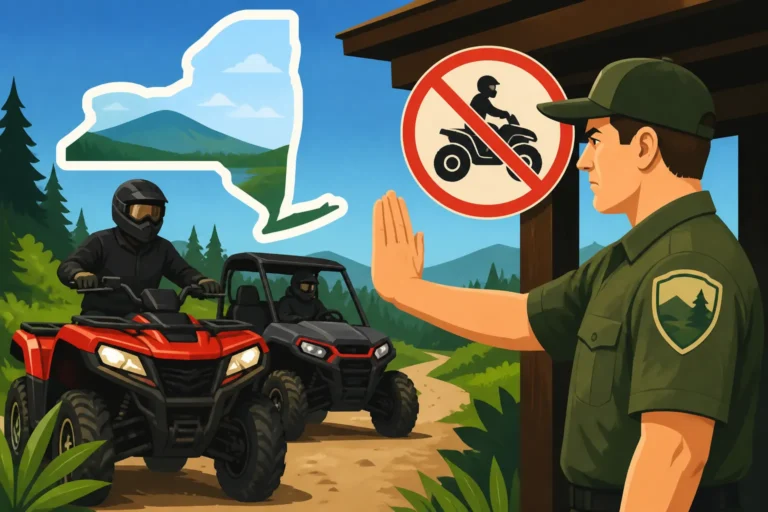
Generally speaking, ATVs and UTVs are not permitted on public highways, including village streets, town roads, and county routes, unless those roads have been specifically designated and posted for ATV use. The fact that a road has been plowed and salted for cars does not, under any circumstances, make it legal for ATV travel. The New York Vehicle and Traffic Law (VTL) is clear on this: ATVs are off-highway vehicles, and they belong off public roads. [New York Rules for Riding a Plowed Road] are quite restrictive.
Think about a common scenario: you live in a rural area, and your town road is plowed regularly. It looks wide open, tempting you to take your quad out for a spin around the block or to a neighbor's house. Don't do it. Unless your town board has gone through the process of [Asking a Town Board to Post a Road] and [How a Town Posts a Road Open for ATV Season], and visibly posted signs indicating ATV access, you're breaking the law. A local police officer or a New York State Trooper can, and often will, issue a ticket for riding on an undesignated public road, even if it's completely cleared of snow. This also applies to [Riding a Town Road Plowed to Bare Pavement] – bare pavement means vehicle traffic, not ATV traffic.
Clearing a Neighbor's Driveway for Fun or Profit
There's a specific, limited exception for ATVs being used for snow removal. You can use your ATV to clear your own driveway or that of a neighbor. This falls under the general scope of [Snow Removal on Private Property]. This is often where a good plow system, which you can find from brands like SuperATV, can transform your ATV into a powerful snow-clearing machine. However, the critical distinction here is the purpose and the location. You're operating the machine on private land or within the scope of a snow removal activity that doesn't involve general public road travel.
If you are clearing a neighbor's driveway for money, this is generally fine, as long as your operation is confined to the property itself and not traveling on public roads to get there. The moment you move your plowing operation onto a public road, even just to cross to another driveway, you fall back under the general rules of ATV operation on public thoroughfares. You would need to legally cross the road, if allowed, and even then, only to get to another private property for the express purpose of snow removal. You cannot simply ride your ATV down the road because you have a plow attached.
Navigating a Plowed Road for Trail Access or Crossing
Sometimes, a designated ATV trail might intersect or momentarily run along a plowed public road. This is a very narrow and specific exception that requires absolute adherence to the rules. If a road is part of a designated ATV trail system, it will be clearly marked. In these instances, you are typically required to operate your ATV in a specific manner: slow speeds, hugging the shoulder, and traveling in a way that minimizes impact on other traffic.
More commonly, you might need to cross a plowed public road to get from one section of a trail to another. This is generally permissible under New York law, provided you do so safely and legally. The rules for [Crossing a Highway on an ATV in New York] stipulate that you must stop before entering the roadway, yield to all traffic, cross at a right angle (ninety degrees) to the road, and proceed directly across without lingering or traveling along the road. Even if the road is plowed and appears empty, these safety precautions are paramount. Failure to follow them can lead to serious accidents or citations.
Hitting the Trails in a New York Winter Wonderland
While public roads are largely off-limits, the true joy of winter ATV riding in New York often lies in accessing dedicated trail systems. However, even here, winter introduces its own set of considerations and rules.
Snowmobile Corridors and Multi-Use Trails
This is another area ripe for misunderstanding. Many riders see extensive snowmobile trail networks crisscrossing New York's landscape and assume that if there's snow, their ATV can join the fun. Unfortunately, this is rarely the case. Snowmobile trails are, as the name suggests, primarily for snowmobiles. While some trails may be designated for multi-use and allow ATVs in winter, this is the exception, not the rule. [Sharing a Trail With Snowmobilers] often means respecting their designated season and trails.
It's critical to understand that riding an ATV on a snowmobile-only trail can lead to fines, damage to the trail bed (especially if there's not enough snow cover), and can jeopardize landowner permissions that keep these trails open. Many snowmobile clubs work tirelessly to groom and maintain these trails, and ATV use can damage their efforts and equipment. Always verify specific trail designations. Just because a trail is open to ATVs in summer doesn't mean it's open in winter, and vice-versa. [Can You Ride a Snowmobile Corridor in Summer?] is a different question than if you can ride it in winter.
Designated Winter ATV Trails
The good news is that certain areas in New York do have designated winter ATV trails. These are often found in counties with robust ATV programs and specific agreements for winter use. The Tug Hill Plateau, particularly within the Lewis County ATV Trail System, is a prime example. This region is famous for its massive snowfalls and has developed a reputation as a winter sports paradise, including some specific routes for ATVs. [New York Riding in a Tug Hill Winter] can be an incredible experience, but it requires diligent planning.
These trails have specific opening and closing dates, which are entirely dependent on snow depth and ground conditions. Too little snow, and you risk damaging the trail bed. Too much, or if conditions become unsafe, and trails may be closed. Always check with the local county recreation department or the ATV club that manages the trails before you head out. These designated trails are usually maintained to handle winter conditions, and adherence to all posted rules, including any specific equipment requirements, is crucial for continued access. [New York Trail Opening Day] and [New York Trail Closing Day] are not fixed calendar dates but rather condition-dependent.
Checking Trail Conditions and Closures
The number one rule for winter trail riding is: Always check current trail conditions and closures before you leave home. Winter weather in New York is notoriously fickle. A trail that was open and rideable yesterday could be closed today due to heavy snowfall, ice, or thawing conditions that make the trail muddy and prone to damage. [New York Trails Closed by Weather] is a common occurrence.
Local ATV clubs, county recreation departments, and even dedicated websites often provide real-time updates on trail status. Websites for the Lewis County Department of Recreation, Forestry & Parks or local ATV clubs are your best resource. Do not rely on assumptions or old information. A quick phone call or check of an official social media page can save you a long, frustrating drive and a potential citation. Respecting closures is not just about avoiding trouble; it's about preserving the trails for everyone and maintaining good relationships with landowners who graciously allow access.
Essential Winter Safety and Machine Prep
Beyond knowing where you can and can't ride, ensuring your machine and yourself are properly prepared for the rigors of a New York winter is paramount for safety and enjoyment.
Winterizing Your ATV for Cold Storage and Preparing for a Ride
Even if you plan to ride through the winter, there might be periods where your machine sits for a few weeks or more. Proper "winterizing" in the traditional sense – stabilizing fuel, charging the battery, etc. – still applies for these downtime periods. If you're riding consistently, the focus shifts to ensuring your machine is ready for cold weather operation. This means checking all fluids for proper levels and ensuring they are rated for cold temperatures. Antifreeze levels are critical, as is ensuring your engine oil viscosity is appropriate for sub-freezing conditions.
Batteries lose efficiency in the cold, so a fully charged battery is essential. Consider a battery tender if your machine sits for more than a few days, especially in unheated storage. [New York ATV Winterizing Costs] are minimal compared to the headache of a dead battery on a freezing day. Inspect your tires for damage and ensure proper pressure – cold temperatures will drop tire pressure. Ensure your winch, if you have one, is in perfect working order, as you're far more likely to get stuck in snow and ice.
Personal Safety Gear for Cold Weather
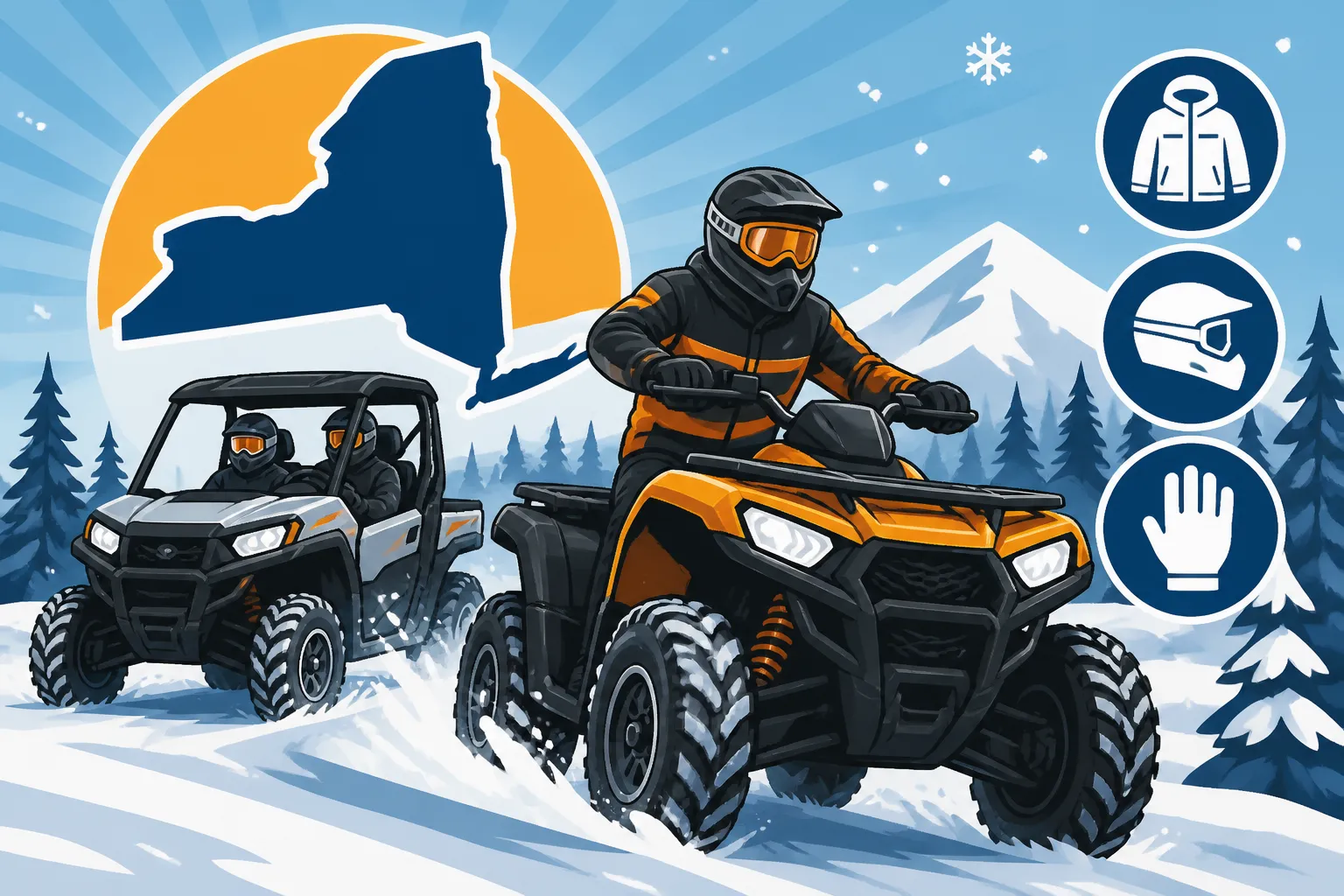
We've touched on layering, but let's dive deeper. Your helmet should be winter-specific or have a breath box insert to prevent fogging. Goggles with dual-pane lenses or electric heating elements are a game-changer for visibility. Hand protection is crucial; thick, insulated, waterproof gloves are a must, ideally coupled with heated grips. Don't forget your feet; warm, waterproof boots are essential, along with wool or synthetic socks.
Always carry an emergency kit. This isn't just for breakdowns but also for unexpected stops or injuries. Your kit should include:
- First-aid supplies: For cuts, scrapes, and sprains.
- Fire starter: Waterproof matches, lighter, or ferro rod.
- Small shovel: Indispensable for digging out stuck machines.
- Tow strap: For pulling out your buddy, or being pulled out.
- Basic tools: Wrench, pliers, screwdriver, duct tape, zip ties.
- Navigation: A fully charged phone (with a portable charger), a physical map, and a compass (and know how to use them).
- Communication: A two-way radio or satellite messenger if cell service is spotty (which it often is in remote New York trails).
- High-energy snacks and water.
- Extra warm layers.
A reliable winch, maybe a robust model from SuperATV, and a small shovel can be absolute lifesavers when you inevitably get stuck in a snow drift.
Traction and Handling Considerations in Snow and Ice
Riding in snow and ice fundamentally changes how your ATV or UTV handles. Your stopping distances will be significantly longer, and acceleration will be less predictable. Smooth inputs on the throttle and steering are key to maintaining control. Abrupt movements are a recipe for losing traction.
Consider upgrading to tires with a more aggressive, open tread pattern designed for mud and snow, or even looking at specialized SuperATV tires known for their winter performance. These can provide better bite than standard all-terrain tires. For truly icy conditions, some riders opt for studded tires, but be aware of how these perform on bare pavement or rocky sections, and check local trail rules, as some might have restrictions.
Always ride at a reduced speed in winter conditions. Even on familiar trails, snow and ice can obscure hazards, change the trail's contour, or make otherwise minor bumps into jarring challenges. Maintain a safe distance from other riders, and be extra vigilant for wildlife, as animals may be more active seeking food or less visible against the snowy backdrop.
Summary of New York Winter Riding Considerations
| Category | Summer Riding (Typical) | Winter Riding (New York Specific) |
|---|---|---|
| Legal Access | Designated ATV trails, some town roads (posted). | Designated winter ATV trails (check local county/club), private land. Public plowed roads are generally NOT open. |
| Road Travel | Crossing public roads at 90 degrees allowed. | Same crossing rules apply, but caution greatly increased due to ice/salt. No general riding on plowed roads. |
| Trail Conditions | Mud, dust, rocks, roots. Seasonal closures for mud. | Snow, ice, hidden hazards, frozen ruts. Closures due to extreme snow, thaw, or insufficient snow. |
| Visibility | Generally good, dust can be an issue. | Reduced by short daylight, blowing snow, glare, fogging helmets. |
| Machine Impact | Wear and tear from dirt, heat, water. | Corrosion from road salt, reduced battery performance, stressed drivetrain in deep snow. |
| Safety Gear | Helmet, eye protection, sturdy clothing. | All summer gear PLUS multiple layers, heated gear, waterproof boots, emergency kit, communication. |
| Maintenance Prep | Pre-ride checks, fluid levels, tire pressure. | Enhanced fluid checks (cold ratings), battery tender, detailed post-ride cleaning (especially for salt), winch check. |
| Traction | Varies by terrain. | Significantly reduced. Requires specific tires, smooth inputs, reduced speeds. |
Winter riding in New York offers unparalleled beauty and excitement for ATV and UTV enthusiasts, but it demands respect for the environment, strict adherence to regulations, and thorough preparation. By understanding the specific challenges of snow and ice, knowing where you can legally ride (and, crucially, where you cannot), and preparing your machine and yourself with the right gear, you can safely enjoy the frosty trails and make the most of the colder months.
Disclaimer
This article is for general informational purposes only and does not constitute professional advice. Laws, prices and regulations vary by location and change over time. Consult a qualified professional for guidance on your specific situation.