New York Rules for Riding With a Dog
Hitting the New York ATV trails with your best furry friend sounds like an absolute dream, right? Picture it: the wind in your hair, the open path ahead, and your loyal dog enjoying the adventure right there with you. But then reality sets in, and you start wondering, "Is this even allowed? What are the actual rules for riding with a dog in New York?" It's a common question, and one that often leads to more confusion than clarity because the state's ATV laws don't exactly spell it out. This guide is here to untangle that leash of confusion, helping you understand the rules, prioritize safety, and make informed decisions about bringing your dog along for the ride.
The Basics: New York Law and Your Four-Legged Co-Pilot
Let's start with the elephant in the room – or perhaps, the golden retriever on the quad. You might be scratching your head, trying to find a specific New York state law that says "dogs are allowed" or "dogs are forbidden" on ATVs or UTVs. The truth is, it's not as clear-cut as you might hope, and this lack of explicit detail is often the source of rider frustration.
What State Law Doesn't Say (and What That Means)
Unlike helmet laws or registration requirements, New York State's Vehicle and Traffic Law, which governs ATVs, doesn't dive into the specifics of canine passengers. There's no statute detailing where Fido should sit, what kind of harness he needs, or whether he requires ear protection. This silence from the state level can feel like a green light to some, but it's crucial to understand that "not explicitly forbidden" doesn't equate to "encouraged" or "safe."
What this absence does mean is that the responsibility often falls onto other entities, and, perhaps most importantly, onto you, the rider. It means you need to exercise extreme caution and common sense. It also means that while the state might not have a rule, local municipalities, counties, and private trail systems absolutely can, and often do. Thinking that just because the state is quiet on the matter means you can do whatever you please can quickly lead to an unexpected conversation with a trail warden or worse, an unsafe situation for your beloved pet.
Local Ordinances and Trail System Rules
This is where the real homework begins for any New York ATV rider hoping to bring their dog along. Because state law is largely silent, towns, counties, and the various organizations that manage ATV trail systems step in to fill the void. These local rules can vary wildly, from one township to the next, and even from one trail club to another.
For example, a town might have a general leash law that applies to all public lands, including any designated ATV roads or trails within its jurisdiction. Some county forests, while potentially open to ATVs, might have specific rules regarding pets to protect wildlife or ensure visitor safety. You absolutely must check with the specific municipality or trail system you plan to ride. Lewis County, with its extensive trail system, will have its own clear guidelines, as will private parks like Tall Pines ATV Park at Andover. Similarly, many club trails, such as those found in Oswego County, often have their own unique sets of rules regarding pets, which are usually part of their membership agreements or posted signage. It’s not uncommon to find signs at trailheads explicitly stating "No Dogs Allowed" or "Dogs Must Be Leashed at All Times" and, crucially, "Dogs Must Be Restrained on Machines." Never assume; always verify before you load up your four-legged friend. This often means a call to the local town clerk, the county parks department, or the specific trail club you're a member of. It's a small step that can save you a lot of grief and ensure compliance with [New York Rules for Riding a Town Road] or [New York Rules for Riding a County Road].
Safety First: Protecting Your Dog (and Others) on the Trail
Beyond what's legal, what's truly paramount is the safety and well-being of your dog, yourself, and other trail users. An ATV or UTV trail can be a noisy, dusty, and potentially dangerous place for an unprepared animal. Just because you can technically bring them doesn't mean you should without proper preparation.
Essential Gear for Your Canine Companion
When you're out on the trails, you're wearing a helmet, sturdy boots, and protective clothing. Your dog deserves the same level of consideration. Investing in appropriate gear is non-negotiable for their safety and comfort.
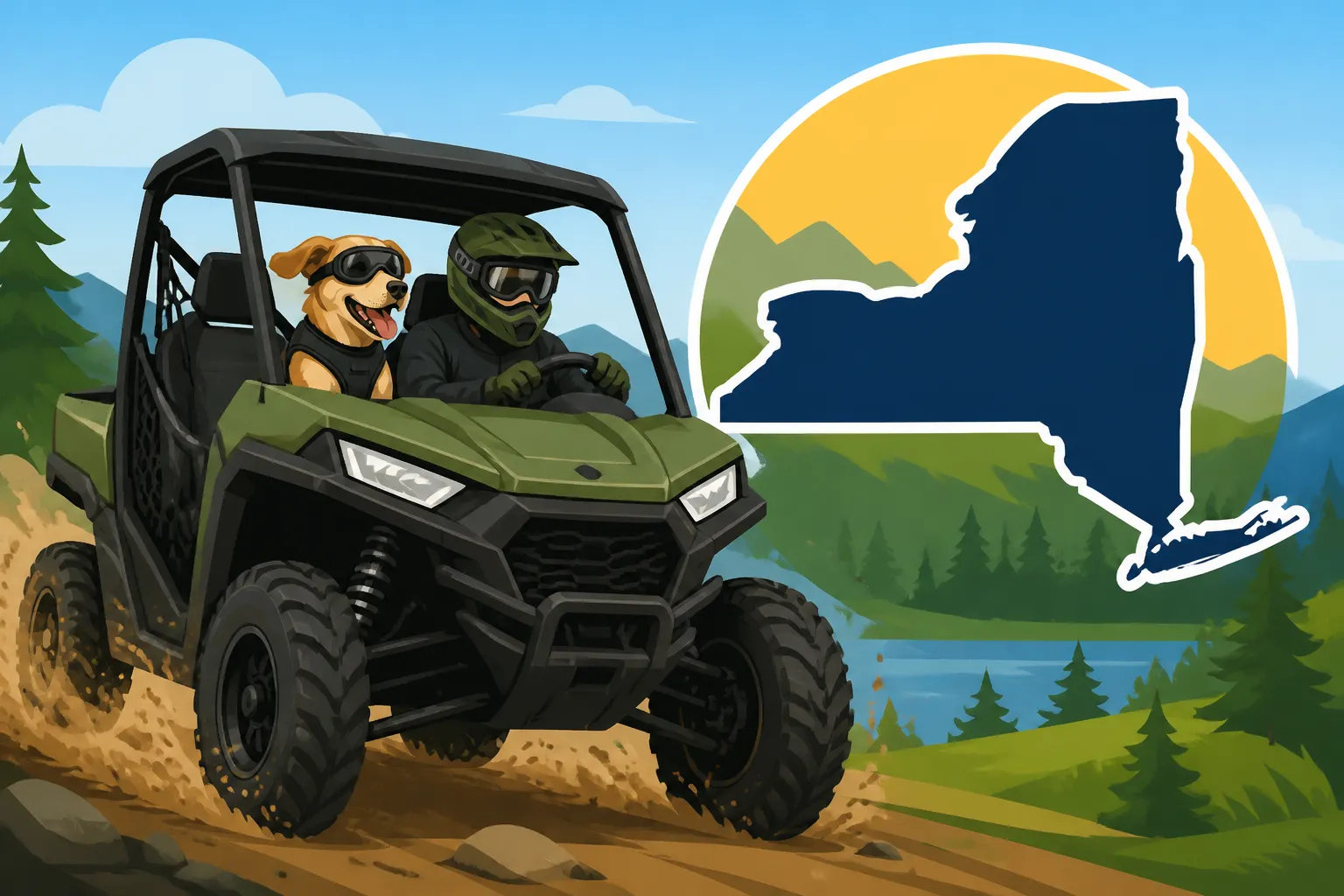
First, consider how your dog will be secured. For UTVs, a sturdy travel crate or a secure harness that can be clipped into a seatbelt receiver is essential. The crate should be well-ventilated and large enough for your dog to stand and turn around comfortably, but snug enough to prevent excessive jostling. For ATVs, the options are more limited, and usually only suitable for smaller dogs in specially designed, securely mounted carriers on a cargo rack. Never, ever let your dog ride unsecured in your lap or just sitting on a seat; a sudden bump or stop can send them flying. Think about products like durable cargo boxes that can safely contain a crate, or robust tie-down systems from brands like SuperATV that ensure everything stays put, even over rough terrain.
Next, eye protection is crucial. Dust, branches, and flying debris can cause serious eye injuries. "Doggles" or similar protective eyewear designed for dogs are a must. They might look a little silly, but they're a lifesaver for your dog's vision. Paw protection, like rugged boots, can shield sensitive pads from sharp rocks, hot surfaces, or abrasive terrain, especially on trails with a lot of shale or gravel. Don't forget hydration! A portable water bowl and ample fresh water are vital, as your dog will exert energy and can easily overheat, especially in warmer months. Pack extra water for yourself, and then double that for your dog. A pet first-aid kit, complete with bandages, antiseptic wipes, and any specific medications your dog might need, should also be a staple in your riding pack. Remember, you're miles from the nearest vet, so basic emergency care is on you.
Training, Acclimation, and Trail Etiquette
Bringing a dog onto an ATV trail isn't just about gear; it's about preparation and manners. A dog that isn't properly trained or acclimated to the unique environment of an ATV trail can quickly become a liability or a danger.
Start slow. Introduce your dog to the ATV or UTV when it's off, letting them sniff around and get comfortable with its presence. Then, try starting the machine for short periods, letting them get used to the noise and vibrations from a distance, gradually moving closer. Once they're comfortable with the idling machine, take them for very short, slow rides around your property or a quiet area before attempting a full trail outing. This gradual acclimation is key to preventing anxiety and stress, which can lead to unpredictable behavior. Basic obedience commands like "stay," "come," "leave it," and "sit" are absolutely crucial. Imagine a deer darting across the trail – a "leave it" command could prevent a dangerous chase. A reliable "come" is non-negotiable if your dog is ever off-leash in an approved area.
Trail etiquette is equally important. Not everyone loves dogs, and some people might even be afraid of them. Always keep your dog under control, whether on a leash (where permitted) or securely contained in your machine. If you encounter other riders, hikers, or even horses on multi-use trails, slow down, give them plenty of space, and be prepared to stop. Don't let your dog approach other people or animals without their explicit permission. And, of course, always clean up after your dog. Carry waste bags and pack out everything you pack in. Leaving dog waste on the trail is not only unsightly but can also spread disease and quickly lead to landowners revoking trail access. Adhering to these principles ensures that trail privileges for riders with dogs continue for everyone.
Practical Considerations for Riding with Your Dog in New York
So, you've checked the local rules, gathered your gear, and worked on training. Now, let's talk about the practicalities of making that trail ride happen safely and enjoyably for everyone involved.
Choosing the Right Machine and Setup
This is a critical decision. While it might be tempting to strap a carrier to your ATV, a side-by-side (UTV) is almost always the superior and safer choice when riding with a dog. UTVs offer more enclosed space, dedicated seating, and a larger cargo area, making it much easier to secure a crate or safely seat a larger dog with a harness. The roll cage and seatbelts offer a level of protection simply not available on an open ATV. With a UTV, you can often fit a proper kennel in the bed, ensuring your dog is protected from bumps, debris, and the elements.
If an ATV is your only option, then you're limited to very small dogs that can be safely secured in a specially designed, robust carrier that attaches firmly to your ATV's front or rear cargo rack. This carrier must be entirely enclosed and escape-proof. The dog should not be able to stick its head out, as this exposes them to flying debris and wind blast. Even with a carrier, an ATV exposes your dog to more jarring movements and less protection than a UTV. Always ensure the carrier is balanced and does not negatively impact your ATV's handling. Consider durable cargo bags or boxes to house your dog's essentials, ensuring they are protected from dust and water. Brands like SuperATV offer robust cargo solutions that can be adapted to secure dog supplies or even a small kennel.
Planning Your Trip: What to Consider Beyond the Rules
Riding with a dog adds another layer of planning to your ATV excursions. You can't just throw Fido in the back and hit the trail; there are specific environmental factors and contingencies you need to consider.
Weather conditions are paramount. Extreme heat can lead to heatstroke, especially for breeds with short snouts or thick coats. Pavement can get dangerously hot for paws. In colder weather, dogs can suffer from hypothermia, especially if they get wet. Always check the forecast and dress (or gear up) your dog accordingly. Think about insulating pads for crates in winter, or cooling vests in summer. [New York Riding Seasons and Trail Openings] are usually dictated by weather, and [New York Trails Closed by Weather] can happen unexpectedly.
Trail terrain suitability is another big one. Very rocky, steep, or heavily wooded trails might not be appropriate for a dog, even if they're secured in a UTV. The constant jostling could cause discomfort or injury. Deep mud can be messy and, if your dog gets out, a potential hazard. Choose trails that are relatively smooth and safe for your dog's temperament and physical condition.
Finally, emergency preparedness cannot be overstated. Beyond the first-aid kit, know your route and where you can find the nearest veterinarian in case of a serious injury. Carry extra water, food, and any specific medications your dog requires. Have a plan for how you would transport an injured dog off the trail. These are the uncomfortable "what if" scenarios, but planning for them can make all the difference in a real emergency.
Where Can You Actually Ride With Your Dog in New York?
This is often the million-dollar question for New York riders. It's frustrating to gear up and get excited, only to find out the trails you wanted to explore don't allow dogs or even ATVs in general.
Public Lands: State Forests, Parks, and Preserve Rules
When it comes to New York's vast public lands, the rules can be restrictive. Many state-managed lands, including State Parks and the beloved Forest Preserve, have stringent regulations regarding motor vehicles, let alone pets on those vehicles. It's a common misconception that if land is "public," you can ride it. This is far from the truth for ATVs in many areas.
For instance, [Why New York State Parks Ban ATVs] is a common point of contention for riders, and if ATVs aren't allowed, neither are your dogs on them. Similarly, the [New York Rules for Riding the Forest Preserve] are highly restrictive due to its "Forever Wild" constitutional protection, meaning motorized vehicle use is severely limited, and dogs riding along on those limited routes would be subject to strict leash laws or outright bans depending on the specific management unit. While some state forests might have roads open to certain vehicles, the rules for dogs must still be verified. Some multi-use trails, such as those that might be part of a snowmobile corridor in winter, might allow dogs on leash, but this rarely extends to them riding on an ATV or UTV. Your best bet for public land will typically be dedicated county trail systems like the [Lewis County ATV Trail System in New York], where specific dog policies are usually clearly stated with the issuance of a [New York ATV Trail Permits Explained]. Even then, strict rules about leashing and waste removal will apply.
Private Trails, Club Trails, and Landowner Permission
This is where you'll often find more flexibility, but it comes with its own set of responsibilities and requirements. Private land, with explicit landowner permission, is generally the most straightforward option. If you own land or have obtained written permission from a private landowner, you can usually ride with your dog as long as you adhere to safety and local leash laws. Always ensure you have clear, documented [New York Landowner Permission Rules] if you're not on your own property.
Club trails and private ATV parks are another viable option, but they each come with their own unique rules. [Oswego County's Club Trails], for example, are managed by local clubs that set their own policies. You'll need to check with the specific club to see if they allow dogs on their trails and if so, what the requirements are (e.g., leash, restraint in vehicle, specific areas where they are permitted). The same goes for private, pay-to-ride parks like [Tall Pines ATV Park at Andover] in Allegany County. These parks often have websites or social media pages where they list their pet policies. It’s imperative to consult these resources before you visit. Often, these policies are designed to balance the enjoyment of all visitors with safety and environmental concerns.
To summarize, here's a general overview of where you might encounter different dog policies in New York:
| Riding Area Type | Common Dog Policy Regarding ATVs/UTVs | Key Action for Riders |
|---|---|---|
| New York State Parks | Generally prohibited (ATVs/UTVs are usually banned, thus dogs on them are too) | Assume no; always verify specific park regulations. |
| Forest Preserve | Extremely limited (ATVs/UTVs largely banned; dogs subject to leash laws) | Assume no; very few exceptions. |
| County Trail Systems | Varies; often allowed with permit, leash, and restraint requirements | Check specific county rules (e.g., Lewis County Parks Dept). |
| Town Roads/Trails | Varies by town; subject to local leash laws and ATV ordinances | Contact town clerk for specific ATV/pet ordinances. |
| Club Trails | Varies by club; usually requires membership, often has specific pet rules | Check with individual club (e.g., Oswego County clubs, Tall Pines). |
| Private Land | Permitted with landowner consent; subject to local leash laws | Secure written permission; follow local rules. |
Taking your dog on an ATV or UTV adventure in New York can be a fantastic experience, bringing you and your loyal companion closer while enjoying the state's beautiful outdoors. But it's not a decision to be taken lightly or without thorough preparation. By understanding the nuanced rules, prioritizing safety with proper gear and training, and diligently planning your trips, you can ensure that your furry friend is a safe and welcome addition to your trail-riding adventures.
Disclaimer
This article is for general informational purposes only and does not constitute professional advice. Laws, prices and regulations vary by location and change over time. Consult a qualified professional for guidance on your specific situation.