New York Rules for Crossing a Public Road
It's a common frustration for ATV riders in New York: you're enjoying a fantastic ride on a designated trail, or maybe just making your way across your own property, and suddenly you hit a public road. The question immediately pops into your head: can I cross this? How do I do it legally? You know ATVs aren't generally "street legal" here, but sometimes a road crossing is unavoidable to get from one section of trail to another, or even just to reach your own land. This guide is here to help you navigate the specific, often confusing, rules New York has in place for ATV riders who need to cross public roads, ensuring you stay safe and on the right side of the law.
Navigating Public Roads with Your ATV in New York
The thought of an ATV on a public road often conjures images of reckless joyriding, but for many riders, crossing a road is simply a necessary evil to connect legitimate riding areas or access private property. New York State law is very particular about how this can happen, and understanding these nuances is crucial for any responsible rider. It’s not about finding loopholes, but about knowing the strict boundaries that are in place to keep everyone safe.
The Core Principle: Designated and Posted Roads
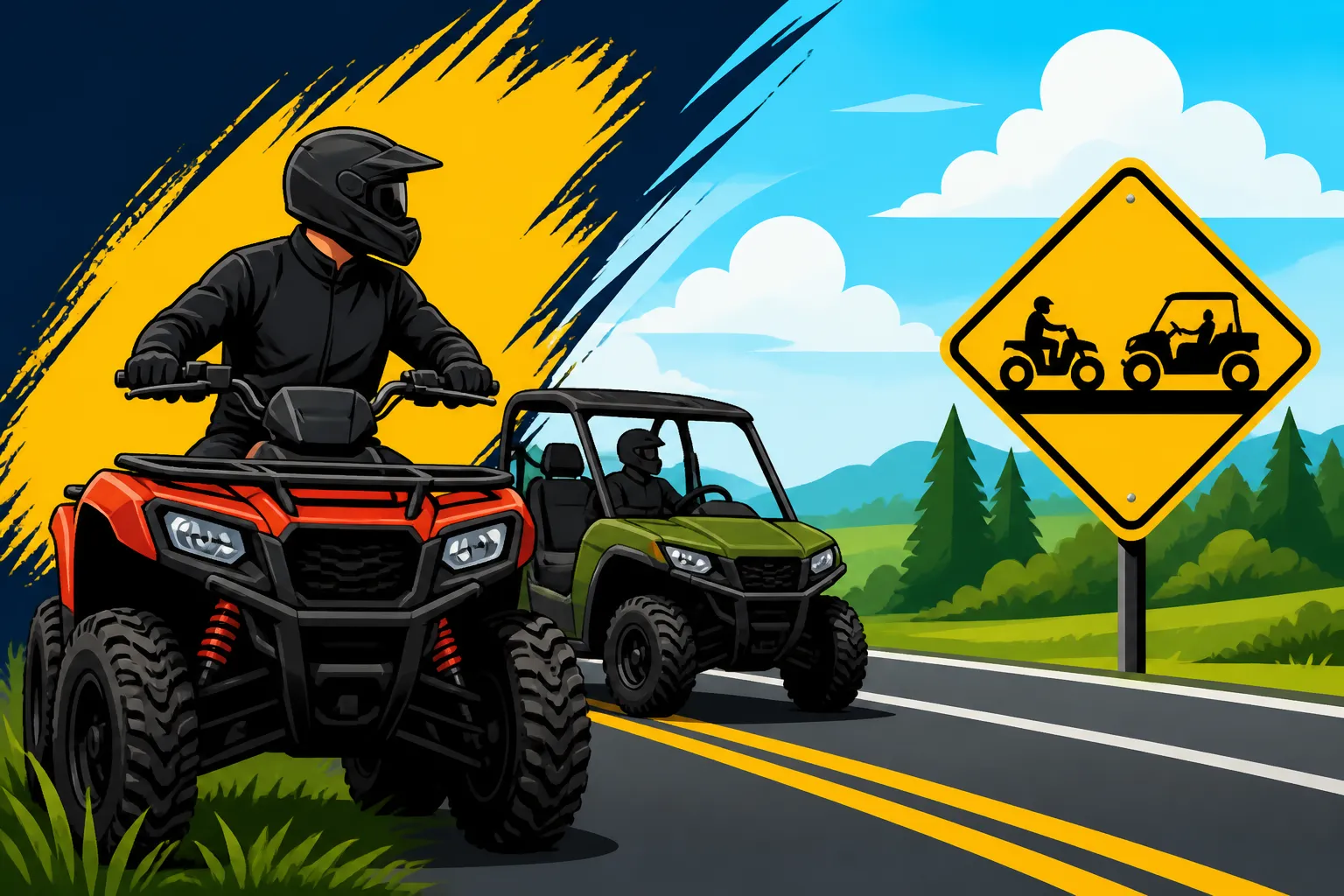
Let's get this straight right off the bat: in New York, ATVs are generally not allowed on public roads. That's the baseline. However, there are exceptions, primarily for crossing purposes. The biggest takeaway here is that you cannot just ride your ATV down any public road, even for a short distance, unless that specific road has been officially "designated and posted" for ATV use by the local municipality. This means signs must be clearly visible, indicating that ATVs are permitted. Without those signs, assume you cannot ride on it, even the shoulder.
This distinction can be incredibly frustrating for riders, especially when a mere quarter-mile stretch of unposted town road stands between two fantastic sections of a trail system. You see the snowmobilers flying down groomed corridors in winter, often using public roads as connectors, and wonder why ATV access is so much more restrictive. The reality is that the state has defined ATVs differently, and with those definitions come tighter restrictions on road access. These rules are designed to prevent casual road use and keep ATVs primarily on trails or private land.
Crossing: More Than Just Zipping Across
When you do encounter a public road that needs to be crossed – perhaps it's a town road intersecting a multi-use trail – there are very specific protocols you must follow. It's not like crossing a parking lot or a field. New York's Vehicle and Traffic Law dictates a precise method to minimize risk for both ATV riders and other motorists. Ignoring these rules can lead to serious fines and even endanger lives.
The primary rule for crossing a public highway in New York is the "ninety-degree rule." This means you must cross the road at as close to a right angle as possible. You can't just meander diagonally across the asphalt. Before you even begin your ninety-degree approach, you are legally required to come to a complete stop. Think of it like a stop sign at an intersection, but with even more diligence. You must yield the right of way to all other vehicles and pedestrians. Take your time, look both ways multiple times, and ensure the path is absolutely clear. This isn't just common courtesy; it's the law. Once you confirm it's safe, cross directly and efficiently to the other side, never lingering on the pavement. You should not travel along the road for any distance, however short, unless it is a designated and posted ATV route.
The 100-Foot Rule and Road Crossings
New York State also has a "100-foot rule" that dictates how close you can operate an ATV to certain structures, particularly at night. While primarily intended for preventing noise disturbances near homes or ice shanties, this rule can indirectly affect your approach to road crossings, especially in more populated areas. If your crossing point is within 100 feet of a dwelling or an occupied building, and it's after midnight, you need to be particularly mindful of this rule.
Even during the day, riding an ATV close to a home or a business on the shoulder of a road just to get to a crossing point can draw unwanted attention and potentially lead to complaints or misunderstandings with local residents. The intent of the law is to keep ATVs away from areas where they might disturb the peace. So, while you might be legally crossing a road, how you approach and depart from that crossing, particularly in residential zones, still matters. Always try to keep your riding to areas well away from homes, even when making a legal crossing, to avoid any issues. This might mean finding a slightly different crossing point or staging your approach from a less intrusive location.
Essential Equipment and Rider Requirements for Road Crossings
Even though you're only crossing a public road, not riding on it, the state still expects you to be properly equipped and prepared. These aren't just suggestions; they are legal mandates designed to protect you, your passengers, and anyone else on the road. Thinking of a quick dash across the asphalt without the right gear or documentation is a recipe for a costly ticket and a potentially dangerous situation.
Lights, Visibility, and Safety Gear
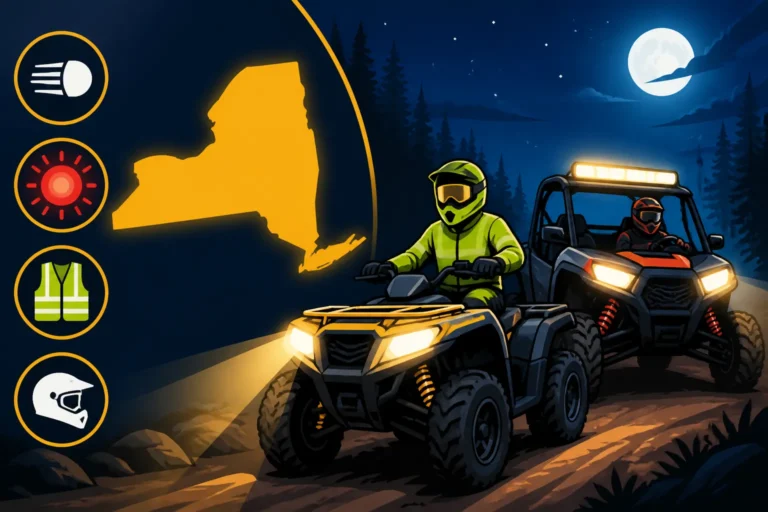
Visibility is paramount when you're momentarily sharing a public road with cars, trucks, and other vehicles. This means your ATV must be equipped with working headlights and taillights. While these are standard on most machines, always double-check them before a ride, especially if you anticipate any crossings, even during daylight hours. A burnt-out bulb could make you far less visible to an approaching car, especially at dusk or on an overcast day. You can find excellent aftermarket lighting solutions that increase your visibility if your stock lights feel inadequate for potential crossings.
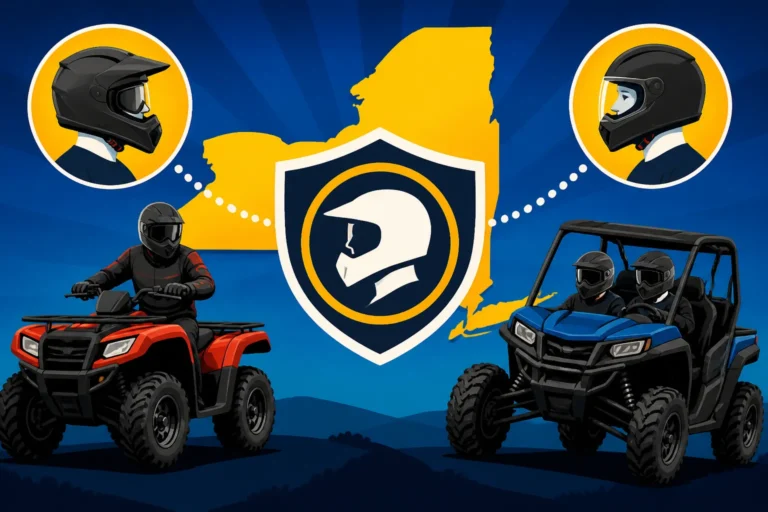
Beyond lights, personal safety gear is non-negotiable in New York. A helmet is absolutely required for all ATV riders, regardless of age, whenever you're operating the machine off your own private property, which includes road crossings. There's no exception for experienced adult riders; everyone wears a helmet. [New York Helmet Law for ATV Riders] outlines this clearly. Eye protection, gloves, and sturdy footwear are also highly recommended to protect you in case of an unforeseen incident. The brief moment you are exposed on a public road is precisely when you need the most protection.
Registration, Insurance, and Proof of Ownership
Just because you're only crossing a road doesn't mean you can skip the legal formalities of ATV ownership in New York. Your ATV must be registered with the New York Department of Motor Vehicles, and you must carry proof of that registration with you whenever you ride off your own property. This includes any public road crossings. An officer stopping you at a crossing point will expect to see valid registration papers. [Registering an ATV in New York] covers this process in detail.
Equally critical is insurance. New York mandates that all ATVs ridden off private property (even for a quick road crossing) carry liability insurance. You must have proof of this insurance with you. The minimum coverage requirements are specific, and failing to have proper insurance can result in significant fines and penalties. Think of it this way: if an accident occurs during your crossing, even if it's not your fault, having insurance ensures that any damages or injuries are covered, protecting both you and other parties. [New York ATV Insurance Requirement] lays out the specifics of what you need. Ensure your policy meets these minimums and that you have your insurance card readily available.
Age and Supervision Rules for Young Riders
The rules for young riders in New York are stringent and apply equally to road crossings. If you have a rider under the age of 16, they face specific limitations on when and where they can operate an ATV, and this absolutely extends to public road crossings. Generally, riders under 10 are prohibited from operating an ATV on any public land or for crossing public roads. Riders between 10 and 15 years old can operate an ATV off their own private property (including for road crossings) only if they possess a valid ATV Safety Certificate and are under the direct supervision of someone 18 or older.
This means a 14-year-old with a safety certificate can legally cross a road, but they cannot do it alone; an adult must be actively supervising. The supervisor is ultimately responsible for the minor's actions. Even if the crossing itself seems simple, the state wants an experienced eye on younger riders when they are interacting with public infrastructure. [New York Minimum Age to Ride an ATV] and [New York ATV Safety Certificate Requirements] are vital resources for understanding these age-related restrictions fully. Always ensure all riders in your group meet these requirements before attempting any public road crossing.
Where You Absolutely Cannot Ride or Cross
While there are specific circumstances where ATV road crossings are allowed, it’s just as important, if not more so, to understand where they are explicitly forbidden. Attempting to ride or cross in these prohibited areas can lead to severe penalties, including fines, impoundment of your machine, and even criminal charges, not to mention the significant safety risks involved.
Interstates and Controlled-Access Highways
Let's make this crystal clear: you cannot, under any circumstances, operate an ATV on an interstate highway or any other controlled-access highway in New York. This includes the shoulder, the median, and absolutely prohibits crossing them. These roads are designed for high-speed, multi-lane traffic, and an ATV simply does not belong there. The speed differential, the volume of traffic, and the lack of visibility make it incredibly dangerous for everyone involved.
Controlled-access highways are usually marked with signs indicating "No Pedestrians" or "No Bicycles," and often have on-ramps and off-ramps rather than direct intersections. Even if you see a tempting gap in traffic, attempting to cross one of these roads is illegal and extraordinarily reckless. You will be ticketed, and your machine could be impounded. Always plan your route to entirely avoid these types of roadways. There are no exceptions for these categories of roads, ever. [Interstates Closed to New York ATVs] explains this further.
State Parks and Restricted State Lands
New York State boasts an incredible amount of public land, but much of it is explicitly off-limits to ATVs. This includes most New York State Parks, the vast majority of the Adirondack and Catskill Forest Preserves, and numerous other state-owned properties managed by agencies like the Department of Environmental Conservation (DEC) or the Office of Parks, Recreation and Historic Preservation (OPRHP). The general rule of thumb is: if it's state land, assume ATVs are prohibited unless there are clearly marked, designated trails or access roads.
This prohibition extends to road crossings within or to access these restricted state lands. For instance, if a public road passes through a State Park where ATVs are banned, you cannot use that road, even for a crossing, if your intent is to access another part of the park. The intent of these prohibitions is often rooted in environmental protection, preserving wilderness character, or ensuring public safety in areas meant for different recreational uses. [Why New York State Parks Ban ATVs] and [Why the Forest Preserve Is Closed to Machines] elaborate on these restrictions. Always check specific regulations for any state land you plan to ride near or through.
Town and Village Ordinances
While New York State sets the baseline for ATV rules, individual towns, villages, and even counties have the authority to enact their own, often more restrictive, ordinances regarding ATV use. This is a critical point that many riders overlook, to their detriment. A town might decide to completely ban ATVs on all public roads within its jurisdiction, even for crossing. Another village might designate specific crossing points, but only during certain hours or seasons.
The state law provides a framework, but local municipalities can tighten the reins. It's incredibly frustrating to be riding legally on a county trail, only to hit a town line where the rules abruptly change. Before you ever hit the trails, especially if you're exploring a new area, make it a point to research the local ordinances for every town and village you might pass through or cross a road in. A quick call to the town clerk's office or a visit to the municipal website can save you a huge headache and a hefty fine. Always prioritize the strictest applicable law; if the town says no crossings, then no crossing, regardless of state law permitting it elsewhere.
The Broader Picture: Why New York's Rules Are So Specific
It's easy to feel like New York's ATV rules are overly complicated or designed to make riding difficult. You might wonder why a quick zip across a quiet town road is so heavily regulated. But understanding the rationale behind these specific regulations can help you appreciate their purpose and ride more responsibly. It's a balancing act that the state, and local municipalities, are constantly trying to maintain.
Balancing Access and Public Safety
At its heart, New York's approach to ATV use, particularly regarding public roads, is about balancing recreational access with public safety and environmental protection. ATVs are powerful machines, and when mixed with cars, trucks, and pedestrians on public roadways, the potential for serious accidents dramatically increases. The state has a responsibility to ensure the safety of all road users. This is why the rules for crossing are so specific: stop, look, yield, cross at ninety degrees. These aren't arbitrary hurdles; they're procedures designed to minimize the risk of collision.
Furthermore, the noise and environmental impact of ATVs are concerns for many communities. Unrestricted access to roads could lead to disturbances in residential areas, dust, and potential damage to road surfaces. The strictures around "designated and posted" roads and limited crossings are ways to channel ATV traffic to appropriate areas, protecting both the riders and the communities they pass through. It’s about creating a framework where everyone can coexist without undue friction.
The Future of ATV/UTV Access in New York
The landscape of ATV and UTV rules in New York is not static. There are ongoing discussions and proposals for changes, particularly concerning side-by-sides (UTVs), which currently face even greater restrictions due to their size and weight. While the state has specific definitions for what constitutes an "ATV" that can be registered, the recreational market has evolved, with many machines now exceeding these historical limits. This creates a disconnect for riders who want to enjoy newer, larger machines but find themselves unable to register them for even limited trail or crossing use.
Advocacy groups and local clubs are constantly working with state and local officials to find solutions that expand safe, legal riding opportunities while still addressing public and environmental concerns. New York is a big state with diverse terrain and communities, and what works in one area, like the extensive trail systems on Tug Hill in Lewis County, might not be feasible in another. Keeping an eye on proposed legislation and supporting local clubs that work to maintain and expand trail networks is one way to stay engaged with the evolving future of ATV riding in New York. The goal, ultimately, is to create more designated riding areas and safer, clearer rules for necessary road interactions.
| Aspect of Road Interaction | Legal Action in New York | Illegal Action in New York |
|---|---|---|
| Purpose | Crossing a designated trail section; accessing private land. | Recreational riding on public roads; commuting. |
| Method | Stop, yield, cross at 90 degrees directly to the opposite side. | Riding along a road, even for a short distance; diagonal crossing. |
| Location | Designated and posted public roads, usually town or county roads. | Interstates, controlled-access highways, most state parks/preserves, unposted roads. |
| Required Equipment | Headlight, taillight, helmet, eye protection. | Missing working lights; no helmet. |
| Documentation | Valid registration, proof of insurance. | Unregistered ATV; no insurance proof. |
| Rider Age (under 16) | Safety certificate + 18+ adult supervision for crossing. | Riding alone; riding without a safety certificate; riding if under 10. |
| Local Ordinances | Adhering to specific town/village ATV crossing rules. | Ignoring local bans or restrictions on road crossings. |
Disclaimer
This article is for general informational purposes only and does not constitute professional advice. Laws, prices and regulations vary by location and change over time. Consult a qualified professional for guidance on your specific situation.