Are ATVs Street Legal in New York?
It’s a scenario many of us have faced, especially here in the Empire State: you've got your ATV or UTV loaded up, ready for a day of adventure, and then you hit that nagging question. Can I just run down the road to the trail head? What about a quick hop to the gas station? The desire to ride your machine on public roads is strong, offering convenience and a sense of freedom, but navigating New York’s specific laws can feel like a maze. This guide is here to untangle the confusion and give you a crystal-clear understanding of whether ATVs and UTVs are street legal in New York, and what the real-world implications are for riders like us.
The Straight Answer: Are ATVs Street Legal in New York?
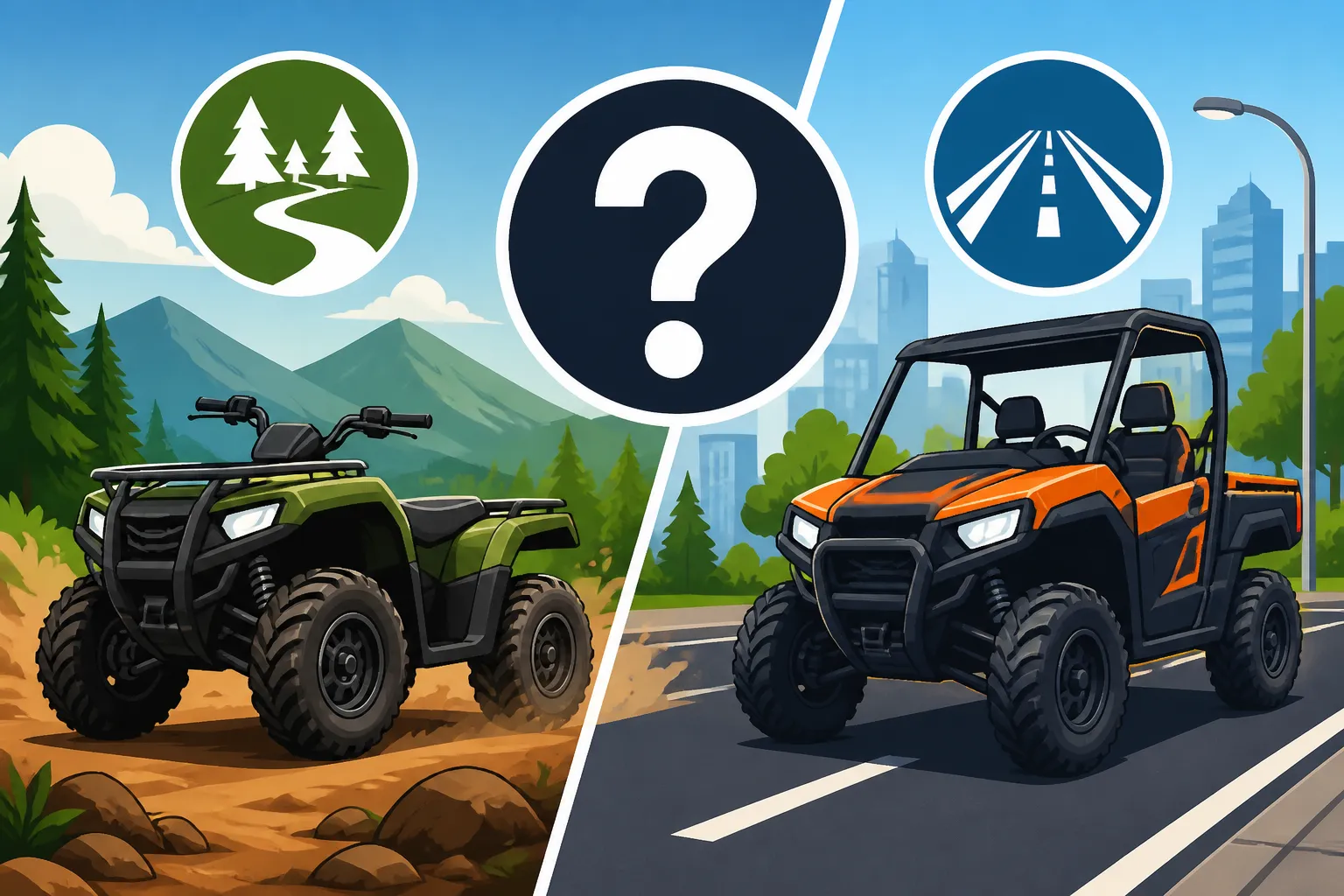
Let’s not beat around the bush or give you a fuzzy answer. It's tough news for many riders, but the straightforward truth is that ATVs are generally NOT street legal in New York State. This isn't just a suggestion or a guideline; it's enshrined in the Vehicle and Traffic Law (VTL). Trying to take your quad out for a spin on a local street, even for a short distance, can lead to serious consequences.
A Blanket Prohibition on Public Roads
New York State's Vehicle and Traffic Law (VTL) Section 2403, which covers all-terrain vehicles, is quite clear. It states that ATVs are generally prohibited from operation on public highways, streets, and roads within the state. This means that for the vast majority of your riding adventures, you’ll need to stick to designated trails, private property with permission, or other legal off-road areas. It's a hard pill to swallow for riders who might be used to more lenient rules in other states or who simply want the convenience of hopping on a road for a moment.
This isn't about the type of tires you have, whether you have turn signals, or even if your machine is insured and registered. The law specifically defines what an ATV is and where it can be operated, and public roadways are largely excluded from that definition for recreational use. We all understand the frustration of having a perfectly capable machine that you can't ride from your driveway to the corner store, but the law is currently quite firm on this point.
The underlying reasoning often points to safety concerns. ATVs are designed for off-road conditions – they handle differently on pavement, have different braking characteristics, and are generally less visible and stable than conventional motor vehicles in traffic. While you might feel perfectly safe and competent on your machine, the state views the risk to both the ATV operator and other motorists as too high for general road use.
Understanding "Public Roads" in New York
When the law talks about "public roads," it's not just referring to busy interstates or bustling city avenues. The definition is much broader and encompasses nearly every type of road that isn't privately owned or a designated off-road trail. This includes state highways, county routes, town roads, and even quiet village streets. If the road is maintained by a public entity – state, county, town, or village – it falls under this prohibition.
This can be particularly confusing in rural areas where "roads" might look more like gravel paths or dirt tracks. Even if there's no asphalt in sight, if it's a public right-of-way maintained by a municipality, the same rules apply. You can't just assume that because a road is unpaved or lightly traveled, it's exempt from the VTL. Always err on the side of caution and assume that any road you didn't specifically get permission to ride on, or that isn't part of a marked, designated ATV trail system, is off-limits.
Think of it this way: if a regular car, truck, or motorcycle can legally drive on it, your ATV likely cannot, unless specifically designated. This means you need to be extremely careful when planning your routes, ensuring you're only on private land with express permission or on officially recognized and signed ATV trails. It's a common mistake for riders to venture onto what they perceive as quiet country roads, only to find themselves facing a ticket or worse.
Limited Exceptions: When an ATV Can Touch a Public Road
While the general rule is strict, New York law does provide a few very specific, narrow exceptions where an ATV might legally interact with a public road. These aren't loopholes for recreational riding; rather, they are allowances for necessary navigation or specific work-related tasks. It's crucial to understand these distinctions because misinterpreting them can still lead to legal trouble.
Crossing Public Roads
One of the most common exceptions, and perhaps the one that causes the most confusion, is the ability to cross a public road. You are generally allowed to cross a public highway, street, or road at approximately a ninety-degree angle, provided you come to a complete stop before entering the roadway, yield to all traffic, and have your lights on if visibility is poor or it's after sunset. This is strictly for crossing, however, not riding along the road. [Crossing a Highway on an ATV in New York]
Imagine you're on a trail system that briefly separates on either side of a county road. You can cross that road to continue on the trail, but you cannot turn onto the road and ride it for a mile before turning off again. The intent of this exception is to facilitate access between legal riding areas that are bisected by public thoroughfares, not to provide a means for street-legal travel. You also need to be aware that certain types of roads, like controlled-access highways (interstates, parkways), are completely off-limits, even for crossing.
When making these crossings, extreme caution is paramount. ATVs are less visible to other motorists, and their acceleration and braking characteristics are different from cars. Always make eye contact with drivers, signal your intentions clearly (if your machine has signals, otherwise hand signals), and never assume a driver sees you. It's a quick, necessary maneuver that requires your full attention and adherence to all traffic laws.
Designated and Posted Roads
In some rare instances, a town or county might pass local ordinances to designate specific roads or portions of roads for ATV use. These are not common, and they are usually very clearly marked with official signage. If a road is designated, it will be conspicuously posted, indicating that ATV operation is permitted. Without such explicit signage, you cannot assume a road is open for ATV travel. [New York's Designated and Posted Roads]
These designated roads are typically found in areas with existing trail networks, where local governments have weighed the recreational benefits against public safety concerns and decided on specific, limited access points. It is absolutely vital to check with local authorities – the town clerk, county sheriff, or parks and recreation department – for specific information on designated roads in any given area. Never rely on hearsay or old maps; laws and designations can change. [How a New York Town Designates a Road]
For example, a rural town might designate a specific two-mile stretch of dirt road that connects two parts of a large, permitted trail system. Even then, there might be speed limits, time restrictions, or other rules specific to that designated section. These are not widespread, statewide allowances, but rather hyper-local exceptions that require active verification by the rider. It's not like finding a "Welcome to ATV-Friendly Road" sign at every turn.
Emergency, Utility, and Agricultural Use
Another set of exceptions applies to ATVs used for specific functional purposes, rather than recreation. For instance, ATVs can sometimes be used on public roads by law enforcement, emergency services, or utility workers in the performance of their duties. These machines are being used as tools to address critical situations or maintain infrastructure, not for leisure.
Similarly, farmers may sometimes be permitted to operate ATVs on public roads for agricultural purposes, such as moving between fields that are separated by a road. [The Agricultural Exemption in New York] This is typically for short distances and with specific restrictions, like displaying a slow-moving vehicle emblem. These machines are considered farm implements in these situations, performing necessary tasks for their livelihood.
It’s important to stress that these exceptions are tied to the purpose of the operation, not the machine itself. You, as a recreational rider, cannot simply claim "utility work" because you're driving to pick up a tool. These are specific, clearly defined operational contexts that do not apply to the general public looking to enjoy a ride on a public road.
The Problem with Side-by-Sides and New York Law
The issue of street legality becomes even more complex, and frankly, more frustrating, when we talk about side-by-sides (UTVs). While ATVs generally face a blanket prohibition, UTVs often fall into a legal gray area or are simply too large to even be registered as ATVs in New York, let alone be considered street legal.
Why Most UTVs Don't Qualify as ATVs
New York's definition of an All-Terrain Vehicle is very specific, and it's where most modern side-by-sides run into trouble. For a machine to even be considered an ATV under New York law, it must meet strict criteria regarding its width and weight. Specifically, an ATV is defined as a vehicle that is 70 inches or less in width and weighs 1,000 pounds or less. [New York ATV Width Limit for Registration] [New York ATV Weight Limit for Registration]
The reality is that the vast majority of popular side-by-sides on the market today, whether they're sport models or utility-focused machines, exceed these dimensions significantly. Many UTVs are well over 70 inches wide, some even approaching 80 inches or more, and they frequently weigh 1,200 pounds or more, with some models easily topping 1,500 pounds dry. [Why a Modern Side-by-Side Fails the Test] This means they don't even qualify for ATV registration in New York, which then eliminates any possibility of falling under the very limited ATV road crossing exceptions.
Imagine you've invested in a fantastic, wide-stance UTV, perhaps with aftermarket control arms or suspension upgrades from a company like SuperATV, designed for ultimate stability and performance on the trails. While these modifications might make your machine a beast off-road, they almost certainly push it further beyond New York's restrictive width limits, making it impossible to even register as an ATV in the state. This leaves UTV owners in a difficult position, often limited to riding on private land or in specific, privately owned parks that allow non-registered vehicles.
Proposed Legislation and Its Current Status
The disconnect between New York's antiquated ATV definition and the reality of modern off-road vehicles like UTVs is a constant source of frustration for riders. There have been various efforts over the years to update the state's laws to better accommodate side-by-sides, often proposing new definitions or specific registration categories for UTVs that would allow for broader access, including potentially some limited road use.
However, the key takeaway here is that these proposed bills have, to date, not become law. [Why New York's UTV Bills Are Not Law Yet] They often get introduced into committees, debated, and then stall or fail to pass. This means that as an operator, you cannot rely on "what might be" or "what almost passed." You must operate strictly under the current Vehicle and Traffic Law. It's a classic example of legislation lagging far behind technological and recreational trends.
Until the law explicitly changes and provides a clear path for UTV registration and specific road-use permissions, owners of these machines face the same, if not greater, restrictions as ATV owners regarding public roads. Always assume your UTV is not permitted on public roads unless you have concrete, current information from official state or local sources stating otherwise for a specific, designated area. Hope for change is one thing; risking a hefty fine and impoundment based on that hope is another entirely.
Registration, Insurance, and Enforcement on Public Roads
Even though ATVs and UTVs are generally not street legal, there are still critical legal requirements you must meet if you plan to ride your machine anywhere other than your own private property. Ignoring these can lead to significant penalties, whether you're on a legal trail, private land with permission, or, God forbid, accidentally on a public road.
Registration for Off-Road Use is Still Mandatory
This is a point often missed by new riders or those coming from states with different rules. In New York, if you operate your ATV anywhere other than your own property, it must be registered with the Department of Motor Vehicles (DMV). This includes state-designated trails, county trail systems, private club trails, and even private land where you have permission to ride. [Do You Need to Register an ATV in New York?]
When you register your ATV, you'll receive a registration certificate, a set of plates, and validation decals. The plate must be displayed on the rear of the machine, and the decals must be affixed in the designated area. [New York ATV Plates and Where They Mount] This registration process ensures that the state has a record of your machine and that you're contributing to the fund that helps maintain and develop ATV trails throughout New York.
Failing to register your ATV, even if you’re riding it purely off-road, is a violation of the law. If an officer encounters you on a trail or any property other than your own without a valid registration, you could face fines and other penalties. It’s a foundational requirement for responsible ATV ownership and riding in New York.
Mandatory Insurance for All Riding
Just like registration, insurance is not optional for ATV riders in New York. The state mandates that every ATV operated anywhere off your own property must carry liability insurance. This is incredibly important, as it protects you and others in case of an accident. [New York's Mandatory ATV Insurance] The minimum coverage amounts are similar to those required for automobiles: $25,000 for bodily injury to one person, $50,000 for bodily injury to two or more persons, and $10,000 for property damage in any one accident.
Having this insurance isn't just a legal requirement; it's a critical safety net. Accidents can happen quickly, even to experienced riders on familiar terrain. Without insurance, you could be personally liable for significant medical bills and property damage if you're involved in an incident. Carrying proof of insurance, typically an insurance card, is also required whenever you operate your ATV.
Riding without the required insurance can lead to severe consequences, including substantial fines, potential suspension of your driver's license (even if you weren't operating a car at the time), and even impoundment of your ATV. [New York Fines for Riding Without Insurance] Don't make the mistake of thinking that because you're off-road, insurance isn't as critical; New York law sees it differently.
Penalties for Illegally Riding on Roads
If you are caught operating an unregistered or uninsured ATV on a public road in New York, the consequences can be quite severe. You could face multiple tickets for violations of the Vehicle and Traffic Law, each carrying its own fine. These could include:
- Operating an unregistered ATV: [New York Fines for an Unregistered ATV]
- Operating an uninsured ATV: [New York Fines for Riding Without Insurance]
- Operating an ATV on a public highway.
- Other potential violations depending on the circumstances, such as reckless operation or speeding.
These fines can quickly add up, often totaling hundreds of dollars. Beyond the financial hit, an officer has the authority to impound your ATV, meaning you'll incur towing and storage fees to get it back, in addition to resolving the legal issues. Your driver's license could also be suspended, regardless of whether you were operating a car at the time.
The reality is that law enforcement officers are increasingly aware of ATV laws, especially given the rise in popularity of these machines. They are on the lookout for illegal road use, particularly in areas near trail systems or rural communities. Ignorance of the law is never an acceptable defense. Always ensure your machine is properly registered, insured, and operated only in legal areas to avoid these costly and stressful encounters.
| Aspect | New York State Law (Generally) | Common Misconception/Desire |
|---|---|---|
| Street Legality | Not Street Legal on public roads/highways. | Can ride on quiet roads, or with modifications. |
| Crossing Roads | Allowed at 90-degree angle, with stop, yield, lights. | Can ride short distances on the road to connect. |
| Designated Roads | Rare, must be explicitly designated and posted by local law. | If a road is dirt or quiet, it's open. |
| UTV Legality | Most UTVs too wide/heavy to even be registered as ATVs. | UTVs are just bigger ATVs, should have same rules. |
| Registration | Mandatory for any use off your own property. | Only needed for "official" trails. |
| Insurance | Mandatory for any use off your own property. | Not needed for off-road or private land. |
| Penalties | Fines, impoundment, license suspension for violations. | Just a warning, or light fine. |
There you have it – the unvarnished truth about ATVs and UTVs on New York roads. While it might not be the answer many riders hope for, understanding these rules is the first step toward responsible and legal riding. New York offers fantastic opportunities for off-road adventures, but those experiences are best enjoyed on designated trails and private lands, keeping our public roadways safe for their intended use. Always prioritize safety, stay informed, and enjoy the trails responsibly.
Disclaimer
This article is for general informational purposes only and does not constitute professional advice. Laws, prices and regulations vary by location and change over time. Consult a qualified professional for guidance on your specific situation.