Measuring 70 Inches Across
It can be incredibly frustrating to buy an ATV or UTV, only to discover later that its dimensions prevent you from legally registering it for use on New York's trails. Many riders, especially those new to the sport or coming from other states, often overlook a crucial detail: the strict 70-inch width limit that dictates what qualifies as a registrable all-terrain vehicle in our beautiful state. This guide is here to walk you through exactly what that 70-inch rule means, how to properly measure your machine, and what your options are if your ride falls outside the definition.
The Critical 70-Inch Width Rule in New York
New York has specific definitions for what constitutes an All-Terrain Vehicle (ATV) for registration purposes, and one of the most impactful criteria is the machine's overall width. This isn't just a suggestion; it's a hard limit that can make or break your ability to get a plate and hit the trails. Many people assume if it looks like an ATV or UTV, it's good to go, but New York law sees things a bit differently.
Why 70 Inches Is the Magic Number
The 70-inch width limit for ATVs in New York isn't arbitrary. It's rooted in the state's efforts to regulate off-road vehicles for safety, trail preservation, and to distinguish ATVs from other vehicle types like cars or trucks. The legislature, back when these laws were crafted, envisioned ATVs as smaller, more agile machines suitable for specific trail systems. Wider machines could potentially damage narrower trails, pose different safety risks, and generally don't fit the original intent of ATV use on designated pathways. This rule fundamentally defines what the DMV considers an ATV, and anything over that measurement simply doesn't meet the criteria for registration as one.
This legal distinction is a major reason why New York's registration process can feel so restrictive compared to some other states. It means that even if you bought your machine out of state where a different definition applies, when you bring it to New York, it still has to conform to our local statutes. Ignoring this limit won't just keep you off the public trails; it means you can't get that all-important New York registration, which is legally required for most riding scenarios off your own private property.
The Impact on ATVs and UTVs
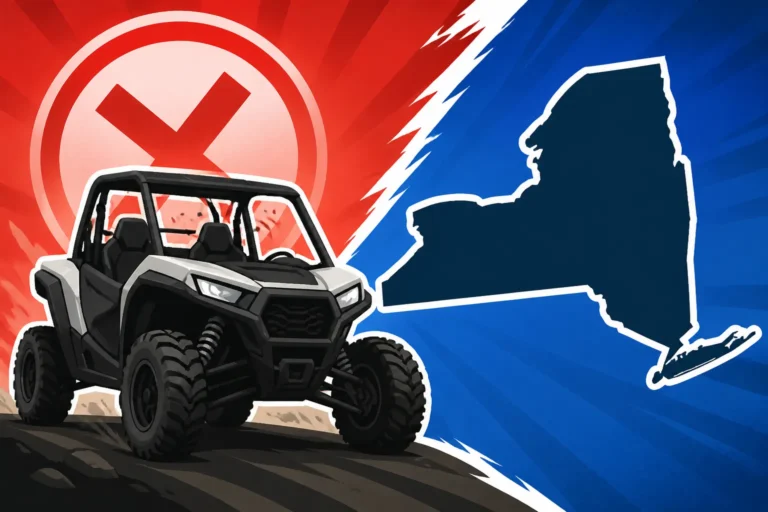
For traditional, single-rider ATVs, the 70-inch rule is usually not an issue, as most quads are well within this width. However, this is where the waters get murky for many side-by-sides (SxS) or Utility Task Vehicles (UTVs). While many people refer to all off-road vehicles as "ATVs," New York's definition is much narrower. The vast majority of modern side-by-sides, with their wider stances for stability and passenger comfort, simply do not meet the 70-inch width requirement.
This means that popular models from manufacturers like Polaris, Can-Am, or Honda that exceed this width cannot be registered as ATVs in New York. You might see some smaller, older, or specialized UTVs that squeak under the 70-inch mark, but they are increasingly rare in the new market. This has created a significant hurdle for many potential UTV owners who wish to explore New York's designated trail systems. It's a common and disappointing discovery for many buyers who find out too late that their new rig, while fantastic for other states, is effectively sidelined in New York. Understanding [Why Most Side-by-Sides Cannot Be Registered in New York] is crucial before making a purchase.
Consequences of Exceeding the Limit
If your machine measures over 70 inches wide, you're looking at some serious limitations within New York state. First and foremost, the New York DMV will deny your application for ATV registration. This means no plate, no decals, and no legal access to any public ATV trails, designated roads, or even crossing public highways. Without registration, you are essentially limited to riding only on your own private property, and even then, you must comply with other regulations such as insurance and helmet laws.
Riding an unregistered machine on public land or designated trails can lead to significant fines and penalties. Law enforcement officers, particularly in popular riding areas like Tug Hill, are well-versed in New York's ATV laws and will not hesitate to issue citations. Beyond the legal ramifications, it can also lead to issues with insurance claims if you have an accident while operating an unregistered vehicle. It's simply not worth the risk. Always verify your machine's compliance with [New York ATV Width Limit for Registration] before you plan to ride.
How to Accurately Measure Your Machine's Width
Getting an accurate measurement of your ATV or UTV's width is paramount. A few inches, or even fractions of an inch, can make all the difference between legal registration and being stuck with a machine you can only ride in your backyard. Don't eyeball it or rely on manufacturer specifications alone, as those might not always account for the widest point with accessories or tire bulge.
Gathering Your Tools
To get the most accurate measurement, you'll need a few simple tools and a bit of patience. First, grab a good quality, long tape measure – one that can easily span the width of your machine. A standard carpenter's tape measure will work, but a fabric tape measure or a long metal one used for construction can sometimes be easier to manage. You'll also want a level, especially if you're measuring alone, to ensure your tape measure is perfectly horizontal. Finally, having a helper can make the process much smoother, as holding both ends of a tape measure perfectly straight across a wide vehicle can be a bit awkward by yourself.
Before you start, make sure your machine is on a flat, level surface, like a garage floor or paved driveway. Give your tires a quick check to ensure they're inflated to the manufacturer's recommended pressure. Under-inflated tires can slightly reduce width, and you want to measure it as it would typically be ridden. Remove any temporary accessories that might stick out, unless they are permanent fixtures that would always be on the machine when ridden.
Step-by-Step Measurement Process
Here's how to measure your machine to ensure you capture its true maximum width:
- Position Your Machine: Park your ATV or UTV on a flat, level surface. Ensure the steering wheel is pointed straight ahead.
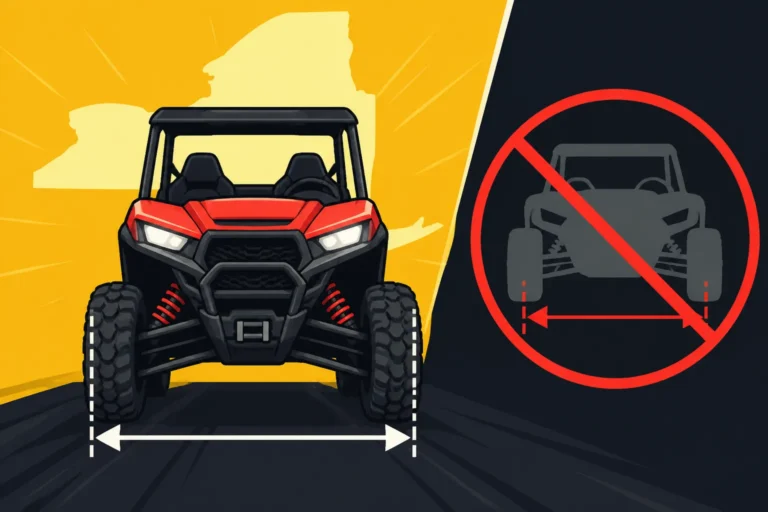
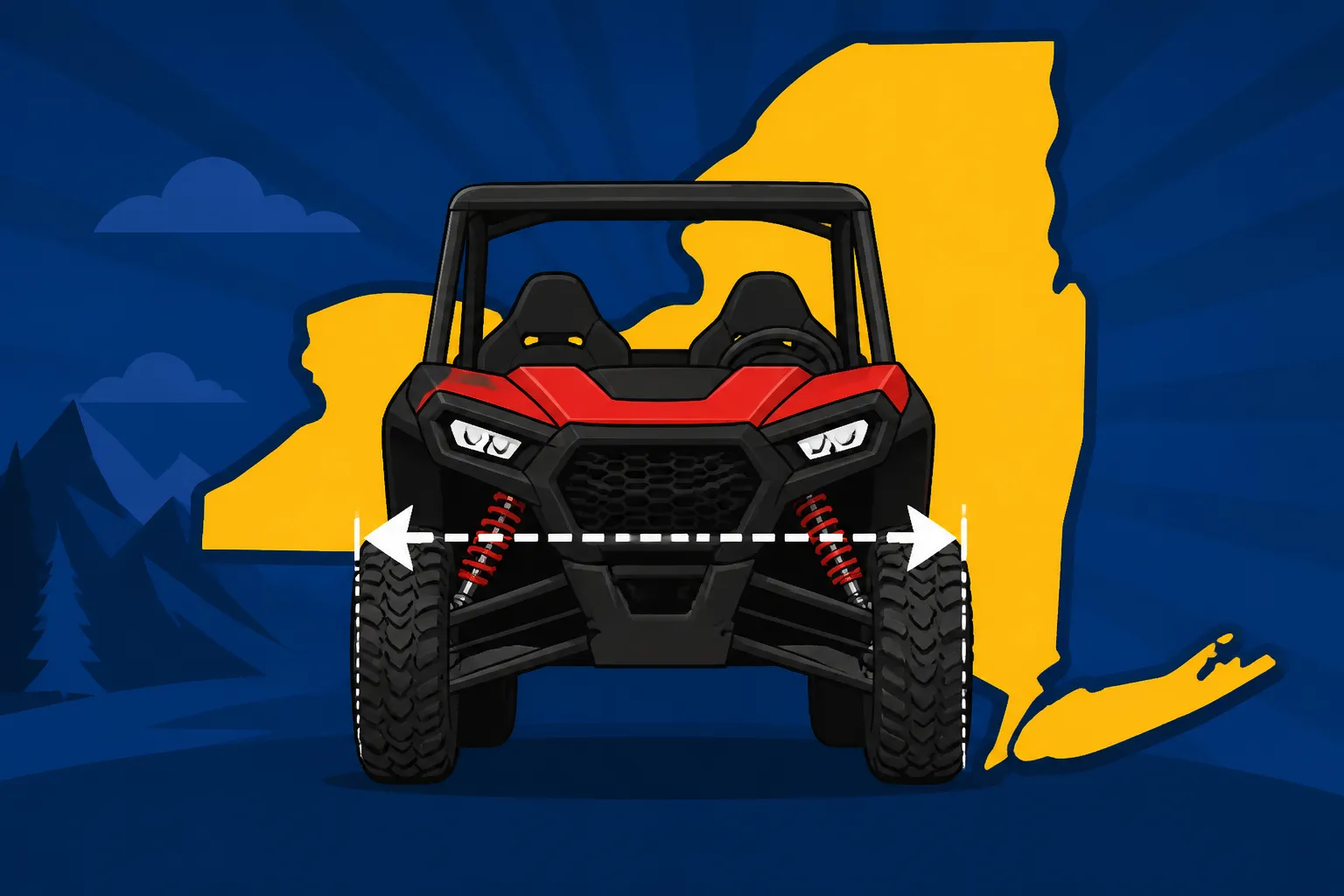
- Identify the Widest Points: Visually inspect your machine from the front and rear. The widest points are almost always going to be the outer edges of your tires. However, also consider fenders, wheel spacers, or any aftermarket accessories like wider offset wheels, light bars, or even mirrors that might extend beyond the tires. You need to measure the absolute widest point of the machine.
- Use Your Tape Measure: If you have a helper, have them hold one end of the tape measure firmly against the outermost edge of one tire (or the widest accessory) at approximately axle height.
- Extend and Level: Walk to the other side of the machine, extending the tape measure across. Ensure the tape measure is perfectly horizontal and not sagging or angled. This is where a level can come in handy if you're working alone; you can rest the tape measure on a flat object or have your helper ensure it's straight.
- Read the Measurement: Read the measurement at the outermost edge of the tire or accessory on the opposite side. Don't press the tape measure into the tire, but make sure it touches the widest part of the tread or sidewall bulge.
- Record and Double-Check: Write down your measurement. It's always a good idea to repeat the process a couple of times, perhaps from slightly different angles or heights (but always at the widest point), to ensure consistency.
Common Measurement Mistakes to Avoid
When measuring, it's easy to make a few common errors that could give you a false sense of security or unnecessarily rule out your machine. First, never just measure the frame or suspension components; the tires, especially their outermost bulge or tread, are almost always the widest part. Manufacturers often list frame width, but that's not what New York is looking at.
Second, don't measure at an angle. If your tape measure sags or is held diagonally, your measurement will be inaccurate and likely shorter than the true width. This is why a level or a second person is so valuable. Third, don't ignore custom wheels or aftermarket tires that might extend beyond the factory setup. If you've modified your machine, you must measure it in its current configuration. Finally, remember that tire pressure matters; a significantly under-inflated tire might give you a slightly narrower reading, but that's not its true operating width. Always ensure proper inflation before measuring.
What to Do If Your Machine Exceeds 70 Inches
Discovering your prized ATV or UTV is wider than New York's 70-inch limit can feel like a punch to the gut. It's a common scenario that leaves many riders feeling frustrated and unsure of their next steps. The important thing is to understand your options and not let that disappointment lead you to ride illegally.
Understanding Registration Limitations
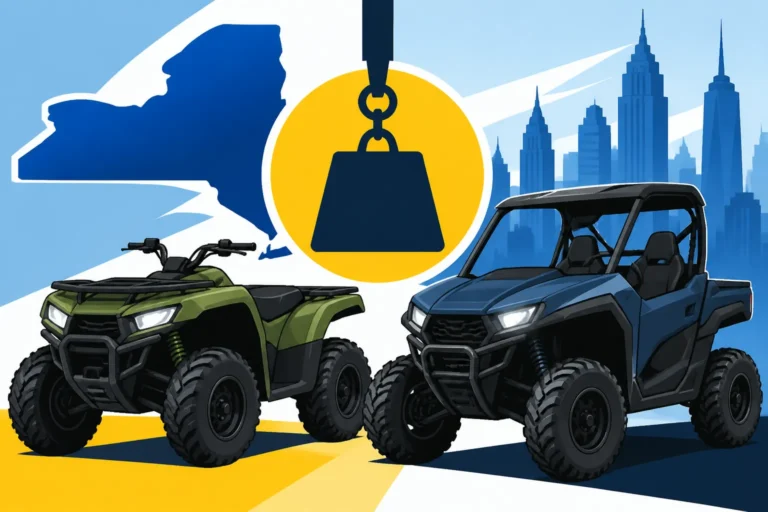
The unfortunate reality is that if your machine measures over 70 inches wide, it generally cannot be registered as an ATV with the New York Department of Motor Vehicles. This is a hard-and-fast rule that applies to most recreational riders. Without this registration, you are severely restricted in where you can legally operate your machine. You cannot ride on public ATV trails, state forests, county land designated for ATVs, or even cross most public roads. The DMV simply doesn't have a registration category for recreational off-road vehicles that exceed both the 70-inch width and the 1,000-pound weight limits.
There are a few very narrow exceptions, primarily for agricultural use or certain government entities, but these usually come with strict stipulations and don't apply to the average recreational rider. For example, a farmer might use a wider UTV on their own land, and if they need to cross a public road between their fields, they might have specific, limited exemptions. However, this is not a loophole for trail riding. So, for the vast majority of owners, a machine over 70 inches is simply not a registrable ATV in New York. You can find more details on [New York ATV Width Limit for Registration] and [New York ATV Weight Limit for Registration] to fully understand these critical factors.
Options for Owners of Wide Machines
So, what are your options if your machine doesn't make the cut? The primary solution, and often the only legal one, is to ride exclusively on private land with the owner's express permission. This means seeking out private parks, large tracts of land owned by friends or family, or your own property if you have enough space. Always ensure you have clear, written permission from landowners to avoid trespassing issues. Services like LawDepot can help you draft a simple landowner permission agreement to protect both you and the property owner.
Another option, though not always practical, is to transport your machine to states with more lenient ATV/UTV laws. States like Pennsylvania or Vermont might have different definitions or trail systems that accommodate wider vehicles. This, of course, means additional travel and logistics for every ride. For those who absolutely want to ride New York's fantastic trail systems, the most realistic option might be to consider trading in your current wide machine for one that is 70 inches or less, such as a traditional ATV. It's a tough pill to swallow, but sometimes it's the only way to gain legal access to the trails you want to ride. Keep an eye on legislative efforts; there have been discussions about [A New York Bill to Widen the ATV Definition], but these are not yet law.
Documenting Ownership Without Registration
If your machine cannot be registered in New York, proving ownership becomes even more critical. Since there's no state-issued registration card or title (as New York doesn't title ATVs to begin with, as explored in [Why New York Issues No ATV Title]), your paper trail is your only proof. This makes a well-documented bill of sale absolutely essential, especially if you plan to sell it later or if there's ever a dispute.
A comprehensive bill of sale should include:
- The full names and addresses of both the buyer and seller.
- The date of the sale.
- A detailed description of the ATV/UTV, including make, model, year, and crucially, the Vehicle Identification Number (VIN) or frame number.
- The purchase price.
- Signatures of both parties.
- Ideally, a statement acknowledging that the buyer is aware of the machine's width and its impact on New York registration.
You can easily find templates for robust bills of sale through online services like LawDepot. Having this document is your best defense against theft and your clearest proof of ownership, even for a machine that can only be ridden on private property. Remember, [New York ATV Bill of Sale Requirements] are specific, and a good bill of sale is your best friend when you can't rely on state registration.
Navigating the Purchase of a New or Used Machine
The 70-inch width rule is one of the most significant factors to consider when buying an ATV or UTV in New York. A little bit of homework and skepticism before you hand over your hard-earned cash can save you a world of disappointment and potential legal headaches down the road. Don't assume anything, and always verify critical details yourself.
Asking the Right Questions Before You Buy
Before you get swept up in the excitement of a new machine, make sure to ask direct questions about its width. If you're buying from a private seller, specifically ask them to measure the machine's widest point. If they're unsure, or evasive, consider that a red flag. For dealers, ask them point-blank if the machine is New York DMV registrable as an ATV and if they can provide documentation or a demonstration of its width. Don't be shy about stating that you need it to be 70 inches or less for registration purposes.
Inquire about any aftermarket modifications that might affect the width, such as wheel spacers, wider tires, or custom fenders. Even if a base model fits, modifications can push it over the limit. It's also wise to ask where the previous owner (if buying used) typically rode the machine. If they exclusively rode out of state or on private land, it might indicate they were already aware of New York's restrictions. Knowing [Best Machine Width for New York Trails] before you shop can guide your questions.
Verifying Dealer Claims
While many dealers are reputable, it's ultimately your responsibility to ensure the machine you're buying meets New York's legal requirements for registration. Do not simply take a salesperson's word for it that a side-by-side is "ATV legal" in New York. Unfortunately, some may be misinformed, or they might define "ATV legal" differently (e.g., legal to sell, but not legal to register for trail use). Always ask them to show you the official specifications, and better yet, ask to physically measure the machine yourself before signing any paperwork.
Bring your tape measure to the dealership! If they balk at you measuring the machine, that's a serious warning sign. Compare their advertised width to your actual measurement. Remember that the state's rules, like [New York's 70-Inch Width Limit], are absolute. It's much easier to walk away from a sale than to deal with an unregistrable machine later.
Bill of Sale Importance
Whether you're buying a machine that perfectly fits New York's ATV definition or one that's too wide for registration, a comprehensive bill of sale is indispensable. For registrable machines, it's a key piece of your [New York ATV Proof of Ownership Requirements] when you go to the DMV. For machines that can't be registered, it becomes your only official record of ownership.
Ensure the bill of sale explicitly states the vehicle's VIN/frame number, the purchase price, and the full details of both buyer and seller. Having a clear, legally sound bill of sale, perhaps drafted using a reliable template from a service like LawDepot, protects you if the machine is ever stolen, if you need to prove ownership for insurance purposes, or when you eventually decide to sell it. It's a simple document that carries immense importance, no matter the width of your ride.
Comparing Common ATV/UTV Widths to New York's Limit
| Machine Type | Typical Width Range (Approx.) | Meets NY 70-Inch Limit? | Common Use Cases in NY (If Registrable) |
|---|---|---|---|
| Traditional ATV | 45 – 50 inches | Yes | Public trails, private land, hunting |
| Sport ATV | 48 – 52 inches | Yes | Public trails, private land, recreation |
| Utility UTV (Narrow) | 50 – 64 inches | Potentially | Private land, farm work, some older models |
| Utility UTV (Standard) | 60 – 72 inches | Rarely | Private land, some professional uses |
| Sport UTV | 64 – 72+ inches | No | Private land, out-of-state riding |
Disclaimer
This article is for general informational purposes only and does not constitute professional advice. Laws, prices and regulations vary by location and change over time. Consult a qualified professional for guidance on your specific situation.