Clearing a Driveway for Money
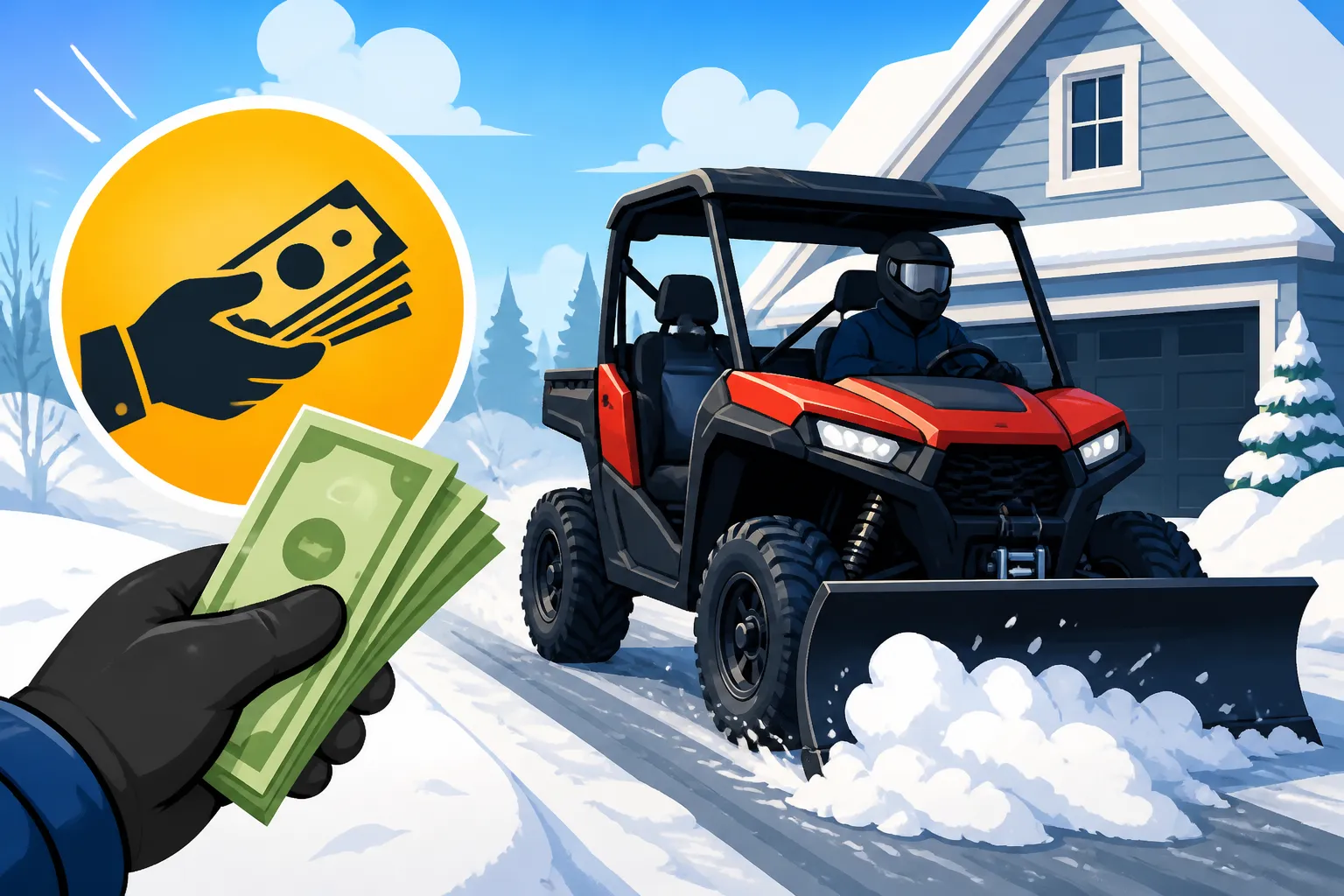
It's incredibly common for folks across New York to eye their trusty ATV, especially when the snow starts piling up, and think, "Hey, I could make a few bucks with this!" Whether it's a neighbor down the road or a small business nearby, using your quad to clear driveways can seem like a perfect way to earn some extra cash and keep your machine working through the winter. But here's the kicker: once money changes hands, even for a single driveway, the rules of the game often shift dramatically, particularly concerning your ATV's registration, insurance, and your personal liability. This guide will walk you through exactly what you need to know when you start clearing driveways for money in New York.
The Difference Between Clearing for Free and Clearing for Money
Most of us are pretty familiar with the idea of lending a helping hand. Your neighbor gets slammed with three feet of lake-effect snow, and you've got your quad with a plow on the front. You zip over, clear them out, they wave, you wave, and everyone's happy. No money, no problem, right? Well, not exactly no problem, but certainly fewer legal headaches than when you decide to turn that helpful gesture into a paid service. The moment compensation, even a small amount, enters the picture, the activity often transitions from personal use to a commercial endeavor in the eyes of the law and, crucially, your insurance company.
"Good Neighbor" Plowing and ATV Rules
When you're plowing for free, purely as a good deed or to help out a friend or family member, your ATV is still generally considered to be in personal or recreational use. This means your standard [Registering an ATV in New York] remains valid for getting to and from the property on public roads, assuming you meet all the other requirements. Your personal ATV insurance policy, which is mandatory in New York for any operation off your own property, is also typically designed for this kind of personal, non-commercial use.
However, even when you're being a good samaritan, you're not entirely off the hook. If, for instance, you accidentally back into their prize-winning rose bushes, or worse, cause an injury to someone on their property, you could still be held liable. Your personal insurance might cover this, but it's essential to understand its limits. You’re still expected to operate your machine safely and responsibly, regardless of whether you’re charging for the service. It’s a common misconception that if you’re doing it for free, you bear no responsibility, but that’s rarely the case.
When Plowing Becomes a Commercial Activity
The line between a friendly favor and a commercial operation can sometimes feel blurry, especially for small-scale efforts. But generally speaking, if there's any form of compensation—be it cash, a trade for other services, or even a gift that clearly serves as payment—your snow removal activity is likely considered commercial. This applies whether you're clearing a single driveway for twenty bucks or have a route of ten clients. The intent is what matters: are you doing it solely out of goodwill, or are you doing it to make money?
Once you cross that threshold into commercial activity, even part-time, the implications for your ATV are profound. It's no longer just about leisure. Now you're operating a business, however small. This change can trigger a whole new set of legal and financial responsibilities that many ATV owners don't anticipate. It's not just about the snow; it's about the shift in how your activity is perceived and regulated, which directly impacts things like your insurance coverage and potential legal exposure. The casual nature of ATV riding quickly gives way to the more stringent demands of professional operation.
New York ATV Registration When Plowing for Profit
One of the first questions people ask when they start thinking about making money with their ATV is whether they need a different kind of registration. It's a valid concern, especially since so many other vehicle types have separate "commercial" plates or categories. For ATVs in New York, however, the situation isn't quite as complicated on the registration front itself, but it’s vital to understand the nuances.
Is a Commercial ATV Registration Different?
Here’s the straightforward answer: New York State does not typically have a separate, distinct "commercial ATV" registration class in the same way it might for a commercial truck or van. Your ATV registration, which you obtain through the DMV, is generally tied to the machine itself, ensuring it's properly identified and entered into the state's system. The primary purpose of this registration is to track ownership and ensure compliance with basic state laws for operation on approved trails and for crossing public roads.
So, if you already have a valid [New York's Annual ATV Registration] for your quad, that same registration generally applies whether you're using it for personal recreation or to plow a few driveways for cash. You won't be applying for a special "commercial snow removal ATV" plate. However, this doesn't mean you're entirely off the hook for commercial implications. While the registration form might be the same, the use of the machine for profit has significant ramifications, particularly for insurance and liability, which we'll delve into next. It's crucial not to confuse the absence of a distinct commercial registration category with the absence of commercial obligations.
Understanding Agricultural Exemptions (and why they likely don't apply)
Sometimes, when people hear about using ATVs for work, their minds jump to agricultural exemptions. New York State does indeed have provisions that can exempt certain machines used exclusively for agricultural purposes on specific land from registration requirements. For instance, a farmer using a quad solely on their own farm property for planting, harvesting, or tending livestock might fall under [The Agricultural Exemption in New York].
However, this exemption is very narrowly defined and almost certainly does not apply to plowing driveways for money. Even if those driveways belong to a farm, if your specific service is snow removal for compensation rather than direct agricultural production on the farm, you won't qualify. The purpose of the activity—snow removal for payment—doesn't fit the strict definition of agricultural work that these exemptions are designed for. So, while it's good to be aware of such exemptions, don't rely on them if your goal is to earn income clearing snow. Your ATV will still need proper registration if you plan to move it from one property to another via public roads, even briefly.
Insurance Implications for Paid Snow Removal
This is arguably the most critical section for anyone considering clearing driveways for money with their ATV in New York. While your registration might not change, your insurance needs absolutely do. Many people overlook this, assuming their personal policy will cover them, but that's a dangerous gamble that could lead to financial ruin.
Why Your Personal ATV Policy Might Not Cover Commercial Work
Standard ATV insurance policies in New York, which are mandatory for operating off private land, are almost universally designed for recreational or personal use. They cover things like accidents on trails, damage to your machine, or liability if you accidentally injure someone or damage property while out riding for fun. However, these policies often contain specific exclusions for "commercial use" or "for-hire" activities. This means that the moment you accept payment for using your ATV to plow snow, your personal policy might become null and void for any incident that occurs during that paid activity.
Imagine this scenario: you're plowing a client's driveway, and due to slippery conditions, you lose control and strike their garage door, causing significant damage. Or, even worse, a pedestrian slips on the freshly plowed (but still icy) area you just cleared, suffers a serious injury, and decides to sue. If your personal ATV insurance policy has a commercial use exclusion, they could deny your claim entirely. This leaves you personally responsible for all repair costs, medical bills, and legal fees. The financial devastation from such an event, even from a seemingly minor incident, can be catastrophic, easily running into tens or hundreds of thousands of dollars. This is not a risk you want to take lightly.
Seeking Commercial Liability Coverage
Given the severe risks outlined above, if you intend to clear driveways for money with your ATV, you absolutely must contact your insurance provider to discuss commercial liability coverage. Do not assume your existing policy will protect you. It’s much safer to have an open conversation with your agent, explaining exactly what you plan to do – even if it's just a few driveways a season. They can advise you on whether your current policy can be endorsed to cover occasional commercial use, or if you need to purchase a separate commercial general liability policy.
A commercial liability policy is designed specifically for situations where you are operating for profit. It covers property damage and bodily injury claims that arise from your business operations. While this might seem like an extra expense for a side hustle, consider it an essential investment in protecting your assets and your future. Some insurers might offer a specific "snow removal" endorsement, while others may require a more comprehensive business policy, even for small operations. Always get your coverage details in writing. Remember, [New York's Mandatory ATV Insurance] is for personal use; commercial endeavors require a different level of protection. Don’t wait until an accident happens to find out you're uninsured.
Legal and Business Considerations
Beyond registration and insurance, turning your ATV into a snow-plowing business, however small, introduces several other legal and business considerations. Ignoring these can lead to fines, legal disputes, and unnecessary stress. It’s about being proactive and protecting yourself from potential pitfalls.
Permits, Taxes, and Local Ordinances
When you start earning income, even from a casual side gig, it generally comes with a few administrative responsibilities. Depending on the scale of your operation and where you live in New York, local municipalities (towns, villages, or cities) might have their own requirements for businesses, including snow removal services. This could mean needing a business license or permit to operate within their jurisdiction. It's always a good idea to check with your local town or village clerk's office to inquire about any specific local ordinances related to snow removal businesses. They might have rules about noise, operating hours, or even where you can park your equipment.
Of course, any money you earn from plowing driveways is considered income, and it's subject to state and federal income taxes. You'll need to keep accurate records of your earnings and expenses throughout the season. While a few hundred dollars might not seem like much, it adds up, and the IRS and New York State Department of Taxation and Finance expect you to report it. Furthermore, if you’re using public roads to get to your clients, you must adhere to all traffic laws and ATV regulations, including those governing [New York Rules for Riding a Town Road] and [New York Rules for Riding a Village Street]. Always ensure your machine is legally allowed on those roads and is operating safely.
Contracts and Liability Waivers
This is an area where many small operators, particularly those just starting out, often fall short. When you're providing a service for money, it's incredibly wise to have a clear understanding—preferably in writing—between you and your client. This doesn't mean you need a fancy lawyer drafting complex legal documents for every single client. Simple, straightforward service agreements or liability waivers can save you a world of trouble down the line.
A basic contract can outline the scope of work (e.g., clearing the driveway after 2 inches of snow, specific hours of operation), the agreed-upon price, payment terms, and what happens in unforeseen circumstances. A liability waiver can help clarify the inherent risks of snow removal and potentially limit your liability for certain types of damage, such as minor scuffs on a delicate surface, or slips that occur hours after plowing due to refreezing. Tools like LawDepot offer templates for various legal documents, including independent contractor agreements or service contracts, which can provide a solid starting point for creating your own tailored documents. Having something in writing protects both you and your client by setting clear expectations and providing a reference if a dispute arises. Without it, you’re relying on verbal agreements, which are notoriously difficult to prove or enforce.
Protecting Yourself and Your ATV
Beyond getting the right insurance and having legal agreements, there are practical steps you can take to protect yourself and your machine while engaging in paid snow removal. First and foremost, proper maintenance of your ATV is paramount. A breakdown on the job site is not only inconvenient but can also delay service and potentially damage your reputation. Regular checks of your plow, winch, tires, and engine can prevent costly surprises.
Secondly, always prioritize safety. Operating an ATV with a plow in icy, snowy conditions can be challenging. Take your time, be aware of your surroundings (especially hidden obstacles like sprinkler heads, low-lying shrubs, or decorative curbing), and never push your machine beyond its limits. Investing in proper safety gear, including a helmet (which is mandatory in New York, even for adults on ATVs), warm clothing, and sturdy footwear, is essential. Finally, be mindful of where you're pushing snow. Avoid blocking sidewalks, fire hydrants, or other critical access points, and be aware of any restrictions on where snow can be piled. Understanding your machine's capabilities and its dimensions, such as [New York's 70-Inch Width Limit] if you happen to ride trails, also applies to understanding its footprint when maneuvering in tight spaces around properties.
Plowing for Free vs. Plowing for Money: A Quick Comparison
To help clarify the distinctions, here's a brief table summarizing the key differences when you decide to use your ATV for snow removal in New York, depending on whether compensation is involved.
| Aspect | Plowing for Free (Good Neighbor) | Plowing for Money (Commercial Activity) |
|---|---|---|
| Registration | Standard ATV registration applies. | Standard ATV registration applies (no separate "commercial" class). |
| Insurance | Personal ATV liability policy may cover accidents, but check for exclusions. | Personal ATV policy likely will NOT cover. Requires commercial liability. |
| Liability | Still personally liable for damages/injuries, but possibly covered by personal policy. | Personally liable for damages/injuries; without commercial insurance, financially exposed. |
| Legal Agreements | Usually verbal or implied. | Highly recommended to have written contracts/waivers (e.g., via LawDepot). |
| Tax Implications | None (if truly no compensation). | Income is taxable; requires record-keeping and reporting. |
| Local Ordinances | Generally not applicable, unless it's a nuisance. | May require business permits/licenses depending on municipality. |
This table highlights the stark contrast in responsibilities once money enters the equation. It's a quick reference to emphasize that while the machine itself might be the same, the framework surrounding its use changes significantly.
Disclaimer
This article is for general informational purposes only and does not constitute professional advice. Laws, prices and regulations vary by location and change over time. Consult a qualified professional for guidance on your specific situation.