Reading a Frame Number Before You Pay
Buying a used ATV in New York can be an exciting prospect, full of visions of hitting the trails, but it also comes with a real and present anxiety: how do you know you're actually buying a legitimate machine? One of the biggest fears is ending up with a stolen quad or a vehicle that has legal issues you can't resolve. This guide is all about equipping you with the knowledge to thoroughly inspect and verify the frame number (or Vehicle Identification Number, VIN) before you hand over any money, ensuring you're making a sound and legal purchase.
Why Verifying the VIN is Your First Line of Defense in New York
When you're looking at a used ATV, especially from a private seller, that frame number is more than just a sequence of digits; it's the machine's identity, its fingerprint. In New York, where ATVs aren't typically issued a title like cars are, the VIN becomes even more crucial for establishing legitimate ownership and avoiding a heap of potential problems down the road. You really can't skip this step.
Avoiding Stolen Property and Fraud
Imagine showing up to register your newly purchased ATV at the DMV, only to find out the VIN comes back as stolen. It’s a gut-wrenching scenario that happens far too often, and suddenly your dream quad is confiscated, you're out the money, and you might even face uncomfortable questions from law enforcement. Verifying the VIN against official databases or through a trusted check service before the sale is your best defense against inadvertently buying a stolen machine. It helps you sleep at night knowing your investment is secure and legitimate. This check also helps weed out fraudsters who might try to sell you a machine with altered identification.
Establishing Clear Ownership and Future Registration
Without a formal title, proving ownership of an ATV in New York relies heavily on a clear chain of documentation that starts with the VIN. When you go to register your ATV, the New York DMV will absolutely be looking for a clean VIN. If there’s any discrepancy or a hint of tampering, they might refuse to register it, leaving you with a machine you can't legally ride off private land. A robust [New York ATV Bill of Sale Requirements] will include the VIN, linking your purchase directly to the machine's unique identifier. This is why you need to confirm the VIN matches any existing paperwork, like a previous registration or an old bill of sale from the seller.
Navigating New York's Unique Registration Process
New York's ATV registration process is a bit different from cars and trucks. Since [Why New York Issues No ATV Title], the DMV relies on other documents to confirm ownership and identity. The frame number is paramount in this process. You'll likely need to provide the VIN on your registration application, and in some cases, you might even be asked for a [New York ATV VIN Tracing Requirement] to prove the number exists physically on the machine. Any issues with the VIN could prevent you from getting that coveted plate and decal, meaning no legal trail riding on designated public trails.
Locating and Identifying the ATV's Frame Number
Finding the frame number on an ATV is usually pretty straightforward, but it can vary slightly depending on the manufacturer and the age of the machine. This isn't like a car where it's always on the dashboard and door jamb. You'll often have to get down and dirty, so be prepared to look in a few spots.
Common Locations on the Frame
Most manufacturers stamp the VIN into the metal frame of the ATV itself, making it a permanent part of the machine. The most common places to look include:
- Front Right Side of the Frame: This is arguably the most frequent spot. Get down low and look at the frame tube just behind the right front wheel, or sometimes further up near the steering neck. It might be on a vertical or horizontal section of the frame.
- Under the Seat: On some ATVs, particularly older models, the VIN might be found stamped on a cross-member of the frame directly underneath the seat. You'll likely need to remove the seat to find it.
- Near the Foot Pegs or Engine Mounts: Less common, but still possible, is finding the VIN stamped on a frame tube in the vicinity of the foot pegs or where the engine mounts to the frame.
Always bring a good flashlight and a rag when you're inspecting a used ATV. Dirt, mud, and even old paint can obscure these numbers, making them nearly impossible to read without a bit of cleaning.
Understanding the VIN Structure
A Vehicle Identification Number is a 17-character code (for machines manufactured after 1981) that provides a wealth of information about the ATV. It's not just a random string; each section tells a story:
- World Manufacturer Identifier (WMI) – Characters 1-3: These three characters identify the manufacturer, the country of origin, and the type of vehicle. For example, '1' might indicate the USA, 'J' for Japan, and then a specific letter for the manufacturer.
- Vehicle Descriptor Section (VDS) – Characters 4-9: This section describes the general attributes of the ATV, such as the model, body type, engine type, and other key features. The specific meaning of these characters can vary greatly by manufacturer.
- Vehicle Identifier Section (VIS) – Characters 10-17: This is the unique serial number of the specific ATV.
- Character 10: Indicates the model year. This is super helpful for quickly confirming the seller's claim about the ATV's age. For example, 'A' used to be 1980, 'B' 1981, and so on. There's a repeating sequence, so always double-check a VIN decoder online if you're unsure.
- Character 11: Identifies the manufacturing plant.
- Characters 12-17: The production sequence number, making your specific machine unique.
Knowing this structure helps you spot inconsistencies. If the tenth character (model year) suggests a 2010 model, but the seller insists it's a 2018, that's a huge red flag that needs immediate investigation.
What if There's No VIN Tag or It's Unreadable?
This is where you need to be extremely cautious. If the VIN is missing, ground off, or appears to have been tampered with, do not proceed with the purchase. Seriously, just walk away. A legitimate seller will have a clear, readable VIN.
Sometimes, a VIN can simply be obscured by rust, mud, or old paint. In this case, gently clean the area with a wire brush and some penetrating oil. If, after cleaning, it's still unreadable or looks suspicious (like inconsistent font, uneven spacing, or grind marks), it's a deal-breaker. Some ATVs, particularly older ones or those from manufacturers who didn't fully comply with VIN standards before 1981, might have shorter, less standardized serial numbers. In these rare cases, you'd need to do extra due diligence, like getting historical registration documents or consulting a trusted expert. However, for most modern machines, a clear 17-character VIN is expected.
Step-by-Step Guide to Inspecting and Verifying the VIN
Okay, you’ve found the VIN. Now comes the critical part: inspecting it closely and verifying its legitimacy. This isn't a quick glance; it's a forensic examination to protect yourself.
Physical Inspection for Tampering
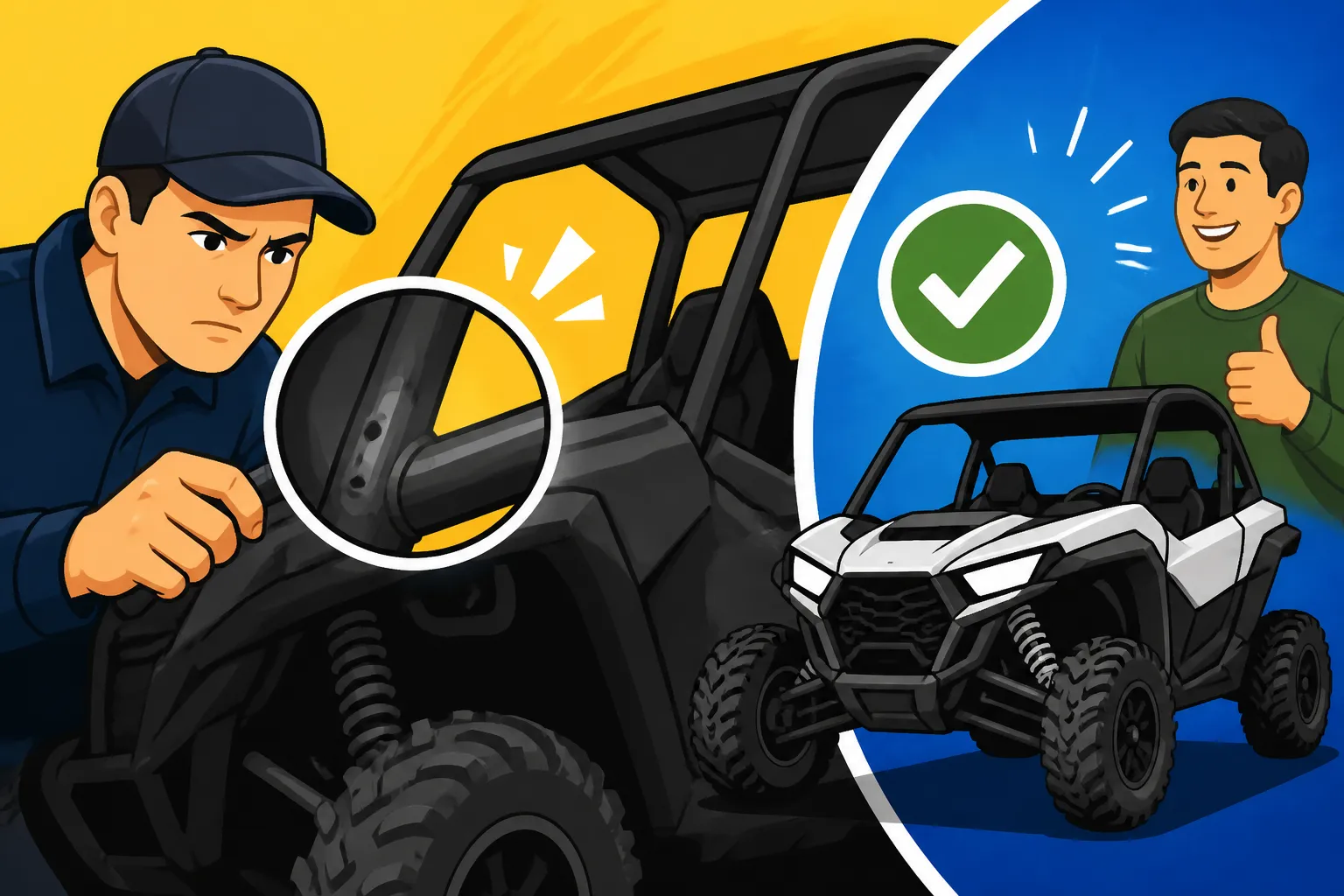
This is your detective moment. Look for any signs that someone has tried to alter the VIN. This can be subtle, so pay close attention:
- Grinding or Filing Marks: Run your finger over the area where the VIN is stamped. Does it feel smooth or rough? Are there any scuff marks, unevenness, or signs that the original metal was ground down or filed? This is a classic sign of someone trying to remove or obscure the original number.
- Repainting or Bondo: Has the area around the VIN been recently repainted, perhaps poorly? Does the texture of the paint or metal look different in that specific spot compared to the rest of the frame? Criminals often try to hide their work with fresh paint or body filler (Bondo).
- Welding or Plate Overlays: Look for any suspicious welding seams or a small metal plate welded over the original frame. Sometimes, a new VIN might be stamped onto a separate plate and then clumsily attached over the original location. The welds might look amateurish or out of place.
- Inconsistent Stamping: Examine the characters themselves. Are they all the same font and size? Are they perfectly aligned, or do some look like they were stamped deeper, shallower, or at a slightly different angle? Factory stamping is usually precise and uniform. Any signs of hand-stamping or a mix of fonts are major red flags.
- Character Spacing: Are the characters evenly spaced? If there are gaps or characters that are too close together, it could indicate that numbers were removed or changed.
If you find any of these signs, even minor ones, be extremely wary. It's often safer to walk away.
Cross-Referencing with Documentation
Once you're satisfied the physical VIN looks legitimate, you need to compare it to every piece of paperwork the seller has. This includes:
- Prior Registration Card: This is often the most reliable document for an ATV in New York, as it's issued by the DMV. Make sure the VIN on the physical machine exactly matches the VIN on the registration card. [New York ATV Registration Paperwork] is key here.
- Bill of Sale: If the seller has a previous bill of sale from their purchase, compare the VIN on that document. If there's a discrepancy between a bill of sale and a registration card, or between the machine and either document, you have a problem. You can find templates for solid bills of sale through services like LawDepot if you decide to proceed with the purchase.
- Insurance Documents: Any proof of insurance for the ATV should also list the VIN. Another layer of verification.
- Owner's Manual: Sometimes the VIN is written or stickered inside the owner's manual. While not always reliable as primary proof, it's another data point.
Every single digit and letter must match. One small discrepancy can unravel the entire legality of the machine.
Performing a Background Check (If Possible)
While New York doesn't title ATVs, there are still ways to do a background check, particularly if the machine has been involved in an accident or reported stolen.
- Local Law Enforcement: You can often call your local police department's non-emergency line or the sheriff's office and ask them to run the VIN through their stolen vehicle database. Be prepared to provide the VIN and potentially a brief explanation of why you're asking. They may or may not be able to assist, depending on their policy.
- Online VIN Check Services: There are third-party services that can run VINs against national databases for stolen vehicles, salvage titles (even if New York doesn't title ATVs, other states might), and accident history. Some of these are paid services, but the cost is usually well worth the peace of mind. While they won't give you a title history for a New York ATV, they can flag major issues like theft or prior total losses.
- New York DMV: While you can’t get a full title history, the DMV can confirm if a VIN has been associated with a New York registration and if there are any flags on their system. This usually requires an in-person visit with the VIN.
It’s always a good idea to perform these checks yourself, even if the seller claims they've done them. Trust, but verify, especially when money is on the line.
What to Do If the VIN is Questionable or Doesn't Match
Finding a suspicious VIN can be a stressful moment, but how you react is crucial. Your best bet is always to err on the side of caution.
Red Flags That Mean "Walk Away"
Let's be blunt: some issues with a VIN are absolute deal-breakers. These aren't things you try to fix or investigate further; these are your cue to politely decline the purchase and move on.
- Clearly Ground-Off or Tampered VIN: If the numbers are clearly ground down, filed off, or re-stamped poorly, this is a strong indicator of a stolen machine or one with a highly problematic history. There's no legitimate reason for this.
- Missing VIN: Unless you're looking at a pre-1981 machine that genuinely never had a standardized VIN (which is rare for most ATVs you'd find for sale today), a missing VIN means you should walk away.
- VIN Doesn't Match Any Documentation: If the physical VIN on the ATV doesn't match the registration, bill of sale, or any other official document provided by the seller, it's a huge problem. You won't be able to register it, and you'll have no clear proof of ownership. This is often an issue when someone is [Proving Ownership Without a Title in New York] after purchasing a machine without proper diligence.
- Seller is Evasive or Defensive: If you ask pointed questions about the VIN, its history, or the documentation, and the seller becomes defensive, changes the subject, or gives vague answers, that's a major red flag. A legitimate seller should be transparent and willing to provide all necessary information.
When in doubt, don't buy it. There are plenty of other ATVs out there for sale in New York.
Steps to Take with Discrepancies
Sometimes, a discrepancy might be a simple error, but you need to treat it seriously.
- Ask the Seller for Clarification: Calmly point out the discrepancy. "Hey, I noticed the VIN on the registration ends in '123' but the frame shows '124'. Can you explain that?" Listen carefully to their response. Is it a plausible explanation (e.g., a typo on an old bill of sale), or does it sound rehearsed and suspicious?
- Request Additional Documentation: If the VIN on the current registration doesn't match, ask for all previous registration documents, or the original bill of sale from when they acquired the ATV. You want to see a clear paper trail where the VIN consistently appears. If they bought a [Registering a Machine Bought Off a Farm] they might have limited documentation, making your due diligence even more important.
- Offer to Go to the DMV Together: A truly honest seller, if they're confident in their machine's legitimacy, might be willing to go with you to a local DMV office to clarify any VIN issues or to start the registration process. If they refuse, it's another red flag.
- Consider a Conditional Purchase Agreement: In extremely rare cases, if you're very confident it's a legitimate clerical error and the seller is cooperative, you could draft a conditional bill of sale (perhaps using a template from LawDepot) that states the sale is contingent on the VIN being successfully verified and the ATV registered in your name. However, this is risky and generally not recommended for private sales of ATVs without titles. It’s usually best to resolve the issue before payment changes hands.
Reporting Suspected Stolen Machines
If you strongly suspect the ATV is stolen, even if you decide not to purchase it, you have a civic responsibility to report it.
- Contact Local Law Enforcement: Provide them with the VIN, the seller's information (if you have it), and the location where you saw the machine. Do not confront the seller yourself. Let the authorities handle it.
- Provide Details: Give as much information as possible about the interaction, including the seller's name, contact information, where you met, and any specific details about the ATV itself.
Taking these steps ensures you're protected and helps prevent others from falling victim to the same scam. A little extra time and scrutiny now can save you a mountain of headaches, legal troubles, and financial loss later. Always put your safety and legal standing first when buying a used ATV in New York.
| VIN Inspection Checklist | Action to Take | Status |
|---|---|---|
| Locate VIN | Find the 17-character VIN on the frame. | Found / Not Found |
| Physical Tampering Check | Look for grinding, filing, suspicious welds, repainting. | Clear / Suspect |
| Stamping Consistency | Check for uniform font, size, alignment of characters. | Consistent / Inconsistent |
| Documentation Match | Compare VIN with registration, bill of sale, etc. | Match / Discrepancy |
| Seller's Explanation | Ask about any inconsistencies. | Satisfactory / Evasive |
| Background Check (if done) | Run VIN through stolen vehicle databases. | Clear / Flagged |
| Decision | Proceed with caution or walk away. | Proceed / Walk Away |
Disclaimer
This article is for general informational purposes only and does not constitute professional advice. Laws, prices and regulations vary by location and change over time. Consult a qualified professional for guidance on your specific situation.