New York ATV Registration Help
Trying to figure out how to register your ATV in New York can feel like navigating a dense, unmapped trail on a foggy day. The rules often seem complex, especially when you realize the state doesn't issue titles for these machines, which can throw a real wrench in what you might expect from vehicle registration. This guide is here to untangle that knot, walking you through the ins and outs of getting your quad legally registered so you can hit the trails with peace of mind.
Understanding the Basics of New York ATV Registration
One of the biggest head-scratchers for new ATV owners in New York, or even seasoned riders new to the state, is the lack of a traditional vehicle title. You're probably used to cars, trucks, and even boats having a title that proves ownership, right? Well, with ATVs in New York, it's a different ball game entirely. This unique approach means that proving you own your machine, and getting it registered, relies on a specific set of documents and processes that might not be intuitive.
Why New York Doesn't Issue ATV Titles
It's a common point of confusion, and frankly, a source of frustration for many. Unlike most motor vehicles, New York State law doesn't consider ATVs to be "titled" vehicles in the same way your car is. This isn't just a quirk; it deeply impacts how you prove ownership, buy and sell machines, and ultimately, register them. The historical context for this goes back to how ATVs were initially categorized – often more like recreational equipment than highway vehicles. While many other states have moved towards titling ATVs, New York has largely maintained its system. This means you won't ever receive a paper title from the DMV for your ATV, and you won't need to surrender one when you sell it. This can feel unsettling if you're accustomed to that definitive proof of ownership, but rest assured, there are other ways to establish your claim to the machine. [Why New York Issues No ATV Title] can really dive deeper into this historical aspect.
This lack of a title particularly impacts how you approach buying a used ATV. Without a title to transfer, the burden of proof shifts heavily to a clear bill of sale and previous registration documents. It's why doing your due diligence and understanding the required paperwork is so crucial. You can't just rely on a title search to verify ownership or liens, which adds a layer of complexity to private sales.
Do You Really Need to Register Your ATV?
"Do I even need to go through all this trouble?" It's a question I hear all the time, especially from folks who only ride on their own land or maybe a friend's property. And it's a fair question, because nobody wants extra hassle. The short answer in New York is: yes, almost always. If you plan on operating your ATV anywhere other than your own private property, and that property is not accessible by public roads or trails, then your machine must be registered with the New York Department of Motor Vehicles (DMV). This includes riding on designated public trails, state forests, county lands, or even crossing a public highway at a designated crossing point. It's not just about getting caught; it's about being prepared for any situation on the trail.
Consider a scenario: you're out enjoying a beautiful Saturday ride on a county-maintained trail system. You come across a fallen tree, and while trying to maneuver around it, you accidentally clip another rider's machine. Even if it's a minor fender-bender, the first thing any law enforcement officer will ask for is your registration and proof of insurance. If you're unregistered, you're not just looking at a ticket; you're also potentially facing significant liability issues without proper documentation. [Do You Need to Register an ATV in New York?] covers these situations in more detail, highlighting the critical importance of being properly registered. Moreover, your registration fees directly contribute to the maintenance and expansion of those very trails you love to ride, so it's also a way to support the riding community.
Navigating the Paperwork Maze for New York ATV Registration
Okay, so you know you need to register, and you understand why New York's title situation is unique. Now comes the nitty-gritty: the paperwork. This is where most people get bogged down, staring at forms and wondering if they've got everything right. The good news is that while it might seem daunting, it's a process with clear steps once you know what to look for. The key is gathering the right documents and filling out the correct forms, especially since the DMV often has separate procedures for non-titled vehicles.
Essential Forms and Documentation
To register an ATV in New York, you'll need a handful of specific items. Don't just show up at the DMV counter hoping for the best; that's a recipe for a wasted trip and a whole lot of frustration. Make sure you have these in hand:
- Proof of Ownership: This is paramount, especially without a title. For a new ATV, you'll need the Manufacturer's Statement of Origin (MSO) or Manufacturer's Certificate of Origin (MCO). For a used ATV, you'll need a bill of sale signed by both parties, along with the previous owner's registration. Sometimes, if a machine has changed hands multiple times without being registered, it can get tricky. Having a clear, detailed bill of sale is crucial, and resources like LawDepot can provide templates for professional-looking documents.
- Proof of Identity: Your valid New York State driver's license, learner permit, or non-driver ID card.
- Proof of Insurance: New York requires all registered ATVs to be insured. You'll need a valid New York State insurance card or policy declaration page, showing the required minimum liability coverage.
- Payment for Fees: Be prepared to pay the registration fee and the one-time plate fee. It's always a good idea to check the current rates before you go, as fees can change. [New York ATV Registration Cost] details the breakdown of these fees.
Gathering these documents beforehand will save you immense time and headaches. Imagine showing up at the DMV after taking a day off work, only to find you're missing a critical piece of paper and have to start all over. It's enough to make you want to throw your helmet in frustration!
The All-Important Form MV-51B
This is the form you'll become very familiar with. The MV-51B, officially known as the "Certificate of Sale" or "Proof of Ownership for Non-Titled Vehicles," is absolutely critical for registering an ATV. It acts as your primary proof of ownership when there's no title. If you bought your ATV from a dealer, they will typically fill this out for you. However, if you're buying a used machine from a private seller, you need to make sure this form is properly completed. It needs to contain details about the seller, the buyer, and the ATV itself, including the Vehicle Identification Number (VIN). [New York's Form MV-51B Explained] breaks down each section of this form to help you understand exactly what needs to be filled out.
| Document Type | Required For | What It Proves/Contains | Notes |
|---|---|---|---|
| MV-51B | All ATVs | Proof of Ownership (for non-titled vehicles), Sale Details, VIN | Crucial for used ATVs; filled out by dealer or private seller. |
| MSO/MCO | New ATVs | Manufacturer's Statement/Certificate of Origin | Issued by the manufacturer; proves first ownership. |
| Bill of Sale | Used ATVs | Transaction details, purchase price, seller/buyer signatures | Essential with or without MV-51B for used machines. Use a template from LawDepot for clarity. |
| Previous Reg. | Used ATVs | Prior owner's registration card | Helps establish a clear chain of ownership. |
| ID (DL/NID) | All | Your identity and residency | Must be current and valid. |
| Insurance Card | All | Proof of minimum liability coverage | Mandatory; must be issued by a New York-authorized insurer. |
| Pencil Tracing | All ATVs | Physical verification of the VIN | Often required; a simple pencil rubbing of the VIN plate. [New York ATV VIN Tracing Requirement] |
Proving Ownership Without a Title
Since there's no title, the DMV relies on a "chain of ownership" established through other documents. This is where the MV-51B, a detailed bill of sale, and the previous owner's registration come into play. If you're buying a used ATV, you absolutely need a clear, legible bill of sale. This document should include:
- The full names and addresses of both the seller and the buyer.
- The date of the sale.
- A complete description of the ATV, including make, model, year, and crucially, the full VIN.
- The purchase price.
- Signatures of both the seller and the buyer.
A generic handwritten note might not cut it if there are any questions later on. Using a professionally crafted bill of sale, perhaps one you generate from a service like LawDepot, can provide a layer of protection and clarity. This is especially vital if you're buying a machine that has never been registered before or if the previous owner lost their registration. [New York ATV Proof of Ownership Requirements] delves into the specific types of documentation the DMV accepts in various scenarios. Remember, if you can't clearly establish who owned the ATV before you, the DMV might deny your registration application, leaving you with a machine you can't legally ride.
Special Situations and Common Roadblocks
The path to ATV registration isn't always a straight line. There are plenty of scenarios that can pop up, making the process a bit more complicated. Whether you're dealing with an inherited machine, an out-of-state purchase, or simply a machine that's seen a lot of life, knowing how to tackle these roadblocks can save you a lot of grief.
Registering a Used ATV or an Inherited Machine
Buying a used ATV from a private seller requires extra vigilance, as we've discussed. Beyond the MV-51B and a robust bill of sale, it's highly recommended to get the previous owner's most recent registration card. This helps solidify that chain of ownership and proves the machine was legally registered before. If the previous owner never registered the machine, or if their registration is long expired, you might need additional documentation to show a clear ownership history. It might even involve the seller signing an affidavit of ownership.
Inheriting an ATV can be a beautiful thing, a piece of a loved one's passion passed down to you. But when it comes to registration, it presents its own set of challenges. Without a traditional title, you'll need more than just a will or a note. You'll typically need a copy of the death certificate, letters testamentary or letters of administration (if the estate went through probate), and a bill of sale or assignment from the executor of the estate to you. This proves that the legal right to transfer ownership exists and that it has been properly conveyed. It's a bit more involved, but completely doable with the right paperwork. [Registering an Inherited Machine in New York] outlines these steps in detail, helping you navigate the process respectfully and efficiently.
Dealing with Out-of-State Purchases or Machines
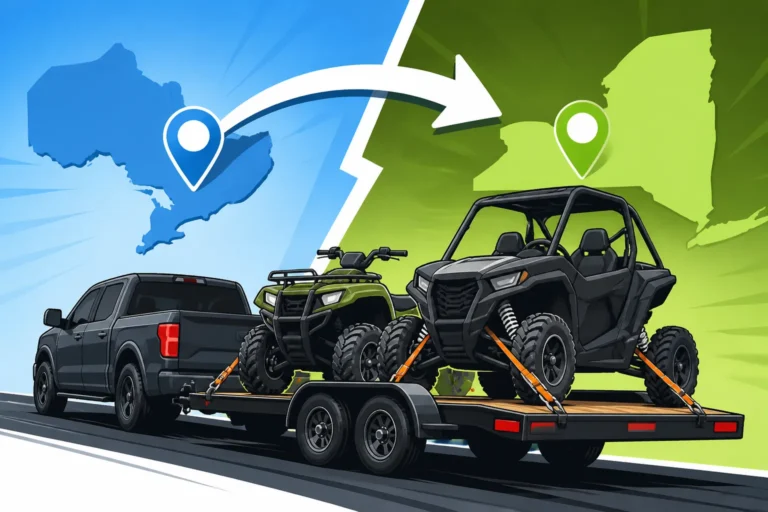
Let's say you found a killer deal on an ATV just across the border in Pennsylvania or Vermont. You trailer it home, excited to hit the New York trails. But hold on a second – that out-of-state registration (or lack thereof, if the other state doesn't require it) won't automatically translate to New York. You'll still need to register the machine here. When bringing in an ATV from another state, you'll need the previous state's registration (if applicable) and a clear bill of sale. If that state issues titles for ATVs, you will need that title to register it in New York, even though New York itself doesn't issue them. The DMV uses that out-of-state title to establish the initial ownership chain.
Beyond the paperwork, if your ATV is a larger side-by-side or a particularly heavy quad, you'll need to pay close attention to New York's specific width and weight limits for what qualifies as an ATV. Many modern side-by-sides, while called ATVs elsewhere, might exceed New York's narrow 70-inch width limit or 1,000-pound weight limit, making them unregistrable as ATVs in the state. [New York's 70-Inch Width Limit] and [New York's 1,000-Pound Weight Limit] are critical reads if you're considering a larger machine. Don't learn this lesson the hard way after you've already bought the machine!
Common Reasons for Registration Denial
It’s incredibly frustrating to spend time gathering documents, only to have your application rejected. To avoid this, be aware of the most common pitfalls:
- Incomplete or Illegible Paperwork: This is probably the number one reason. Missing signatures, unreadable VINs, or blank sections on forms like the MV-51B will get you sent home.
- Unclear Chain of Ownership: If you can't prove who owned the ATV before you, or if there are gaps in the ownership history (e.g., several private sales without any registration updates), the DMV will be hesitant to register it in your name.
- Missing or Invalid Proof of Insurance: Without current, valid insurance that meets New York's minimum requirements, your registration will be denied.
- Exceeding New York's ATV Definition: As mentioned, if your machine is too wide or too heavy, it simply won't qualify as an ATV for registration purposes in New York. This is a hard line that often catches side-by-side owners off guard. [Can You Register a Side-by-Side in New York?] explores this challenge in depth.
By paying careful attention to these details and being prepared for the unique requirements of New York ATV registration, you'll be much more likely to get your quad on the trail without unnecessary delays or headaches.
Disclaimer
This article is for general informational purposes only and does not constitute professional advice. Laws, prices and regulations vary by location and change over time. Consult a qualified professional for guidance on your specific situation.