Sharing a Corridor With Sleds
A trail that carries snowmobiles in winter can look like a natural ATV route once the snow melts, but shared corridors are not automatically open to every machine or in every season. In New York, access depends on the landowner, trail agreement, local rules and posted dates. This guide explains how to check before riding, avoid damaging a corridor and share it safely when ATVs are allowed.
A snowmobile corridor is not automatically an ATV trail
Access depends on who manages the land
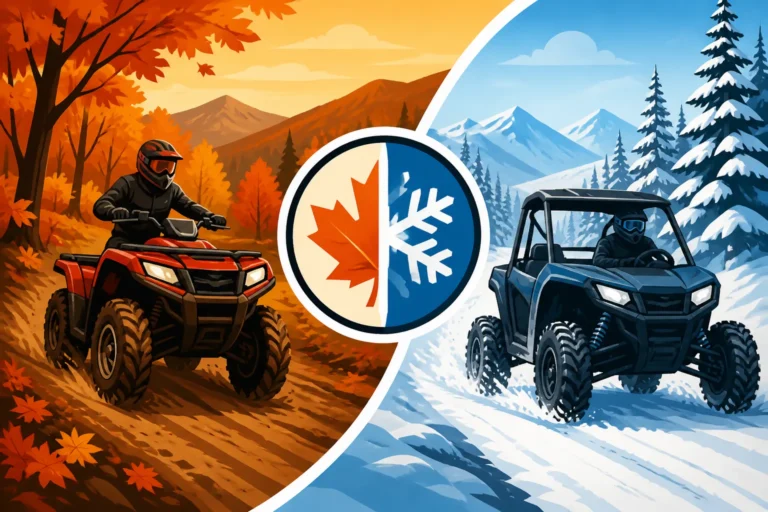
A path used by snowmobilers may cross private property, county land, a club-maintained route or several kinds of land in a single ride. Permission for snowmobiles does not necessarily include permission for ATVs. A landowner or trail manager may allow snowmobiles during winter but prohibit wheeled machines in warmer months, when tires can rut soft ground or interfere with farm and logging work.
That distinction matters even when a route is familiar. A gate may be open, a trail marker may still be visible, and an online map may show a continuous line—but none of those details alone proves that ATV riding is permitted. Look for rules that specifically identify the corridor as open to ATVs, along with any seasonal restrictions. If the information is unclear, contact the town, county, club or land manager responsible for that section.
New York also does not have one statewide trail pass that grants access to every corridor. Local systems can have their own access rules, permits and agreements. Why New York Has No Statewide Trail Pass explains why a state ATV registration or permit should not be treated as permission to ride every marked route.
Seasonal use can change from one section to the next
A corridor may be open to snowmobiles after enough snow covers the ground, closed to all motorized use during spring thaw, and available to ATVs only after the managing organization has inspected it. Another section on the same route may remain snowmobile-only or close when a landowner needs access for work.
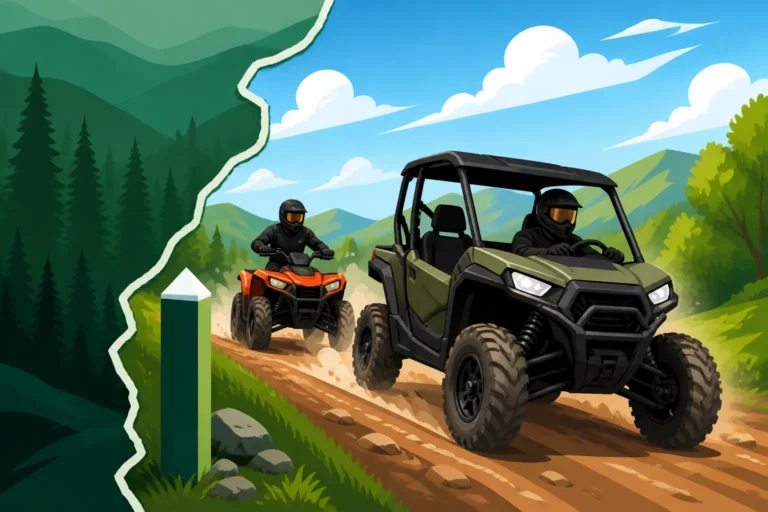
This can make planning frustrating: a trail shown as one continuous route may cross several jurisdictions, each with its own dates and conditions. Do not assume the opening date for one county applies to a neighboring county, or that a winter trail’s posted status carries over into summer. New York Riding Seasons and Trail Openings and New York Trails Closed by Weather offer useful context for why dates and conditions can affect access.
A snowmobile corridor may also be part of a broader trail network without being open to ATVs for its full length. Check each connecting section, not just the starting point. If a route passes through a farm, private woodlot or club-managed segment, the permission for that segment may be different from the permission on the public portion.
How to confirm a corridor is open before you ride
Check the rules at the local level
Start with the organization or agency that manages the specific route. Depending on the corridor, that may be a county trail office, local ATV club, town, landowner or state agency. Look for current trail notices, maps, signs at access points and instructions about permitted vehicle types. If there is a phone number or email for the manager, ask directly whether ATVs are allowed on the exact section and on the date you plan to ride.
Be precise when you ask. “Is the snowmobile trail open?” may get an answer about snowmobiles, not ATVs. Ask whether your machine type is allowed, whether a permit or club membership is needed, which direction of travel is permitted, and whether any seasonal or weather-related closure applies. If you ride a side-by-side, confirm that the trail allows that type and width of machine rather than assuming that rules for a narrower ATV apply.
A trail app can help you orient yourself, but treat it as a planning aid rather than official authorization. onX Offroad can be useful for identifying a route and comparing your planned ride with nearby access points, but confirm the corridor’s current rules with its manager. New York Trail Maps From a County is also a helpful starting point when you are looking for local mapping information.
Read signs and closures as instructions, not suggestions
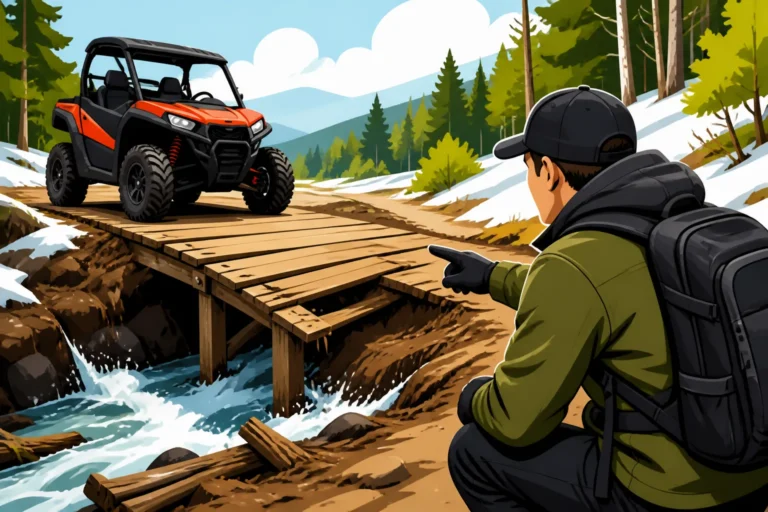
At the trailhead, read every sign before unloading. A sign may limit access to snowmobiles, prohibit motorized use during a particular season, identify a required permit or direct riders to a different route. A gate, barrier or temporary notice may reflect a closure that is more recent than a map. Do not go around a closure because the trail looks passable.
The same caution applies farther into a ride. A route may cross a road, enter private land or reach a junction where the rules change. Keep an eye out for new signs and trail markers, and turn around if the route becomes unclear. A closure sign on one section does not become optional just because you have already ridden several miles.
onX Offroad can help you keep track of your position when a trail branches or its entrance is hard to spot. Use it alongside posted directions and local notices, not instead of them. Before leaving home, save or review the route information you will need; service can be unreliable in remote areas.
| What you find | What it tells you | Sensible next step |
|---|---|---|
| A sign explicitly allowing ATVs | ATV use may be permitted under the posted conditions | Check dates, permits, machine limits and any linked rules |
| A snowmobile-only sign | The corridor is not open to your ATV under that sign | Choose a route specifically authorized for ATVs |
| A seasonal closure notice | Access is restricted during the stated period | Do not ride until the manager confirms reopening |
| A map line without vehicle-specific rules | The route is mapped, but permission is unclear | Contact the trail manager before riding |
| A gate or barrier | Access may be restricted, temporarily or permanently | Do not bypass it; find out whether the route is closed |
| Conflicting signs or notices | The corridor’s status is uncertain | Stop and verify with the responsible organization |
For broader guidance about access on managed trails, see New York Rules for Riding a Snowmobile Trail and New York Rules on Club Trails. The rules can differ by route, so a general description of a trail type is not a substitute for the local notice.
Sharing an approved corridor with snowmobilers
Ride predictably and leave room
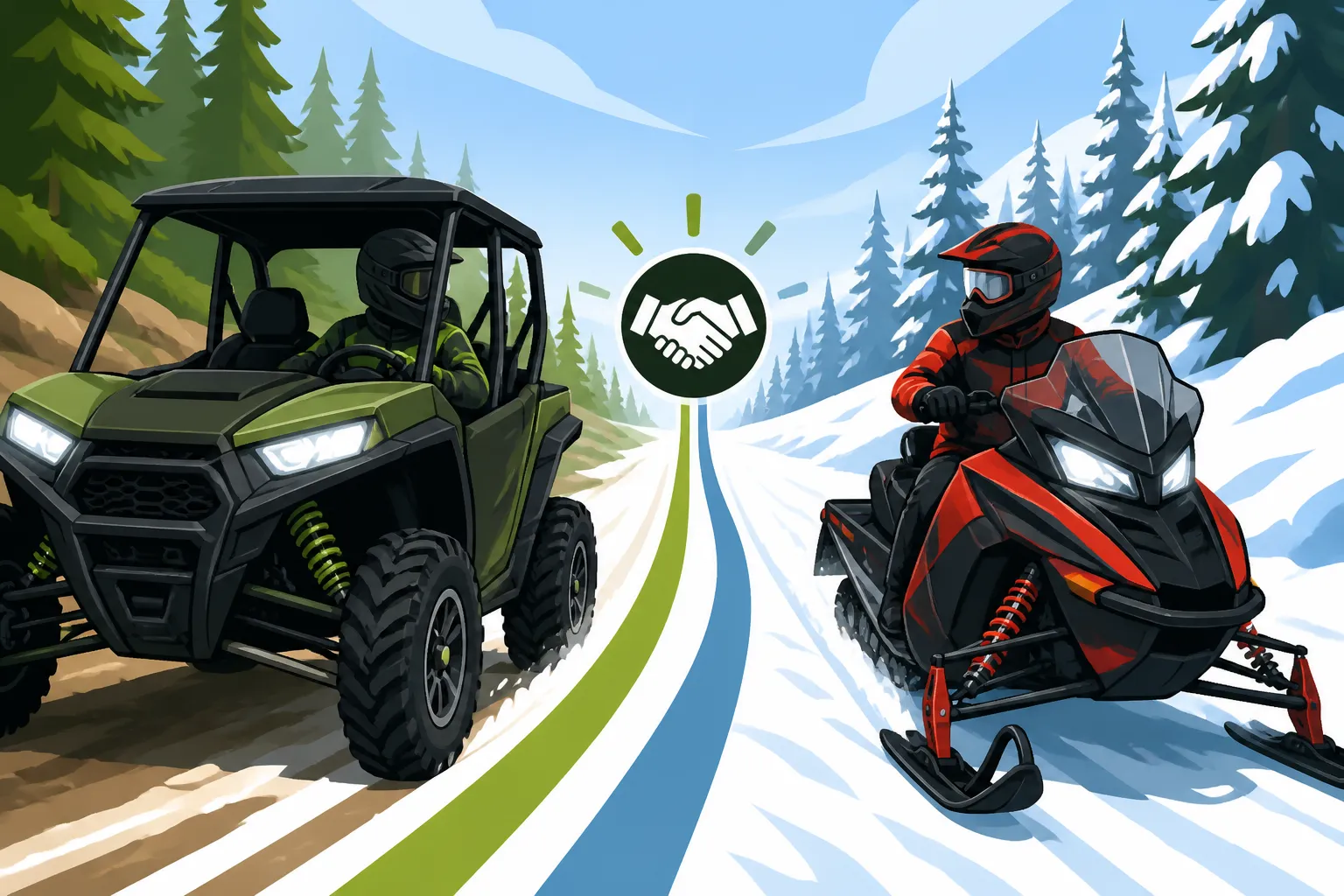
When a corridor is open to both ATVs and snowmobiles, approach it as a shared space rather than an ATV trail that happens to have snowmobile markers. Travel at a speed that lets you stop within the distance you can see, especially near bends, hills, bridges and wooded sections. A snowmobile may approach quickly around a corner, and a rider may have limited room to avoid a machine that is stopped in the track.
Stay to the side indicated by local signs or trail rules. If there is no clear direction, ride in a controlled, predictable way and avoid sudden moves. When meeting another machine, slow down early, give the other rider space and stop if the corridor is too narrow for a safe pass. Do not assume that the other rider can see or hear you in time.
Be especially cautious at junctions and road crossings. Stop where required, look carefully in both directions and give other trail users room to maneuver. Keep a safe distance behind a snowmobile rather than following closely through dust, snow spray or low visibility. Sharing a Trail With Snowmobilers covers the practical etiquette that helps reduce close calls on mixed-use routes.
Protect the corridor and respect the people who keep it open
A corridor can be vulnerable when the surface is soft, wet or recently thawed. ATV tires can cut deep ruts that channel water, damage the riding surface and make later use harder for everyone. If a trail is muddy enough that your tires are digging in or you are repeatedly slipping, turn around. A route that is technically open may still be a poor choice under current conditions.
Avoid widening the trail to get around a muddy patch. Going around the edge can damage vegetation, disturb private property and create a second track that future riders may mistake for an authorized route. Keep machines on the marked corridor, obey barriers and leave gates as you find them unless signs clearly instruct otherwise.
Many routes exist because landowners and clubs have agreed to share access. If riders ignore closures, leave litter or ride outside the trail, those agreements can be harder to maintain. That can mean a corridor closes to everyone, including responsible riders. How Clubs Keep Landowners Willing to Host Trails explains why respectful use is part of keeping local access available.
Plan for the machine, the season and the whole route
Confirm that your ATV or UTV fits the rules
“ATV access” does not always mean every ATV or UTV is allowed. A corridor may have width limits, machine restrictions, permit conditions or rules against certain vehicle types. Side-by-sides are especially important to check because some routes designed for narrower machines may not accommodate wider vehicles. Measure your machine and confirm its eligibility with the trail manager before you tow it to a trailhead.
Registration and insurance are separate from trail permission. Having the required documents does not by itself authorize riding on a snowmobile corridor, and a trail permit does not replace vehicle requirements. For background on the state’s vehicle rules, see New York UTV Registration Rules and New York ATV Insurance Requirement. Check what applies to your machine and carry any required documents while riding.
If your machine is too wide for the trail, do not try to squeeze through, remove markers or create a new path around obstacles. A trail that is suitable for a quad may not be safe or authorized for a UTV. Choose a route specifically confirmed for your machine.
Make a route plan with a backup
Before loading, confirm the corridor’s status for the day you intend to ride, including weather-related closures and seasonal restrictions. Identify a legal turnaround point and a backup riding area in case the trail is closed or too wet. Tell someone where you are going, when you expect to return and what to do if you are delayed.
Check fuel range, tire condition, lights and communication options before setting out. On a long or remote route, a map and a charged phone are useful, but do not count on mobile service everywhere. onX Offroad can help you review your planned route and nearby alternatives; still, use local trail notices to establish whether those alternatives are actually open to your vehicle.
If a route crosses county or club boundaries, check every section independently. A permit or membership that covers one system may not cover the next, and trail conditions can change quickly after rain or a thaw. New York Trail Closures to Check First and New York Trail Etiquette With Landowners are useful companion topics when preparing for a ride.
The safest rule is straightforward: ride a snowmobile corridor with an ATV or UTV only when the responsible manager clearly allows that machine on that section at that time. If the signs, map and local guidance do not agree, pause and verify before entering.
Disclaimer
This article is for general informational purposes only and does not constitute professional advice. Laws, prices and regulations vary by location and change over time. Consult a qualified professional for guidance on your specific situation.