Camping and Cabins at Tall Pines
Planning an ATV weekend at Tall Pines can get complicated when you are trying to match a place to stay with trail access, machine rules, and the needs of everyone in your group. This guide explains how to think through camping and cabins at Tall Pines in Andover, what to confirm before booking, and how to prepare for a smoother ride.
Choosing between camping and a cabin at Tall Pines
Tall Pines ATV Park, near Andover in Allegany County, is a destination where lodging decisions and riding plans go hand in hand. The right option depends on more than whether you prefer a tent or a roof: consider your group’s comfort, gear, schedule, and the park’s current arrangements.
When camping may suit your riding weekend
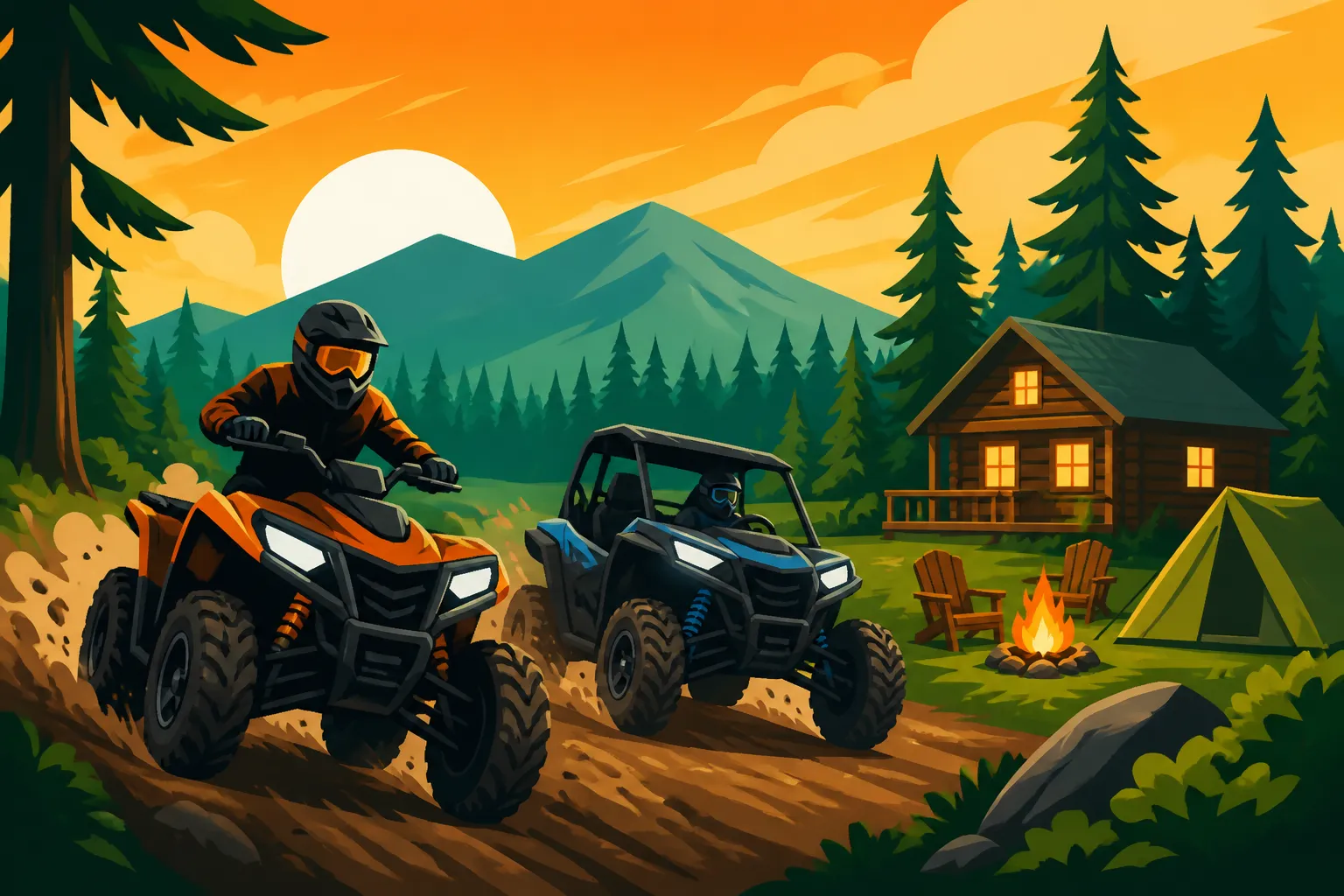
Camping can work well if your group enjoys a simple outdoor base and is comfortable managing its own gear. It gives you a place to unwind after riding and can make a weekend feel more like a full outdoor getaway. Before you decide, ask Tall Pines what kinds of camping are available and what visitors need to bring. Do not assume that every type of campsite, vehicle, or setup is permitted.
Think through practical details at home first. Will you need a tent, sleeping pads, cooking equipment, and a way to keep food secure? Is someone in the group bringing a trailer, and will there be room to park it where you plan to stay? Check whether the park has requirements or restrictions related to generators, fires, quiet hours, or site occupancy. Those details can shape your packing list and your choice of campsite.
Camping also means allowing time for setup and pack-up. If your group arrives late, has young children, or wants to get on the trails early, a complicated setup can make the first or last part of the weekend feel rushed. One useful approach is to assign jobs before leaving: one person handles sleeping gear, another takes care of food, and someone else checks the machine and riding equipment. Keep your accommodation questions separate from your riding questions; a campsite booking does not automatically confirm that your machine or chosen route meets all park requirements.
When a cabin may be the easier fit
A cabin may be more comfortable for a group that wants less outdoor setup or has different needs around sleeping and shelter. It can also make evenings simpler if the weather turns wet or chilly. But the word “cabin” can mean different things at different parks, so ask what the specific accommodation includes rather than assuming it has a kitchen, bathroom, bedding, or other conveniences.
Get the details that matter to your group in writing or directly from the park before you commit. Confirm the number of people allowed, what you need to bring, whether pets are permitted, and how check-in and departure work. Ask about parking for your tow vehicle and trailer, too. If your group is splitting between a cabin and a campsite, find out whether both arrangements can be coordinated and whether everyone will be staying in a suitable area for the visit.
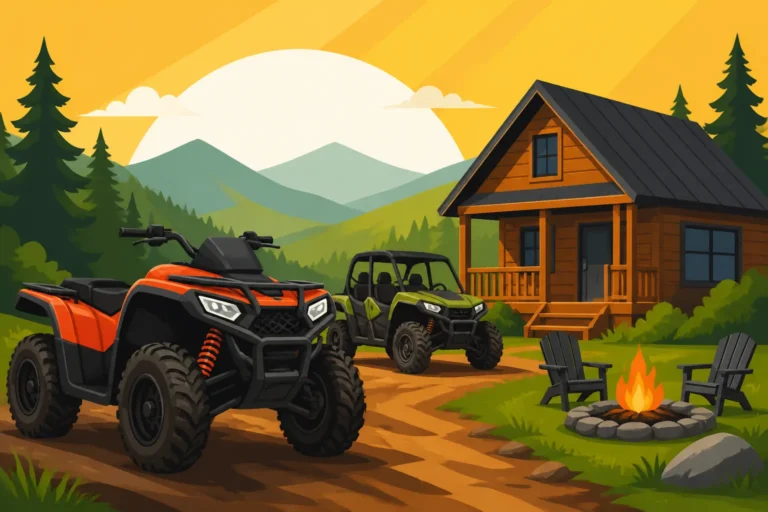
The main trade-off is usually convenience versus the kind of outdoor experience you want. A cabin may reduce the amount of equipment to pack, but you still need to plan for meals, riding clothes, wet gear, and machine care. Camping may offer a more self-sufficient weekend, but it asks more of you before and after the ride. For a broader look at the park, start with [Tall Pines ATV Park at Andover] and [New York's Tall Pines and Its 70 Miles], then confirm lodging details with Tall Pines directly.
| Consideration | Camping may suit you if | A cabin may suit you if |
|---|---|---|
| Setup | Your group is comfortable bringing and setting up gear | You want to reduce tent and sleeping-gear setup |
| Comfort | Everyone is happy with a simpler outdoor arrangement | Your group prefers more shelter or a defined indoor space |
| Packing | You can organize camping equipment and food | You want to travel with less lodging equipment |
| Group needs | Your group can agree on shared camping routines | Children, mixed-age groups, or varied comfort needs call for a simpler base |
| Key question | What camping setups and equipment are permitted? | What is included, and what must you bring? |
Confirming lodging, access, and park details before booking
It is easy to focus on the fun part of planning and leave important questions until arrival. A quick check with the park can prevent an avoidable surprise, especially when accommodation arrangements and machine access have separate rules.
Questions to ask about your stay
Start by confirming that the lodging option you want is available for your dates and appropriate for the size of your group. Ask what the booking includes, what the arrival and departure process looks like, and what happens if your plans change. If a cabin or campsite is close to other guests, find out whether there are quiet hours or other shared-space expectations.
Then ask about the practical details that affect your packing and parking. Is there space for your truck and trailer? Are there restrictions on where machines can be parked overnight? Can you store riding gear in or near the accommodation? What should you do with muddy clothing and boots? Even when a detail sounds minor, it can matter after a full day outdoors. A place to keep clean clothes separate from wet gear, for instance, can make the next morning much more comfortable.
Do not rely on an old social post or a description that may not cover your particular visit. Facilities, availability, and operating arrangements can change. Call or message Tall Pines directly and keep a note of the answers, especially if more than one person is coordinating the trip. For a broader lodging comparison, [Camping Near a New York Trailhead] can help you think through what to ask when planning a ride-and-stay weekend.
Separating accommodation access from riding access
A reservation for a place to stay is not, by itself, a guarantee that your machine is eligible to ride or that every trail is open to you. Confirm what registration, insurance, permits, or other park-specific requirements apply to your machine and group. Ask whether riders need to check in separately, display a permit, or follow designated routes from the lodging area.
This matters especially for UTV and side-by-side owners. New York’s rules for registering and operating different kinds of off-road machines can be complicated, and a park’s private access rules do not replace state requirements. If you own a wider machine, ask Tall Pines about its trail restrictions and check the applicable state rules before hauling it. The article [Bringing Your Own Machine to Tall Pines] is a useful starting point for building that checklist, while [Why New York's Forest Preserve Is Closed] explains why private riding destinations should not be confused with public state land.
Also ask whether the park has any restrictions on passengers, age, safety equipment, or machine condition. Bring the paperwork you may need rather than expecting to sort it out at the gate. A comfortable place to stay is only one part of a successful trip; the other is knowing that your machine and riders are ready to use the trails under the applicable rules.
Preparing machines, trailers, and gear for an overnight ride
A weekend stay at Tall Pines usually means you will be managing more than the machine itself. A little organization before you leave can prevent the familiar frustration of arriving with the wrong gear, a missing strap, or no sensible place to put muddy equipment.
Pack for riding and for the hours off the trail
Make two lists: one for riding and one for lodging. Riding gear may include helmets, gloves, eye protection, suitable layers, boots, and any required documents or safety equipment. Lodging gear depends on whether you are camping or staying in a cabin, but it may include towels, bedding, food, personal items, and weather-appropriate clothing. Check what the accommodation provides before packing bulky items.
Plan for New York weather to shift during a weekend, and do not pack only for the forecast at the time you leave. A dry layer, rain protection, and a place to store damp clothes can make a big difference after a wet loop. Bring bags or bins that keep clean clothes and bedding separate from muddy boots and gear. If you are camping, protect sleeping equipment from rain and keep essential items accessible rather than buried beneath riding equipment.
For navigation, check what maps or route information the park recommends. A mapping app such as onX Offroad can help you organize your general trip and keep track of your location, but it should not replace Tall Pines’ current trail map, signs, or staff guidance. Private trail systems may have boundaries and route conditions that are not obvious from a phone screen. Download or save information before heading out if you expect weak service, and follow the park’s instructions when there is any conflict between a digital map and posted directions.
Manage the trailer, machine, and muddy gear
Before loading, check that your trailer is suitable for your machine and that the ramps, tie-down points, and straps are in good condition. Secure the machine so it cannot shift during transport, and keep the items you may need at check-in—such as paperwork, keys, and any required permits—easy to reach. If you are bringing more than one machine, label or organize gear so you are not sorting through everyone’s equipment in the parking area.
A simple machine check is worth doing before the drive. Look over the tires, brakes, controls, lights, and visible fluid levels, and make sure you have the tools and basic supplies you normally rely on. Pack recovery equipment only if you know how to use it safely and it is appropriate for the machine and terrain. If you are unsure what Tall Pines permits, ask in advance rather than arriving with equipment that may not be allowed.
Plan how to deal with mud at the end of the day. Ask whether the park has designated areas or guidance for cleaning machines, and avoid washing mud into places where it could cause damage or create a mess for other visitors. A brush, towels, and separate bags for wet gear can help you contain the cleanup. [Washing a Machine After a Muddy Loop] covers the sort of after-ride planning that can be easy to overlook when you are focused on the trails.
Planning your riding days from a Tall Pines base
Staying near your riding area gives you more time to enjoy the weekend, but it does not mean you should head out without a route plan. A sensible day plan leaves room for trail conditions, breaks, and the possibility that your group will ride at different speeds.
Use maps and local instructions together
Before riding, study the current information Tall Pines provides and identify the routes your group can use. Confirm trail designations, closures, and any restrictions for your machine type. If someone in the group is new to the park, agree on a meeting point and a way to regroup if you become separated. Do not assume that everyone’s phone will have reliable service throughout the ride.
onX Offroad may be useful as a secondary navigation tool for reviewing your general location and organizing a route, but treat the park’s current map and directions as the authority for access. Map coverage and route details can differ, and a line shown on a digital map does not necessarily mean the route is open to your machine. Download what you need before riding and keep an offline backup if your navigation method supports one.
For a multi-day visit, check the conditions again each morning. Rain, maintenance, landowner needs, or other operational factors can affect access. Follow signs and instructions from park staff, even if a route appeared open when you first planned the weekend. [New York Trail Conditions Before You Ride] and [New York Trail Closures to Check First] offer useful reminders about checking current conditions rather than relying on yesterday’s plan.
Make a realistic schedule for your group
A common mistake is planning a full day as though every rider has the same experience, energy, and machine capability. A new rider may need more breaks, while a group with several machines may move more slowly at trail junctions. Set a turnaround time and make sure everyone knows what to do if the group gets split up. It is better to shorten a loop deliberately than to rush back because daylight is fading.
Build in time for meals, hydration, and checking on the machines. If the trail is rough or conditions are wet, your pace may be slower than expected. A longer stop to deal with a loose strap, a minor mechanical issue, or a tired rider can change your schedule. Keep a basic check-in plan with anyone who is not riding, particularly if you are staying in separate accommodations or have a large group.
Be considerate of other visitors and the property around the trail system. Stay on permitted routes, keep noise and speed appropriate near lodging areas, and follow posted instructions. A park weekend relies on everyone sharing the space responsibly. [New York ATV Trail Etiquette With Landowners] and [Riding Tall Pines for a Weekend] can help you think about the social side of planning, not just the route itself.
Making the trip comfortable for families and mixed groups
Not everyone on an ATV weekend has the same idea of a good day. Some people want long trail rides, while others may prefer a shorter outing and more time at camp or in the cabin. Planning around those differences helps the weekend feel enjoyable instead of like one long compromise.
Match the plan to each rider
Talk through experience and comfort levels before the trip. Ask who has ridden before, who may want a shorter route, and whether anyone is nervous about rougher terrain. Do not pressure a less experienced rider into keeping up with a faster group. Agree on a pace and a route that riders can manage, and make sure everyone understands the park’s rules for riders, passengers, and equipment.
If children are part of the group, check age-related requirements and supervision expectations before making plans. New York has specific rules for young ATV riders, and the machine must be appropriate for the rider. A family member being present at the park does not automatically satisfy every legal or safety requirement. Review [New York Trail Access for Riders Under 16] and confirm any park-specific youth policies directly.
Think about the non-riding parts of the weekend, too. A child or companion who is not riding may need activities, warm clothing, snacks, and a comfortable place to rest. If your party includes riders and non-riders, agree on meeting times and how transportation will work. A little coordination keeps someone from being left waiting while the rest of the group is still out on the trails.
Keep expectations flexible when conditions change
Even a well-planned weekend can be affected by weather, trail conditions, or a change in group energy. Have a backup plan that does not depend on every person riding all day. If a route is unsuitable or a rider is tired, a shorter ride or an earlier return can be the right call—not a failed trip.
Keep basic comfort items close: water, snacks, dry layers, and a way to contact the group when service is available. Discuss what to do if a machine has a problem, if someone takes a wrong turn, or if the weather changes. Make sure riders know where they are expected to regroup and what information to share with park staff if assistance is needed.
After the ride, leave enough time to clean up, put gear away, and prepare for the next morning. A rushed end to the day can mean wet clothing gets packed with clean bedding or a machine is loaded before it has been checked. A clear routine—park, inspect, separate muddy gear, and confirm the next day’s plan—makes a multi-day stay more relaxed. Before you travel, review the park’s own lodging and riding information, and recheck the details that matter most to your group.
Disclaimer
This article is for general informational purposes only and does not constitute professional advice. Laws, prices and regulations vary by location and change over time. Consult a qualified professional for guidance on your specific situation.