Renting a Cabin at an ATV Park
Planning an ATV weekend is exciting until you realize the cabin, machine, trail access, and parking arrangements may all have separate rules. This guide explains what to check before renting a cabin at an ATV park in New York, using Tall Pines near Andover as a practical example, so you can arrive prepared rather than untangling details after you unload.
Choose a cabin for the kind of ride you are planning
Confirm what “at the park” means
A cabin advertised in connection with an ATV park may be on the trail property, close to a trailhead, or simply nearby. Those differences affect whether you can ride from your door, need to trailer your machine to a staging area, or must use a designated route to reach the trails. Before booking, ask exactly where the cabin is in relation to the riding area and whether the route between them is approved for ATVs.
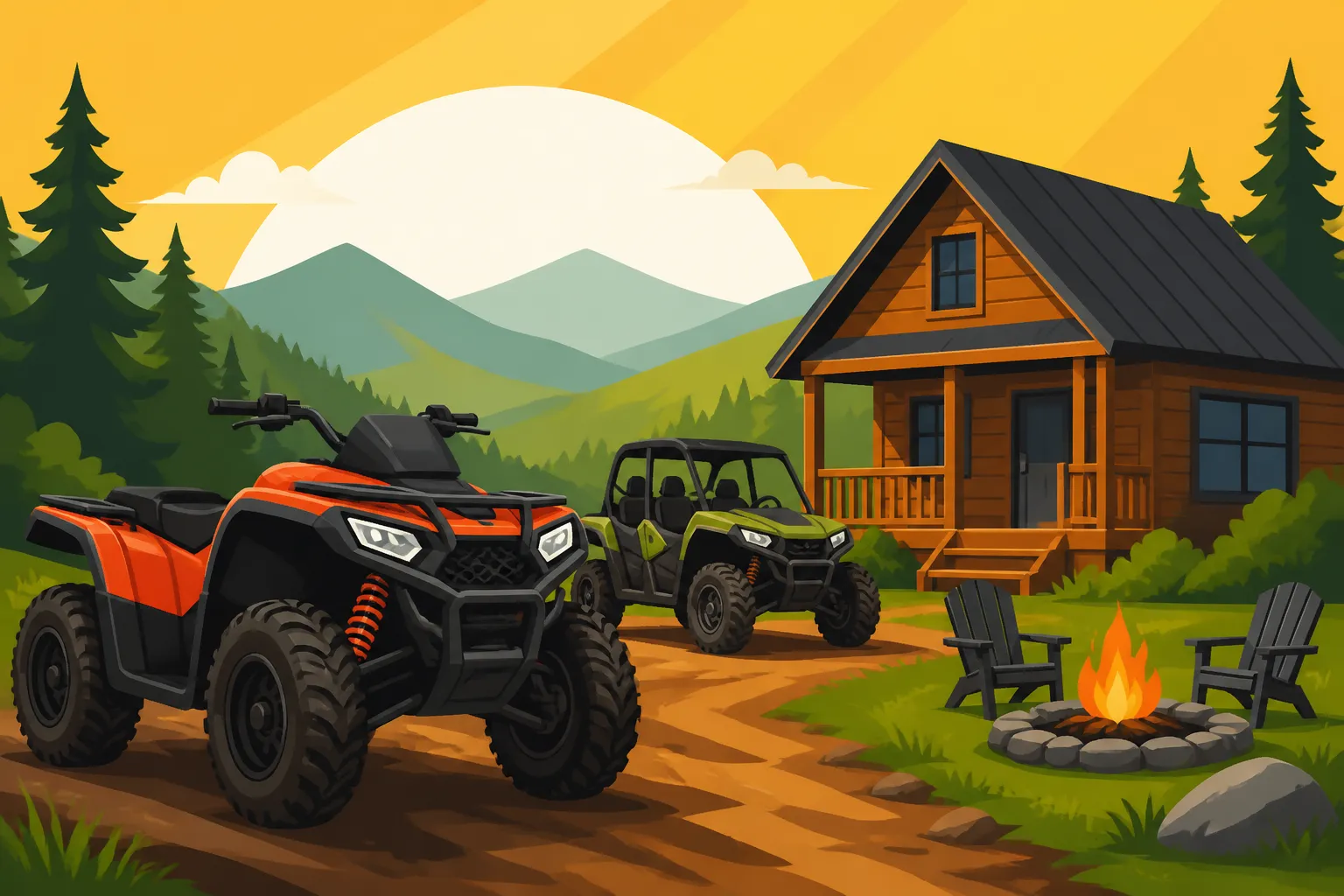
For a New York example, Tall Pines ATV Park is associated with cabins and riding near Andover in Allegany County. Its trails are described as running beside a working farm, so it is especially sensible to ask about trail access, farm operations, and any areas riders must avoid. The park’s own instructions should settle what is allowed; a map alone may not show temporary closures or property boundaries. See [Camping and Cabins at Tall Pines] and [New York's Tall Pines and Its 70 Miles] for more context.
Ask who can use the trails and what the cabin reservation includes. A lodging reservation does not automatically tell you whether riding access, a trail permit, a day pass, or club membership is required. Nor does it necessarily mean every person in your group has access under the same terms. Clarify the rules for guests, children, visiting riders, and anyone arriving for only part of the stay.
It also helps to ask about arrival and departure logistics. Find out where to check in, where to unload, whether trailers can stay at the cabin, and whether you can move a machine between the cabin and staging area. These details may seem minor when you are booking, but they matter when you arrive with a trailer, tired kids, and several machines to secure.
Match the cabin to your group and equipment
Think through your group’s needs before comparing lodging options. How many people are sleeping there? Does anyone need a ground-floor sleeping area? Will you bring food and prepare meals, or plan to eat elsewhere? Is there a place to dry wet riding gear? Ask which amenities are included rather than assuming a cabin has a full kitchen, linens, indoor bathroom, or reliable cell service.
Space for machines and trailers deserves its own conversation. A cabin can sleep your group comfortably and still leave you with nowhere convenient to park a long truck-and-trailer combination. Ask about the surface and layout of the parking area, overnight trailer storage, and whether machines must be parked in a particular location. If the site is shared, confirm how many vehicles your reservation permits.
| What to ask | Why it matters |
|---|---|
| Is the cabin on the riding property or nearby? | Determines whether you can ride from the cabin or need to trailer to a trailhead |
| Is trail access included with lodging? | Prevents assuming that a cabin reservation covers permits or riding fees |
| Can guests park a truck and trailer overnight? | Helps avoid tight parking or an unexpected staging plan |
| What amenities and supplies are included? | Lets you pack appropriately instead of relying on assumptions |
| Are there quiet hours or machine-use limits? | Helps your group respect other guests and nearby residents |
| What is the closure or cancellation policy? | Matters when weather or trail conditions disrupt a planned ride |
If you are traveling with a mixed-experience group, ask whether the riding area has routes suitable for newer riders and what the park expects guests to know before heading out. Don’t treat a trail map as a guarantee that every route will fit every machine or skill level. For trip planning, onX Offroad can be one way to review mapped routes, but confirm access and closures with the park or trail operator before riding.
Sort out machine access before you book
Find out whether you need to bring your own ATV
Never assume a cabin rental includes an ATV. In particular, check whether the park rents machines at all, what options are available locally, and whether outside machines are permitted. Tall Pines is identified as a place where riders bring their own machines rather than rent them, so plan your transport and equipment around that expectation. The detail is covered in [Why Tall Pines Rents No Machines] and [Bringing Your Own Machine to Tall Pines].
If you are bringing a machine, confirm the access rules for the specific area you intend to ride. New York registration, insurance, and trail access requirements are separate questions, and a cabin booking does not resolve them. Review [New York ATV Trail Permits Explained] and [New York ATV Registration and Insurance Proof], then ask the park which documents or permits it expects riders to carry for its trails.
Make a packing checklist that includes more than the machine itself. Bring the registration and insurance information you need, helmets and protective gear, tie-downs, basic tools, and any machine-specific items you rely on. If you are bringing a youth rider, check the applicable age, supervision, and safety requirements before leaving home. Keeping documents in a waterproof pouch makes them easier to find when you are asked to show them.
If you are considering renting a machine somewhere else, ask both the rental provider and the park about compatibility. Confirm where the rented machine can be ridden, who is responsible for required paperwork, and whether the rental comes with any trail access. Do not assume that an ATV rental includes a park pass or permission to use every nearby trail.
Check machine fit, transport, and trail access
Machine dimensions can affect where you can ride in New York. Before hauling a wide side-by-side or another larger vehicle, confirm that it is eligible for registration and permitted on the specific trails you plan to use. The fact that a machine can be transported to a cabin does not mean it can legally or practically ride the trails there. [New York's 70-Inch Width Limit] explains why width is an important issue to check before buying or bringing a machine.
Trailer planning is worth doing before the trip, especially if your lodging is in a rural area. Check your route, fuel stops, and whether the final approach includes narrow roads or limited turning space. Ask the park where to unload and whether you can leave a trailer there while riding. If your group has multiple machines, agree in advance on a parking and unloading order to avoid blocking other guests.
Use mapping tools as planning aids, not as permission slips. onX Offroad may help you study routes and orient yourself, but a route appearing on a map is not proof that it is open, authorized, or appropriate for your machine. Cross-check with the park’s directions and current trail notices. Carry an offline map or other navigation backup if service is unreliable, and make sure everyone in the group understands the agreed route.
Prepare for trail conditions and shared-property rules
Verify trail status close to your trip
A reservation confirms lodging, not trail conditions. Rain, mud, maintenance, landowner decisions, or seasonal closures can change what is rideable. Ask where the park posts updates and how it communicates closures to guests. Check again shortly before departure and, if possible, when you arrive. [New York Trail Conditions Before You Ride] offers a useful planning reminder: trail status can change after you have made your plans.
Build flexibility into the weekend. If a trail is closed, do not assume that riding around the closure or using a nearby road is acceptable. Ask the park for authorized alternatives, and keep a non-riding activity in mind in case weather limits access. That way, a wet day does not turn into a stressful argument about whether a route is “probably fine.”
Navigation should account for signs on the ground as well as digital maps. Follow posted markers, gates, and closure notices even if your app suggests another path. [Following County Trail Markers] is a helpful topic to review when you are unfamiliar with how routes are identified. Share the route plan with your group before starting, and decide what to do if riders become separated.
Be a considerate guest around landowners and other riders
ATV parks and trail systems depend on people respecting the property and agreements that make riding possible. Stay on marked routes, leave gates as instructed, keep noise in mind near cabins and homes, and do not enter fields or work areas without permission. At a property next to a working farm, give equipment and workers plenty of room and follow any instructions about temporary access changes. [New York Trail Etiquette With Landowners] covers the relationship between responsible riding and continued trail access.
Ask about local rules for washing or maintaining machines. Mud may be part of the ride, but it can create a mess at a cabin or parking area. If there is a designated wash area, use it as directed; if there is not, ask before rinsing a machine. [Washing a Machine After a Muddy Loop] is worth considering when you are planning what to bring and how to protect the lodging area.
Be thoughtful about other guests’ sleep and downtime. Agree on a quiet return routine, avoid revving machines near cabins, and keep gear and muddy boots out of shared spaces where the park asks you to do so. A little consideration makes a difference when people are sharing a small property after a long day outside.
Make a booking and arrival checklist
Get important details in writing
Before paying or confirming the reservation, keep a written record of the details that affect your trip. This can be a booking confirmation or a message from the park. Include the cabin location, arrival instructions, included amenities, parking arrangements, trail access requirements, and who to contact if you arrive after the office closes. If any part of the plan depends on a separate permit or day pass, note where and when you need to obtain it.
Ask about the policies that could change your plans: cancellation terms, deposits, damage expectations, pets, extra guests, and whether the park has a minimum stay. Policies vary, so rely on the terms for the actual reservation rather than another guest’s experience or an old online post. If you are traveling with a large group, make sure the reservation reflects the actual number of people and vehicles.
A practical pre-trip checklist might include:
- Confirm the cabin address, check-in process, and arrival window.
- Verify that your group has the right trail access or permits.
- Confirm that each machine is allowed on the intended routes.
- Ask about truck, trailer, and overnight machine parking.
- Check trail notices shortly before leaving and again on arrival.
- Pack required documents, safety gear, navigation tools, and wet-weather clothing.
- Save the park’s contact details and share the plan with everyone in the group.
Pack for comfort, safety, and rural logistics
Cabin packing is easier when you separate everyday items from riding equipment. Bring the clothing and personal items you would take on any overnight trip, then add riding layers, gloves, eye protection, spare socks, and a way to manage wet gear. Ask whether towels, bedding, cookware, and cleaning supplies are provided instead of packing on assumptions.
Rural riding areas can have limited services nearby, so plan fuel and meals before you arrive. Check where you can refuel, whether food is available within a practical distance, and whether the cabin has the facilities you need to store or prepare groceries. Bring a first-aid kit, drinking water, and a charged phone, while recognizing that cellular coverage may be inconsistent. Tell someone outside the group where you are staying and when you expect to return from a ride.
Finally, choose a meeting point and a simple regrouping plan. Riders often spread out without meaning to, especially when one person stops to check a map or adjust gear. Decide who leads, who rides at the back, and what everyone should do if the group separates. A short conversation before the first ride can prevent a confusing search later.
Renting a cabin at an ATV park can make a New York riding trip more comfortable, but a smooth stay depends on sorting out the details before you tow in. Confirm the cabin’s location, machine and trailer arrangements, trail access, current conditions, and property rules directly with the park. With those pieces settled, you can spend less time troubleshooting and more time enjoying the ride.
Disclaimer
This article is for general informational purposes only and does not constitute professional advice. Laws, prices and regulations vary by location and change over time. Consult a qualified professional for guidance on your specific situation.