Frozen Ruts in Late March
Late March in New York for ATV and UTV riders can feel like a cruel joke, dangling the promise of spring riding while simultaneously throwing some of the most treacherous trail conditions your way: frozen ruts. These icy, unforgiving grooves aren't just uncomfortable; they pose significant safety risks and can wreak havoc on your machine, making what should be an enjoyable outing a truly hazardous experience. This guide will delve into the harsh reality of late March riding, explaining why these conditions are so dangerous, how to navigate them if you absolutely must, and what precautions you need to take.
The Treacherous Landscape of Late March Trails in New York
As winter's grip loosens its hold on the Empire State, the transition to spring doesn't happen overnight with a simple flip of a switch. Instead, we often find ourselves in a frustrating, drawn-out period of freeze-thaw cycles that can turn even well-maintained trails into a challenging, unpredictable mess. Late March is prime time for this kind of instability, especially across regions like the Tug Hill Plateau or the Southern Tier, where snowpack can linger and temperatures fluctuate wildly.
The Unpredictable Freeze-Thaw Cycle
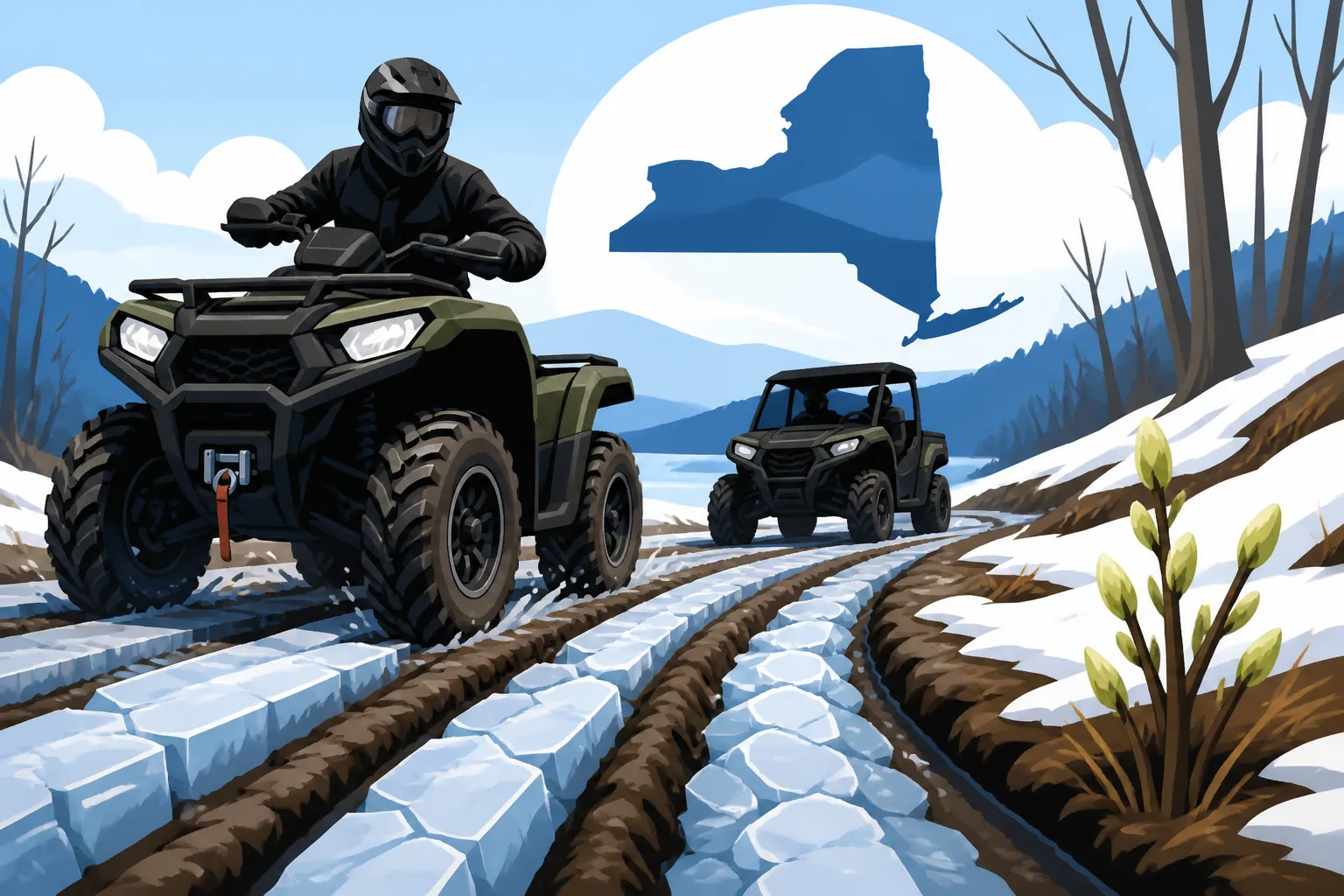
Imagine a typical late March day in upstate New York. The sun might be shining brightly, pushing temperatures into the low 40s or even 50s during the afternoon. This warmth begins to melt any lingering snow and ice, creating puddles and turning soft sections of trail into slick mud. Water naturally flows into existing ruts carved by previous riders or trail maintenance vehicles, settling in these low spots. Then, as the sun dips below the horizon, temperatures plummet back below freezing, sometimes well into the 20s or even teens overnight. That water and mud that collected in the ruts? It turns solid, creating a network of rock-hard, frozen trenches that can grab your tires and dictate your ride.
This cycle can repeat for days or even weeks. One day, you might encounter soft, slushy conditions, only for them to transform into bone-jarring ice the next morning. It’s not just surface water either; the ground itself thaws only superficially, meaning any mud is often a thin layer over still-frozen earth, offering little traction or stability. This variability makes planning a ride incredibly difficult, as conditions can change dramatically even over the course of a single day, let alone from one weekend to the next.
Why Trails Close During Shoulder Seasons
It's precisely because of these volatile conditions that many official ATV and UTV trail systems in New York implement seasonal closures. You'll often hear this referred to as "mud season," but it equally applies to the frozen rut scenario we're discussing. The purpose isn't to punish riders; it's to protect the trails themselves. Riding on trails when they are soft and saturated, or when riddled with frozen ruts, causes significant erosion, deepens existing ruts, and can damage sensitive ecosystems. This damage often requires extensive and costly repairs that volunteer clubs and county recreation departments must undertake before trails can safely reopen.
Ignoring these closures doesn't just put the trails at risk; it jeopardizes future riding opportunities for everyone. Landowners who generously grant access for trails often pull their permission if their property is damaged or if riders consistently disregard closure notices. It's a delicate balance, and respecting official closures, even when the weather seems to be improving, is paramount to the longevity of our trail systems. You can often find detailed information about specific trail openings and closures by checking county tourism websites or the social media pages of local riding clubs. [New York Trails Closed by Weather] and [New York Riding Seasons and Trail Openings] are excellent resources to consult.
Why Frozen Ruts Spell Danger for Riders and Machines
Riding through frozen ruts isn't just an uncomfortable experience; it's a genuinely hazardous one that can lead to serious injuries and costly damage to your off-road machine. The very nature of these conditions creates a perfect storm of unpredictability and strain, demanding extreme caution and, frankly, often a decision to simply stay home.
Unpredictable Handling and Increased Accident Risk
When your ATV or UTV encounters a frozen rut, several things can go wrong very quickly. First, your tires, especially if they're not specifically designed for icy conditions, can lose traction instantly, sending your machine skittering uncontrollably. Even if you maintain some grip, the hard, unyielding nature of the frozen ground means your suspension has little give. Instead of absorbing bumps, your machine gets violently tossed and bounced, making it incredibly difficult to maintain a consistent line or react to sudden changes.
Imagine coming around a bend on the [Lewis County ATV Trail System in New York] and suddenly dropping a tire into a deep, frozen rut. Your machine could be instantly pulled in an unintended direction, potentially throwing you off balance or even forcing a sudden steering input that leads to a rollover. If one wheel drops into a deep rut while the other is on higher ground, it creates a severe tilt, destabilizing the machine and greatly increasing the risk of an upset. These conditions contribute significantly to rider fatigue, as you're constantly fighting the terrain, which further diminishes reaction time and decision-making capabilities. This is why many experienced riders will tell you that riding in frozen rut conditions is more dangerous than riding in deep snow or thick mud.
Strain and Damage to Your Machine
Beyond the immediate safety concerns, frozen ruts are brutal on your ATV or UTV. The constant jarring and slamming take a heavy toll on nearly every component:
- Suspension Components: Shocks, A-arms, tie rods, and bushings are all subjected to extreme forces. The rigid impact of hitting a frozen rut can bend tie rods, crack A-arms, or blow out shock seals. Your machine's suspension is designed to articulate and absorb, but against a frozen, unforgiving obstacle, it can only do so much before something gives.
- Tires and Wheels: Tires can get pinched, torn, or even de-beaded if they hit the edge of a deep rut at an awkward angle. Wheels, particularly aluminum ones, can bend or crack from the repeated, harsh impacts, leading to flats or unsafe handling.
- Frame and Underbody: The underside of your machine, even with factory skid plates, is highly vulnerable. High-centering on a frozen rut can cause frame damage, crush exhaust pipes, or rip off critical components like drive shafts or engine mounts. Aftermarket heavy-duty skid plates, like those offered by companies such as SuperATV, can provide an extra layer of protection, but even they have their limits against direct, unyielding impacts from frozen ground.
- Drivetrain: Differential housings, axles, and CV joints are all at risk. The sudden jolts and twisting forces can cause axle shafts to snap or CV boots to tear, leading to costly repairs.
These aren't just minor wear-and-tear issues; they can be catastrophic failures that leave you stranded far from civilization, facing a long walk and a hefty repair bill. It's a costly gamble to ride in these conditions, both for your body and your wallet.
Navigating the Challenges: Safe Riding Strategies and Trail Etiquette
Given the inherent dangers, the safest advice for frozen ruts in late March is often to simply avoid riding. However, if you find yourself needing to traverse such terrain, or if conditions surprise you, there are strategies you can employ to minimize risk. Remember, the goal isn't to conquer the ruts, but to survive them safely.
Slow and Steady: The Pace for Challenging Terrain
When dealing with frozen ruts, speed is not your friend. Your instinct might be to power through, but that's precisely how accidents happen. A slow, deliberate pace allows you more time to react, to pick your lines, and to absorb impacts. Think of it more like rock crawling than trail blasting. Keep your eyes constantly scanning ahead, looking for the shallowest ruts, potential escape routes, or smoother patches. Avoid sudden acceleration or braking, as this can easily break traction on icy surfaces and send your machine sideways.
Maintain a light but firm grip on the handlebars, allowing the machine to move a bit beneath you rather than fighting every jolt. Use your body to absorb impacts, standing up slightly in your riding position to let your legs and arms act as additional suspension. If you're riding a UTV, keep your hands and feet inside the cab at all times, and wear your seatbelt. This is not the time for aggressive riding; it's a time for patience and precision.
Choosing Your Line and When to Turn Back
Often, the best strategy is to try and ride between the frozen ruts, if the trail width allows. This keeps your tires on higher, potentially less treacherous ground. If the ruts are too wide or too deep to straddle, you might be forced to ride with one wheel in a rut and one out, or even both wheels within a set of ruts. In these scenarios, maintain a very slow speed and try to keep your wheels tracking consistently. Any sudden movement could cause a tire to climb out of a rut and then drop back in violently, or worse, cause you to high-center your machine.
It's also crucial to know when to turn back. There's no shame in encountering conditions that are beyond your skill level or your machine's capability. If the ruts are too deep, too steep, too icy, or if you simply don't feel confident, it's always better to find an alternative route or pack it in for the day. Pushing through when conditions are overwhelming only increases the risk of an accident or getting stuck. Remember, trail safety also involves respecting signage; riding on trails specifically marked as closed during mud season or other shoulder seasons can result in fines. [New York Fines for Riding a Closed Trail] can be substantial, and it erodes trust with landowners and trail managers.
Here’s a quick overview of spring trail conditions and how to prepare:
| Condition Type | Typical March Weather | Key Risks | Rider Preparedness | Machine Preparation |
|---|---|---|---|---|
| Frozen Ruts | Freeze-thaw cycles, lingering ice | Loss of control, rollovers, suspension damage | Slow speed, stand up, pick lines, turn back early | Check suspension, heavy-duty skid plates, winch |
| Heavy Mud | Thawing ground, rain, melting snow | Getting stuck, deep ruts, traction loss | Momentum, aggressive tires, buddy system, winch | Mud-specific tires, snorkel, winch, sealed bearings |
| Water Crossings | Snowmelt, swollen creeks | Engine hydrolock, slipping, submerged hazards | Scout depth, slow entry/exit, maintain throttle | Waterproofing, snorkel, check fluid levels |
| Slush & Snowpack | Residual snow, soft thaw | Hidden obstacles, traction issues, heavy going | Low gear, maintain momentum, appropriate tires | Snow/mud tires, winch, cold weather gear |
Respecting Closures and Seeking Alternative Options
The most important aspect of trail etiquette during this period is to respect trail closures. Many official trail systems in New York, whether managed by counties or local clubs, will have specific opening and closing dates that are heavily influenced by these freeze-thaw cycles. These dates are not arbitrary; they are based on ground conditions and the need to protect the trail infrastructure. Riding on a closed trail isn't just illegal; it can cause irreparable damage and lead to trail access being revoked for everyone. Always check the official website of the trail system you plan to visit before you load up your machine.
If your local trails are closed due to frozen ruts or mud season, consider these alternatives:
- Private Land with Permission: If you have access to private land and have explicit, written permission from the landowner, you can often ride there. This allows you to control the conditions and impact. Remember, even on private land, you still need to adhere to [New York Rules for Riding Private Land], including insurance requirements.
- Pay-to-Ride Parks: Some private parks, like Tall Pines ATV Park in Andover, manage their terrain more actively and might have sections that drain better or are less susceptible to severe rutting. Always call ahead to inquire about current conditions.
- Wait It Out: Often, the best and safest option is simply to wait until the trails are officially open and conditions have improved. The spring riding season in New York is fantastic once it truly arrives, and patience ensures you'll be able to enjoy it without incident.
Gearing Up for the Thaw: Machine Preparation and Rider Essentials
Riding in late March, especially with the threat of frozen ruts and unpredictable conditions, demands a higher level of preparation for both you and your machine. Skimping on maintenance or gear can turn a challenging ride into a dangerous ordeal.
Machine Maintenance and Protective Gear
Before heading out in questionable spring conditions, give your ATV or UTV a thorough once-over. This isn't just about making sure it runs; it's about making sure it can withstand the abuse of frozen, muddy terrain.
- Tires: Good tires are paramount. While a dedicated snow or mud tire might be ideal, ensure your existing tires have plenty of tread depth ([New York ATV Tread Depth Requirement] applies, generally 2/32nds of an inch, though more is always better for traction). Check tire pressure frequently; slightly lowering your pressure can increase your tire's footprint and help with traction and compliance over uneven terrain, but be careful not to go too low, as this can risk de-beading.
- Suspension: Inspect your shocks, A-arms, and bushings for any signs of wear, cracks, or leaks. A well-functioning suspension system is your first line of defense against the jarring impacts of frozen ruts. Consider upgrading to heavy-duty components if you frequently ride aggressive terrain.
- Underbody Protection: As mentioned earlier, robust skid plates are crucial. While factory plates offer some protection, aftermarket options made from thicker, more durable materials (like those available from SuperATV) provide significantly better defense against sharp, frozen obstacles. This investment can save you from costly repairs to your frame, engine, or drivetrain.
- Winch and Recovery Gear: Getting stuck in a frozen rut or deep mud is a real possibility. A reliable winch, recovery straps, and a shovel are not optional; they are essential safety equipment. Make sure your winch is well-maintained and that you know how to use it safely.
- Fluids and Filters: Check all fluid levels (engine oil, coolant, brake fluid, differential fluid). Ensure your air filter is clean, especially if you anticipate dusty or muddy conditions. Water and debris can easily find their way into sensitive components during spring riding.
Rider Essentials and Safety Considerations
Your personal gear is just as important as your machine's readiness. Dressing appropriately and carrying essential safety items can make all the difference in an emergency.
- Layered Clothing: Late March weather is notoriously fickle. Dress in layers that you can add or remove as temperatures fluctuate. A waterproof and windproof outer shell is crucial for protection against sudden rain, sleet, or cold winds. Avoid cotton, which loses its insulating properties when wet; opt for synthetics or wool.
- Helmet and Protective Gear: A properly fitting helmet is non-negotiable. [New York Helmet Law for ATV Riders] mandates helmets for all riders and passengers, regardless of age or experience. Beyond a helmet, sturdy boots, gloves, eye protection, and body armor (chest protector, elbow pads, knee pads) can significantly reduce the risk of injury during a fall or impact with a frozen rut.
- Communication and Navigation: Cell service can be spotty in many New York riding areas. Carry a fully charged cell phone (in a waterproof case), and consider a satellite communication device for truly remote areas. Always carry a map (physical or downloaded offline) of your riding area and know how to use it.
- First Aid and Emergency Supplies: A well-stocked first-aid kit, fire starter, knife, flashlight, and emergency blanket are vital. Even a small incident can become serious if you're unprepared and far from help.
- Riding with a Buddy: It's always safest to ride with at least one other person, especially in challenging conditions. This ensures that if one of you gets into trouble, there's someone else there to help or go for help. If you're a younger rider, remember that [New York Supervision Rules for Young Riders] are in effect, requiring a safety certificate and supervision for those under 16.
By taking these precautions, you can significantly mitigate the risks associated with frozen ruts and other unpredictable late March trail conditions in New York. The goal is always to have a fun and safe ride, and sometimes, that means being overly prepared or simply waiting for another day.
Disclaimer
This article is for general informational purposes only and does not constitute professional advice. Laws, prices and regulations vary by location and change over time. Consult a qualified professional for guidance on your specific situation.