Why Forever Wild Means No Machines
It's a familiar scenario for many of us who love to hit the trails in New York: you're looking at a map, dreaming of riding through the stunning landscapes of the Adirondacks or Catskills, only to find vast stretches marked off-limits. You've likely heard the term "Forever Wild" thrown around, and it often feels like a brick wall for anyone hoping to bring their ATV or UTV. This guide is here to unravel the mystery of New York's "Forever Wild" clause and explain precisely why it means no machines in these treasured areas.
Understanding New York's "Forever Wild" Clause
For anyone looking to ride an ATV or UTV in New York, the phrase "Forever Wild" is one you'll encounter quickly, and often with a sense of frustration. It sounds like a simple sentiment, but its implications for motorized recreation are profound and legally binding. To truly grasp why your machine is unwelcome in these areas, we need to dig into the roots of this unique constitutional protection.
A Historical Promise to the Land
The "Forever Wild" clause isn't just a suggestion; it's enshrined in the New York State Constitution under Article XIV, Section 1. This landmark amendment was passed way back in 1894, a time when concerns about unchecked logging and exploitation of New York's vast forests were growing. People saw the potential for the majestic Adirondack and Catskill Mountains to be stripped bare, losing their natural splendor and vital resources. The intent was clear: to permanently safeguard these lands from such destruction.
This constitutional promise created what is known as the Forest Preserve, comprising specific state-owned lands within the Adirondack and Catskill Parks. The language used was incredibly strong and definitive, reflecting the public's desire for ironclad protection. It was a commitment to future generations, ensuring that these wild places would remain wild, offering solace and natural beauty for centuries to come, untouched by the very forces that threatened them.
What "Forever Wild" Really Means for the Landscape
The exact wording of Article XIV, Section 1 states that the lands of the state, now owned or hereafter acquired, constituting the forest preserve, "shall be forever kept as wild forest lands." This isn't just poetic phrasing; it carries strict legal weight. It explicitly prohibits the sale, removal, or destruction of timber and other natural resources from these lands. In essence, it means that the character of these areas must be preserved in as natural and wild a state as possible.
This directive goes far beyond just preventing logging. It implies a deeper protection against activities that fundamentally alter the wild nature of the landscape. Imagine a vast, unbroken forest, dotted with pristine lakes and rivers, where the sounds you hear are those of nature, not engines. That's the vision the "Forever Wild" clause seeks to uphold. Introducing widespread roads, parking lots, and the noise and impact of motorized vehicles, regardless of how small or specialized, directly conflicts with this deeply ingrained principle of wildness.
The Specific Ban on Motorized Vehicles
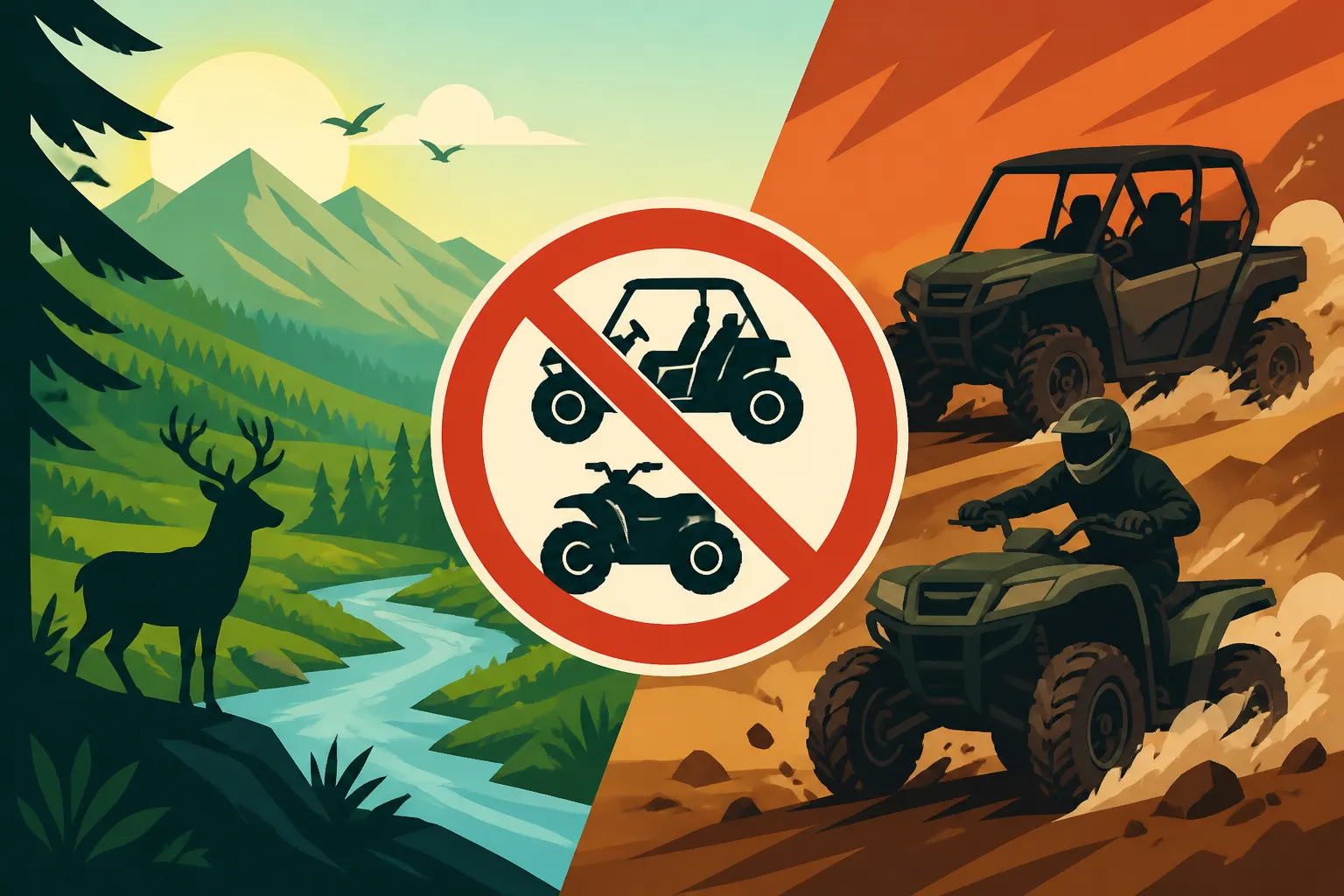
So, how do ATVs, UTVs, and other motorized machines fit into this picture? Simply put, their use is deemed incompatible with the "wild forest" character that the constitution demands. The presence of motorized vehicles, even on existing trails or unpaved roads within the Forest Preserve, is seen as a direct infringement on the "forever wild" mandate. The noise, the potential for erosion, the disruption to wildlife, and the sheer human presence associated with these machines are considered detrimental to maintaining the pristine, untouched essence of these lands.
This isn't about personal preference; it's about a foundational legal interpretation that has been consistently upheld over decades. While other states might allow ATVs on certain public lands, New York's "Forever Wild" clause is unique in its stringency. It creates a clear boundary: if a piece of land is part of the Forest Preserve, it's generally off-limits to motorized recreation. It's why you won't find designated ATV trails crisscrossing the heart of the Adirondacks or Catskills, no matter how appealing the terrain might look.
Navigating the Adirondack and Catskill Parks
The Adirondack and Catskill Parks are massive, iconic landscapes that draw millions of visitors each year. However, their sheer size and complex ownership structure often lead to confusion about where, if anywhere, you can actually ride an ATV or UTV. It's crucial to understand that the "Park" itself is not entirely "Forever Wild." This distinction is key to making sense of the riding restrictions.
The Park Boundaries and Designated Lands
When people talk about the Adirondack Park or the Catskill Park, they're referring to vast geographic regions, not simply contiguous blocks of state-owned land. Within these park boundaries, you'll find a mosaic of different land ownerships: private homes, towns, villages, working forests, and, of course, the state-owned Forest Preserve. It's only the state-owned Forest Preserve lands within these parks that are protected by the "Forever Wild" clause of the New York State Constitution.
This means that while the scenery might look continuous, the rules for motorized vehicle access change dramatically depending on whether you're on private land, town property, or a section of the Forest Preserve. Many residents within the parks use ATVs for private property access or specific tasks on their own land. However, this doesn't grant them carte blanche to ride beyond their property lines onto state land. For more on this, you might find [New York's Adirondack Park and Motor Vehicles] and [New York's Catskill Park and Motor Vehicles] helpful.
The Difference Between Wild Forest and Wilderness Areas
Within the state-owned Forest Preserve, land is further classified into different management units, with "Wilderness" and "Wild Forest" being two significant categories. This is where much of the misunderstanding arises for riders.
Wilderness Areas are the most restrictive. These are designated to be left as truly wild and untrammeled by humans as possible, meaning no motorized vehicles whatsoever. This includes snowmobiles, ATVs, UTVs, and even electric bikes in most cases. The intent is to provide a primitive, non-mechanized recreational experience. The idea is to escape the sounds and impacts of modern machinery entirely.
Wild Forest Areas, on the other hand, may allow some forms of motorized access, but typically this is limited to snowmobiles on designated and maintained trails during winter, or sometimes certain administrative vehicles for management purposes. For ATVs and UTVs, access is extremely rare and usually non-existent for recreational riding within the Forest Preserve's Wild Forest categories. If there is any ATV access on Forest Preserve land, it will be incredibly limited to specific, clearly marked multi-use trails, which are few and far between. It is always crucial to check official maps and regulations for any specific area, but generally, assume state lands in the Adirondack and Catskill Parks are off-limits for your quad.
Why Even Existing Roads Are Restricted
You might look at a map or drive through a remote part of the parks and see old logging roads, administrative tracks, or even seemingly unused dirt roads that look perfect for an ATV adventure. However, if these roads are within the Forest Preserve, they are almost universally closed to public motorized use. The rationale circles back to the "Forever Wild" mandate.
Even an existing road, if opened to ATVs, introduces a level of mechanization and potential for environmental impact that state land managers interpret as conflicting with the preserve's wild character. The goal is to minimize human impact, especially from vehicles, in these sensitive ecosystems. Opening such roads could lead to increased erosion, habitat fragmentation, noise pollution, and simply detract from the solitude and natural experience that the "Forever Wild" clause is designed to protect. Therefore, even if a path exists, if it's on Forest Preserve land, it's highly likely to be closed to your machine. [Where New York Bars ATV Riding] offers more insights into restricted areas.
Finding Legal Riding Opportunities in New York
While the "Forever Wild" clause places strict limits on where you can ride in the state's most iconic natural areas, that doesn't mean New York is a barren landscape for ATV and UTV enthusiasts. Far from it! You just need to know where to look and understand the different types of land and management that do allow for motorized recreation.
Exploring Designated ATV Trail Systems
The good news is that several counties and regions in New York have embraced ATV and UTV riding, creating robust and well-maintained trail systems. These are typically found on a mix of county-owned lands, municipal properties, and private lands where landowners have granted permission. They exist outside the strictures of the "Forever Wild" clause.
One of the most popular and extensive systems is found in Lewis County, which boasts hundreds of miles of multi-use trails that welcome ATVs and UTVs. This system is a fantastic example of what can be achieved when local communities, clubs, and private landowners work together. Similarly, Oswego County offers significant riding opportunities, often maintained by dedicated local clubs. These designated trail systems are where you'll find vibrant riding communities, events, and often, amenities like staging areas and access to local businesses. These are the places where you can confidently outfit your machine with accessories, perhaps from SuperATV, knowing you'll have legal places to put them to good use. For specifics, check out [Lewis County ATV Trail System in New York] or [Oswego County's Club Trails].
Private Parks and Managed Riding Areas
Beyond county-run systems, New York also has a few privately owned and operated ATV parks. These parks offer a controlled environment specifically designed for off-road recreation. Tall Pines ATV Park, for example, is a well-known destination that provides miles of trails suitable for various skill levels, often with amenities like camping and cabins.
These parks operate on private land, which means they aren't subject to state-level land use restrictions like "Forever Wild." They offer a fantastic option for riders who want guaranteed access, diverse terrain, and often, a more structured riding experience. They're also great for families or new riders, as many offer a variety of trails from easy scenic routes to challenging technical sections. Always check their specific rules regarding machine width, noise, and safety gear before you go.
The Importance of Local Ordinances and Maps
Wherever you plan to ride in New York, diligence is your best friend. Even outside of "Forever Wild" areas, ATV and UTV access is highly localized. What's permitted in one town or county might be strictly prohibited just across the border. This is why you absolutely must consult local ordinances, county recreation departments, and ATV club resources before you ever load up your machine.
Many counties and clubs provide detailed maps and trail condition updates. These resources are invaluable for planning a safe and legal ride. Don't rely on old information or assumptions. The general rule of thumb is: if it's not explicitly marked and designated as an ATV trail, assume it's closed to motorized vehicles. This might sound overly cautious, but it's the safest way to avoid accidental trespass or costly fines. Check sources like [New York Trail Maps From a County] and [New York Trail Conditions Before You Ride] for the most current information.
Respecting the Rules and Preserving Access
Understanding "Forever Wild" isn't just about knowing where you can't ride; it's about respecting the underlying principles that shape land use in New York. These rules, while sometimes inconvenient for riders, are in place for significant reasons. By understanding and adhering to them, we not only avoid trouble but also contribute to the long-term health of our riding community and the preservation of New York's diverse landscapes.
The "Why" Behind the Restrictions
It's easy to feel frustrated when vast areas are off-limits, but the restrictions aren't arbitrary. The "Forever Wild" clause, and similar protective measures on other lands, are designed to achieve several critical goals:
- Ecosystem Protection: Many of these areas are home to fragile ecosystems, rare plants, and sensitive wildlife habitats. Motorized vehicle use, even with the best intentions, can lead to soil compaction, erosion, disruption of wildlife, and the spread of invasive species. The rules aim to minimize this impact.
- Quiet Recreation: New York also values opportunities for quiet, non-motorized recreation like hiking, camping, and wilderness paddling. The presence of ATVs and UTVs, with their associated noise and speed, would fundamentally alter the experience for those seeking solitude and a deeper connection with nature.
- Preservation of Wild Character: Ultimately, it's about maintaining the "wild forest" character as mandated by the constitution. This isn't just about trees; it's about the entire sensory experience of an untamed landscape, free from the marks of modern machinery.
The Role of Advocacy and Responsible Riding
For ATV and UTV enthusiasts, respecting the "Forever Wild" rules isn't just about compliance; it's about being a good steward and advocating for responsible access where it is appropriate. Supporting local ATV clubs is paramount. These clubs often do the heavy lifting of maintaining trails, working with landowners, and advocating for new riding areas. When you ride legally and responsibly, you demonstrate that ATV riders can be a positive force in land management conversations.
Using proper equipment, such as robust skid plates or durable A-arms, perhaps from a reputable brand like SuperATV, not only protects your machine but also minimizes your impact on the trail, which contributes to a positive image. Sticking to marked trails, riding at appropriate speeds, and minimizing noise are all ways to show respect for the land and other users. This kind of responsible behavior can slowly, but surely, open doors for future riding opportunities in suitable areas.
What Happens If You Ride Illegally
The consequences of riding an ATV or UTV illegally on "Forever Wild" lands, or any other unauthorized area, can be severe. This isn't just a slap on the wrist. You could face significant fines, your machine could be impounded, and you might even face legal charges for trespassing or environmental damage. Enforcement officers, including Forest Rangers and State Troopers, take these violations very seriously, especially in constitutionally protected areas.
Beyond the immediate legal repercussions, illegal riding harms the reputation of the entire ATV community. It reinforces negative stereotypes and makes it harder for legitimate advocacy efforts to gain traction for new trail development. So, always ride where it's legal, always have your [New York ATV Registration and Insurance Proof] handy, and always know the rules of the land you're on. It's the best way to ensure that riding opportunities continue to grow in New York, rather than diminish.
New York State Land ATV/UTV Access Overview
| Land Type | Primary Purpose | ATV/UTV Access (General) | Key Considerations |
|---|---|---|---|
| Forest Preserve | "Forever Wild" constitutional protection | None (Strictly Prohibited) | Part of Adirondack/Catskill Parks. Focus on wilderness, non-motorized recreation. |
| Wilderness Areas | Primitive, non-motorized recreation | None (Strictly Prohibited) | Most restrictive classification within Forest Preserve. |
| Wild Forest Areas | Managed for a mix of recreation, often includes snowmobiles | Extremely Limited/None (Check specific area maps; generally no ATV access) | Often within Forest Preserve; may have snowmobile trails, but rarely ATV. |
| County Forests/Parks | Multi-use recreation, timber production | Possible (Depends on county/local ordinances; often where trails are developed) | Lewis, Oswego Counties are prime examples. Requires local permit/registration. |
| Private Land | Owned by individuals/organizations | Permitted with Owner's Permission (Always get explicit, written consent) | Trespassing is illegal. Respect property rights is paramount. |
| Private ATV Parks | Dedicated off-road recreation facilities | Permitted (With entry fee and adherence to park-specific rules) | Examples like Tall Pines ATV Park. Great for controlled riding. |
| Rail Trails | Multi-use trails on former rail beds | Generally None (Unless explicitly designated for ATVs, which is rare) | Most are for hiking, biking, equestrian; usually non-motorized. |
| Public Roads | Vehicular travel | None (ATVs are not street legal in New York, except for very limited crossings) | [Are ATVs Street Legal in New York?] covers specifics. Cannot operate on public roads. |
Disclaimer
This article is for general informational purposes only and does not constitute professional advice. Laws, prices and regulations vary by location and change over time. Consult a qualified professional for guidance on your specific situation.