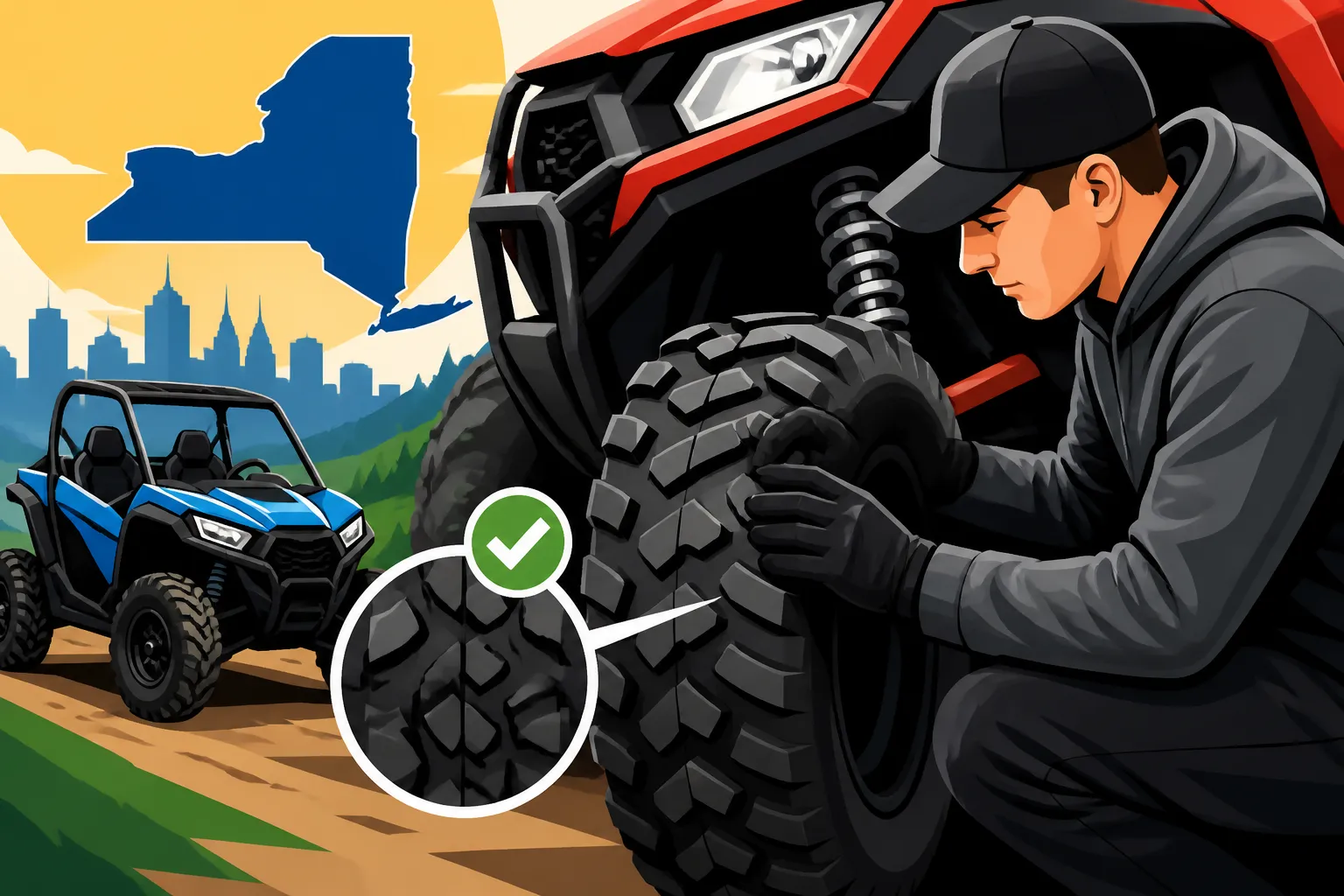
Checking Tread Before a Ride
There's nothing quite like the feeling of hitting the trails on your ATV, the engine humming, the dust flying, and the promise of adventure ahead. But before you even think about loading up the trailer or hitting that starter button, there's one crucial check many of us overlook in our eagerness: your tires. We've all been there, pushing off that tire check for "just one more ride," only to find ourselves struggling for grip, or worse, facing a potential ticket on a designated trail. This comprehensive guide is here to walk you through exactly how to inspect your ATV tires, what New York State expects from you, and why paying attention to your tread is about so much more than just avoiding a slip and slide.
Why Your ATV Tire Tread is More Critical Than You Think
It's easy to dismiss tire tread as just something that helps you get traction in the mud or over rocks. And while that's certainly a huge part of it, the truth is, your ATV's tire tread plays a vital role in several aspects of your riding experience, from personal safety to legal compliance here in New York. Ignoring it can lead to a whole host of frustrations and even dangerous situations, which nobody wants when they're out trying to enjoy the incredible beauty of our state's riding areas.
The Unseen Dangers of Worn Tread
Think about it: your tires are the only point of contact between your machine and the ground. Every acceleration, every turn, every brake application relies entirely on the grip they provide. When that tread starts to wear down, especially on the aggressive lugs designed for off-road use, you're severely compromising your machine's ability to perform as it should. Suddenly, that muddy climb becomes a dangerous slide, or that quick stop to avoid a deer on a back trail turns into a near miss because your braking distance doubled. It's not just about getting stuck; it's about maintaining control, especially when conditions get tricky or unexpected obstacles pop up. We often focus on engine maintenance or suspension, but tires are foundational to safe operation.
What many riders don't realize is that even seemingly minor tread wear can impact the handling characteristics of your ATV. You might find yourself fighting the handlebars more, experiencing unpredictable slides, or feeling a general "looseness" that wasn't there before. This isn't just annoying; it can be downright exhausting and mentally taxing, turning a fun ride into a constant battle against your machine. Over time, this kind of compromised handling can even lead to premature wear on other components, as the machine struggles to compensate for the lack of grip.
New York's Legal Mandate for Tread Depth
Beyond personal safety and performance, there's a very practical, legal reason to keep an eye on your ATV's tires when riding on public lands or designated trails in New York: the law. Yes, our state actually has a specific requirement for ATV tire tread depth. This isn't some obscure rule; it's part of the broader [New York Equipment Rules for ATVs] that are designed to keep everyone safe and trails protected. Getting stopped on a county trail in Lewis County or Oswego County and finding out your tires don't meet the minimum could put a serious damper on your day, not to mention your wallet.
An officer performing a roadside check, perhaps at a trailhead or during a routine patrol, will likely look for a valid registration, proof of insurance, and yes, the condition of your machine, including its tires. While they might not carry a tread depth gauge in their patrol car, they are certainly trained to spot excessively worn tires. If your tires are clearly bald or severely worn, it's an easy indicator for them to check further. This is precisely why understanding and adhering to the [Two Thirty-Seconds of Tread in New York] rule is so vital for any rider looking to enjoy the trails without unnecessary drama.
Decoding New York's Tread Depth Requirements
Alright, let's get into the nitty-gritty of what New York State actually expects from your ATV tires. It's not a complicated rule, but it's one that many riders, even experienced ones, might not be fully aware of. Knowing this specific measurement and how to check it yourself can save you a lot of hassle and potential fines down the road.
The Two Thirty-Seconds Rule Explained
The New York State Vehicle and Traffic Law (VTL) mandates that ATV tires must have at least two thirty-seconds of an inch of tread depth over the entire surface of the tire. Now, "two thirty-seconds of an inch" might sound a bit technical or even tiny, but it's a measurable standard. To put it simply, imagine a tire with literally no tread – that would be zero. As the tread wears down from its original depth, eventually, you'll reach a point where only 2/32" remains. This isn't a lot of tread, especially for an off-road machine that relies on aggressive patterns for grip. It's truly a bare minimum for safe operation and legal compliance.
This rule exists for a good reason. While a brand-new ATV tire might have anywhere from 1/2 inch to a full inch or more of tread, especially aggressive mud or rock tires, that 2/32" is considered the absolute minimum to maintain any semblance of safe traction and control. Below that, the tire essentially becomes a slick in off-road conditions, making it incredibly dangerous. Whether you're navigating rocky terrain, crossing streams, or just trying to brake on a loose dirt trail, adequate tread depth is your best friend.
How to Accurately Measure Your Tread Depth
So, how do you actually check for 2/32" of tread depth without needing a mechanic's shop? Thankfully, it's pretty straightforward, and there are a couple of methods you can use right in your garage or at the trailhead.
The Penny Test (Rough Estimate)
This is the classic, quick-and-dirty method. Grab a penny and find Abraham Lincoln's head. Insert the penny into the shallowest groove of your tire tread, with Lincoln's head upside down and facing you. If you can see the very top of Lincoln's head, your tread is likely below the 2/32" mark and it's time to start thinking about new tires. If Lincoln's head is completely covered and you can't see the top, you probably have enough tread. This isn't perfectly precise, but it's a good initial indicator.
The Tread Depth Gauge (Precise Measurement)
For a more accurate reading, and what an officer might use, a dedicated tire tread depth gauge is your best bet. These are inexpensive tools available at any auto parts store or online.
To use one:
- Push the gauge needle into the deepest part of a major tread groove.
- Ensure the gauge's shoulder is flat against the tire block.
- Read the measurement on the scale. Many gauges will show measurements in 32nds of an inch.
You should check multiple spots around the tire, especially in areas that look more worn, to get a comprehensive understanding. Uneven wear patterns can sometimes give a false sense of security if you only check one spot. If you find any area where the tread is consistently at or below 2/32", then your tire legally doesn't pass the New York standard.
Here's a quick comparison:
| Measurement Tool | Accuracy | Ease of Use | Cost | Best For |
|---|---|---|---|---|
| Penny Test | Low | High | Free | Quick, informal check; early warning sign |
| Tread Depth Gauge | High | Medium | Low | Precise measurement; legal compliance checks |
| Professional Mechanic | Very High | Low (you pay) | Varies | Thorough inspection; diagnosis of issues |
What Happens if You Don't Meet the Standard?
Failing to meet the minimum tread depth requirement can lead to consequences. Primarily, you could face a citation for an equipment violation. The specific fine can vary, but it's never a pleasant experience. Think about the disappointment of having your ride cut short, followed by the financial sting. Beyond the immediate legal trouble, remember the safety implications we discussed. An officer spotting bald tires isn't just looking to write a ticket; they're seeing a potential accident waiting to happen. So, checking your tires regularly is not just about avoiding a fine; it's about protecting yourself and your riding buddies. You can learn more about general consequences in [New York Fines for an ATV Violation].
Thoroughly Inspecting Your ATV Tires Beyond Tread Depth
While New York's specific tread depth requirement is a critical component of tire maintenance, a complete tire inspection goes far beyond just measuring the depth of your lugs. Your tires endure a tremendous amount of abuse out on the trails – sharp rocks, hidden roots, deep mud, and constantly changing surfaces. A truly comprehensive check needs to consider the entire health and integrity of the tire, not just how much rubber is left on the tread face. Neglecting these other areas can lead to unexpected failures, costly repairs, or even dangerous blowouts when you're far from help.
Checking for Sidewall Damage and Punctures
The sidewall of an ATV tire is often its most vulnerable point, especially when riding through technical terrain with sharp obstacles. Unlike the thick, reinforced tread, the sidewall can be thinner and more susceptible to cuts, tears, and punctures from rocks, branches, or even stubborn roots. Before every ride, make it a habit to visually inspect the entire circumference of both sidewalls on all your tires. Look for:
- Deep cuts or gashes: Even if they're not actively leaking air, a deep cut can compromise the tire's structural integrity and lead to a sudden blowout under stress.
- Bulges or bubbles: These are telltale signs of internal tire damage, where the internal plies or cords have separated. A bulge is a ticking time bomb and means the tire needs immediate replacement.
- Punctures: Sometimes a nail, screw, or piece of metal might still be embedded in the tire, slowly leaking air or waiting to cause a rapid deflation. Listen for hissing sounds, especially if the tire looks low.
- Cracks or dry rot: Over time, especially if your ATV sits exposed to the sun and elements, the rubber can dry out and develop small cracks. This "dry rot" significantly weakens the tire, making it brittle and prone to failure.
Evaluating Uneven Wear Patterns
Just like on a car, uneven tire wear on an ATV can be a sign of deeper issues within your machine's suspension or steering components. It's not just cosmetic; it indicates that your tires aren't making proper contact with the ground, which can affect handling, stability, and even your machine's overall lifespan.
Common uneven wear patterns include:
- Wear on one side of the tread (cupping or feathering): This often points to problems with wheel alignment, worn ball joints, tie rods, or A-arm bushings. If you notice one side of the tire's lugs is significantly more worn than the other, it's worth investigating.
- Wear in the center of the tread: If your tires are wearing out fastest down the middle, it's usually a sign of over-inflation. Too much air causes the center of the tire to bulge out, carrying most of the load.
- Wear on the outer edges of the tread: Conversely, wear on both outer edges typically means the tire is under-inflated. The tire sags, and the edges bear the brunt of the contact with the ground.
Addressing uneven wear isn't just about preserving your tires; it's about identifying and fixing underlying mechanical issues before they become more serious or expensive. Sometimes, a simple adjustment to tire pressure can solve the problem, but other times it might require a trip to a qualified technician. While we're talking about general maintenance, remember to ensure your [New York ATV Insurance Requirement] is always up to date as well, providing peace of mind for any unexpected issues.
The "Feel" Test and General Condition
Beyond visual inspection, sometimes a tactile check can reveal problems. Run your hand over the tire surface (carefully, checking for sharp objects first!). Feel for:
- Soft spots or localized bulges: These can indicate ply separation or internal damage that isn't immediately visible.
- Unusual texture or deformation: If a section of the tire feels drastically different from the rest, it could be a sign of a manufacturing defect or impact damage.
- Loose lugs: On very aggressive tires, sometimes lugs can start to tear or separate from the main tire body. These need attention before they fully detach.
Also, consider the general age of your tires. Even if they have decent tread and no visible damage, rubber degrades over time. Many tire manufacturers recommend replacing ATV tires every 5-7 years, regardless of tread depth, due to rubber aging and hardening. Old, hard rubber loses its flexibility and grip, especially in colder temperatures.
Choosing and Maintaining Your ATV Tires for New York Riding
Once you've inspected your current tires and perhaps determined they're due for replacement, the next step is choosing the right set for your riding style and the specific conditions you'll encounter in New York. This isn't a one-size-fits-all decision, and making an informed choice can significantly enhance your riding experience and safety.
Matching Tread Patterns to New York Terrain
New York State offers a diverse range of riding environments, from the rocky, root-laden trails of the Tug Hill Plateau to the occasional muddy stretches near agricultural areas or the hard-packed gravel of some county forest roads. No single tire excels at everything, so consider where you'll spend most of your time.
- All-Terrain (AT) Tires: These are a great compromise for riders who encounter a mix of hardpack, loose dirt, and light mud. They typically have a tighter tread pattern with medium-height lugs, offering good performance without excessive vibration on harder surfaces. Many factory-equipped ATVs come with this type of tire.
- Mud Tires: If you're consistently hitting the deep stuff, especially on [New York Trails Closed by Weather] that might still be a bit boggy, mud-specific tires are your friend. They feature very tall, widely spaced lugs that dig into mud and self-clean well. Be aware that these can be rougher riding and wear faster on hardpack.
- Hardpack/Desert Tires: While less common for typical New York riding, these tires have a dense, durable tread designed for rocky, technical terrain. They offer excellent puncture resistance and a smooth ride on firm surfaces, but they struggle significantly in mud.
A good example of a brand offering a wide array of options is SuperATV, known for its diverse lineup of tires designed for various terrains and riding conditions. They often have different models optimized for mud, rock, or all-around performance, helping riders fine-tune their setup.
The Importance of Width and Weight for New York Regulations
When selecting new tires, it's crucial to remember that changing tire size can impact your ATV's overall dimensions, and New York State has specific rules about machine size for registration. Specifically, you need to be mindful of [New York's 70-Inch Width Limit] and [New York's 1,000-Pound Weight Limit]. While tires themselves don't usually add significant weight, wider tires can push your machine beyond the legal width limit, which would prevent you from registering it as an ATV for trail use.
- Width: Always measure your ATV's total width from the outermost point of one tire to the outermost point of the opposite tire after new tires are installed. Some aftermarket tires, especially those designed for aggressive off-road use, might have very wide sidewalls or offset wheels that can increase your overall machine width. Exceeding 70 inches means your machine can't be registered as an ATV in New York, confining it to private property. This is a critical point to consider when you are looking at [Best Machine Width for New York Trails].
- Weight: Similarly, while tires don't typically add enough weight to push a qualifying ATV over the 1,000-pound limit, it's something to be aware of if you're already at the higher end of the spectrum with other accessories. Most ATVs are well under this limit, but some heavier utility quads with large, aggressive tires could theoretically push the boundary.
Maximizing Tire Lifespan and When to Replace
Even the best tires won't last forever. Regular cleaning, proper storage, and mindful riding can extend their life, but eventually, they'll need to be replaced.
- Rotate Your Tires: Just like on a car, rotating your ATV tires (e.g., front to back, or even diagonally, depending on the tread pattern) can help promote more even wear and extend their overall life.
- Proper Inflation: We touched on this earlier, but maintaining the correct tire pressure is paramount. Check your ATV owner's manual for recommended pressures, as it can vary by machine and tire type. Too much or too little air will accelerate wear and compromise handling.
- Riding Style: Aggressive starts, hard braking, and excessive spinning of the tires will obviously wear them down faster. While off-roading is inherently hard on tires, being mindful of your technique can make a difference.
- When to Replace: Beyond the 2/32" legal minimum, you should consider replacement if:
- You notice any significant sidewall damage (cuts, bulges, dry rot).
- The tire is constantly losing air, even after minor repairs.
- The tread pattern is so worn that it no longer provides effective grip for your intended use, even if it technically meets the 2/32" rule.
- The rubber is old, hard, and showing signs of cracking, even if the tread looks decent.
Don't wait until your tires are completely bald or you get a flat on the trail to think about replacements. Proactive maintenance will keep you safer and your adventures uninterrupted. Planning for [Replacing Tires on a New York Machine] should be part of your yearly ATV budget, alongside other consumables and maintenance. If you're ever unsure about the condition of your tires or need help diagnosing uneven wear, don't hesitate to consult a professional at an ATV [New York ATV Repair Shop Rates]. They can provide expert advice and ensure your machine is trail-ready.
Disclaimer
This article is for general informational purposes only and does not constitute professional advice. Laws, prices and regulations vary by location and change over time. Consult a qualified professional for guidance on your specific situation.