New York Passenger Rules on an ATV
It's a common dream for many ATV enthusiasts in New York: sharing the thrill of the trail, the beauty of the backcountry, and the camaraderie of a ride with a friend or a child. But before you invite someone to hop on the back of your quad, it's absolutely crucial to understand New York's very specific and often misunderstood rules regarding ATV passengers. This guide will walk you through exactly who can ride with you, what your machine needs, and the critical safety considerations to keep everyone safe and legal on the trails.
The Absolute Rule: Your ATV Must Be Factory-Designed for a Passenger
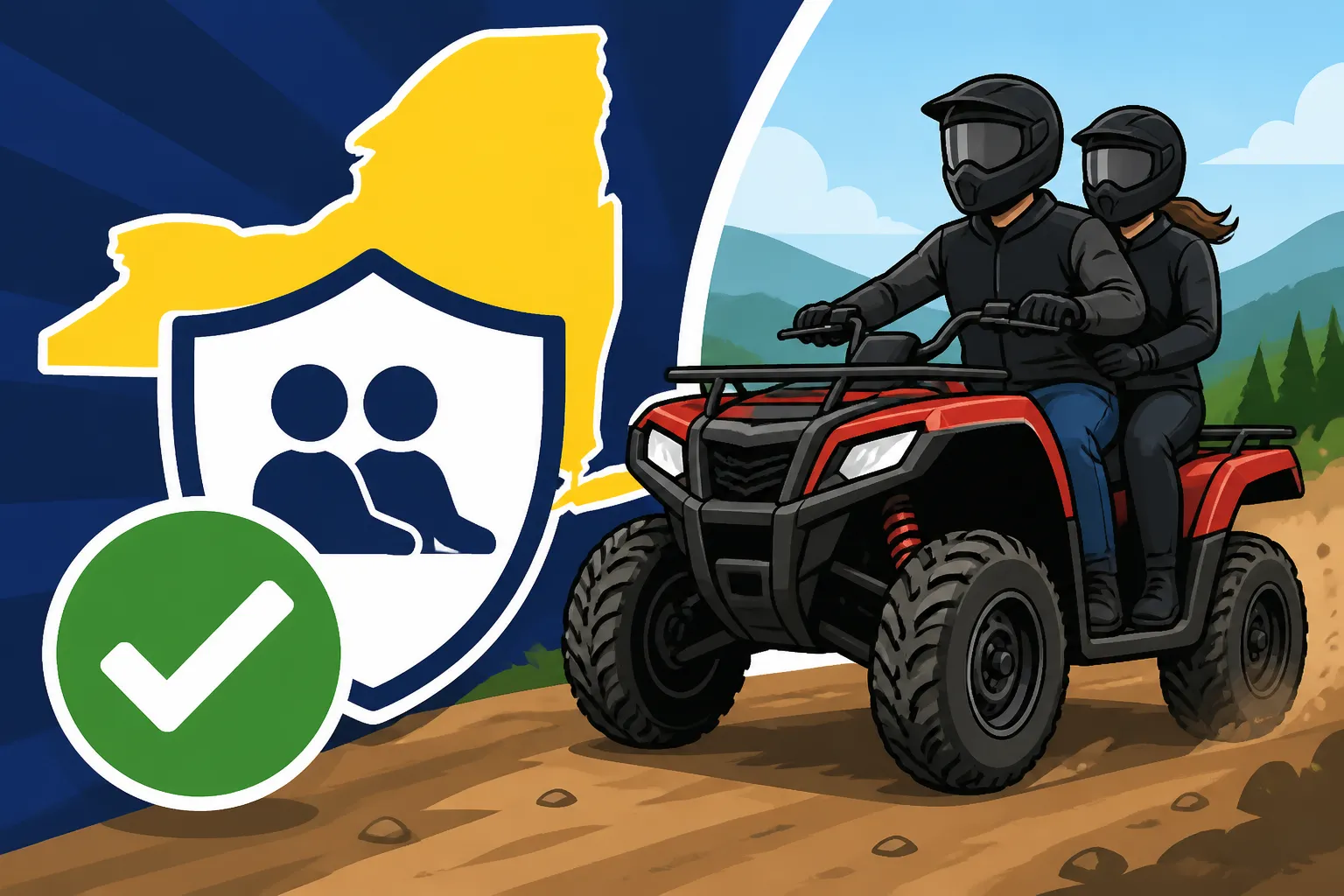
This is the cornerstone of New York's passenger rules, and it trips up more riders than almost anything else. You might think adding an aftermarket seat or having a large cargo rack is enough, but the law is very clear: your ATV must have been specifically designed and manufactured to carry a passenger from the factory. If it didn't roll off the assembly line with a dedicated passenger seat, it's a single-rider machine, no matter how much space you think there is.
Why "Factory-Designed" Matters for Your Machine
When a manufacturer designs an ATV for two riders, they aren't just slapping on an extra pad. They're engineering the entire machine with that second person in mind. This includes everything from the frame's strength and suspension tuning to the placement of footrests and grab handles. The center of gravity is different, the braking requirements are different, and the overall stability is calibrated for the added weight and distribution. If you try to carry a passenger on a single-rider ATV, even with an aftermarket seat, you're fundamentally altering its intended balance and safety characteristics.
Think about it this way: riding an ATV is already a dynamic activity, requiring constant balance and weight shifts from the operator. With a passenger, those dynamics are amplified. The machine becomes less nimble, stopping distances increase, and the risk of instability, especially on uneven terrain or during turns, goes way up. The New York Department of Motor Vehicles (DMV) understands these engineering realities, which is why [Why a Passenger Needs a Factory-Fitted Seat in New York] is such a critical component of the rules. It's not about making things difficult; it's about preventing serious accidents that can result from overloading or improperly balancing a machine.
Identifying a Legally Compliant Passenger Setup
So, what does a factory-designed passenger setup actually look like? It's not just a cushion. You'll typically see an elongated seat that provides distinct seating areas for both the operator and the passenger, often with a slight rise for the passenger for better visibility and comfort. Crucially, there will be dedicated passenger handholds – often integrated into the rear rack or seat structure – and separate footrests or floorboards for the passenger. These aren't just little nubs; they're solid, secure points of contact designed to keep a passenger stable and secure, even over rough terrain.
Some larger ATVs, often called "two-up" or "MAX" models, are specifically built for this purpose. You might see models from manufacturers like Polaris or Can-Am with these features explicitly advertised. If your ATV doesn't have these clearly defined, integrated features right from the factory, it's considered a single-rider machine, regardless of its size. Attempting to modify a single-rider ATV with aftermarket accessories to carry a passenger will not make it legal or safe under New York law. Companies like SuperATV offer fantastic accessories for all sorts of machines, but when it comes to legal passenger carrying in New York, their aftermarket seat options for single-rider ATVs don't change the fundamental "factory-designed" rule. Always double-check your owner's manual or the manufacturer's specifications to confirm if your specific model is rated for more than one rider.
Navigating Age Restrictions for ATV Passengers in New York
Even if your ATV is a legitimate two-up machine, New York law imposes strict age requirements for who can ride as a passenger. This is another area where many riders face frustration, especially families hoping to take younger children out for a spin. However, these rules are in place for the safety of everyone, particularly the most vulnerable riders.
The Absolute Age Floor: No Passengers Under 10 Years Old
Let's get this one out of the way first: New York absolutely prohibits anyone under the age of 10 from riding as an ATV passenger, even on a machine designed for two riders. There are no exceptions for parental supervision, short distances, or private property when it comes to this rule. It's a hard and fast limit set to protect very young children who simply don't have the physical development, strength, or cognitive ability to safely ride as a passenger on an ATV. [New York Rules for a Child Passenger] are unequivocally clear on this point.
While it might be disappointing if you have a younger child eager to join, consider the extreme forces involved in ATV riding. A sudden bump, turn, or stop can easily throw a small child off balance, even if they're holding on. Their bones are more fragile, and their reflexes aren't as developed. This rule is a direct reflection of the potential for severe injury. It's a tough pill for some to swallow, but it's ultimately about preventing tragedies. There are other ways to introduce younger children to the outdoors and powersports as they grow older and meet the age requirements.
Rules for Passengers Aged 10-15: Operator Requirements and Supervision
For passengers aged 10 through 15, the rules become a bit more nuanced, but they still emphasize safety and proper oversight. A passenger in this age group can ride on a factory-designed two-up ATV, but there are specific requirements for the operator. The operator of the ATV must be at least 18 years old and possess a valid New York ATV Safety Certificate. This isn't just a suggestion; it's a legal mandate. The safety certificate demonstrates that the operator has undergone formal training and understands responsible ATV operation, which is even more crucial when carrying a younger passenger.
Furthermore, general supervision by an adult aged 18 or older is required for the entire riding party, though this is a broader rule for all minor riders, not just passengers. This means that if you're taking a 12-year-old passenger, you, as the certified operator, are responsible for their safety and adherence to all rules. The emphasis here is on experience and certified knowledge. A young operator, even if they have their own safety certificate, is generally not permitted to carry a passenger under 16, underlining the state's focus on mature and trained operators for these situations. You can learn more about these training requirements in [New York ATV Safety Certificate Requirements].
Here's a quick summary of New York's passenger age and seat requirements:
| Passenger Age | ATV Seating Requirement | Operator Age & Certification |
|---|---|---|
| Under 10 | Not Allowed | N/A (Passenger Prohibited) |
| 10-15 years old | Factory-designed for 2 riders | 18+ years old & New York ATV Safety Certificate |
| 16+ years old | Factory-designed for 2 riders | 16+ years old (if operating legally) |
General Safety and Considerations for All Passengers
Beyond the legal mandates, there are critical safety considerations that apply to all passengers, regardless of age. Even if your ATV is a two-up model and your passenger meets the age requirements, common sense and a commitment to safety are paramount.
First and foremost, everyone on the ATV, operator and passenger alike, must wear a DOT-approved helmet. [New York Helmet Rules for ATV Riders] and [New York Helmet Law for Passengers] make this explicitly clear, and it's a non-negotiable safety item. Beyond helmets, passengers should wear appropriate protective gear: long pants, long-sleeved shirts, over-the-ankle boots, gloves, and eye protection. This gear helps protect against abrasions, impacts, and debris that can be kicked up on the trail.
The operator's skill level dramatically influences passenger safety. Carrying a passenger changes the ATV's handling characteristics significantly – it becomes heavier, less agile, and stopping distances increase. Only experienced, confident operators should attempt to carry a passenger, and they should stick to less challenging trails. Avoid aggressive riding, sharp turns, or excessive speeds when you have a passenger. Constant communication between the operator and passenger is also key. Before you even set off, discuss hand signals or verbal cues for stopping, slowing down, or if the passenger feels uncomfortable. Remind your passenger to always keep their feet on the footrests and hold onto the designated grab handles. Remember, the goal is to share the enjoyment, not to push limits.
Consequences of Violating New York's Passenger Laws
Ignoring New York's ATV passenger rules isn't just a minor oversight; it carries serious legal and safety implications. The state takes these regulations very seriously because they are directly tied to preventing injuries and fatalities.
Fines and Legal Ramifications
If you're caught carrying an illegal passenger on your ATV – whether it's on a single-rider machine or an underage passenger – you can expect to face significant fines. These aren't just warnings; they are often tickets that carry financial penalties. The exact fine can vary depending on the specific violation and the officer's discretion, but it's always an unwelcome hit to your wallet. Beyond fines, repeated violations or involvement in an accident with an illegal passenger could lead to more severe legal consequences, including potential points on a driver's license (if the violation is tied to a road-related offense, though ATVs are generally off-road vehicles, some scenarios could cross over) or even impoundment of the machine in extreme cases.
Furthermore, if an accident occurs while you are in violation of these passenger rules, your liability can skyrocket. Your ATV insurance policy, which is mandatory for all New York ATV riders, might not cover injuries sustained by an illegally carried passenger. This means you could be personally responsible for medical bills, property damage, and legal fees, which can quickly add up to tens or even hundreds of thousands of dollars. Always carry proof of your [New York ATV Insurance Requirement] to avoid further issues if stopped. It's simply not worth the risk to yourself, your passenger, and your finances to bend these rules.
The Ultimate Risk: Injury and Loss
The most severe consequence of violating New York's passenger rules isn't a fine; it's the potential for serious injury or even death. These regulations exist to protect everyone, especially children, from the inherent dangers of ATV riding when not properly equipped or supervised. An ATV accident, even at low speeds, can result in broken bones, head injuries, internal damage, or worse. For a child or someone not properly seated and secured, the risks are amplified.
Imagine the regret and trauma of an accident where a friend or family member is seriously hurt because you didn't follow the rules. No amount of fun or convenience is worth that risk. The laws regarding ATV passengers in New York are designed to mitigate these exact scenarios. By adhering to the factory-designed seat rule and the age restrictions, and by always prioritizing protective gear and responsible riding, you're not just staying legal – you're actively safeguarding lives and ensuring that your time on the trails remains a source of enjoyment, not regret. Stay safe out there, and know the rules before you ride.
Disclaimer
This article is for general informational purposes only and does not constitute professional advice. Laws, prices and regulations vary by location and change over time. Consult a qualified professional for guidance on your specific situation.