Headlight and Taillight After Sunset
Riding your ATV as the sun dips below the horizon can be an exhilarating experience, a completely different world from daytime trail riding. But here in New York, that transition from daylight to darkness isn't just about grabbing your headlamp; it's about adhering to some very specific and non-negotiable lighting requirements. Ignoring these rules can not only land you in hot water with law enforcement but, more importantly, put your safety and the safety of others at serious risk. This guide will shine a light – literally – on everything you need to know about ATV headlight and taillight regulations when the day ends in New York.
Why New York Takes ATV Lighting Seriously After Sunset
It might seem like a no-brainer to have lights on your ATV if you're riding after dark, but many riders underestimate just how critical this is, especially in New York. Our state isn't just making suggestions here; they're laying down clear, enforceable laws designed to keep everyone safe on and near the trails. The woods, fields, and designated routes can become incredibly dangerous places once the natural light disappears, and without proper illumination, you're essentially riding blind and invisible.
The Mandate: Riding Legally When Daylight Fades
Think about it: when you're driving your car at night, you expect other vehicles to have their lights on, right? The same principle applies to ATVs, even if you're not on a public road. New York law is very specific about when your ATV needs to be lit up. Generally speaking, from a half-hour after sunset to a half-hour before sunrise, and at any other time when visibility is poor due to weather conditions like fog, rain, or snow, your ATV's lighting system must be fully functional and engaged. This isn't just a suggestion; it's a mandatory legal requirement, and it applies whether you're on a designated trail, crossing a permissible road, or even just puttering around on private property with public access easements.
The intent behind these regulations is crystal clear: prevent accidents by ensuring every rider can see where they're going and, crucially, can be seen by others. This includes other riders, hikers, wildlife, and even landowners who might be nearby. If you're out on a trail in the deepening twilight, and your buddy forgot to turn his lights on, that's a recipe for disaster. [New York Rules for Riding After Dark] really digs into all the nuances of this timeframe, but the bottom line is, if it's getting dim, your lights need to be on. It's not just about avoiding a ticket; it's about avoiding a collision that could change your life or someone else's forever.
The Real-World Risks of Poor Visibility at Night
Beyond the legal ramifications, the practical dangers of riding an ATV after dark without adequate lighting are immense. Picture this: you're cruising a familiar trail as evening sets in. The path you know like the back of your hand suddenly looks entirely different. A fallen branch that was easily avoidable in daylight becomes an unseen obstacle. A sudden dip in the trail turns into a surprise launch pad. Without a strong, clear headlight, you might not spot these hazards until it's far too late to react. Your reaction time diminishes significantly in low light, and your depth perception plays tricks on you.
Then there's the issue of being seen. Imagine another rider coming around a blind turn, or a deer darting across the trail. If your taillights aren't bright enough, or if they're caked in mud, you're practically invisible until it's too late for them to react. This isn't just about other ATVs; it's about anyone who might be sharing the space, or even just crossing a road at an approved point. [New York Rules for Crossing a Public Road] emphasizes visibility during such maneuvers. Even if you're on a private trail system, like one of the many great club trails around Oswego County, the rules of common sense and safety still apply. You might think you're alone, but you never truly are, and adequate lighting is your first line of defense against the unexpected.
Decoding Headlight Specifics for New York ATV Riders
So, you know you need headlights. But what kind of headlights? New York doesn't just say "put a light on it and call it a day." There are expectations for how bright they should be, where they should point, and how they should function. This isn't about making things complicated; it's about ensuring that the lights you have actually do their job effectively, providing both illumination for you and visibility for others.
Required Brightness and Beam Direction
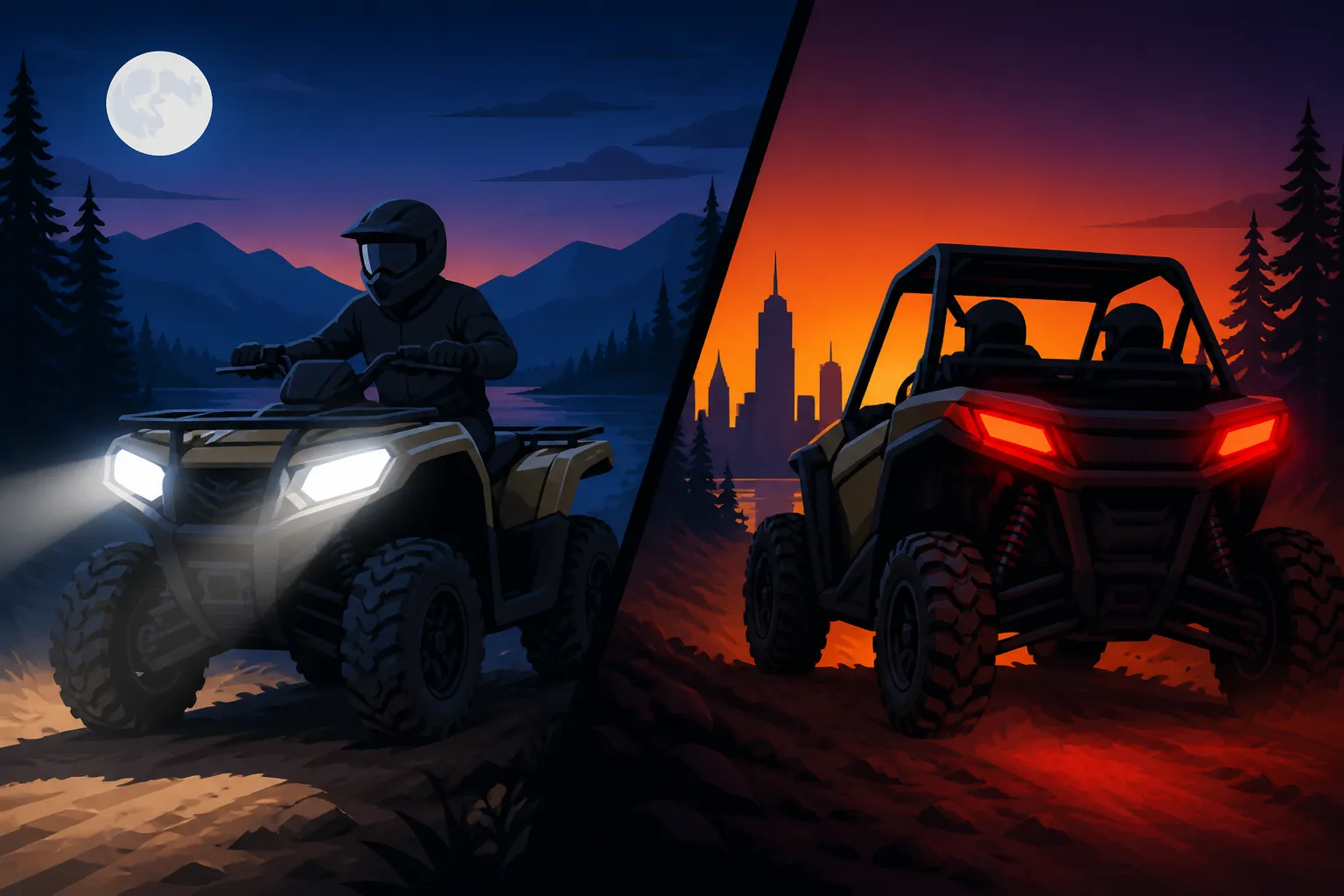
New York law requires that your ATV be equipped with at least one white or amber headlight that is capable of illuminating objects at a distance of at least 200 feet ahead. That's a pretty substantial reach, and it means your little dim factory light might not always cut it, especially if it's older or been through a few mud baths. Think about what 200 feet really looks like – it's roughly the length of two semi-trucks parked end-to-end. You need to be able to clearly see what's ahead of you at a reasonable riding speed. If you can't, you're over-driving your lights, which is incredibly dangerous.
Beyond just brightness, the beam pattern matters. Your headlight should project a stable, consistent beam that allows you to see the trail clearly without blinding oncoming riders or creating massive dark spots. A wide, even flood beam is often preferred for trail riding, as it helps illuminate the periphery and potential obstacles to the sides. Some stock headlights might be too narrow or have a cutoff that's too sharp. This is where aftermarket solutions can really shine. Companies like SuperATV offer a range of powerful LED light bars and pod lights designed to deliver exceptional brightness and beam patterns specifically tailored for off-road use, far exceeding basic legal requirements and dramatically improving your night vision. When considering an upgrade, think about a combination of spot and flood beams to get both distance and width.
Proper Headlight Placement and Function
Just having a bright light isn't enough; it needs to be positioned correctly to be effective and legal. Your headlight must be securely mounted on the front of your ATV and remain functional, meaning it's not flickering, dimmed, or broken. It should be aimed properly – not pointed too high into the trees, which blinds others, nor too low into the ground, which limits your forward vision. Imagine trying to navigate a tricky section of trail with your headlight bouncing around or aimed incorrectly; it's frustrating and extremely unsafe. [New York Equipment Requirements for ATVs] covers these general stipulations for all gear.
Regular checks of your headlight are crucial. Before every night ride, even if it's just a quick jaunt to the back of your property, test your headlight. Make sure it turns on, stays on, and projects a clear, steady beam. Check the wiring for any frays or loose connections, as these can lead to intermittent failures, which are the worst kind of surprise when you're out in the dark. Dust, mud, and water can degrade the performance of your headlight over time, so keeping the lens clean is also a simple but vital step. A dirty lens can drastically reduce the effective light output, turning your powerful beam into a dull glow, severely hindering your ability to see and be seen.
Essential Taillight and Brake Light Compliance
While headlights help you see where you're going, taillights and brake lights are all about making sure others see you, especially from behind. This is often overlooked by riders who are focused on their own forward visibility, but it's just as critical for preventing rear-end collisions, particularly on shared trails or when navigating areas where other people or vehicles might be present.
Making Your Presence Known from the Rear
New York law dictates that your ATV must be equipped with at least one red taillight mounted on the rear, visible from a distance of at least 200 feet. This taillight needs to be on whenever your headlight is on, ensuring that you're always visible from the back in low-light conditions. Just like with headlights, a dirty or damaged taillight can dramatically reduce its effectiveness, making you a ghost on the trail. Imagine riding in a group on a dusty evening; if your taillight is barely glowing through a layer of grime, the rider behind you is going to have a hard time tracking you, especially if they hit a patch of thick dust or fog.
The color red is specific for a reason – it's universally recognized as a warning signal and cuts through darkness and inclement weather more effectively than other colors for rear visibility. Some riders like to add additional red lights or reflective tape to their rear, especially if they often ride in groups or on trails that can get crowded. While not always legally mandated beyond the primary taillight, these additions are excellent safety enhancements. It's about being proactive, not just compliant. If you are riding in a highly trafficked area, or perhaps a system like the Lewis County ATV Trail System in peak season, maximizing your rear visibility is simply smart practice.
The Unseen Power of Functional Brake Lights
Even more important than a steady taillight is a functional brake light. New York law requires that your ATV has at least one red brake light on the rear that illuminates when the brakes are applied. This seems obvious, but many riders neglect to check their brake light until it's too late. The brake light is a critical communication tool, signaling to anyone behind you that you're slowing down or stopping. Without it, the rider behind you has no advance warning, significantly increasing the risk of a collision.
Think about a sudden stop: you might be approaching a sharp turn, a stalled rider, or a fallen tree. If your brake light isn't working, the rider directly behind you might not realize you're decelerating until they're right on top of you, leaving them no time to react. This is especially dangerous when riding in varied terrain, where speeds and conditions can change rapidly. Just like your taillight, your brake light needs to be bright, consistently red, and easily visible from 200 feet away. Test your brake light before every ride: squeeze the brake lever or press the foot pedal and have someone confirm the light comes on. It's a simple check that can prevent a serious accident and potentially costly [New York Fines for an ATV Violation] if an officer spots it during a roadside check.
Upgrading Your ATV's Lighting for Enhanced Safety
While New York's laws set minimum standards, savvy riders know that "minimum" isn't always "optimal" when it comes to safety and performance. The stock lighting on many ATVs, especially older models, can be barely adequate. Investing in better lighting isn't just about looking cool; it's a significant upgrade to your safety, extending your riding hours and confidence when the sun isn't shining.
Auxiliary Lighting Solutions and Their Legal Use
Once you've met the basic legal requirements for headlights and taillights, you might want to consider auxiliary lighting. This can include light bars, floodlights, spot lights, or even specialized work lights. These can be incredibly useful for enhancing your field of vision, particularly on challenging trails, or for tasks like setting up camp after dark. A powerful LED light bar, for example, can turn night into day, revealing obstacles and trail features that your stock headlight might miss. Many riders find that a robust light bar from a brand like SuperATV can completely transform their night riding experience, offering superior illumination and durability compared to factory options.
However, there's a caveat: the use of auxiliary lights is often restricted on public roads or in certain areas. While they're fantastic for off-road use, blindingly bright auxiliary lights can be illegal on any designated public road, even those shared with ATVs, because they can dangerously glare into the eyes of oncoming traffic or other trail users. Always be mindful of local regulations and practice good trail etiquette: if you encounter other riders, dim your lights or turn off your auxiliary lights to avoid blinding them. The goal is to enhance your visibility without diminishing theirs. It's a balance between seeing everything and respecting others on the trail.
| Lighting Type | Primary Purpose | Visibility Range (Approx.) | New York Legal Status (Off-Road) | Potential Benefits |
|---|---|---|---|---|
| Stock Headlight | Basic forward illumination | 200 ft | Mandatory | Meets minimum legal requirements |
| Stock Taillight | Rear visibility | 200 ft | Mandatory | Ensures you are seen from behind |
| Stock Brake Light | Signals deceleration | 200 ft | Mandatory | Crucial for preventing rear-end collisions |
| LED Light Bar | Broad, powerful illumination | 500+ ft | Permitted (off-road) | Significantly enhances night vision, wide coverage |
| LED Pod Lights | Focused spot or flood beams | 300-600 ft | Permitted (off-road) | Targeted illumination, durable, versatile |
| Amber Fog Lights | Improves visibility in fog/dust | 100-150 ft | Permitted (off-road) | Reduces glare, enhances contrast |
| Work Lights | Task-specific illumination | Varies | Permitted (stationary) | Ideal for repairs, camping, loading |
Maintenance: Keeping Your Lights Trail-Ready
A lighting system is only as good as its maintenance. Neglecting your ATV's lights can lead to unexpected failures, leaving you literally in the dark. A routine pre-ride check should always include inspecting all your lights. Are the lenses clean and free of mud, dust, or scratches? A dirty lens can reduce light output by a surprising amount. Are all bulbs working? Check your headlight, taillight, and brake light. If you have auxiliary lights, test those too.
Beyond just checking if they turn on, inspect the wiring. Vibrations, water, and debris can cause wires to fray, become loose, or corrode, leading to intermittent failures. Ensure all connections are secure and protected from the elements. If you notice any dimming, flickering, or complete failure, troubleshoot immediately. It could be a simple bulb replacement, a fuse, or a more involved wiring issue. Carrying spare fuses and even a spare bulb (if your system uses them) can save you from being stranded or having to cut a ride short. Proper maintenance isn't just about keeping your ATV running; it's about ensuring every safety feature is performing at its peak, every single time you hit the trail, whether it's the [New York ATV Insurance Requirement] or your brake light.
Consequences of Ignoring New York's Lighting Laws
It's easy to think, "Oh, I'll just risk it for a short ride," or "Nobody will notice." But ignoring New York's ATV lighting laws is a gamble that rarely pays off. The consequences can range from inconvenient and costly fines to far more serious outcomes like accidents, injuries, and significant legal liability.
Fines and Penalties for Non-Compliance
New York State, like any state serious about off-road vehicle safety, isn't shy about enforcing its rules. If you're caught riding your ATV after sunset, or during periods of reduced visibility, without the required working headlight, taillight, or brake light, you're likely looking at a citation. The specific fine can vary, but generally, these are treated as traffic infractions, similar to a broken headlight on a car. This means not only a monetary penalty but potentially points on your driver's license, depending on the exact statute cited and whether you were operating on public access land or crossing a road. For example, being stopped by a game warden or a state trooper while riding on the Tug Hill Plateau with non-compliant lights could quickly escalate into a costly situation.
Beyond the immediate fine, repeated offenses or a particularly egregious violation could lead to other consequences, such as your ATV registration being suspended or revoked, making it impossible to legally ride on designated trails. Imagine having your [New York's Annual ATV Registration] canceled simply because you neglected a faulty taillight. It's a hassle you definitely want to avoid. These penalties are designed to deter unsafe behavior and emphasize that these regulations are serious and non-negotiable for anyone operating an ATV in New York.
The Broader Impact on Safety and Liability
The fines are one thing, but the truly devastating consequences come into play if your lack of proper lighting contributes to an accident. If you're involved in a collision—whether with another rider, a pedestrian, a vehicle, or even wildlife—and your ATV's lighting system was not compliant with New York law, your liability could skyrocket. This isn't just about property damage to your machine or someone else's; it's about potential serious injury or even fatality. In such a scenario, the fact that your lights were off or inadequate could be used as evidence of negligence, leading to hefty lawsuits, medical bills, and potentially criminal charges.
Your ATV insurance policy might even have clauses that could deny coverage if you were operating illegally at the time of an incident. While you must carry [New York ATV Insurance Requirement] to ride, if you're found to be in violation of a safety law that directly contributed to an accident, your insurer might argue that you breached the terms of your policy. This could leave you personally responsible for all damages, medical expenses, and legal fees, which could easily amount to hundreds of thousands of dollars. It’s a sobering thought, but one that underscores the absolute importance of ensuring your ATV's lighting system is always in perfect working order, especially when riding in low-light conditions. Don't let a simple oversight turn into a lifelong regret.
Disclaimer
This article is for general informational purposes only and does not constitute professional advice. Laws, prices and regulations vary by location and change over time. Consult a qualified professional for guidance on your specific situation.