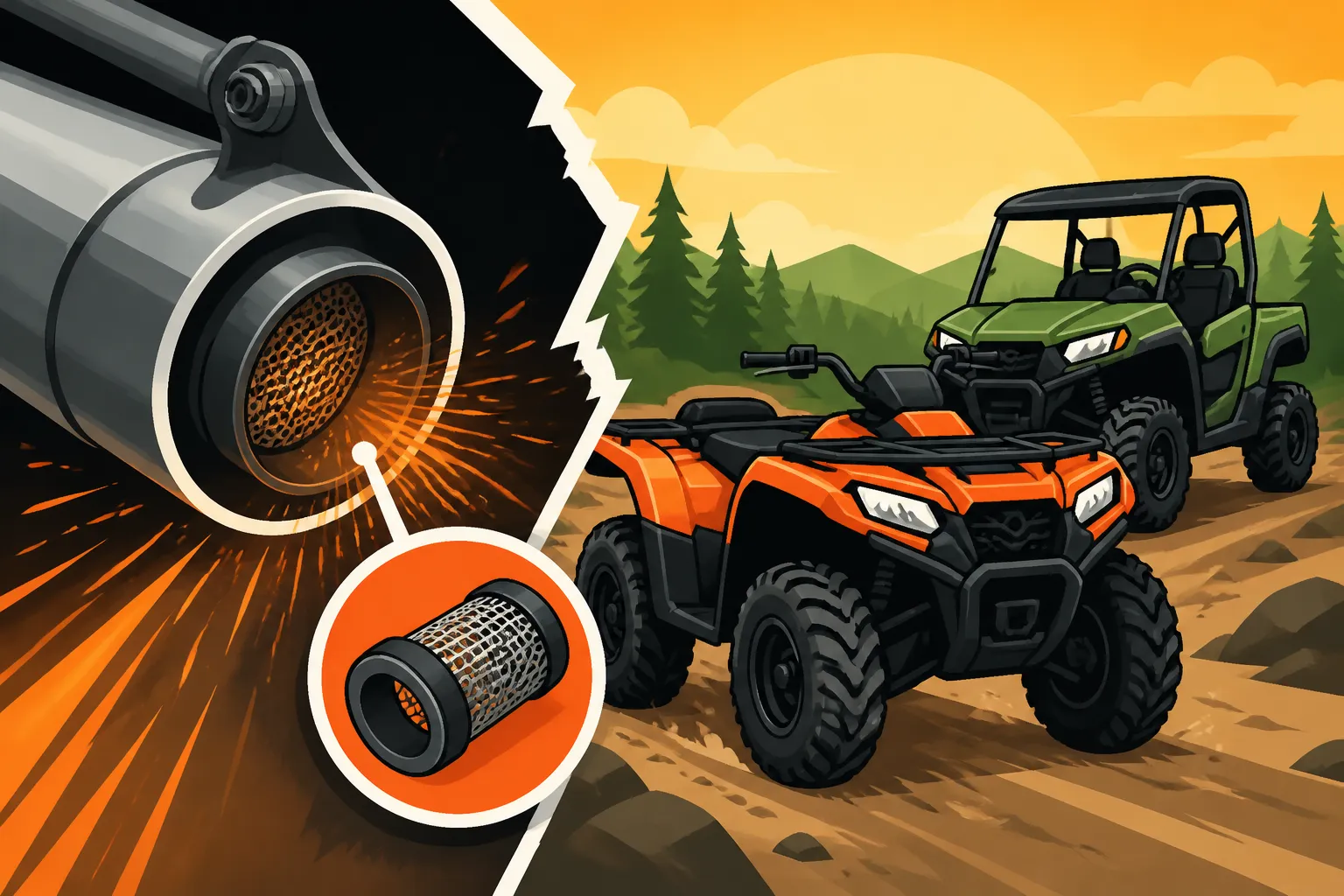
The Spark Arrester Section 2406 Requires
Few things are more frustrating than preparing for a long-anticipated ride on New York's beautiful trails, only to realize you're unsure if your ATV is legally equipped. One of the most overlooked, yet critical, pieces of equipment for any off-road machine in the Empire State is the spark arrester. This guide will dive deep into New York's Section 2406, explaining exactly what you need to know to stay compliant, safe, and on the trails.
Understanding New York's Spark Arrester Law (Section 2406)
When you're out enjoying the rugged beauty of New York on your ATV, whether it's the sweeping vistas of Tug Hill or the more intimate trails of Oswego County, it's easy to get lost in the moment. But the state has very clear rules designed to protect both riders and the environment, and one of the most important centers on your exhaust system. Section 2406 of New York State's Parks, Recreation and Historic Preservation Law specifically addresses the requirement for spark arresters on off-road vehicles. It’s not just a suggestion; it’s a mandate rooted in public safety and environmental preservation.
This section essentially states that any all-terrain vehicle operated in New York must be equipped with an adequate muffler and a spark arrester that has been approved by the U.S. Forest Service (USFS). The law doesn't get into the nitty-gritty of how the spark arrester works, but it’s unequivocal about its presence and approval. This means that if you're planning to hit any designated trails, state land where ATVs are permitted, or even many private lands, you absolutely must have this device in working order. Ignorance of the law isn't a valid defense, and trust me, you don't want to learn about it the hard way from a conservation officer or park ranger.
The intent behind Section 2406 is simple: prevent wildfires. ATVs, especially older models or those with modified exhaust systems, can emit hot carbon particles or sparks from their engines. In dry conditions, these sparks can easily ignite leaves, grass, or other flammable debris, leading to devastating wildfires. New York, with its vast tracts of forests and wildlands, takes this threat very seriously. Ensuring every ATV has a proper spark arrester is a proactive step to mitigate this risk, protecting natural resources, wildlife, and surrounding communities. It's a small part on your machine that plays a huge role in responsible riding.
What "Approved by the U.S. Forest Service" Really Means
When the law specifies "approved by the U.S. Forest Service," it's not just a fancy phrase; it refers to a specific testing and certification standard. The USFS conducts rigorous tests on spark arresters to ensure they effectively trap carbon particles larger than a certain size. If a device passes these tests, it receives a stamp of approval, often visibly etched or stamped onto the arrester itself or the exhaust system it's integrated into. This certification is your proof that the device meets the minimum safety standards set forth to prevent accidental fires.
Many aftermarket exhaust systems or stand-alone spark arresters will clearly state "USFS Approved" or "Forest Service Approved" and display a specific code or number. This marking is crucial. Without it, even if you believe your muffler has some sort of spark-catching capability, it might not meet the legal definition. It’s like having a driver’s license from another country; it might be valid elsewhere, but for New York, you need the specific approval. When you're buying a new ATV or an aftermarket exhaust, make sure to look for this critical stamp.
For many riders, this means doing a little homework. If your machine is stock from a reputable manufacturer, chances are its exhaust system came with an integrated, USFS-approved spark arrester. However, if you've bought a used ATV, especially one with aftermarket modifications, or if you're upgrading your exhaust, you need to be extra vigilant. Always check the product specifications and look for that USFS stamp. Reputable parts suppliers and brands like SuperATV typically highlight this certification for compliant products, making your search a bit easier. It's a small detail, but one that can prevent a big headache down the road.
Why Spark Arresters Are Non-Negotiable for New York Riding
Beyond the legal requirement, having a properly functioning spark arrester is fundamental to responsible ATV operation in New York. We've all seen the news reports of massive wildfires ripping through forests, often started by a single spark. New York's forests, especially during dry spells in late spring, summer, and early fall, are particularly vulnerable. A well-maintained spark arrester acts as a critical line of defense, keeping those potentially destructive sparks contained within your exhaust system and away from the dry tinder of the forest floor.
Think about the sheer amount of effort that goes into maintaining New York's trail systems and public lands. Many of these trails are managed by local clubs, county parks, or the state itself, often relying on volunteer efforts and public funding. A single, preventable wildfire caused by an unarrested spark could lead to devastating damage, closures, and even permanent bans on ATV access in certain areas. Riders often express frustration about limited riding opportunities in New York; contributing to a wildfire would only exacerbate that problem. So, while it might seem like a minor component, it's really about protecting the privilege of riding in these beautiful places.
Moreover, the absence of a spark arrester doesn't just put the environment at risk; it also puts you and your fellow riders in a precarious position. If a fire starts due to your machine, you could face severe legal consequences, including hefty fines, liability for firefighting costs, and even criminal charges. Imagine trying to explain to a judge why you thought skipping this simple safety device was worth the risk. It’s a stark reminder that our freedom to enjoy the outdoors comes with a significant responsibility to respect and protect it. This is why the [New York Equipment Rules for ATVs] are so clear on this point.
The Real-World Risk of Fire Without One
To truly understand why New York mandates spark arresters, consider a common riding scenario. You're riding in the Lewis County ATV Trail System in mid-August. It's been a dry summer, the ground cover is brittle, and the leaves are already starting to crisp at the edges. You pull over to take a break, your engine still hot. If your ATV lacks a spark arrester, or if it's clogged and ineffective, a hot carbon particle could easily be ejected from your exhaust pipe. That tiny ember, no bigger than a grain of rice, could land on a pile of dry pine needles or a patch of sun-baked grass. Within minutes, a small puff of smoke can turn into an uncontainable blaze.
Another scenario might involve riding through tall, dry grass on a private farm field (with permission, of course) or an unmanaged trail. The friction of the hot exhaust pipe against the dry vegetation can also be a fire hazard, but the greater risk comes from those ejected sparks. The sound of a backfiring engine, while sometimes thrilling, can also be a sign of uncombusted fuel escaping the engine, and without a spark arrester, that can carry hot, glowing carbon. It's a risk that is entirely preventable with the right equipment.
The consequences of such an event can be catastrophic. Beyond the environmental damage and potential loss of property, there’s the immediate danger to human life. Firefighters, emergency services, and even other riders could be put at risk. This isn't just a theoretical concern; it's why every single piece of legislation like Section 2406 exists. It's a lesson learned from past incidents and a proactive measure to keep everyone safe. When you consider riding without one, you're not just risking a ticket; you're risking a disaster.
Identifying a USFS-Approved Spark Arrester
Knowing that you need a USFS-approved spark arrester is one thing; actually identifying one on your machine or when shopping for parts is another. The good news is that the USFS makes it relatively easy by requiring specific markings. These markings serve as visual proof that the device has met the federal standards for fire prevention. If you can’t find these markings, or if they’re illegible, you might have a problem on your hands.
The most common form of USFS approval will be a stamped or etched marking directly on the spark arrester itself or on the muffler it's integrated into. This mark usually includes the letters "USFS" or "USDA Forest Service" along with a model number or identification code. Sometimes it might say "Spark Arrester – USFS Approved." It’s designed to be permanent and visible, even after years of riding and exposure to the elements. You might need to clean off some mud or grime, but it should be there.
If you’re unsure about your current setup, get down and dirty. Inspect your muffler and exhaust pipe, typically where the exhaust gases exit. Look for that crucial stamp. If you're considering an aftermarket exhaust or a slip-on muffler, verify with the manufacturer or retailer that it explicitly carries this USFS approval. Don’t just take a salesperson's word for it; ask for documentation or point to the physical marking. This small verification step is far better than facing fines or being turned away from a trailhead because your equipment doesn't pass muster. It's an important part of ensuring your machine is compliant with [New York Equipment Rules for ATVs].
Where to Look for the Stamp and What It Means
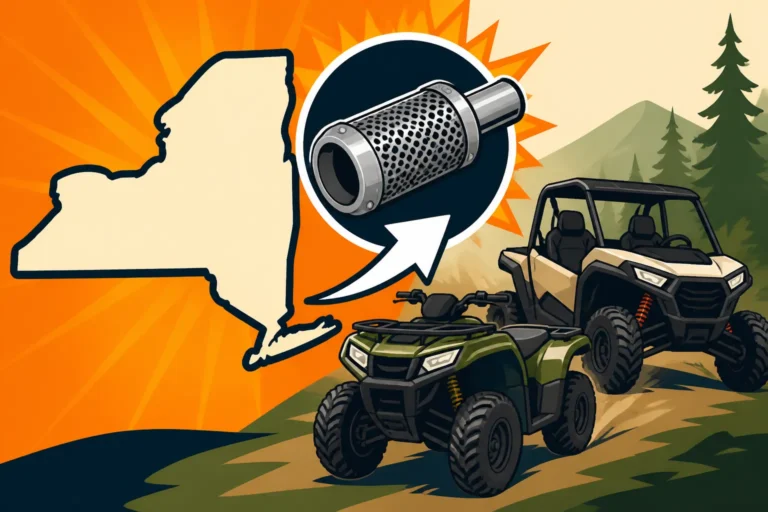
When you're trying to locate the USFS stamp on your ATV's exhaust system, start by looking at the very end of the muffler, where the exhaust gases exit. For most ATVs, the spark arrester is a screen-type device located just inside the muffler outlet, or it may be an integral part of the muffler's internal baffling. Manufacturers usually stamp the approval on the visible exterior of the muffler housing, close to the outlet, or sometimes on the end cap itself. You might need a flashlight and a rag to clean off any accumulated dirt, mud, or carbon buildup to clearly see the marking.
The stamp typically looks something like "USFS Approved Spark Arrester – SA-YY-ZZZ" where SA denotes "Spark Arrester" and the Y's and Z's represent specific certification numbers. This unique identifier tells the USFS and enforcement officers that this particular design has undergone and passed their stringent testing. It confirms that the device is capable of preventing the escape of dangerous sparks that could ignite a wildfire. Without this specific marking, even if your exhaust seems to muffle sound adequately or has a fine mesh screen, it may not be considered legally compliant under New York's Section 2406.
If you purchase an aftermarket exhaust system, the product description should explicitly state its USFS approval status. Reputable manufacturers understand the importance of this certification, especially for products sold in areas with strict fire prevention laws. For instance, if you're browsing for performance parts or replacement exhaust components from a company like SuperATV, their product listings for compliant exhaust systems will usually highlight the USFS approval. Always prioritize systems that clearly display this certification to avoid any potential legal issues or safety hazards down the trail.
Maintaining and Inspecting Your Spark Arrester
Even if your ATV came equipped with a USFS-approved spark arrester, your responsibility doesn't end there. Like any component on your machine, spark arresters require regular maintenance and inspection to ensure they remain effective and compliant. Neglecting this simple task can lead to a clogged arrester, which not only makes it less effective at trapping sparks but can also reduce engine performance and potentially cause damage to your exhaust system. A well-maintained arrester is key to safe and legal riding.
Regular inspection is easy. After a few rides, especially if you've been in dusty or muddy conditions, carefully remove the spark arrester screen (if it's a removable type) and check for carbon buildup. Carbon is a byproduct of combustion, and it can accumulate on the screen, reducing the mesh size and making it less efficient. If the screen is excessively clogged, it can restrict exhaust flow, causing your engine to run hotter and lose power. This is not just about legality; it's about keeping your ATV running smoothly.
Cleaning your spark arrester is usually a straightforward process. For screen-type arresters, simply use a wire brush or a small pick to carefully scrape away the carbon deposits. Be gentle so you don't damage the screen itself. Once clean, reinstall it, ensuring it's seated properly. If your spark arrester is an integral part of your muffler and not easily removable, you might need to consult your owner's manual for cleaning instructions or consider a specialized exhaust cleaner. Make this a part of your routine maintenance checklist, just like checking your oil or tire pressure. It takes minutes but can save you from a major problem.
Steps for Routine Cleaning and Damage Check
To keep your spark arrester in top shape, here’s a simple routine you can follow before or after every few rides, especially during dry seasons. First, ensure your ATV is cool to the touch. Exhaust components get extremely hot, so safety first! Locate your spark arrester. For many ATVs, this is a removable screen or insert at the very end of your muffler. You might need a screwdriver or a small wrench to remove a couple of bolts or a retaining clip to access it.
Once the spark arrester is removed, visually inspect it. Look for excessive carbon buildup, which will appear as a dark, crusty layer on the screen. Also, check for any physical damage: tears in the mesh, bent components, or holes larger than the original design. A damaged arrester is as ineffective as a missing one. If you find significant damage, it's time for a replacement. Do not attempt to patch or repair a damaged screen, as it may compromise its effectiveness and USFS approval.
For cleaning, use a stiff wire brush to gently scrub away the carbon deposits from the screen. Some riders even use a small torch to carefully burn off the carbon, but if you choose this method, be extremely cautious and do it in a well-ventilated area away from anything flammable. Once clean, reinstall the spark arrester, making sure it fits snugly and securely. A loose arrester can fall out, rendering your machine non-compliant. Adding this quick check to your post-ride cleanup routine is a small investment that pays off big in peace of mind and compliance.
What Happens If You Ride Without One in New York
Riding an ATV without a USFS-approved spark arrester in New York is not just irresponsible; it's illegal. The consequences can range from inconvenient and costly to severe, completely derailing your day of riding and potentially impacting your future access to trails. Enforcement officers, including New York State Police, local sheriff's deputies, and Department of Environmental Conservation (DEC) officers, are well aware of this requirement and will check for compliance, especially in popular riding areas like the Tug Hill Plateau or Lewis County's extensive trail network.
The immediate consequence if you're caught without a compliant spark arrester is usually a citation. This can come with a hefty fine, and the officer may order you to cease riding until the issue is resolved. Imagine loading up your ATV, driving hours to a trailhead, only to be turned away or ticketed before you even get dirty. It's a frustrating experience that could have been easily avoided. For a more detailed look at the financial impact, you might want to read about [New York Fines for an ATV Violation].
Beyond the ticket, there's the risk of liability. If your non-compliant ATV is responsible for starting a wildfire, the legal ramifications escalate dramatically. You could be held liable for property damage, environmental rehabilitation costs, and the immense expense of fighting the fire. This could run into hundreds of thousands, if not millions, of dollars. It's a burden no one wants to face, all for the sake of neglecting a relatively inexpensive and easy-to-maintain piece of equipment.
Fines, Trail Closures, and Legal Liabilities
Being caught riding an ATV without a USFS-approved spark arrester in New York can quickly turn a fun outing into a costly headache. Typically, the first thing you'll receive is a summons or ticket. While specific fine amounts can vary, state law allows for penalties that can quickly add up, easily costing you a significant chunk of change. This fine is generally in the realm of other equipment violations, and it's certainly enough to put a damper on your weekend plans. In some cases, especially if it's a first offense, you might just get a warning, but it’s not something to bank on.
Beyond the immediate fine, an officer can order you off the trails and forbid you from riding until your ATV is brought into compliance. This means your day is over, and you'll have to figure out how to transport your machine home or to a repair shop without riding it. Imagine being deep in the [Lewis County ATV Trail System in New York] and having your ride cut short, potentially leaving you stranded or facing a long, slow haul back to your trailer. It's an inconvenience that can feel like an extra penalty on top of the financial one.
The most severe consequences, however, come into play if your non-compliant machine causes a fire. In New York, starting a wildfire, even accidentally, can lead to charges for reckless endangerment, criminal mischief, or even arson, depending on the circumstances and intent. Civil liability is also a huge concern. You could be sued for the costs of property damage, the expenses incurred by fire departments, and even for the environmental damage caused to public or private lands. These costs can be astronomical, potentially bankrupting an individual. The simple act of ensuring your spark arrester is in place and properly functioning is a small price to pay to avoid such devastating outcomes.
Choosing and Installing a Compliant Spark Arrester
When it comes to outfitting your ATV with a compliant spark arrester, you generally have a few options. The easiest route is to ensure your stock exhaust system is intact and in good working order, as most reputable manufacturers install USFS-approved spark arresters from the factory. However, if your original arrester is damaged, missing, or you're upgrading your exhaust, you'll need to choose a suitable replacement. The key is always to look for that "USFS Approved" stamp.
For many riders, opting for a quality aftermarket exhaust system that is explicitly advertised as USFS-approved is a popular choice. These systems often offer improved performance or a different sound while still maintaining legal compliance. When shopping, don't be swayed by just any "performance exhaust"; confirm that it carries the necessary USFS certification. Some brands even offer specific spark arrester inserts that can be added to their exhaust pipes. For example, brands like SuperATV are well-known in the off-road community and often provide exhaust options or accessories that meet USFS standards, but always verify the specific product's compliance.
Installation of a spark arrester is usually a straightforward mechanical task that most riders can handle with basic tools. If it's a slip-on type that fits into your existing muffler, it might just be a matter of securing a few bolts or a retaining clip. If you're replacing an entire exhaust system, the process will be more involved, often requiring removal of the old system and careful fitting of the new one, ensuring all connections are tight and leak-free. If you're not comfortable with mechanical work, it's always best to have a qualified technician handle the installation to ensure everything is done correctly and safely.
Aftermarket Options and OEM Replacements
When your original spark arrester bites the dust or you're looking to upgrade your ATV's exhaust, you'll encounter two main paths: OEM (Original Equipment Manufacturer) replacements or aftermarket options. OEM replacements are designed to be identical to the part your ATV came with from the factory. These are a safe bet for compliance, as they are guaranteed to meet all original specifications, including USFS approval. You can typically purchase these through your ATV dealer or an authorized parts retailer. The benefit here is peace of mind, knowing it's a perfect fit and legally sound.
However, many riders choose aftermarket options for various reasons, such as performance gains, a different exhaust note, or simply a more robust design. This is where you need to be particularly diligent about checking for USFS approval. Not all aftermarket exhausts are created equal, and some performance-oriented systems may not include a spark arrester or may not be USFS-certified. Always read product descriptions carefully and look for explicit statements of USFS compliance. If it's not clearly stated, assume it's not compliant and move on, unless you plan to add a separate, certified spark arrester. Companies like SuperATV, known for a wide range of ATV accessories, often clearly mark their USFS-compliant exhaust components, making it easier for consumers to make informed choices.
| Arrester Type | Description | USFS Approval Check | Common Maintenance |
|---|---|---|---|
| Screen Type | Fine wire mesh or perforated plate inserted in muffler. | Look for stamp on screen/muffler. Often removable. | Brush off carbon, check for tears. |
| Turbine Type | Vane-style device that spins to throw sparks out. | Stamp on muffler housing. Less common on ATVs. | Inspect for blockages, wear. |
| Integrated | Built into the muffler's internal baffling. | Stamp on muffler housing. Not easily removable. | Consult manual, chemical cleaning. |
| Aftermarket | Replaces stock muffler or section. | Must be explicitly USFS certified. | Follow manufacturer's guidance. |
Installing either an OEM or aftermarket spark arrester usually involves basic hand tools. For most screen-type arresters, you simply remove a screw or two, pull out the old one, clean any carbon from the housing, and slide in the new one. If you’re replacing an entire muffler, it will involve removing exhaust springs, bolts, and possibly an exhaust gasket. Always use new gaskets if recommended. After installation, start your ATV and listen for any exhaust leaks, which can indicate an improper seal. A secure and leak-free installation ensures both proper function and legal compliance.
The Spark Arrester and [Mufflers Under the Federal Noise Standard]
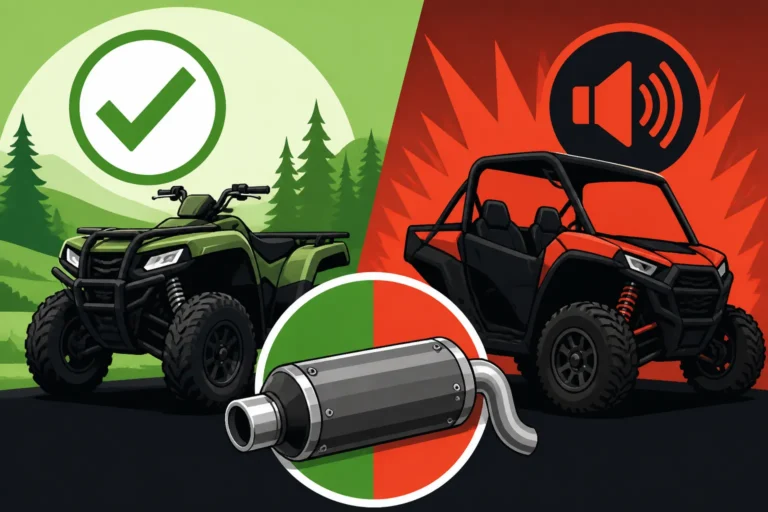
It's important to understand that while spark arresters are focused on fire prevention, they are often intrinsically linked to the muffler's function, which primarily deals with noise reduction. New York State also has regulations concerning the noise levels produced by ATVs. Section 2406 requires an "adequate muffler," which generally means one that meets federal noise standards. The spark arrester, being a component within or at the end of the muffler, contributes to the overall exhaust flow and, consequently, the sound output.
A properly designed and USFS-approved spark arrester is engineered to perform its fire-prevention duty without unduly restricting exhaust flow to the point of significantly altering engine performance or creating excessive backpressure. However, a clogged spark arrester can drastically increase backpressure, leading to a louder exhaust note as the engine struggles to expel gases, and can also lead to engine overheating and reduced power. This is why regular cleaning and maintenance are crucial – they ensure both fire safety and optimal engine function, keeping your ATV compliant with noise regulations.
When considering aftermarket exhaust systems, riders often seek a louder or different sound. However, a "loud" exhaust doesn't automatically mean it's non-compliant with noise standards, nor does it mean it lacks a spark arrester. Many performance mufflers are designed to be louder than stock but still integrate a USFS-approved spark arrester and fall within acceptable decibel limits. The key is to verify both aspects: USFS approval for spark arresting and compliance with federal noise standards. Reputable manufacturers will provide this information, helping you choose a system that keeps you legal on all fronts in New York. [What a New York Officer Checks Roadside] often includes both visual inspection and, sometimes, sound checks.
Disclaimer
This article is for general informational purposes only and does not constitute professional advice. Laws, prices and regulations vary by location and change over time. Consult a qualified professional for guidance on your specific situation.