What Riding Without a Plate Costs in New York
It's a common scenario in New York, especially for those new to the ATV scene or who've only ever ridden on private property: you’ve got a quad, you’re ready to hit the trails or maybe just cross a road, but that little license plate isn't affixed to the back. It’s easy to think, "What's the big deal?" but ignoring New York's ATV registration rules can lead to a heap of trouble and unexpected costs far beyond a simple ticket. This guide will walk you through the various financial and legal pitfalls of riding an ATV without proper registration and a plate in the Empire State.
The Immediate Financial Hit: Fines and Impoundment
When you're caught riding an unregistered ATV in New York, the first thing you'll likely face is a penalty that hits your wallet directly. This isn't just a minor slap on the wrist; the state takes these regulations seriously for everyone's safety and accountability.
Understanding the Fine Structure
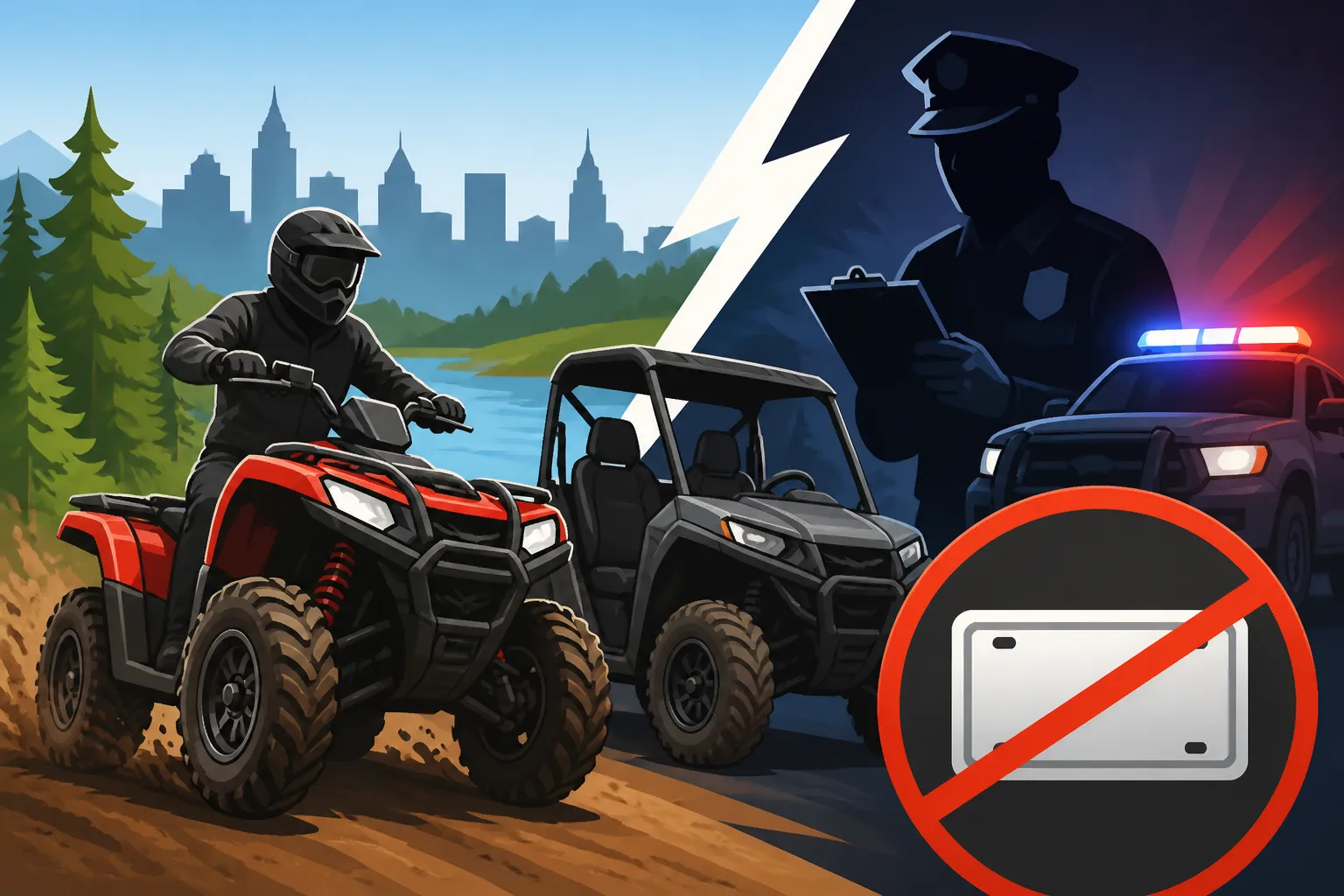
New York law is pretty clear: an ATV operating on public lands or trails, or even crossing a public highway, must be registered. If you're stopped by law enforcement—be it a State Trooper, a county sheriff, or a local police officer—and your machine lacks a current registration and visible plate, you're looking at a fine. These fines aren't set in stone for every single offense, but they are designed to be a deterrent. For a first offense of riding an unregistered ATV, the fine can be substantial, often in the range of hundreds of dollars. This amount can increase significantly if it's a repeat offense or if other violations are present, such as operating without proper safety equipment or in an unauthorized area.
Imagine you're out enjoying a beautiful fall day on the trails near the Tug Hill Plateau. You've been careful, following all the speed limits and staying on marked paths. Suddenly, you round a bend and there's a ranger. They stop you, ask for your registration, and you realize your plate isn't on the machine, or worse, you never registered it at all. That peaceful ride just became a very expensive lesson, and you'll likely receive a summons right there on the trail. The cost of that initial fine alone could have covered your [New York ATV Registration Cost] for several years, making the decision not to register feel particularly regrettable.
The Specter of Impoundment
Beyond the immediate fine, one of the most stressful and costly consequences of riding an unregistered ATV is the potential for impoundment. Law enforcement has the authority to seize your machine if it's being operated illegally, and "unregistered" falls squarely into that category. If your ATV is impounded, you're not just dealing with the initial fine; you're also on the hook for a whole new set of expenses.
First, there are towing fees. Getting your quad from the trail or roadside to an impound lot isn't free, and these fees can add up quickly, especially if you're in a remote area. Then, there are daily storage fees at the impound lot. These fees can range from modest to exorbitant, accumulating every single day your machine sits there. The longer it takes you to resolve the situation and get your ATV released, the more expensive it becomes. To get your ATV back, you'll generally need to pay all outstanding fines, prove ownership, and then pay the towing and storage fees. Sometimes, the cost of getting an impounded, unregistered ATV back can easily exceed the value of the machine itself, forcing owners into a tough spot where they might even abandon the ATV rather than pay the escalating costs. Imagine the frustration of having to pay hundreds, possibly thousands, just to retrieve your machine, only to then have to register it properly anyway if you want to ride it legally again.
The Heavier Burden: Liability and Insurance Gaps
While fines and impoundment are significant, the financial repercussions can skyrocket if your unregistered ATV is involved in an accident. New York has very specific requirements for ATV insurance, and riding without it—which often goes hand-in-hand with riding without registration—leaves you exposed to devastating financial risks.
The Mandatory Insurance Requirement
In New York, ATV insurance isn't optional for riding off your own private property; it's mandatory. Specifically, the law requires you to carry liability insurance with minimum coverage amounts, similar to what's required for cars. This insurance is designed to protect you financially if you cause an accident that results in injury to another person or damage to their property. If you're riding an unregistered ATV, it's highly likely you also don't have the required insurance, or your policy might be invalid because the machine isn't legally registered. This is where a minor infraction can turn into a life-altering financial disaster.
Consider a scenario: you're riding your unregistered quad on a designated trail, but you misjudge a turn and collide with another rider. The other rider is injured, and their machine is damaged. Because your ATV was unregistered and uninsured, you're personally liable for all the medical bills, lost wages, and property damage suffered by the other party. [New York ATV Insurance Requirement] details the minimums, but even those amounts can be quickly exhausted in a serious accident. Without insurance, you could be looking at tens of thousands, hundreds of thousands, or even millions of dollars in damages, all coming out of your pocket. This isn't just about paying a fine; it's about potentially losing your savings, your home, or facing years of garnished wages.
Medical Bills and Property Damage
Beyond the legal fines and impoundment, the real financial gut punch often comes from the costs associated with an accident. If you're involved in a crash, whether you're at fault or not, medical bills can pile up at an alarming rate. Even if your own health insurance covers your injuries, the other party's medical expenses, which you could be liable for, can be astronomical. A broken bone, a concussion, or more severe injuries can lead to extensive hospital stays, surgeries, physical therapy, and long-term care.
Then there's property damage. ATVs, especially modern ones, are not cheap. If you damage another person's machine, or even their fence, shed, or vehicle while crossing a private lane, you'll be responsible for those repair or replacement costs. Without liability insurance to step in, every single dollar of that burden falls directly on you. This includes not just the physical repairs but also potential legal fees if the injured party decides to sue you for their damages. A simple fender bender with a car while crossing a road could easily total the car, and without insurance, you would face the full cost of replacing it, plus any medical expenses for the driver and passengers. [New York Fines for Riding Without Insurance] are just the tip of the iceberg compared to actual liability costs.
Beyond the Ticket: Long-Term Repercussions and Legal Headaches
The immediate costs and the risks of an accident are severe enough, but riding without a plate in New York can also lead to a cascade of long-term legal and financial headaches that impact your ability to ride in the future and even your general legal standing.
Future Registration Difficulties
Getting caught riding an unregistered ATV can complicate your ability to register it—or any other ATV—in the future. While New York doesn't permanently ban you from registering a machine for a first offense of simply being unregistered, repeat offenses or a history of disregard for vehicle laws can raise red flags. You might face closer scrutiny, or certain privileges could be revoked if your actions demonstrate a pattern of non-compliance. Furthermore, if your ATV was impounded, you often cannot retrieve it until it is properly registered, creating a catch-22 situation where you have to complete the registration process under duress, usually incurring additional rush fees or inconveniences.
Sometimes, if a machine is seized and later sold at auction due to unpaid impound fees, it can create a messy paper trail for any future owner, highlighting the importance of having clear [New York ATV Bill of Sale Requirements] even for seemingly simple private sales. If you don't have proper documentation of ownership, getting an unregistered, impounded machine back becomes even more challenging. You might need to prove who owns the machine before they even let you start the registration process, and without a title (which New York ATVs don't have), things like a bill of sale become critical. Resources like LawDepot can be helpful for ensuring you have legally sound documents for any purchase or sale, providing a clear chain of ownership should you ever need it for registration or retrieval.
Legal Battles and Criminal Charges
In some situations, riding an unregistered ATV can escalate beyond a simple traffic infraction to more serious legal battles or even criminal charges. If your unregistered ATV is involved in an accident causing serious injury or death, prosecutors might factor in the lack of registration and insurance as evidence of negligence or recklessness. This could lead to criminal charges, potentially including jail time, heavy fines, and a permanent criminal record, in addition to the civil liabilities mentioned earlier.
Even without an accident, riding on prohibited lands, such as state parks or private property without permission, while unregistered, can compound the charges. Trespassing, coupled with an unregistered vehicle, presents a much graver picture to a judge than either offense alone. Furthermore, if the machine is believed to be stolen or if its VIN (Vehicle Identification Number) is obscured or tampered with, the lack of registration immediately raises suspicions, potentially leading to theft charges or investigations, regardless of your actual innocence. This kind of legal entanglement can lead to thousands of dollars in legal fees, stress, and a significant disruption to your life, all for trying to save a few dollars on registration.
Avoiding the Hassle: Why Proper Registration Pays Off
The penalties, liabilities, and long-term legal headaches associated with riding an unregistered ATV in New York are clearly not worth the risk. Proper registration is not just a bureaucratic hoop to jump through; it's a fundamental part of responsible ATV ownership and ensures you can enjoy your machine legally and safely.
The Simplicity of New York ATV Registration
Registering your ATV in New York is a straightforward process, designed to be accessible to all owners. While it might seem like an inconvenience, it pales in comparison to the hassle of fines, impoundment, or legal battles. To register, you'll generally need proof of ownership (like a bill of sale, especially since [New York Issues No ATV Title]), proof of identity, proof of insurance, and payment for the registration fee and the one-time plate fee. Many local DMV offices can handle the process quickly. Once registered, you'll receive a registration certificate and the all-important license plate and validation decal.
The process for [Registering an ATV in New York] is well-defined. By taking an hour or two out of your day to handle the paperwork, you avoid potentially ruinous consequences down the line. It's a small investment in time and money for significant peace of mind. Remember, the [New York ATV Plate Fee You Pay Only Once], and the annual renewal fee is quite modest, especially when weighed against the cost of a single ticket.
The Benefits of Being a Registered, Insured Rider
Being a properly registered and insured ATV rider in New York opens up a world of legal riding opportunities and provides crucial protection. With your machine registered, you can confidently ride on designated ATV trails, cross public highways where permitted, and participate in organized events without fear of legal repercussions. Your registration contributes to state and county programs that maintain and expand these very trails, meaning your fee helps support the sport you love.
More importantly, carrying the mandated insurance acts as your financial shield. Should an unforeseen accident occur, your liability insurance will help cover damages and injuries to others, protecting your assets and future. You won't have to worry about losing everything you've worked for due to a single mishap on the trail. This financial protection, combined with the legal freedom to explore New York's vast ATV opportunities, makes registration and insurance an essential part of the riding experience. So before you head out, make sure that plate is securely mounted, your registration is current, and your insurance card is in your wallet. It's the smart, responsible way to ride in New York. You can also review documents from resources like LawDepot if you need to formalize agreements for trail access on private land, adding another layer of security to your riding adventures.
| Violation Type | Immediate Financial Impact | Potential Long-Term Financial Impact | Legal Consequences (Beyond Fines) |
|---|---|---|---|
| No Registration / No Plate | Significant fines (hundreds of dollars) | Increased scrutiny for future registrations | Summons, potential criminal charges if VIN tampered |
| Impoundment | Towing fees, daily storage fees | Loss of ATV if costs exceed value | Forced registration to retrieve, ownership disputes |
| No Mandatory Insurance | None (until an incident) | Personal liability for all damages and injuries | Lawsuits, garnished wages, loss of assets, potential criminal charges in serious accidents |
| Accident (Unregistered & Uninsured) | Fines, medical bills, property damage | Bankrupcy, loss of home, long-term debt | Civil lawsuits, criminal charges (negligence/recklessness) |
Disclaimer
This article is for general informational purposes only and does not constitute professional advice. Laws, prices and regulations vary by location and change over time. Consult a qualified professional for guidance on your specific situation.