Registering an Inherited Machine in New York
Losing a loved one is an incredibly difficult time, filled with grief, complex emotions, and an overwhelming list of tasks. Amidst the personal items and legal paperwork, you might discover an ATV or UTV and suddenly face the bewildering challenge of getting it registered in your name, especially in New York where the rules for these machines are often less straightforward than for cars or motorcycles. This guide is here to walk you through the often-confusing process of registering an inherited ATV or UTV in New York, offering clarity and practical steps during a sensitive period.
The Initial Shock and Why New York is Different
When you're dealing with the loss of someone close, the last thing you want to navigate is bureaucratic red tape, especially concerning something like an ATV. You might be sifting through boxes of old documents, trying to make sense of what’s needed, all while grappling with your emotions. This is a common and completely valid struggle. New York State's approach to ATV ownership only adds another layer of complexity, as it deviates significantly from how most other vehicles are handled.
The Emotional Burden of Estate Management
The sheer volume of administrative tasks that fall upon someone managing an estate can feel insurmountable. From notifying banks and utilities to settling debts and distributing assets, it's a marathon, not a sprint. Finding an ATV in the mix can feel like just another hurdle, especially if you're not familiar with powersports or the specific nuances of New York's regulations. You might feel a sense of obligation to keep the machine, or perhaps you intend to sell it, but either path requires proving legal ownership. The emotional toll can make focusing on these details incredibly difficult, but taking it one step at a time, as we will here, is key to success.
Imagine discovering a well-loved quad in the garage, perhaps one your father used for hunting or just enjoying the trails up in the Tug Hill area. It holds sentimental value, but now you’re faced with not just the memories, but also the practical question: "How do I put this in my name?" Or perhaps it's a side-by-side that was used on a family farm. You know it’s a valuable asset, but without the proper documentation, its value remains locked away. The DMV can seem like an intimidating fortress when you're already feeling vulnerable, but understanding the system makes it less daunting.
New York's No-Title Rule for ATVs and Its Implications
One of the biggest hurdles and sources of confusion for anyone dealing with ATV ownership in New York is the absence of a traditional vehicle title. Unlike cars, trucks, or even motorcycles, New York State does not issue titles for ATVs. This means there's no single, universally recognized document that explicitly states who the legal owner is in the way a car title does. This can be incredibly frustrating, especially when you're trying to prove ownership for an inherited machine. You might expect to find a "title" among your loved one's papers, only to come up empty-handed, leaving you wondering how on earth you're supposed to proceed. This is precisely [Why New York Issues No ATV Title].
Instead of a title, New York relies primarily on the machine's previous registration card and a bill of sale (if applicable) to establish a chain of ownership. For an inherited ATV, this means the previous owner's registration card becomes incredibly important, alongside documents that legally transfer the deceased's assets to you. Without a definitive title, the DMV needs to see a clear paper trail demonstrating that you are the rightful successor to the machine. This reliance on a combination of documents rather than one single title is a critical distinction you must understand when approaching the registration process.
Gathering the Necessary Paperwork After a Loss
Successfully registering an inherited ATV in New York hinges on having the right documents. This can be a bit of a scavenger hunt, especially if the deceased wasn't meticulous with their record-keeping. Don't get discouraged if you don't have everything immediately; many people find themselves in this situation. The goal is to piece together enough evidence to satisfy the DMV's requirements.
The Importance of the Original Registration Card
The most crucial document you can hope to find is the deceased's last New York ATV registration card. This small card, typically carried in the wallet or kept with the machine's other documents, serves as proof that the ATV was previously registered and indicates the last known owner. Think of it as the closest thing New York has to a "title" for these machines. It will contain the machine's Vehicle Identification Number (VIN), make, model, and the expiration date of the last registration.
If you can locate this card, it significantly streamlines the process. It immediately establishes a link between the deceased and the ATV. If the registration has expired, that's perfectly fine; what matters is having the physical card to show the DMV. Make sure to check glove compartments, owner's manuals, and any file cabinets where important documents might have been stored. If you can't find it, don't panic – there are still ways forward, though they may involve a few extra steps in [Proving Ownership Without a Title in New York].
When a Bill of Sale Becomes Crucial
While the registration card is vital, a bill of sale can also play a significant role, particularly if the deceased bought the ATV from a private seller and perhaps didn't immediately register it, or if they purchased it from a dealer many years ago and the original registration card is lost. A bill of sale acts as a receipt and a transfer of ownership from the previous seller to the deceased.
If you don't have the original registration card, but you do have a bill of sale showing the deceased as the buyer, this document becomes your primary proof of the deceased's ownership. The DMV will want to see it to establish that the machine was, in fact, theirs. If you cannot find either, you might need to create an affidavit of ownership. This is a sworn statement, often notarized, explaining how the deceased came to own the ATV. Templates for such documents can sometimes be found through legal document services like LawDepot, which can guide you in creating formal agreements or declarations.
Proving Your Right to Inherit: Death Certificates and Wills
Beyond proving the deceased owned the ATV, you must prove that you are the legal heir entitled to take possession of their assets. This is where standard estate documents come into play.
- Death Certificate: A certified copy of the death certificate is always required. This document formally proves the individual's passing and is foundational for all estate-related transactions.
- Will and Probate Documents: If the deceased left a will, you'll need the original will, and critically, the "Letters Testamentary" or "Letters of Administration" issued by the Surrogate's Court. These court-issued documents officially appoint you (or another individual) as the executor or administrator of the estate, granting you the legal authority to manage and distribute the deceased's property, including the ATV. Without these court-stamped letters, the DMV generally cannot transfer ownership, even if the will clearly names you.
- Affidavit of Heirship (No Will): If the deceased passed away "intestate" (without a valid will), the situation becomes a bit more complex. In this case, you might need to present an Affidavit of Heirship. This is a legal document, typically signed by disinterested parties who knew the deceased and their family, stating who the legal heirs are according to New York's intestacy laws. Depending on the value of the estate and the specific county, you might still need to go through a simplified probate process (often called "Small Estate Administration" or "Voluntary Administration") to obtain Letters of Administration from the Surrogate's Court, which formally appoints an administrator. Legal document services such as LawDepot can provide templates and guidance for drafting an affidavit of heirship if your situation warrants it, helping you formalize your claim without a lengthy court battle if the estate is small.
Navigating the New York DMV Process for Inherited ATVs
Once you've gathered your ownership and inheritance documents, it's time to face the New York Department of Motor Vehicles. While it might seem daunting, breaking down the application process into clear steps can make it much more manageable. Remember, the goal is to clearly demonstrate to the DMV that the ATV belonged to the deceased and that you are now the legal party entitled to register it.
Understanding Form MV-51B: The Application for Registration
The primary form you'll need to complete is Form MV-51B, titled "Application for Registration/Title (Non-Titled Vehicles Only)." This form is specifically designed for vehicles that New York State does not title, which perfectly describes ATVs. You'll need to fill out your personal information as the new owner, details about the ATV itself (make, model, year, VIN), and crucially, how you acquired it.
Under the "How Acquired" section, you'll indicate "Inheritance" or "Estate." Be prepared to present all the supporting documents we discussed: the death certificate, the will, Letters Testamentary/Administration, and the deceased's old registration card or bill of sale. It's often helpful to bring photocopies of everything, in addition to the originals, as some DMVs may keep copies for their records. Thoroughly filling out this form with accurate information is key to a smooth transaction. This form is central to [New York ATV Registration Paperwork] and understanding [MV-51B and New York's Non-Titled Vehicles].
The VIN Tracing Requirement for Ownership Proof
A unique and often surprising requirement for registering ATVs in New York is the VIN tracing. The DMV will ask you to provide a pencil tracing of the ATV's Vehicle Identification Number (VIN) directly from the machine's frame. This isn't just a quirky request; it's a security measure to prevent fraud and ensure that the VIN on your paperwork matches the physical machine.
To get a clear tracing, you'll typically place a piece of paper over the VIN (usually stamped into the frame, often near the front wheels, handlebars, or under the seat) and rub a pencil over it until the numbers and letters clearly transfer to the paper. Make sure the tracing is legible and matches the VIN you've written on your MV-51B form. If the VIN is difficult to access or unreadable due to rust or damage, you might need to speak with a DMV supervisor about alternative proof, such as a photo of the VIN or a verification from law enforcement. This specific process is outlined in [Why New York Wants a Pencil Tracing of the VIN].
Dealing with Unregistered or Previously Owned Machines
What if the inherited ATV was never registered by your loved one, or it was purchased but the registration lapsed years ago and the card is nowhere to be found? This adds a layer of complexity, but it's not insurmountable.
- Never Registered: If the deceased bought the ATV new or used but simply never registered it, you'll rely heavily on the bill of sale (if they bought it used) or the original sales invoice from the dealer (if they bought it new). Combined with your estate documents, these show the chain of ownership. You’ll still fill out Form MV-51B and indicate the acquisition as "Inheritance." The DMV will process it as a new registration for the machine in your name.
- Lapsed Registration/Lost Card: If the registration simply expired and the card is lost, you'll follow a similar path. The crucial elements become your Letters Testamentary/Administration and a solid explanation of how the deceased owned the machine. The VIN tracing will be even more critical here, as it provides physical verification. In some cases, if there's absolutely no prior paperwork beyond the estate documents, the DMV might ask for an affidavit of ownership. Again, resources like LawDepot can assist in drafting formal affidavits of ownership that clearly state how the deceased acquired the ATV, even if traditional paperwork is missing. This might also require additional fees for a new plate, as detailed in [The One-Time Plate Fee in New York].
Special Considerations for Different Inheritance Scenarios
Inheritance isn't always a neat process with a clear will and a single heir. Life is messy, and estate administration can reflect that. Understanding how different situations impact your ATV registration is vital.
Intestacy: When There's No Will to Guide You
If your loved one passed away without a valid will (intestate), New York State law dictates how their assets are distributed. This can complicate the process of registering an inherited ATV because there's no written directive from the deceased. In such cases, the Surrogate's Court will appoint an administrator for the estate, usually a close family member, by issuing "Letters of Administration." These letters are just as important as "Letters Testamentary" (for estates with a will) as they provide the legal authority to transfer assets.
Without Letters of Administration, the DMV will be unable to transfer the ATV's registration into your name. Even if you're the sole surviving child or spouse, the court still needs to formally recognize your role as the estate administrator. This process ensures that all potential heirs are properly identified and that assets are distributed according to state law. It can add time and legal costs to the process, but it's a necessary step to establish your legal standing.
Multiple Heirs and Shared Ownership
What happens if the will names multiple beneficiaries, or if intestacy laws dictate that several individuals inherit equally? For example, two siblings might inherit an ATV jointly. In this scenario, you have a few options:
- Joint Registration: The ATV can be registered in both names. This means both individuals would be listed as owners on the registration card. While this might seem equitable, it can complicate future transactions, as both parties would likely need to sign off on any sale or major decision regarding the ATV.
- Agreement to Transfer: The co-heirs can agree that one person will take sole ownership of the ATV. The other heirs would then need to sign a notarized document (often a simple bill of sale from them to the designated owner for a nominal fee, or a formal affidavit of relinquishment) stating they are relinquishing their claim to the ATV. This makes the registration process much simpler for the sole owner. Legal document services like LawDepot can provide templates for an inter-family bill of sale or a release of interest form, making it easier for co-heirs to formalize their agreement to transfer the ATV to one person.
- Sale and Division of Proceeds: The heirs can decide to sell the ATV and divide the proceeds. In this case, one heir might register it in their name (following the standard process) with the intention of selling it, or the estate administrator might handle the sale directly. However, the DMV often prefers that the machine be registered in the name of the selling party to ensure a clear transaction. Understanding [Selling an ATV in New York] becomes critical here.
Selling an Inherited ATV Before Registering It in Your Name
You might find yourself in a situation where you inherit an ATV but have no interest in keeping it. Perhaps you don't ride, or you simply need to liquidate assets as part of the estate. While it's tempting to sell it immediately, it's almost always cleaner and easier to first register the ATV in your name as the new owner.
Think of it this way: to sell a vehicle, you need to prove you have the legal right to do so. If the ATV is still technically registered in the deceased's name, or worse, if it was unregistered, transferring ownership to a third-party buyer becomes convoluted. The buyer will face the same hurdles you're trying to overcome, making your ATV a less attractive purchase. By registering it in your name first, you establish a clear chain of ownership from the estate to you, and then from you to the new buyer. You can then provide the buyer with a new, valid bill of sale from yourself, and your current registration card. This smooths out the transaction and provides confidence to the buyer. This also relates to [Buying a Used ATV in New York] from the buyer's perspective.
Costs, Timelines, and What to Expect
Beyond the paperwork and legalities, there are practical considerations like fees and how long the process might take. Being prepared for these aspects can help manage your expectations and budget during an already challenging time.
Registration Fees and the One-Time Plate Cost
When you finally get to the DMV counter, you'll need to pay the applicable fees to register the ATV in your name. New York charges an annual registration fee, which can vary. This fee covers the administrative costs of maintaining your registration in the state system. You should expect to pay this yearly. You can find out more about the specific figures at [New York ATV Registration Cost].
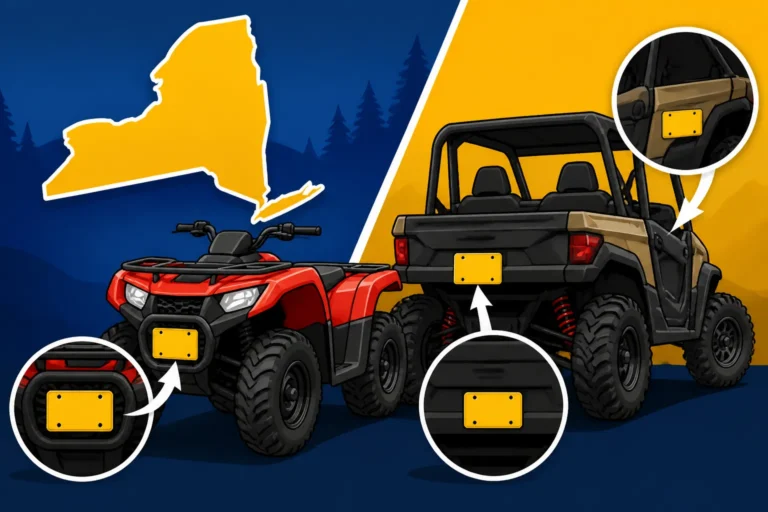
Additionally, there's a one-time plate fee. This fee is paid the first time a new plate is issued for that specific ATV. If the deceased's ATV already had a New York plate, and you're simply re-registering it in your name and keeping the existing plate number (if allowed and in good condition), you might not pay this fee again. However, if a new plate is issued (e.g., if the old one was lost or damaged, or if it's the first time this specific machine has been registered in NY), you will incur this one-time charge. It's a fee you only pay once per plate, not annually, as explained in [New York ATV Plate Fee]. Always check the current fee schedule on the New York DMV website or call your local office to confirm the exact amounts before your visit.
The Annual Renewal Cycle and August 31 Expiration
A common point of confusion for New York ATV owners is the registration expiration date. Unlike many vehicle registrations that expire on your birthday or the anniversary of purchase, New York ATV registrations operate on a fixed annual cycle. All ATV registrations, regardless of when they are initially issued, expire on August 31st of each year.
This means if you register an inherited ATV in, say, June, your registration will still expire on August 31st of that same year, requiring renewal shortly after. If you register it in September, your registration will be valid until August 31st of the following year. There's no pro-rating for partial years, so timing your registration can sometimes feel a little odd, but it's just how the system works. It’s important to mark this date on your calendar so you don't inadvertently ride with an expired registration. This specific date is a key detail for [New York's August 31 Expiration].
Patience is a Virtue: Processing Times and Potential Delays
Dealing with government agencies can often test one's patience, and the DMV is no exception, especially when handling a more complex transaction like an inherited vehicle. While some DMV offices are incredibly efficient, others might have longer wait times, particularly if you're visiting during peak hours.
It’s always a good idea to call your local DMV office ahead of time, if possible, to confirm their specific requirements for inherited ATVs and to ask about the best times to visit. Some offices may even allow you to make an appointment. Be prepared for questions from the clerks; they are simply doing their job to ensure all requirements are met. Bringing all your documents organized and ready will significantly speed up the process. Don't be surprised if the entire transaction takes an hour or more, especially if there are any unique aspects to your situation. Patience and a clear, calm demeanor will serve you well.
Summary of Required Documents for Inherited ATV Registration in New York
| Document Type | With a Will (Testate Estate) | Without a Will (Intestate Estate) | Condition/Purpose |
|---|---|---|---|
| Death Certificate | Certified copy | Certified copy | Proof of deceased's passing |
| Will (Original) | Original will | Not applicable | Deceased's instructions for asset distribution |
| Letters Testamentary | Certified copy from Surrogate's Court | Not applicable | Court order appointing Executor, granting authority to act on estate's behalf |
| Letters of Administration | Not applicable | Certified copy from Surrogate's Court | Court order appointing Administrator, granting authority to act on estate's behalf (if small estate affidavit insufficient) |
| Form MV-51B | Completed by heir/executor | Completed by heir/administrator | Application for Registration (for non-titled vehicles like ATVs) |
| Deceased's Registration Card | Original (if available) | Original (if available) | Primary proof of deceased's prior ownership |
| Bill of Sale (to deceased) | Original (if deceased bought used & no reg card) | Original (if deceased bought used & no reg card) | Secondary proof of deceased's prior ownership |
| VIN Tracing | Pencil rubbing from ATV frame | Pencil rubbing from ATV frame | Physical verification of ATV's identity |
| Affidavit of Ownership | If reg card/bill of sale are missing | If reg card/bill of sale are missing and no Letters of Admin. | Sworn statement explaining how deceased acquired ATV (sometimes required by DMV without other proof) |
| Proof of Insurance | Your current NY ATV insurance policy | Your current NY ATV insurance policy | Mandatory for registration in New York |
This article is for general informational purposes only and does not constitute professional advice. Laws, prices and regulations vary by location and change over time. Consult a qualified professional for guidance on your specific situation.