Registering a Quad Brought From a State With No ATV Program
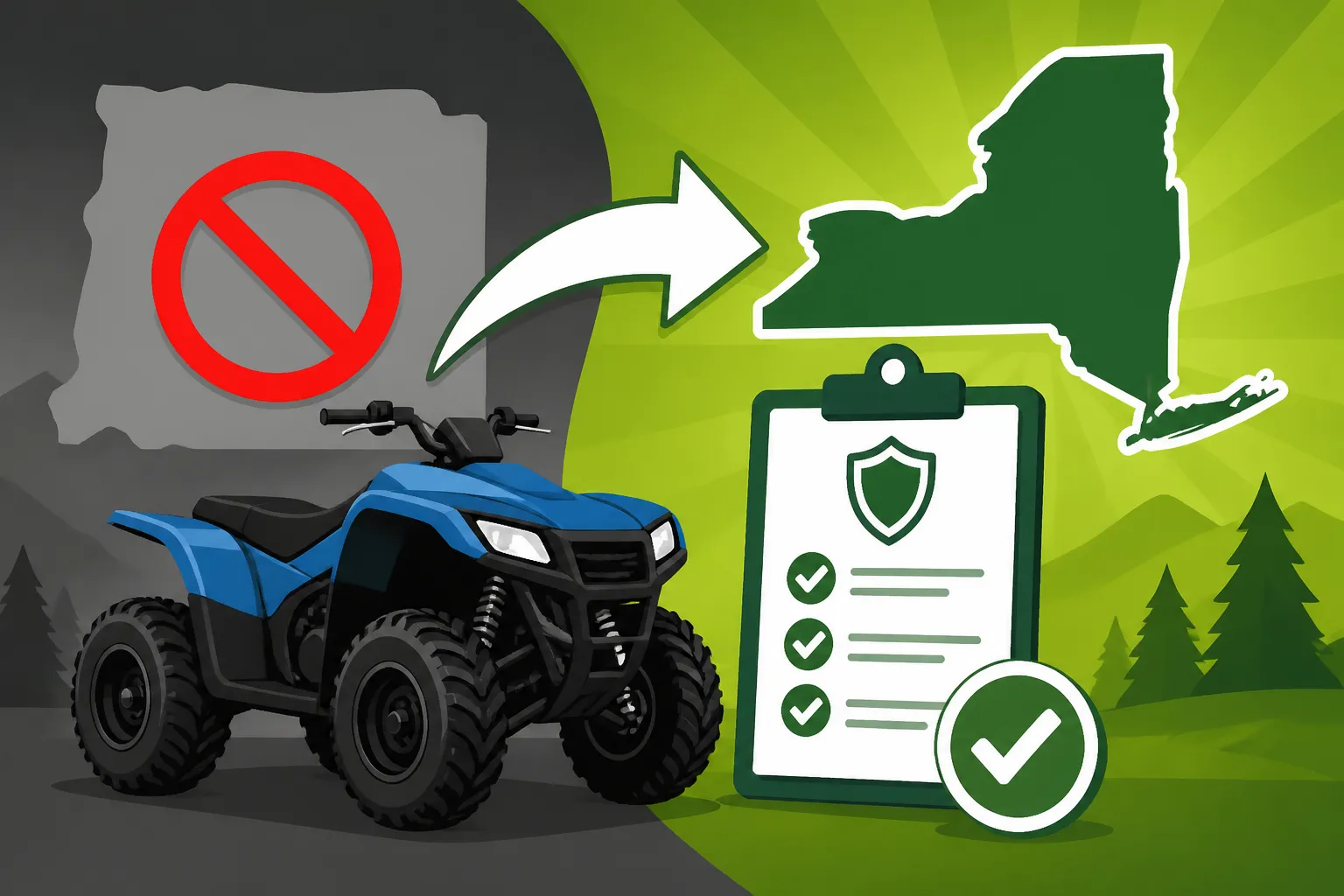
It can be incredibly frustrating to bring an ATV into New York State from a place where nobody batted an eye about registration or titles, only to hit a wall at the DMV. You've got your machine, you're ready to ride the amazing trails of Lewis County or Tug Hill, but New York has its own set of rules. This guide will walk you through the specific hoops you need to jump through to successfully register your quad that hails from a state with no formal ATV program.
The Unique Challenge of Importing a Non-Registered Quad to New York
When you bring a machine into New York from a state that doesn't have an ATV registration or titling program, you're stepping into a bit of a gray area. Most states have some form of vehicle identification or proof of ownership, even if it's just for cars and trucks. But for ATVs, many places simply treat them as recreational equipment, like a lawnmower or a dirt bike, not requiring any official paperwork. This can leave you in a bind when you arrive in New York, a state that does require registration for ATVs to be ridden off your own property, and a state that is very particular about how it proves ownership.
Imagine you bought your quad years ago in a neighboring state, say Pennsylvania or Vermont, which do have ATV registration programs. You'd likely have some form of title or registration receipt from that state, which would make the process of [Registering an Out-of-State Machine in New York] much smoother. But what if you picked it up in a place that had absolutely no such system? Perhaps it was a handshake deal in a rural area, or a small town where such machines were purely for farm use and never saw a trail. The previous owner might have only had a handwritten bill of sale, or perhaps nothing at all, making New York's requirements feel like an impossible hurdle. The New York DMV is looking for a clear chain of ownership, and when that chain begins in a vacuum, it requires a bit more legwork on your part.
Why New York Demands Clear Proof of Ownership
New York's insistence on clear proof of ownership isn't just about bureaucracy; it's about protecting buyers and preventing theft. Without a title or formal registration from a previous state, the DMV needs to be absolutely sure that you are the rightful owner of the ATV you're trying to register. This is particularly crucial for machines that aren't street legal and often change hands without the formal processes associated with cars. The state wants to prevent stolen machines from being "cleaned" through the registration system. It also wants to ensure that if a machine is involved in an incident, there's no question about who is responsible.
Because New York does not issue titles for ATVs itself, and only issues registrations, the initial proof you provide to the DMV is paramount. They’re not going to track down a seller in another state to verify a handwritten note. You have to bring them solid, undeniable evidence that the machine belongs to you. This might seem like an over-the-top request for a recreational vehicle, especially if you’ve always just used your quad on private land, but it’s a non-negotiable step to get that coveted New York ATV plate. Many riders initially try to register their machine without fully understanding this unique ownership requirement, leading to frustrating denials at the DMV counter.
The Paperwork Gap from Non-Titling States
The biggest issue coming from a non-titling state is the paperwork gap. Most states that don't have an ATV registration program also don't issue titles for these machines. You might have a receipt from the dealership if you bought it new, but if you bought it used, you might only have a simple bill of sale, or perhaps nothing more than a cancelled check or a Venmo payment record. The New York DMV, however, has specific forms and requirements for non-titled vehicles, and merely showing up with a few scribbled notes isn't going to cut it.
The lack of official state-issued documents from the point of origin means you have to build your case from the ground up. You need to gather all available documentation, no matter how informal it might seem. This could include the original bill of sale from when the machine was first purchased, even if it was twenty years ago, or a series of bills of sale tracing the machine's ownership history. Any document that shows a transfer of ownership, even a notarized affidavit from a previous owner, can be incredibly helpful in piecing together the required proof. The DMV clerks are looking for a clear, logical story told through paperwork, and it's your job to provide it. This can be one of the most time-consuming parts of the whole process.
Proving Ownership: What New York Needs Without a Title
Since your quad comes from a state with no ATV titling program, you won't have the typical "Certificate of Title" that the New York DMV usually looks for with other vehicles. This means you'll need to rely on alternative forms of proof to establish ownership. The good news is that New York has a process for this, but it requires diligent preparation. The core idea is to establish a clear, unbroken chain of ownership that leaves no doubt about your right to register the machine. This is where [Proving Ownership Without a Title in New York] becomes a crucial hurdle.
The primary document for registering a non-titled vehicle in New York is the Form MV-51B, known as the "Vehicle Bill of Sale." However, it's not enough to just fill this out yourself if you bought it from someone else. You need the previous owner's information, and ideally, their signature on this form. If you're the first owner, say you purchased it new from a dealership in a non-titling state, you'd bring the original dealer's bill of sale and possibly a Manufacturer's Statement of Origin (MSO). But for used machines, especially those that have changed hands multiple times without formal paperwork, it becomes more complex.
The Critical Role of Form MV-51B
The MV-51B, or "Vehicle Bill of Sale," is a cornerstone document when you're registering an ATV without a title. Even if you have a handwritten bill of sale from the person you bought it from, the DMV will almost certainly want to see their official MV-51B filled out. This form collects crucial information like the buyer's and seller's names, addresses, the vehicle's make, model, year, and most importantly, the Vehicle Identification Number (VIN). Without a title, this form essentially serves as the legal proof of the transfer of ownership. If your original bill of sale from a non-titling state is informal, you might need to contact the seller to complete this New York-specific form.
If the person you bought the ATV from also bought it from someone else in a non-titling state, and they never had formal papers, you'll ideally want a chain of MV-51Bs. This can feel like a tall order, especially if past owners are hard to track down. In situations where getting a full chain of MV-51Bs is impossible, you may need to supplement your application with an affidavit. An affidavit is a sworn statement, notarized, explaining the history of ownership and why certain documents are unavailable. You can find general affidavit templates through services like LawDepot, which can help you craft a legally sound document to present to the DMV. Remember, the goal is to make it as easy as possible for the DMV clerk to understand and accept your claim of ownership.
What to Do If You Don't Have a Clear Bill of Sale
This is often where riders hit a snag. What if you bought the quad years ago, and the seller is long gone, or the informal bill of sale is lost? The New York DMV understands that life happens, but they still need to be satisfied. In these situations, your best bet is to provide any and all existing documentation, no matter how minor, and then supplement it with a detailed, notarized affidavit of ownership. This affidavit should explain:
- When and where you acquired the ATV.
- From whom you acquired it (if known).
- The circumstances surrounding the purchase (e.g., "private sale, no formal title issued in that state").
- Why you lack a traditional bill of sale or previous registration.
- A clear statement that you are the rightful owner and the machine is not stolen.
You might need to include copies of old receipts, cancelled checks, or even an email exchange with the seller if that’s all you have. Think of it as building a legal narrative. The more information you can provide, even if it seems piecemeal, the better. Sometimes, a detailed explanation is all it takes to bridge the gap. Using a service like LawDepot to draft a professional affidavit can lend credibility to your claim, ensuring it contains all the necessary legal language. The DMV might also request a [New York ATV VIN Tracing Requirement] to confirm the machine's identity, especially if the paperwork is sparse.
Additional Documentation to Bolster Your Claim
Beyond the MV-51B and an affidavit, gather any other documents that might support your claim. This could include:
- Original dealership receipts: Even if from another state, they establish the machine's origin.
- Maintenance records: If you've had the ATV serviced, these often list the VIN and your name, implicitly linking you to the machine over time.
- Insurance policies: If you've had the ATV insured, even if for private land use, the policy documents list the VIN and your name. [New York ATV Registration and Insurance Proof] is a separate requirement, but past insurance can help.
- Photographs: While not legal proof, sometimes photos of you with the machine over the years, especially if dated, can contribute to the overall picture of long-term ownership.
- Previous state's non-registration proof: If you can find any official statement from the other state's DMV or equivalent agency confirming they do not register ATVs, that can be powerful evidence.
The goal is to paint a comprehensive picture for the DMV clerk. They are looking for clear, consistent evidence that you are the legitimate owner and that the machine has a verifiable history, even if it's not a titled one.
Navigating the New York DMV for Your Out-of-State Machine
Once you've gathered all your ownership documents, the next step is to visit your local New York Department of Motor Vehicles office. This is where the rubber meets the road, so to speak. Be prepared for a potentially lengthy visit, especially if your documentation is unconventional. Patience and thorough preparation are your best friends here. Knowing [Where to Register an ATV in New York] and what forms they'll ask for is half the battle.
The DMV will require more than just proof of ownership. You'll also need identification, proof of New York residency (if applicable), and you'll need to pay the appropriate fees. It's always a good idea to call ahead or check the New York DMV website for the most current list of required documents for out-of-state, non-titled vehicle registration. This will help you avoid multiple trips and ensure you have everything in order.
Required Forms and Fees at the Counter
When you go to the DMV, you'll need a few specific forms in addition to your ownership proof:
- Form MV-51B (Vehicle Bill of Sale): As discussed, this is critical. If you're the first owner from a non-titling state, your original dealer invoice or MSO serves this purpose. Otherwise, get it from your seller, or create an affidavit using resources like LawDepot.
- Form MV-82 (Vehicle Registration/Title Application): This is the main application form for any vehicle registration in New York. You'll fill out your personal information and the ATV's details here.
- Proof of Identity and Residency: Bring your New York State driver's license or non-driver ID, along with another form of proof of residency (e.g., utility bill, bank statement).
- Proof of Insurance: You must have a New York ATV insurance policy in place before you can register your machine. Make sure it meets the [New York ATV Insurance Requirement] minimums.
- Pencil Tracing of the VIN: The DMV will require a physical tracing of your ATV's VIN onto Form MV-82. Make sure you know where your VIN is located on the frame, as it can sometimes be hard to find or access. [Why New York Wants a Pencil Tracing of the VIN] is about preventing fraud.
As for fees, you'll have the standard registration fee and a one-time plate fee. The specific amounts can vary, so check the DMV website or call before you go. Remember that New York ATV registrations have an [New York's August 31 Expiration] date, regardless of when you register it during the year, and the fee is generally not prorated.
| Document Type | Purpose | Notes |
|---|---|---|
| MV-51B | Proof of Sale/Transfer of Ownership (for non-titled vehicles) | Must be completed by seller or original dealer. If unavailable, use notarized affidavit. |
| MV-82 | Vehicle Registration Application | Your primary application form. Be sure to complete the VIN tracing section. |
| ID & Residency Proof | Verify your identity and New York residence | NY Driver's License/ID, utility bill, bank statement. |
| Proof of Insurance | Mandated liability insurance coverage | Must be a New York-authorized insurer. Show policy documents with VIN and coverage dates. |
| VIN Tracing | Physical verification of Vehicle Identification Number | Use a pencil and paper to rub over the VIN on the frame, directly onto the MV-82 form. |
| Sales Tax Form | Form ST-130 (If purchased from an individual and tax not paid) | If you bought it from a private seller, you'll owe New York sales tax. If from a dealer, they likely collected it. [New York ATV Sales Tax Rate] applies. |
| Affidavit (if needed) | Sworn statement detailing ownership history if MV-51B is insufficient | Helpful when original documents are lost or non-existent; use a service like LawDepot for proper wording. |
Common Pitfalls and How to Avoid Them
One common pitfall is showing up without the pencil tracing of the VIN. Many people overlook this specific requirement, assuming the DMV can just look at the machine. They can't—it's a security measure. Another is lacking sufficient proof of ownership, especially if you only have a vague, handwritten note. The DMV clerks are very particular about the MV-51B. If you cannot get the previous owner to complete it, your notarized affidavit becomes critical.
Make sure your insurance policy clearly states "ATV" and lists the correct VIN. A generic liability policy for your car won't cut it. Also, be mindful of the [New York ATV Width Limit for Registration] and [New York ATV Weight Limit for Registration]. If your machine is wider than 70 inches or heavier than 1,000 pounds (and not exempted for agricultural use), it generally won't qualify for ATV registration, regardless of your ownership proof. This is a critical distinction that many out-of-state riders, particularly those with larger side-by-sides, often miss. Don't go through all this trouble only to find your machine is physically too big to be registered as an ATV in New York.
Beyond Registration: What Comes Next for Your New York Quad
Once you successfully navigate the DMV and receive your New York ATV registration and plate, you're not entirely off the hook. There are ongoing responsibilities and rules you need to be aware of to legally and safely enjoy your machine in the Empire State. Getting that plate is a significant achievement, but it's just the first step in responsible ATV ownership in New York.
The immediate next steps involve properly displaying your new registration items. You'll receive a metal plate that needs to be mounted securely on the rear of your ATV, and a small validation decal that typically gets affixed to the plate itself. Make sure you understand [New York ATV Plates and Where They Mount] and [Where to Stick a New York ATV Validation Decal]. Improper display can lead to fines, even if you’re fully registered.
Understanding New York's Riding Rules
Having a registered ATV means you can now legally operate it on designated trails and areas in New York, provided you also have the mandatory insurance. However, New York has very specific and strict rules about where and how you can ride. You cannot just hop on any road or piece of public land. Generally, ATVs are restricted to designated and posted trails, and private property with explicit landowner permission. [Where New York Bars ATV Riding] is a crucial read for any new registrant.
This means you need to familiarize yourself with local ordinances and state regulations. For instance, towns and counties can have their own rules, and state parks generally prohibit ATVs. You'll also need to follow equipment rules, helmet laws, and age restrictions. For example, [New York Rules for Riders Under 16] require an ATV safety certificate and supervision. Don't assume that because you're registered, you can ride anywhere. Always check the specific rules of your intended riding area before you trailer out.
Annual Renewal and Ongoing Compliance
Your New York ATV registration isn't a one-and-done deal. It needs to be renewed annually by August 31st. You'll receive a renewal notice in the mail, but it's ultimately your responsibility to ensure it's renewed on time. Failure to renew means your registration lapses, and riding an unregistered ATV can result in significant fines. [Renewing a New York ATV Registration] is a straightforward process, but one that can easily be forgotten.
Beyond renewal, always ensure your ATV remains insured. [New York's Mandatory ATV Insurance] is not just a requirement for registration; it's a requirement for riding anywhere off your own private property. Keep your proof of insurance and registration card with you when you ride, as law enforcement officers can stop you and ask to see them. Just like with a car, keeping your paperwork in order is a critical part of being a responsible ATV owner in New York.
Disclaimer
This article is for general informational purposes only and does not constitute professional advice. Laws, prices and regulations vary by location and change over time. Consult a qualified professional for guidance on your specific situation.