A Plate on the Rear of a New York Machine
Navigating the ins and outs of ATV registration in New York can feel like tackling a particularly gnarly section of trail – full of twists, turns, and unexpected obstacles. One of the most common points of confusion, and frankly, frustration, revolves around the seemingly simple requirement of displaying a license plate. This guide will take a deep dive into why your New York machine needs a plate, exactly where it needs to be, and how to keep it legal, visible, and secure so you can focus on the ride ahead.
Why Your New York ATV Needs a Plate (and Where It Goes)
It's a common misconception that if you're just riding on private land or specific designated trails, a license plate isn't necessary. However, for most ATVs operating in the Empire State, a plate is a fundamental part of staying on the right side of the law. This isn't just about identification; it's about accountability, funding for trail systems, and ensuring everyone plays by the same rules for safety and enjoyment.
The Legal Mandate for Display
New York State law is quite clear: if your ATV is registered, it must display a valid license plate. This isn't an optional accessory; it's a mandatory identifier that links your machine back to you through the Department of Motor Vehicles (DMV). Without this plate, even if you've gone through the entire [New York's Annual ATV Registration] process, your machine is considered unregistered in the eyes of the law when you're out and about on public lands or trails. This can lead to unexpected fines and a ruined riding day, which nobody wants after spending good money and time on registration.
The plate serves multiple purposes beyond just tracking ownership. It helps law enforcement identify machines quickly, which is crucial in cases of accidents, theft, or rule violations on trails. It also signifies that you've paid your dues into the system, contributing to the very trails and infrastructure that many riders enjoy. Thinking you can skip this step or ride without it, even just once, is a gamble that rarely pays off.
The "Rear of the Machine" Specificity
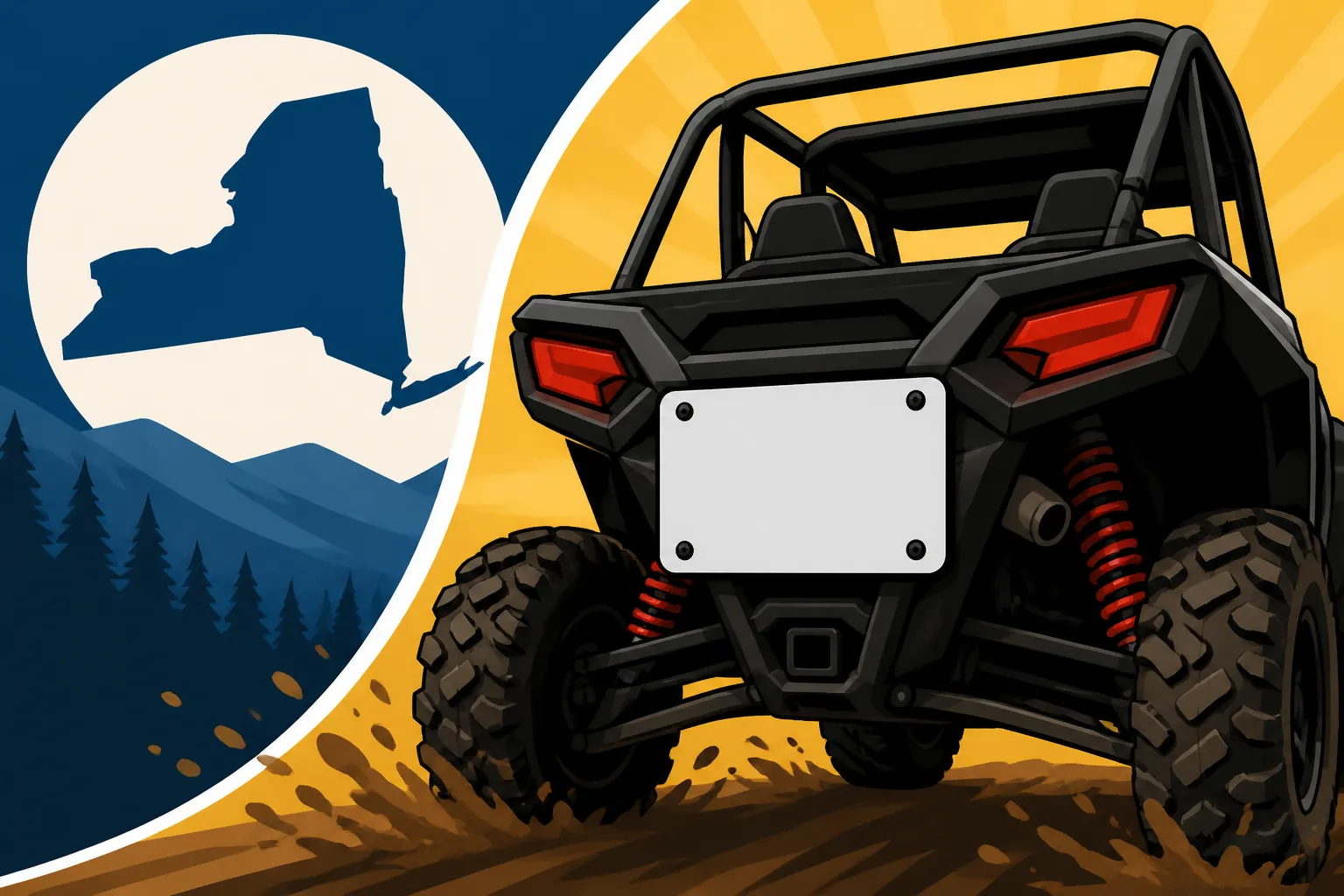
Now, here's where it gets really specific: New York law explicitly states that the ATV license plate must be affixed to the "rear of the machine." This isn't just a suggestion; it's a hard and fast rule. Unlike cars where plates are front and back, or motorcycles where it's usually just the rear, ATVs are subject to their own specific placement. You won't find a designated spot for a front plate, and attempting to mount one there would likely obscure lights, cooling vents, or simply be impractical for trail riding.
The logic behind the rear placement is practical. It's typically the most visible part of the ATV from behind, especially when riding in a convoy or being observed by trail wardens. Mounting it securely to the rear rack, bumper, or a dedicated bracket ensures it's not easily obscured by the rider, handlebars, or front-mounted accessories. Making sure it's firmly attached and clearly visible from the rear is paramount, as an officer needs to be able to read it without obstruction. This detail, though seemingly minor, is critical for compliance and avoiding a ticket.
Getting Your New York ATV Plate
The journey to getting your ATV plate in New York is intrinsically tied to the registration process itself. It’s not a separate application; rather, the plate is issued as a direct result of successfully registering your off-road machine with the state. Understanding this connection can help you anticipate the steps and ensure you have everything you need when you head to the DMV.
The Registration Process and Plate Issuance
When you register your ATV in New York, whether it's a brand-new machine from a dealer or a used one you just bought, the DMV will process your application and, upon approval, issue your registration document and a physical license plate. This plate comes with a [The One-Time Plate Fee in New York] which covers the cost of the plate itself. You'll hand over your paperwork, such as proof of ownership and insurance, and once everything checks out, they'll hand you the shiny new plate right there at the counter. It's often one of the most tangible parts of the registration experience, signifying that your ATV is officially recognized by the state.
This plate is specifically designed for ATVs – it’s not a car plate or a standard motorcycle plate. It will have a unique series of numbers and letters, often with "ATV" clearly marked. The initial registration process is where you pay the full [New York ATV Registration Cost], which includes the annual fee and that one-time plate charge. Remember, while the plate itself is a one-time fee, your registration needs to be renewed annually to keep that plate valid for riding.
Understanding Your Plate and Decal
Once you receive your ATV plate, you’ll notice it’s a relatively small, sturdy piece of metal, usually with a standard New York State design but clearly marked for an ATV. Along with the plate, you'll also receive a validation decal. This small sticker, usually with the year clearly printed on it, is just as important as the plate itself. It signifies that your current year's registration fees have been paid and that your registration is active. The decal is generally color-coded by year, making it easy for enforcement officers to quickly see if your registration is current from a distance.
The decal doesn't go on the plate itself. Instead, it has a designated spot, typically on the left side of the rear fender, or another clearly visible location as specified by the DMV. You can find detailed guidance on [Where to Stick a New York ATV Validation Decal] to ensure you're placing it correctly. Applying it firmly and smoothly to a clean surface is key to preventing it from peeling off during rides, especially through mud or brush. Both the plate and the current validation decal must be prominently displayed for your machine to be considered fully registered and legal to ride on designated trails and public lands.
Proper Plate Mounting and Visibility
Having a plate and decal is one thing, but ensuring they are correctly and securely mounted, and always visible, is another crucial aspect of legal ATV operation in New York. A plate that falls off, gets obscured, or is unreadable due to poor mounting or neglect can lead to the same penalties as not having one at all. It's all about making sure that the plate can do its job as a clear identifier.
Ensuring Your Plate is Securely Affixed
The trails of New York, from the rocky climbs of Tug Hill to the muddy stretches in Oswego County, can be unforgiving on equipment. A flimsy mounting job for your ATV plate simply won't cut it. While some riders might be tempted to use zip ties or thin wire, these methods are notoriously unreliable and often lead to lost or damaged plates. The best practice is to use sturdy bolts, nuts, and washers, preferably with lock washers or nylon-insert locknuts, to secure the plate to a robust part of your ATV's rear frame or a dedicated metal plate bracket. Many aftermarket accessories are designed specifically for this purpose.
Consider where you're mounting it: will it be constantly exposed to mud flung from the tires? Is it vulnerable to impacts from branches or rocks? Ideally, it should be mounted to a part of the machine that is rigid, offers some protection, and allows for clear visibility. A lost plate, especially miles deep on a trail, is a major headache and can effectively end your ride prematurely. Taking the time to properly secure it with durable hardware will save you time, money, and potential frustration down the road. If you find your plate bent after a tough ride, you might need to look into [Replacing an ATV Plate Bent on the Tug Hill Rocks] rather than trying to straighten it and risk further damage or illegibility.
Maintaining Readability and Illumination
A license plate that’s present but unreadable might as well not be there at all. Your New York ATV plate must be kept clean and legible at all times. This means regularly wiping off mud, dirt, snow, or any debris that might obscure the numbers and letters. Imagine a trail warden or law enforcement officer trying to identify your machine; if they can't clearly read your plate, you could be facing the same issues as riding without one. This is especially true on dusty summer days or after a deep mud bog, where a quick spray with water can make all the difference.
For night riding, proper illumination of your rear plate is also a requirement. Many ATVs come with a small light that shines down on the license plate area. If your machine doesn't have one, or if it's broken, you'll need to install an auxiliary light to ensure the plate is visible after sunset. [Headlight and Taillight After Sunset] rules apply, and that includes the plate. An unlit or obscured plate at night makes it impossible for others to identify your machine, which can be a safety concern as well as a legal one. Don't risk a ticket for something so easily remedied; if your plate is unreadable, an officer may question [Can You Be Ticketed for an Unreadable ATV Plate?], and the answer is usually yes.
Here's a quick look at common plate conditions and the necessary actions:
| Plate Condition | Immediate Action | Long-Term Action | Legal Ramifications (Potential) |
|---|---|---|---|
| Clean & Visible | Maintain regularly, ensure no obstruction. | Periodic check of mounting hardware. | None |
| Mud-Covered / Obscured | Clean immediately with water/cloth. | Clean after every muddy ride; check visibility during ride. | Warning, fine for unreadable plate. |
| Bent / Damaged | If still readable and secure, proceed with caution. | Order a replacement plate. | Fine if unreadable or structurally compromised. |
| Missing / Lost | Immediately stop riding on public/designated trails. | Report to DMV and apply for replacement plate. | Fine for unregistered/unplated machine. |
| Unlit (at night) | Avoid night riding until illuminated. | Install or repair plate illumination light. | Fine for equipment violation. |
| Improperly Mounted (e.g., zip-tied) | Re-mount securely with bolts. | Ensure permanent, sturdy attachment. | Warning, potential fine for improper display. |
What Happens When Your Plate Is Damaged or Lost?
Even with the most careful mounting and diligent maintenance, the harsh realities of off-road riding in New York mean that ATV plates can sometimes meet an untimely end. Whether it’s a rogue branch on a tight section of trail, a tumble in a deep rut, or simply the vibrations of countless miles, plates can get damaged or, worse, go missing entirely. Knowing what to do in these situations is key to getting back on the trails legally and without undue stress.
Dealing with a Damaged or Unreadable Plate
It’s an all too common scenario: you’ve had a great day out, maybe tackled some challenging terrain in Lewis County, and then you notice your plate is bent, cracked, or scraped to the point where the numbers are no longer clear. This isn’t just an aesthetic issue; an unreadable plate is a non-compliant plate. Continuing to ride with a plate that cannot be easily read by an officer or trail warden puts you at risk of a citation, even if you technically have it displayed. [Replacing an ATV Plate Bent on the Tug Hill Rocks] isn't just about appearance; it's about legality.
If your plate is damaged, assess the extent. If it's merely bent but still perfectly legible and secure, you might get by for a short time. However, if any part of the registration number is obscured, or if the plate is so mangled it could fall off, you need to address it immediately. Your best course of action is to order a replacement plate from the DMV. This usually involves filling out a specific form, providing your current registration information, and paying a small fee. Don't try to "fix" a severely damaged plate with tape or paint, as this can often make it even less legible and draw more unwanted attention.
The Process for a Lost Plate
A lost plate is perhaps even more frustrating than a damaged one because there’s nothing left to show. Whether it vibrated loose, was torn off by trail debris, or perhaps even stolen (though less common for ATV plates), you are now operating an unplated, and thus technically illegal, registered machine. This means you absolutely should not ride your ATV on any public land or designated trail until you have a replacement. The process for [Replacing a Lost New York ATV Plate] is similar to replacing a damaged one but carries a bit more urgency.
You’ll need to contact the New York DMV promptly. Typically, you'll complete a form (like a Statement of Lost, Stolen, or Mutilated Plate) and pay the replacement fee. It's helpful to have your ATV's registration document and VIN handy for this process. While you wait for your new plate to arrive in the mail, there isn't a "temporary plate" system for ATVs like there might be for cars. This means your ATV will be sidelined from public riding areas until the new plate is in your possession and properly mounted. Planning for potential delays in mailing can save you from missing out on a planned ride.
Common Plate-Related Questions and Scenarios
Beyond the basic requirements, specific situations often arise that bring up questions about ATV plates. From the role of dealers in the process to handling plates when buying or selling used machines, understanding these nuances can prevent confusion and ensure a smooth experience for New York riders.
When a Dealer Handles Plate Installation
When you purchase a brand-new ATV from a reputable New York dealer, they often handle the initial registration process for you as a convenience. This usually includes submitting the necessary paperwork to the DMV, collecting the registration and plate fees, and sometimes even installing the plate on your new machine before you drive it off the lot. [Dealers Registering Before Delivery in New York] is a common practice that can save you a trip to the DMV. However, it's still your responsibility to ensure everything is done correctly.
Before you leave the dealership, always double-check that your plate is securely mounted to the rear of the machine, that the validation decal is correctly affixed, and that you have your physical registration document in hand. Don't assume everything is perfect; a quick inspection can catch a loose bolt or a missing decal before it becomes a problem on the trail. Ask the dealer to show you where they've mounted the plate and confirm it meets New York's requirements for visibility and security.
Special Situations: Visitors and Used Machines
What if you're visiting New York with your ATV from out of state? Generally, New York extends reciprocity to out-of-state registered ATVs, meaning if your machine is legally registered in your home state (and displays its plate according to that state's laws), you can ride on New York's designated trails. However, there are nuances and often time limits for how long this reciprocity applies. For longer stays or frequent visits, you might need to consider [Registering a Visitor's Machine in New York]. Always check the latest DMV guidelines to be sure.
When buying a used ATV in New York, the plate situation is critical. The previous owner's plate does not transfer to you. They are required to remove their plate and registration document. When you purchase a used machine, your first step is to register it in your own name at the DMV. This is when you'll pay your registration fees and receive your own new plate. If the seller doesn't remove their plate, politely ask them to do so. You want to avoid any confusion or liability issues. When buying a used machine, having a solid bill of sale is crucial proof of ownership, especially since New York doesn't title ATVs. Resources like LawDepot can help you generate a professional bill of sale, which is invaluable when you head to the DMV to register your "new-to-you" machine and get your plate. [Buying a Used ATV in New York] comes with its own set of rules, and plate transfer isn't one of them.
Avoiding Fines and Keeping Your Ride Legal
The last thing any ATV enthusiast wants is to have a fantastic day of riding cut short by a law enforcement officer because of an issue with their license plate. Understanding the penalties and adopting best practices can help you steer clear of unnecessary fines and ensure your machine is always trail-ready and compliant with New York regulations.
The Penalties for Plate Violations
New York State takes its ATV registration and plate display rules seriously. Riding an ATV on designated trails or public lands without a valid, properly displayed license plate is essentially riding an unregistered machine, and the fines for such violations can be quite hefty. An officer who pulls you over for an equipment check or observes you on a trail will first look for that rear plate and current decal. If it's missing, obscured, unreadable, or improperly mounted, you could be facing a citation. [New York Fines for an Unregistered ATV] can range from several hundred dollars for a first offense, potentially increasing for repeat violations, not to mention court costs and the inconvenience of appearing before a judge.
Beyond the immediate financial hit, an officer might also order you to stop riding your machine until the issue is resolved, effectively impounding your day out. This means loading your ATV back on the trailer and heading home without enjoying the trails you intended to ride. It’s a frustrating situation that’s entirely avoidable with a bit of proactive attention to your plate. Knowing [What a New York Officer Checks Roadside] can help you prepare. They are trained to spot these types of non-compliance issues quickly.
Best Practices for Compliance
To avoid any plate-related headaches, integrate a quick plate check into your pre-ride routine. Before you even load your ATV onto the trailer, make it a habit to glance at the rear plate: Is it clean? Is it secure? Is the current year's validation decal still firmly attached and visible? This simple visual inspection takes mere seconds but can save you hours of trouble. If you're planning a long or particularly muddy ride, consider bringing a small brush and a bottle of water to clean your plate periodically throughout the day.
Always carry your current ATV registration document with you, preferably in a waterproof pouch, whenever you ride. While the plate itself is the primary visual identifier, having the paperwork instantly confirms that the plate belongs to your machine and is current. If you ever need to prove ownership for a replacement plate or other purposes, having documents like a properly drawn up bill of sale, perhaps created using a service like LawDepot, can be incredibly helpful. Staying informed about current regulations by occasionally checking the New York DMV website or consulting local trail clubs is also a smart move, as rules can sometimes be updated. Ultimately, a few moments of prevention are worth far more than the stress and cost of a violation.
Disclaimer
This article is for general informational purposes only and does not constitute professional advice. Laws, prices and regulations vary by location and change over time. Consult a qualified professional for guidance on your specific situation.