What a Used Machine Costs in New York
A used ATV or UTV’s asking price is only the starting point. In New York, the machine’s condition, registration eligibility, paperwork, sales tax, insurance, and trail access can all change what you actually spend. This guide shows how to compare asking prices, estimate the full cost of ownership, and spot a bargain that could become an expensive problem.
What moves a used machine’s price
There is no single reliable price for a used machine across New York. Two quads of the same make and model can be worth very different amounts if one has been stored indoors and maintained while the other has spent years working in mud, snow, or road salt. Start by treating a listing price as a seller’s starting point, not proof of market value.
The most useful comparisons are for machines that match on the factors that affect both performance and condition:
- Make, model, year, and trim: Engine size, power steering, four-wheel drive, electronic features, and factory accessories can separate otherwise similar machines.
- Hours and miles: Neither number tells the whole story. A low-hour machine used for hard work may have more wear than a higher-hour machine used for light trail riding. Check whether the meter works and whether the seller’s account fits the machine’s condition.
- Use: A quad that plowed a long driveway, hauled loads on a farm, or spent time in deep mud may have experienced heavy strain even if it looks clean.
- Maintenance: Records for oil changes, air-filter service, belt replacement, and repairs help you judge whether the price reflects a machine that has been cared for.
- Condition and modifications: Worn tires, damaged plastics, questionable wiring, suspension changes, or a heavily altered engine can affect value and create additional repair costs.
- Included equipment: A plow, winch, racks, tracks, or trailer may add practical value if the equipment is in good condition and suits your plans. An accessory is not automatically worth the amount the seller paid for it.
- Paperwork and registration eligibility: A low price can be misleading if ownership is unclear or the machine cannot be registered for the use you have in mind.
Compare several similar listings rather than anchoring on one. Look for machines of the same model and approximate year, with comparable features, condition, and location. Listings that have been sitting for a long time may give you a clue about seller flexibility, but they do not prove the machine is overpriced. A seller may simply be waiting for the right buyer.
If you want a more focused comparison of asking prices, see New York Used ATV Prices. For the steps involved in evaluating a specific machine, use Checking a Used Quad in New York.
| Price factor | What to check | Why it can change your budget |
|---|---|---|
| Age and model | Exact model, year, trim, and factory features | Similar-looking machines can differ in capability and resale value |
| Use and wear | Hours, miles, work history, and tire condition | Heavy work can mean earlier repairs even when the machine runs |
| Maintenance | Receipts, service notes, and seller explanations | A documented service history can reduce uncertainty |
| Accessories | Condition, compatibility, and whether you need them | Useful gear may save a separate purchase, but damaged gear may add cost |
| Ownership records | Bill of sale, prior paperwork, VIN, and any lien | Problems may delay or prevent a smooth purchase and registration |
| Intended riding | Land, trails, work, or winter use | The wrong machine can cost more to adapt or may not be usable where you plan to ride |
For a practical local comparison, make a small worksheet. Record the asking price, model and year, stated hours or miles, major equipment, visible issues, and whether the seller has ownership documents. Add your estimated immediate repairs and purchase-related costs. This helps compare the amount you would actually spend, rather than just the number in the headline.
Choose the right kind of machine before comparing prices
A lower-priced machine is not a good value if it does not fit the work or riding you plan to do. Decide first whether you need a single-rider quad, a youth machine, or a side-by-side-style UTV. Consider where it will be used, how it will be transported, and whether your New York riding plans depend on registration or access to organized trails.
Quads and side-by-sides are not interchangeable
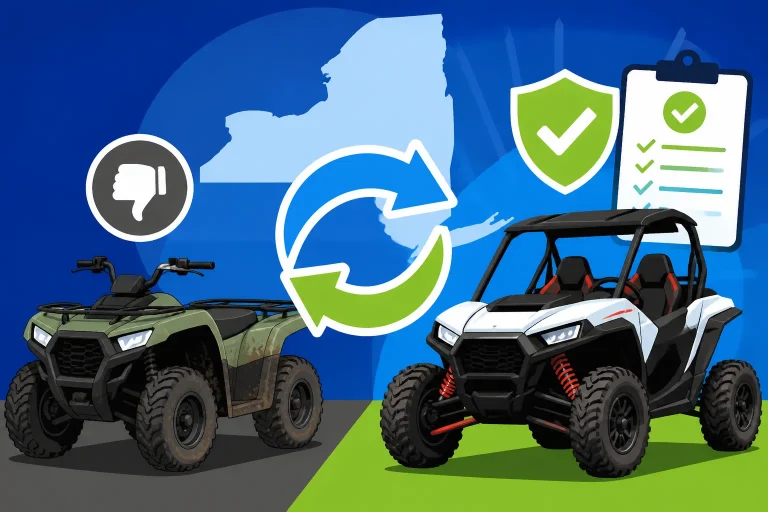
Listings may use terms such as ATV, UTV, quad, and side-by-side loosely. The machine’s label in an advertisement does not determine whether it qualifies for New York ATV registration. New York has rules that may exclude many modern side-by-sides, including limits related to width and weight. Check the actual machine against the current requirements before buying, especially if you expect to ride it away from private property. Why Most Side-by-Sides Cannot Be Registered in New York explains why a machine marketed as an ATV may not qualify.
A machine that is too wide or too heavy for the applicable registration definition may still suit a buyer who plans to use it only in a place where that use is allowed. But the price should reflect that limitation. Do not assume you can register it later, ride it on a county trail, or solve the issue by changing the plate position. Check New York ATV Width Limit for Registration and New York ATV Weight Limit for Registration before putting down money.
Match capability to the job
Buying more machine than you need can raise the purchase price and the cost of ownership. A powerful, large machine may be unnecessary for light property use, while a smaller quad may not be suitable for the loads, terrain, or riders you have in mind. Think through:
- Whether the machine must carry passengers, and whether it was designed and equipped to do so.
- Whether you need a winch or plow, and whether the machine can support the equipment you plan to use.
- Whether the machine will fit your trailer, storage space, and usual route.
- Whether a youth rider will use it, and whether its size and power suit that rider.
- Whether the tires, clearance, and setup are appropriate for mud, rocks, snow, or maintained trails.
Accessories can make a machine look like a better deal, but evaluate each one separately. A plow with worn parts or a winch with a damaged cable may not be worth much to you. A track kit, unusual suspension setup, or engine modification can also make the machine less suitable for your needs or more difficult to service.
Buying from a dealer or a private seller
The cheapest advertised machine is not always the least expensive purchase. A dealer and a private seller offer different trade-offs in paperwork, condition, convenience, and recourse. Compare the full terms of the sale, not just the amount the seller wants.
| Purchase route | Potential advantages | Points to check carefully |
|---|---|---|
| Dealer | May offer assistance with paperwork, a more structured transaction, or a machine prepared for sale | Ask for an itemized written total, the condition and repair history, and exactly what any warranty covers |
| Private seller | May offer a more direct negotiation and a clearer conversation with the person who used the machine | Verify ownership, inspect the machine independently, and do not rely on a verbal promise about registration |
| Auction or estate sale | May provide access to machines not listed through a dealer | Inspection time may be limited, records may be incomplete, and the sale terms may restrict returns |
A dealer’s advertised amount may not include every charge due at the transaction. Ask for an itemized quote that separates the machine’s price, any dealer charges, taxes, registration-related costs, and optional products. New York regulates dealer documentary fees, but you should confirm the current rules and the fee shown on your paperwork. Do not treat optional protection plans, accessories, or service packages as required without asking what they are and whether you can decline them.
For a private sale, agree on the price only after checking the machine and the ownership documents. Do not rely on a seller’s statement that a machine is “easy to register” or that a missing document will be no problem. New York does not issue titles for ATVs in the same way it does for cars, so the ownership paperwork can look unfamiliar to a first-time buyer. Read New York ATV Proof of Ownership Requirements and New York ATV Registration Paperwork before you meet the seller.
Whichever route you choose, get the terms in writing. The written record should identify the machine, state the agreed amount, note what equipment is included, and accurately describe any known defects or promises about repairs. Keep copies of the bill of sale and all supporting documents. If you are comparing the two routes in more depth, see New York ATV Dealer Versus Private Sale.
Budget for the New York costs beyond the purchase price
The amount you pay the seller is only one part of the budget. Before making an offer, estimate the costs that come with buying, registering, insuring, preparing, and using the machine. Some depend on the machine and your location; others depend on where and how you ride. Confirm current figures with the relevant provider or official source rather than relying on old online estimates.
Sales tax and purchase records
New York sales tax applies to ATV purchases, with the total rate depending on state and local taxes. A private-party sale does not necessarily mean you can skip tax. The amount and process can depend on the transaction, where you live, and the documentation you provide. Confirm the current rate and requirements for your situation with the appropriate New York tax or motor vehicle office.
If you are trading in another machine, ask how the trade-in is documented and whether it qualifies for a tax credit. Do not assume the seller will calculate your tax the way you expect, or that a verbal agreement about a trade-in will be reflected in the final paperwork. New York ATV Sales Tax by County and New York Trade-In Credit on a Machine cover those details.
Keep the bill of sale and payment records. A price written on the paperwork should reflect the real transaction. Understating the sale amount can create tax and ownership problems, and it does not make an undocumented machine safer to buy.
Registration, plates, and ownership documents
A used machine’s registration status does not by itself settle whether you can register it in your name. Before paying, verify that the VIN on the machine matches the paperwork and that the seller can show acceptable proof of ownership. Ask what original registration documents, bills of sale, or other records will be provided. If the machine has never been registered, the documentation question becomes especially important; review Buying a Quad Nobody Ever Registered before proceeding.
Registration costs and steps can vary with the transaction and the machine’s status. A plate or registration associated with a previous owner should not be treated as proof that the sale and transfer are complete. Check what the current requirements are and whether you need to apply in person or provide additional evidence. For a used machine with an unusual history, such as an out-of-state purchase or a missing ownership record, resolve the paperwork question before handing over the full payment.
The same caution applies to machines described as “farm use,” “camp use,” or “off-road only.” Those descriptions are not a substitute for checking the rules that apply to your intended use. If the machine’s eligibility is uncertain, treat that uncertainty as a cost and a risk, not as something to sort out after the sale.
Insurance and trail access
Insurance is another cost to check before riding. Requirements depend on how and where the machine is used, and the policy must fit the machine and the people who will ride it. Ask an insurer whether it covers the exact make, model, and intended use. Check what the policy excludes, how it handles passengers, and whether it provides the coverage you need. New York ATV Insurance Costs can help you think through insurance as part of the larger budget.
New York does not have one statewide trail pass that automatically provides access to every riding area. Trail access can depend on the county, club, property owner, or specific trail system. A machine’s registration does not grant permission to ride every trail, and a permit for one system should not be assumed to cover another. Check the current rules for the area you plan to ride, including whether a club membership or local permit is required.
If your plan depends on a particular network, confirm that the machine is eligible to use it and that the trail is open to your type of machine. A low purchase price loses its appeal if the machine is too wide, cannot be registered as expected, or cannot access the trails you intended to ride.
Repairs, gear, transport, and storage
Set aside money for work that may be needed before the first ride. Common expenses can include tires, a battery, fluids, a belt, brakes, bearings, an air filter, or repairs to electrical and cooling systems. A machine that starts during a brief viewing may still need service after sitting unused. Ask a qualified repair shop to inspect it if you are unsure what the symptoms mean.
Also account for equipment and logistics:
- A suitable trailer, tie-downs, and a tow vehicle if you cannot ride directly from home.
- A helmet and other protective gear for each intended rider.
- A winch, plow, rack, or other work equipment if the machine does not already have usable gear.
- Secure storage and measures to protect the machine from moisture and corrosion.
- Fuel, routine maintenance, and repairs during the riding season.
A basic inspection kit can be simple: a flashlight, gloves, and a tire-pressure gauge can help you look more carefully. If you buy basic tools through Amazon or another retailer, remember that the tool’s availability does not replace a professional inspection when something looks wrong. For a broader budget outline, see Budgeting a New York Riding Season.
Inspect the machine before you negotiate
A clean appearance is not a mechanical inspection. Mud can hide damage, fresh paint can conceal repairs, and new parts may have been installed to cover an unresolved problem. Ask to inspect the machine cold, in good light, and without the seller rushing you. If the seller will not allow a reasonable inspection or independent review, consider walking away.
Check identity and ownership first
Find the VIN or frame number on the machine and compare it with the paperwork. The number should be legible and appear undisturbed. Look for signs of grinding, repainting, replacement frame sections, or mismatched characters. A mismatch is a reason to stop and get an explanation before proceeding.
Ask the seller how they acquired the machine and whether there are records from prior owners. If the machine was financed, confirm that any lien has been properly released. A seller’s assurance that the loan is paid off is not a substitute for checking the records. See New York ATV Lien Check Before Buying if the ownership history or financing is unclear.
Look for wear that matters
Check the frame, underbody, suspension, wheels, tires, brakes, and steering. Look for cracks, bent components, weld repairs, leaking seals, loose joints, and uneven tire wear. Pay special attention to areas where mud and water collect, as well as places exposed to road salt. Rust on a rack is different from corrosion affecting the frame or structural parts. New York ATV Rust and Road Salt explains why corrosion deserves attention in the local climate.
Inspect the air filter and its housing if accessible. A badly dirty or damaged air-filter system may point to poor maintenance or repeated use in dusty or muddy conditions. Check the oil and coolant where applicable, but do not assume clean fluids prove the machine has been maintained. Ask when they were changed and whether receipts are available.
Test lights, controls, switches, four-wheel drive, and any electronic features. Listen for unusual engine, transmission, or driveline noises. Check whether the machine shifts smoothly and whether the brakes feel consistent. Any hesitation, warning light, leak, or unexpected noise should be recorded and priced as a repair risk, not brushed aside because the machine still moves.
Start it cold and take a suitable test ride
Ask the seller not to warm up the engine before you arrive. A cold start can reveal hard starting, smoke, unusual noise, or a weak battery that may not show after the machine has run. Let it reach operating temperature and watch for leaks or overheating signs. A short test ride should be safe, legal, and allowed by the owner; do not ride without the required permission and protection.
If you are not comfortable assessing the machine, arrange an inspection with a mechanic who knows ATVs. The inspection fee is part of the cost of reducing uncertainty. It can also help you negotiate based on an actual repair estimate rather than guessing from a list of symptoms.
Avoid treating a seller’s maintenance claims as verified unless the records support them. Ask specific questions: When was the belt last replaced? Has the machine been submerged? Was the frame repaired? Does it burn oil? Has it been used for plowing or hauling? Clear answers are useful; inconsistent or evasive answers are a warning to slow down.
Make an offer based on the full cost
A reasonable offer starts with comparable machines and adjusts for the specific one in front of you. It should account for condition, paperwork, equipment, and repairs without pretending that every flaw has a precise dollar value.
Use a simple calculation:
- Set a comparison price. Find several similar machines with the same model, approximate year, features, and general condition.
- Estimate immediate work. List likely repairs, replacement parts, and basic service needed before regular use.
- Add purchase-related costs. Include tax, registration, insurance, and any dealer charges that apply.
- Add access and equipment costs. Account for a trail permit or club access where relevant, transport, storage, gear, and needed accessories.
- Set a maximum total. Decide what you can spend overall, then work backward to a purchase amount that leaves room for the other costs.
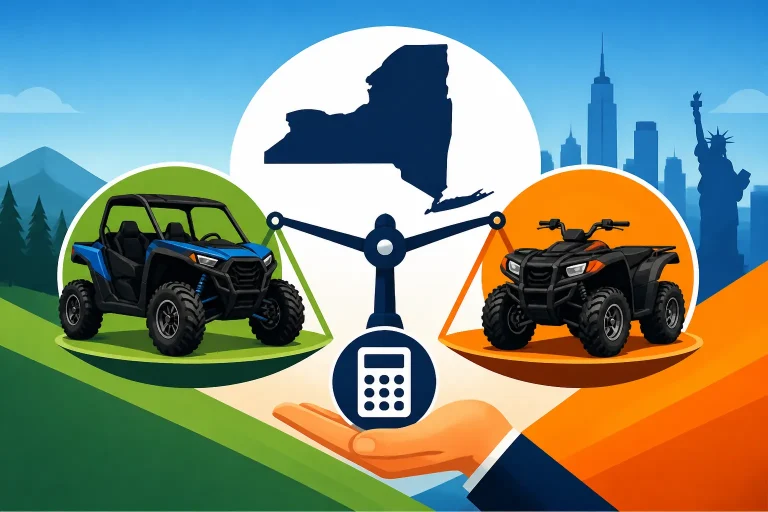
This method keeps an attractive asking price from taking over the decision. For example, a machine with a lower price but worn tires, uncertain ownership records, and no suitable trail access may be a worse purchase than a more expensive machine with clean paperwork and less immediate work. The right comparison is not “Which listing costs less?” but “Which option gets me a usable, lawful machine for the least acceptable total cost?”
Do not deduct the full retail cost of every old or worn accessory from a seller’s price. Focus on necessary repairs and genuine limitations. A cracked rack may be manageable; an unclear VIN or unresolved lien may be a reason not to buy at all. If the seller will not negotiate, you can still decide that the total does not fit your budget.
A written checklist is useful during the negotiation:
- Agreed machine price
- Included accessories and spare parts
- Known defects and promised repairs
- VIN and ownership records to be handed over
- Any lien-release paperwork
- Payment method and timing
- Date and place of pickup
Avoid paying a large amount before the documents and machine have been verified. If a seller asks for a deposit, get the terms in writing and understand what happens if the machine’s identity, ownership, or condition does not match what was represented.
Complete the sale without inheriting a problem
Before final payment, confirm that the machine and paperwork match what you agreed to buy. Check the VIN again, count the included equipment, and make sure you receive the original documents the seller promised. Keep a signed bill of sale and copies or clear images of the records. The bill of sale should identify the parties and machine and state the actual amount paid.
New York ATV ownership paperwork can be different from what buyers expect when they are used to purchasing a car. Do not wait until you reach the registration counter to find out that a required document is missing. If anything about the chain of ownership is unclear, pause the transaction and ask the relevant office what it will accept. A seller’s previous registration is helpful evidence, but it may not resolve every ownership issue.
For a machine with a complicated history, such as one brought from another state, inherited, never registered, or sold through an estate, gather the relevant records before you buy. Get a clear explanation of who has authority to sell it and how that authority is documented. A bargain is not worth much if you cannot establish ownership or complete the next required step.
After the sale, arrange insurance and registration as needed before riding. Verify trail rules separately, and do not assume that the plate, registration, or previous owner’s permit transfers with the machine. Store the paperwork where you can retrieve it, but avoid carrying original ownership records in a way that risks loss or damage.
The cost of a used machine is best judged in layers: what you pay the seller, what it takes to make the machine reliable, and what it takes to use it as planned in New York. A careful inspection and paperwork check may not lower the sale price, but they can keep an appealing listing from turning into a costly mistake.
Frequently Asked Questions
Is a used ATV cheaper from a private seller?
It can be, but a private sale may put more responsibility on you to inspect the machine and verify ownership. Compare the total transaction cost and paperwork, not just the advertised price.
Does a low-hour machine always cost more?
Not necessarily. Hours are only one clue. Maintenance, work history, storage, condition, and the accuracy of the hour meter all matter.
Can I buy a used side-by-side and register it in New York?
Do not assume so. Many side-by-sides may not meet New York’s ATV registration definition. Check the specific machine’s dimensions, weight, and current eligibility rules before buying.
Does a previous New York registration prove I can register the machine?
It can be useful paperwork, but it does not guarantee that every ownership or transfer requirement is satisfied. Confirm that the VIN and documents match and check current requirements before purchase.
What should I do if the seller cannot prove ownership?
Do not complete the sale until you understand what documents are required and whether the seller can provide them. A low price does not make an ownership gap safe to ignore.
Disclaimer
This article is for general informational purposes only and does not constitute professional advice. Laws, prices and regulations vary by location and change over time. Consult a qualified professional for guidance on your specific situation.