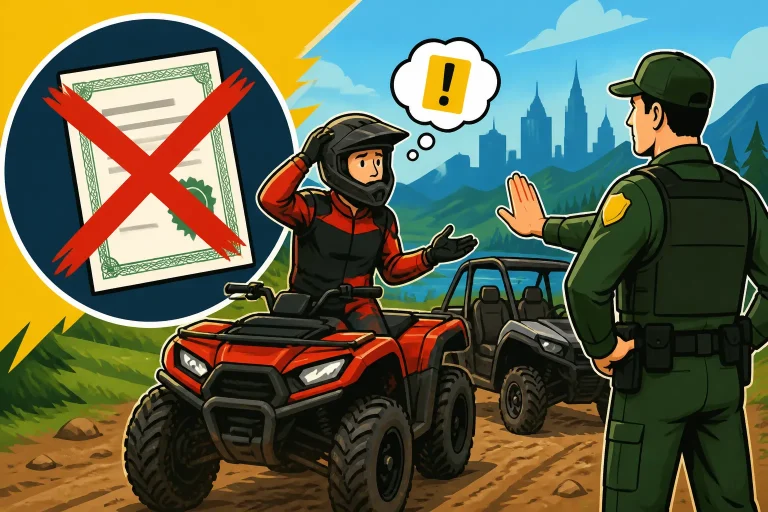
Joining a New York ATV Club
Joining an ATV club in New York can open doors to local trail information, organized rides, and volunteer networks. But club membership is not a statewide riding pass, and it may not include permission to use every trail. Here’s how to find the right club, understand what its membership actually provides, and avoid confusing club dues with registration or trail permits.
What joining a New York ATV club can do
A local ATV club can be a useful starting point for riding in New York, especially when trails cross private property or access depends on local agreements. Clubs may organize rides, share trail updates, maintain routes, and work with landowners or local agencies. The exact benefits vary: one club may offer access to a members-only trail system, while another may focus on trail maintenance or community events.
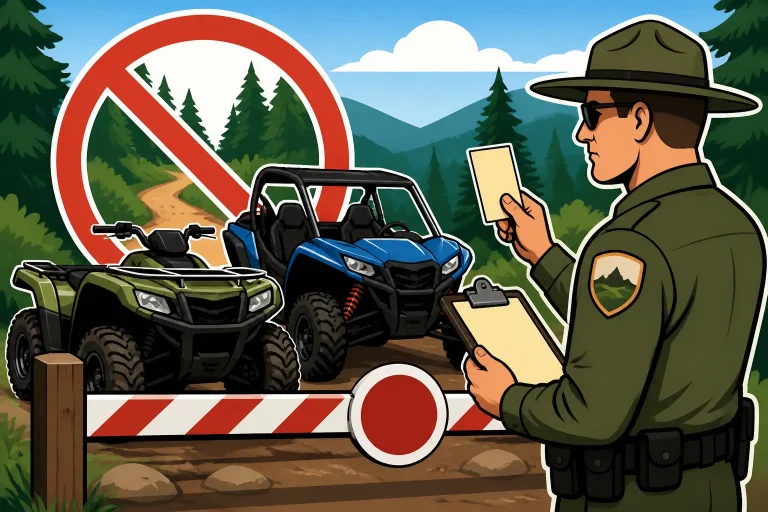
Membership is best understood as a relationship with a particular organization, not as a universal authorization to ride. A club’s membership card does not automatically give you permission to ride on private land, open a closed trail, or use a county trail network. It also does not replace required machine registration, insurance, or other applicable rules.
That distinction matters because New York has no single statewide ATV trail pass that grants access to every riding area. Counties, clubs, landowners, and individual trail systems can have separate rules. A club membership may be part of the access process in one location and have no effect on access in another. For a broader overview of how local systems differ, see County Permits Instead of a State Sticker.
Possible benefits, with limits
Depending on the club, members may receive:
- Information about trail openings, closures, and changing conditions.
- Invitations to club rides, meetings, or volunteer work days.
- A way to support trail maintenance and landowner relations.
- Access to club-organized routes, if the club operates or helps manage them.
- Guidance on local permit, registration, and riding requirements.
- A community of riders who know the area and its customary practices.
Those benefits are not guaranteed by the word “club.” Before paying dues, ask what the organization provides to members, what access it controls, and whether access depends on a separate permit, pass, or sign-up. For more context on common membership benefits, see What a New York Club Membership Buys.
A club can share practical information, but it cannot make a closed route legal to ride or override a landowner’s restrictions. It may also have to close or reroute a trail if an agreement changes, a property is sold, logging begins, or trail conditions become unsafe. Membership is most valuable when you understand the specific access it supports and the conditions attached to it.
Membership is separate from basic riding requirements
Joining a club does not register your ATV, provide the insurance required for riding in New York, or establish that a particular trail is open. Riders still need to check the requirements that apply to their machine and route. If you are unsure whether your machine is registered correctly, start with Do You Need to Register an ATV in New York?. For insurance, see New York ATV Insurance Requirement.
The same separation applies to youth riders, passengers, helmets, and equipment. A club may set additional conditions for its events or trails, but those do not replace state requirements. Treat club rules as an extra layer to check, not a substitute for the rules that apply to all riders.
How to choose a club that fits your riding
The right club is usually the one connected to the area and riding style you actually want. A club near home may be convenient for meetings and work days, but it may not manage trails where you plan to ride. Conversely, a club that supports a distant trail system may be useful for a weekend destination but offer little local riding information.
Start with the specific trail or county you want to use. Check the county’s official information and the club’s own current notices. Then ask whether the club has an active relationship with the trails you care about, whether membership is required for access, and whether the route is open to your type of machine.
Questions to ask before you join
Before paying dues, contact the club and get clear answers to the following:
- Which trails or riding areas does the club support? Ask for named areas or a current map, rather than relying on a general description such as “local trails.”
- Does membership provide access, or only support the club? A club may advocate for riding opportunities without controlling access to a specific trail.
- Is a separate county or trail-system permit required? Find out whether the permit is purchased from the county, a club, or another authorized provider.
- Are any routes limited to members? Ask whether membership is needed for all routes, only certain routes, or particular events.
- Does access depend on machine type or dimensions? A trail may not suit every ATV or UTV, even if it is open to members.
- What happens when a trail closes? Ask where closure notices appear and whether members receive updates by email, a website, or social media.
- Are rides, work days, or meetings optional? Some riders want community involvement; others mainly need trail information.
- What does the membership cost cover? Confirm the current dues and what they support, as well as any separate permit or event charges.
- Are there rules for guests? Do not assume that a membership lets you bring another rider or machine onto a club route.
- How is membership documented? Ask whether you need a card, receipt, decal, or other proof, and whether it must be carried or displayed.
These questions help separate a club’s actual role from assumptions based on its name or location. If the club cannot explain which routes it supports or what a member may access, check with the county or trail manager before making plans.
Look beyond the membership fee
The cost of joining is only one part of a riding budget. You may also need to pay for a local trail permit, machine registration, insurance, fuel, maintenance, or an event. Club dues may be annual, seasonal, household-based, or structured in another way, so check the organization for its current figures and terms. For a closer look at this expense, see New York Club Membership Cost.
Also ask whether the club membership changes the price or eligibility for a trail permit. Any discount or benefit should be confirmed with the organization responsible for issuing that permit. Do not assume that joining one club lowers the cost of permits in another county or grants access to a separate trail system.
If you are considering joining mainly to obtain trail access, verify the full cost and process first. You may need both membership and a permit, and you may have to register your machine separately. A club representative can explain its own program, but the county or trail operator is the best place to confirm the conditions for the trail itself.
Club membership, trail permits, and reciprocity
The most common misunderstanding is treating club membership and trail permits as interchangeable. They are not. A club membership is issued by an organization. A trail permit is an authorization for a particular system or area, when that system requires one. Registration applies to the machine, while insurance applies to the rider or machine according to the relevant requirements. One item does not automatically satisfy the others.
| Item | What it generally relates to | What it does not automatically provide |
|---|---|---|
| Club membership | Supporting or participating in a club; possible access to specific club-supported routes | Permission to ride every trail or a statewide pass |
| Trail permit | Access to a particular trail system when required | Machine registration, insurance, or access to unrelated systems |
| ATV registration | Registration of an eligible machine | Trail access or permission to ride on private land |
| Insurance | Required financial protection for riding where applicable | A trail permit or permission to use a closed route |
| Safety certificate | Required training credential for riders in situations covered by the rules | Club membership or general trail access |
Trail access is often local. A county may run its own permit program, a club may help manage certain routes, and another area may have different conditions. Confirm the exact requirements for the system you plan to ride. The Lewis County system, for example, has its own information and access arrangements; see The Lewis County ATV Trail System in New York and Which Trails a Lewis County Permit Covers when planning for that area.
Club membership does not create reciprocity
Reciprocity concerns whether New York recognizes certain out-of-state registration or other credentials for a visiting rider. A membership in an out-of-state club is not, by itself, proof that a New York trail operator will admit you. Likewise, joining a New York club does not automatically make your out-of-state machine compliant with New York’s registration or insurance rules.
Visitors should check two separate questions:
- What does New York require of the machine and rider?
- What does the specific county, club, or trail system require for access?
For more on the first question, see New York Reciprocity for Out-of-State Registrations. For the second, consult the current access information from the trail operator. A county permit may be required even when your machine is registered elsewhere, and club membership may still be separate from that permit.
A rider who belongs to a club in one county should not assume that the membership carries over to another county. The name of a regional club may suggest a broad area, but actual access depends on the club’s agreements and the rules of each trail system. If you plan a multi-county ride, check every system on your route rather than relying on one membership card.
Private club trails and public access are different
Some trails are open under conditions set by a public agency or county. Others rely on private landowner permission, and some club routes may be limited to members or organized events. These are different types of access. A trail appearing on a map does not prove it is open to the public or currently passable.
On a club trail, follow posted signs, gates, and temporary closure notices. Stay on the marked route, respect speed and machine restrictions, and avoid side roads or property that are not included in the authorized trail. Club rules can be stricter than general riding requirements because they help protect landowner relationships and keep routes available.
If a route crosses private property, do not treat club membership as permission to explore beyond the trail. Access is limited to what the owner or trail agreement allows. For more detail, see New York Rules on Club Trails and Permission Before You Ride Someone’s Land.
Joining and using a club responsibly
Joining is usually straightforward, but the details are club-specific. Some organizations accept applications online; others may handle membership through meetings, events, or a designated contact. Check the club’s current instructions rather than sending payment or personal information through an unverified page.
A sensible joining process looks like this:
- Identify the trail system you want to ride. Start with the county or area, not just a club name.
- Find the club connected to that system. Use the trail operator’s official information or contact the organization directly.
- Confirm what membership includes. Ask whether it provides access, information, discounts, or simply a way to support trail work.
- Check other requirements. Verify registration, insurance, permits, age-related rules, and machine limits independently.
- Review the club’s rules and communication channels. Know how to check closures and where to find ride or event details.
- Apply using the club’s stated process. Keep the receipt or membership confirmation and ask how proof should be carried.
- Recheck conditions before each ride. A trail that was open when you joined may later close or change.
Be a good guest on shared trails
Club membership can help sustain trail access, but the behavior of individual riders affects whether that access continues. Follow marked routes and do not cut around gates, ride through closed sections, or create unofficial bypasses. A short detour can cross land that has not been included in the trail agreement.
Ride at a pace appropriate to the route and yield carefully when meeting other trail users. Slow down near homes, farms, road crossings, work crews, and areas where visibility is limited. Keep noise and dust in mind, and avoid leaving litter or damaging vegetation. If the trail crosses active farmland or a logging area, follow posted instructions and give equipment operators room.
When a club organizes a ride, follow the organizer’s briefing and any limits on group size, spacing, or route. A group event does not give riders permission to leave the authorized trail. If you see a blocked route, damaged sign, washout, or unsafe condition, report it through the club or trail operator instead of trying to repair or reroute it without authorization.
Members can also contribute without riding every event. Clubs may welcome help with trail work, meetings, landowner outreach, or sharing accurate closure information. Ask what kind of support is useful. A membership is more likely to be worthwhile when it matches your interests and helps maintain the access you intend to use.
Keep membership records and riding documents separate
Carry or retain whatever documentation the applicable rules require, and keep club confirmation in a place you can access. A membership card may help establish that you belong to an organization, but it is not a substitute for registration documents, insurance proof, or a required trail permit.
Before leaving home, make a short check:
- Is the planned trail open to my machine today?
- Do I have the correct permit for this system?
- Is my machine properly registered and insured?
- Do I have any required rider credentials and identification?
- Do I understand the club’s guest, route, and event rules?
- Have I checked for road, weather, landowner, or maintenance closures?
For multiple riding areas, make this check for each one. Do not rely on an old social media post, last season’s map, or a friend’s membership as confirmation that a route is currently open. Local access arrangements can change, and trail operators may announce closures through channels that are separate from the club’s.
Frequently Asked Questions
Does joining an ATV club let me ride anywhere in New York?
No. Membership applies to the organization and any specific access it supports. Trail systems may require separate permits, and private land requires permission within the terms set by its owner or trail agreement.
Does a club membership replace a county trail permit?
Not automatically. Some clubs may administer or help arrange access for particular systems, but requirements differ. Ask the trail operator whether a separate permit is needed and confirm the current process.
Can an out-of-state club membership provide access in New York?
Not by itself. Visitors should check New York’s registration and insurance requirements, then confirm the access rules for the specific trail system. Reciprocity and trail access are separate issues.
How can I tell whether a club’s trails are open?
Check the club’s current notices and the information from the county or trail operator. Look for closures, seasonal conditions, machine restrictions, and any member or permit requirements before traveling.
Disclaimer
This article is for general informational purposes only and does not constitute professional advice. Laws, prices and regulations vary by location and change over time. Consult a qualified professional for guidance on your specific situation.