Riding Tug Hill in Deep Snow Country
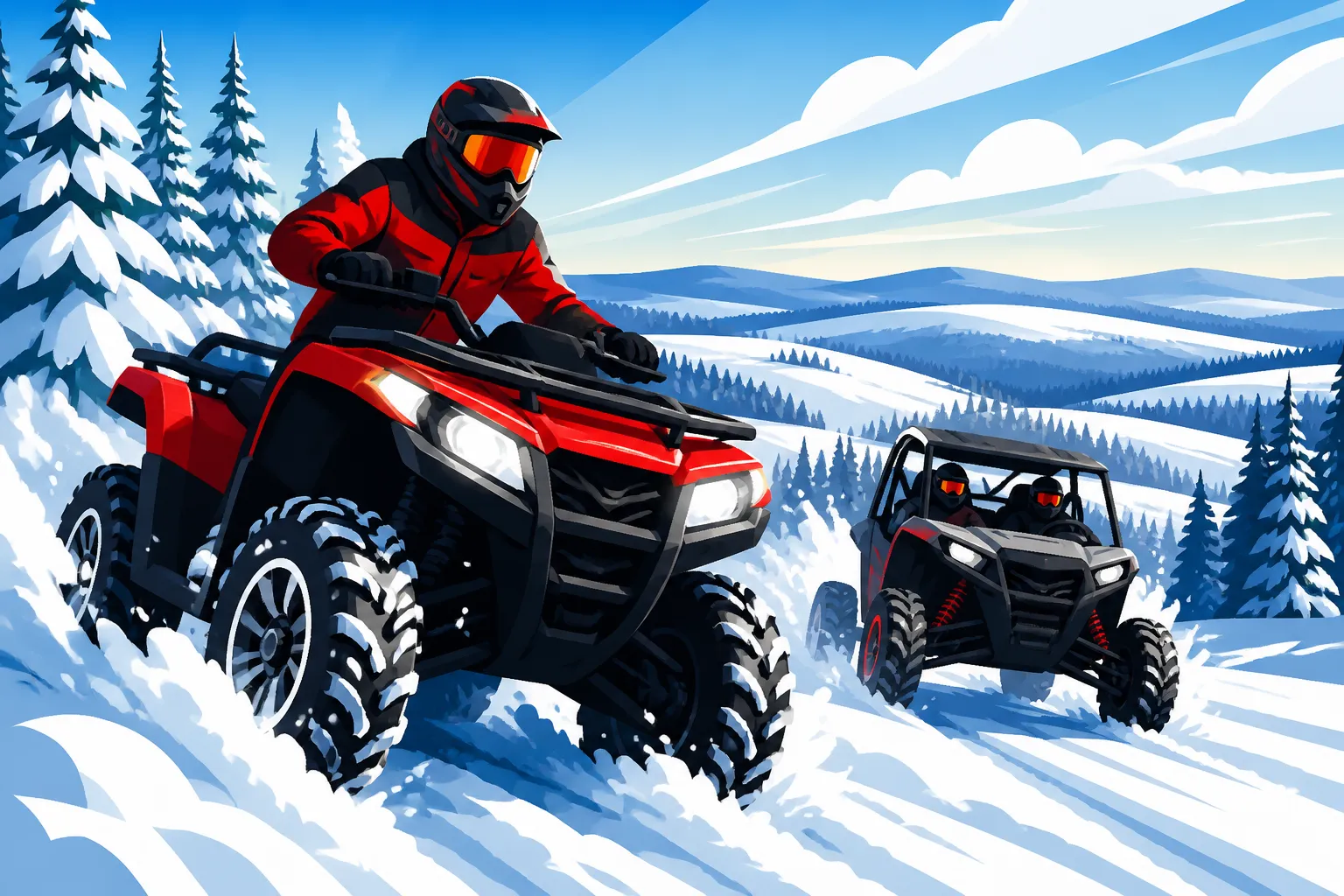
Deep snow can make Tug Hill look like one enormous playground, but a white trail is not automatically open to ATVs. Lake-effect storms, plowed roads, private land, and seasonal closures can change the ride quickly. This guide explains how to plan a winter trip, check access, prepare your machine, and manage the cold without mistaking snowmobile access for ATV permission.
Understand winter access on Tug Hill
Snow cover does not mean a trail is open
Tug Hill’s deep snow country spans parts of Lewis, Jefferson, and Oswego counties. The region is known for lake-effect snowfall, but winter conditions do not create automatic permission to ride. An ATV route may be closed for the season, unavailable because of a landowner agreement, or unsuitable after a thaw even when the surrounding landscape looks rideable.
ATV trails and snowmobile trails are not interchangeable. A marked snowmobile corridor may be maintained for snowmobiles and still be closed to ATVs. Before unloading, check the trail system’s current notices and confirm that the specific route allows your machine and is open to your type of riding. County and club trail networks can have their own rules, access periods, and closures.
If you are planning around the Lewis County system, start with [New York's Tug Hill Riding] and [New York's County Trail Systems Compared]. These can help you understand the local riding landscape, but the final word should come from the trail operator or county managing the route. A map may show where a trail goes without proving that it is open today.
Confirm who manages the route
Winter routes in the Tug Hill region may cross private property, county-managed land, or land covered by a trail agreement. A route that was open during a fall visit may be closed later because of weather damage, logging, maintenance, or a change in landowner permission. Gates and signs matter, even if tire tracks continue past them.
Do not assume that a trail is public because it appears on a recreational map or because other riders have used it. Stay on marked routes, respect closures, and avoid cutting across fields or forest roads to get around a blocked section. A landowner’s consent for one route or season does not necessarily authorize riding elsewhere on the property.
Before the trip, check the relevant county notices, trail-club updates, and local rules. Planning with a mapping tool such as onX Offroad can help you review your intended route and orient yourself, but it should not replace official access information or posted signs. If a route’s status is unclear, choose a confirmed-open alternative rather than trying it and hoping.
Prepare for deep snow and cold
Match the machine to the conditions
A machine that handles summer mud may feel very different in packed snow or fresh powder. Deep snow can hide ruts, rocks, ditches, culverts, and branches, while cold can affect batteries, tire pressure, starting, and the time it takes to recover a stuck ATV. A narrow machine may also be easier to manage on a tight trail than a wide one, but the trail’s legal and physical limits still need to be checked.
Before setting out, inspect the tires, brakes, throttle, steering, lights, winch, and battery. Check that the tires are appropriate for the conditions and have adequate tread. If your machine uses tracks, confirm that they are permitted on the route and suited to the machine; tracks do not grant access to a trail that is otherwise closed. Avoid making major changes to tire pressure without understanding the manufacturer’s guidance and how the adjustment may affect handling.
Give yourself enough clearance for snow hiding uneven ground, but do not mistake clearance for immunity from getting stuck. A winch, rated recovery points, and suitable recovery gear can help, but they are not a substitute for careful route choice. For broad guidance on local seasonal conditions, see [New York Riding in Winter] and [New York Trails Closed by Weather].
Pack for a slow ride and an unexpected stop
Winter riding often takes longer than the same route in mild weather. A drift, icy incline, or machine recovery can turn a short stretch into a long stop. Carry warm layers, waterproof outerwear, insulated gloves, eye protection, and dry backup clothing in a sealed bag. Wear a helmet and other protective gear appropriate to the ride, and make sure clothing does not interfere with controls.
Bring drinking water, food, a first-aid kit, a charged phone, and a backup way to contact someone if service is limited. Tell a person who is not riding with you where you plan to go and when you expect to return. Set a turnaround time before leaving; if the route is taking longer than expected, turning back early is usually better than pressing on as daylight fades.
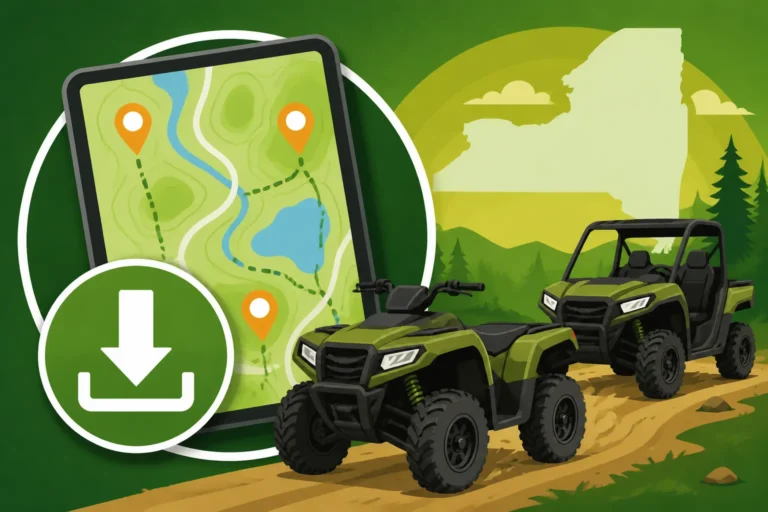
Cold batteries and poor cell coverage can make it harder to get help. Keep your phone warm and conserve its battery, and do not rely on a map app as your only navigation tool. If you use onX Offroad to review a route, download or save the information you need before leaving service, and carry a paper map or another backup. Confirm that the map corresponds to a route you are actually allowed to ride.
| Before you leave | Why it matters in deep snow | What to check |
|---|---|---|
| Trail status | Snow cover can conceal a closure or a route intended for another vehicle type | County, club, and land-manager notices |
| Machine condition | Cold and snow put extra strain on starting and recovery | Battery, lights, brakes, steering, tires, winch |
| Clothing and supplies | A stuck machine can mean standing still in severe cold | Warm layers, dry clothing, water, food, first aid |
| Navigation | Cell service may be unreliable, and tracks can be hard to follow | Saved map, backup navigation, planned route |
| Return plan | Snow and recovery delays can eat into daylight | Check-in contact, turnaround time, fuel reserve |
Ride carefully on winter trails
Adjust your pace to what you can see
Fresh snow can make a familiar trail look smooth while covering hazards. Ride slowly enough to stop within the distance you can see, especially around bends, narrow bridges, steep grades, and intersections. Give extra room to other trail users, and expect that a snowmobile or work vehicle may appear around a blind corner.
Packed snow can be slippery, while loose snow can pull the front end off course or hide a rut deep enough to shift the machine. Avoid abrupt steering and braking. If traction changes, ease off the throttle and make controlled adjustments rather than trying to power through. Keep a generous following distance so you are not forced to stop suddenly on an icy section.
When riding with a group, agree on a lead rider and a sweep rider, establish a regrouping plan, and keep the group together at turns. Do not assume the next rider saw the trail marker or the hazard you just passed. A navigation app such as onX Offroad can be useful for checking your position against a planned route, but riders should still follow signs and trail markings on the ground.
Treat shared routes and crossings with extra care
Some winter routes may be shared with snowmobiles, local traffic, or other permitted users. Stay alert for faster traffic and yield according to posted signs and applicable rules. Do not ride on a snowmobile trail simply because it is groomed or because it connects to an ATV route. Confirm that ATVs are allowed on that specific segment before entering.
Road crossings deserve particular caution. Snowbanks can block sightlines, and plowed surfaces may be icy or bare pavement. Stop where required, look carefully in both directions, and cross only where legally permitted. Do not ride along a public road unless the route is designated for that use. For more on trail access and rules, read [New York Rules for Riding a Snowmobile Trail] and [New York's Designated and Posted Roads].
If a trail is closed or a crossing cannot be made safely, turn around. Do not bypass a gate, ride along a road shoulder to reach another trail, or cross private property as a shortcut. Those choices can put you at risk and threaten access for everyone who depends on local trail agreements.
Build a practical Tug Hill winter plan
Plan around weather, daylight, and fuel
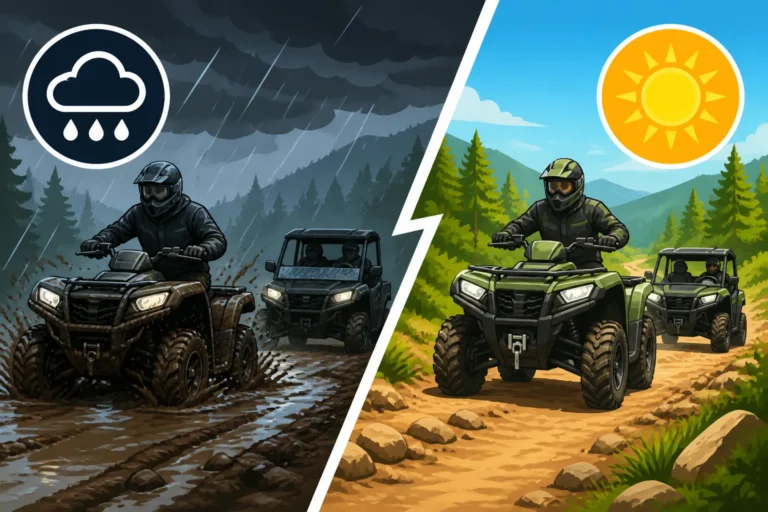
Check the forecast for the route area, not just the nearest town. Conditions can vary across the plateau, and a sunny start near Watertown or Lowville does not guarantee similar weather deeper into Tug Hill. Look for changing temperatures, wind, snowfall, and visibility. A thaw followed by a freeze can leave slick surfaces and rough frozen ruts; fresh snow can obscure the trail’s edges.
Choose a route that fits your group’s experience, machine, and available daylight. Estimate fuel conservatively, allowing for slow travel, detours, and recovery. Identify a staging location where parking is permitted, and avoid blocking plow routes, gates, driveways, or access for emergency vehicles. A downloaded route in onX Offroad may help you keep track of your intended path, but leave room in the plan for a safe return without relying on shortcuts.
Winter trail access can change quickly, so have a shorter backup plan. If a route closes, the weather deteriorates, or the trail becomes difficult to follow, switch plans rather than riding beyond your comfort level. The point is not to complete a loop at all costs; it is to get the group and machines back safely.
Know when to turn around
Turn back if visibility drops, the group is getting cold, a machine develops a mechanical problem, or the route becomes more difficult than expected. Be especially cautious if you encounter a closed gate, a trail marker that does not match your route, or fresh damage from thawing conditions. A closure is not an invitation to find another way through the property.
If someone becomes stranded, keep the group together and assess the situation before attempting recovery. Use recovery equipment only as intended, and keep people clear of tensioned straps or cables. Avoid exhausting the group with repeated attempts in worsening weather. If the situation becomes unsafe, contact emergency services and give them your location as clearly as possible.
A good Tug Hill ride depends on respecting the people and agreements that keep routes available. Check access before you travel, ride only open and permitted trails, and leave the route as you found it. For local trail planning, [New York Trail Conditions Before You Ride] and [New York Trail Closures to Check First] are useful related reads.
Disclaimer
This article is for general informational purposes only and does not constitute professional advice. Laws, prices and regulations vary by location and change over time. Consult a qualified professional for guidance on your specific situation.