Black Flies in a Northern June
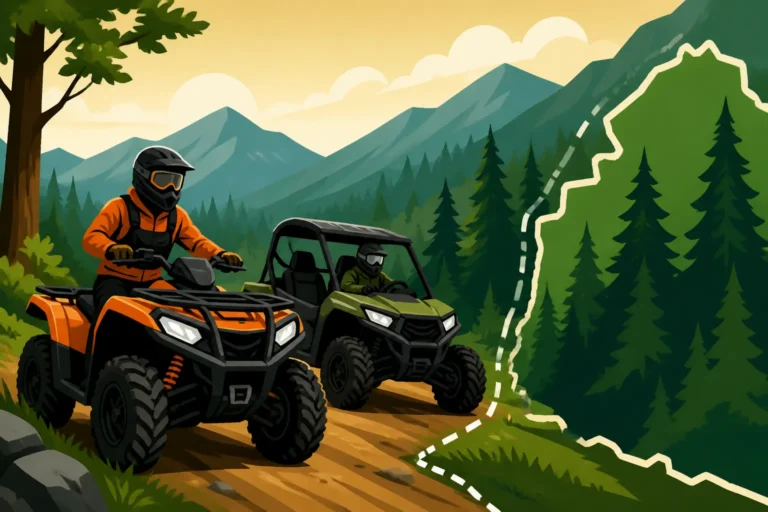
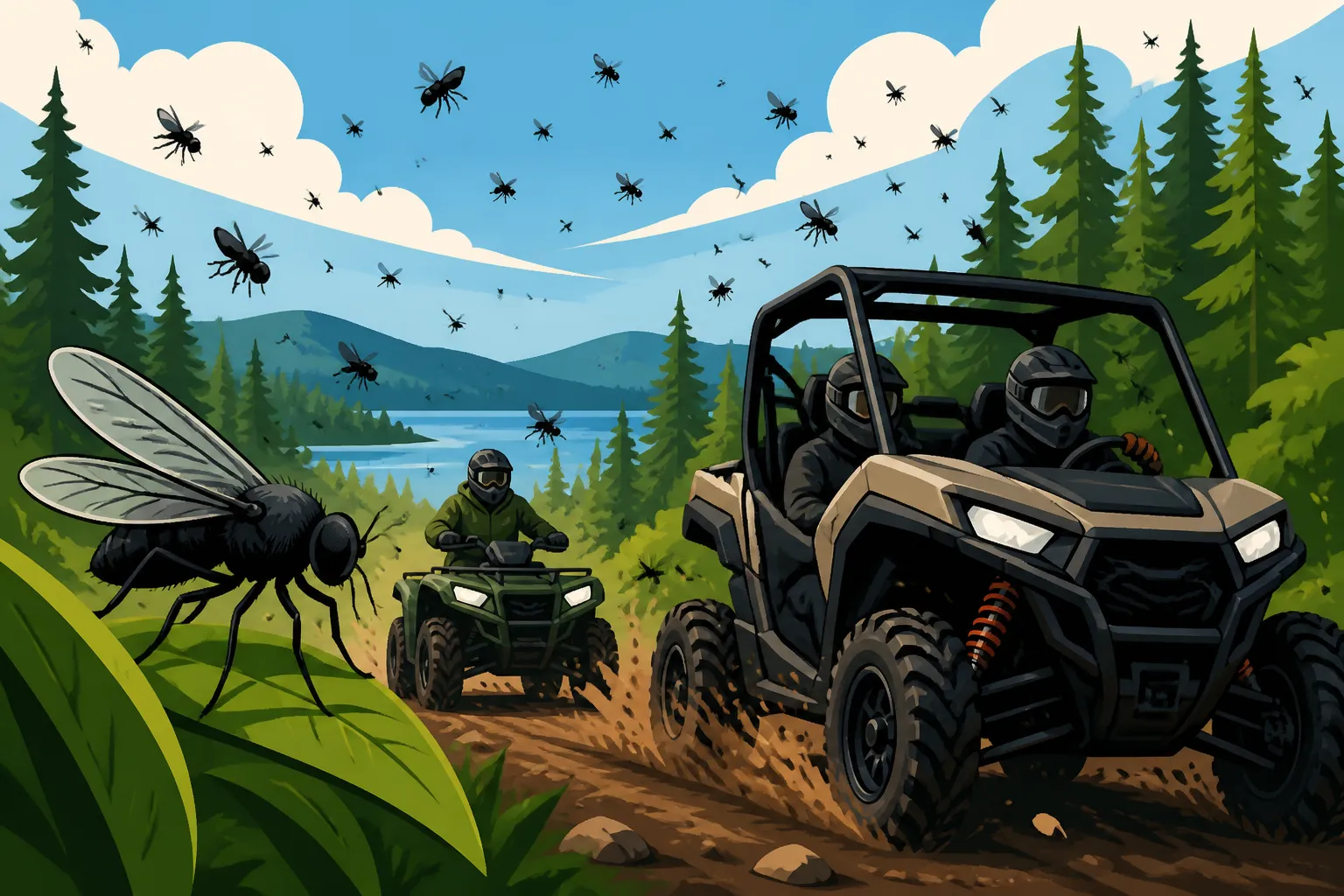
A northern New York ride in June can turn uncomfortable fast when black flies find the gaps around your helmet, collar, and gloves. Their season varies with weather and location, but riders around Tug Hill and the Adirondacks should plan for them rather than assume the trail will be breezy or bug-free. This guide covers when and where they’re worst, what to wear, and how to make a ride more manageable.
Why black flies are part of a northern June ride
Black flies are a familiar nuisance in northern New York, especially around wooded, damp areas in late spring and early summer. Their numbers and timing vary from one year and location to another. A stretch of warm, still weather can feel very different from a cool, breezy day, even on the same trail.
For ATV and UTV riders, the challenge is not just encountering flies on the trail. It’s the exposed skin around a helmet, the pause at a staging area, or the moment you stop to check a map. A little preparation before loading the machine can save a ride from becoming an itchy, frustrating retreat.
When black flies are most likely to bother you
Black flies are often most noticeable during the spring-to-early-summer period, with June a common time for riders to encounter them in northern New York. The exact peak shifts with local weather and conditions. A cool spring can change the timing, while a warm spell may make activity noticeable earlier.
Conditions matter as much as the calendar. Calm, humid periods can feel especially buggy, while a steady breeze may make it harder for flies to hover around you. That does not mean wind guarantees a comfortable ride; sheltered woods, trail stops, and low spots can still feel very different from an open road or clearing.
Think about the whole outing, not only the hours spent moving. You may feel fine on an exposed stretch, then get swarmed while unhooking a trailer, talking with your group, or taking a break in the trees. Check the forecast and trail information before you go, but treat them as planning clues rather than a promise that insects will or won’t be active. For broader seasonal context, see [New York Riding Seasons and Trail Openings].
Where riders are likely to notice them
Black flies are associated with damp environments where their immature stages develop in flowing water. That makes wooded northern riding areas with streams and wet ground places where it’s sensible to be prepared. A trail does not have to run directly beside water for flies to be a nuisance; they may follow riders into nearby shaded areas and gathering spots.
The Tug Hill region and the Adirondacks are popular examples of northern New York riding country where June visitors may encounter biting insects. Conditions vary across each region, though. A breezy section of trail may be comfortable while a sheltered staging area feels unpleasant, and one day’s experience does not reliably predict the next.
If you are planning a trip, look up the specific riding area and check its latest notices rather than relying on a general impression of the region. [New York's Tug Hill Riding] and [New York ATV Trails Near Watertown] can help with regional planning, while [New York Trail Conditions Before You Ride] is a useful reminder to check current access and conditions before you load up.
Why they can feel worse on an ATV
An ATV rider may be more exposed than someone walking through the same woods. Airflow can help while the machine is moving, but it may not protect your face and neck at low speed or when you stop. Dust, branches, and mud also create reasons to keep your eyes and skin protected, so simply uncovering your face to deal with flies is not a good trade.
The most frustrating bites often happen at the edges of protective gear: wrists, collar, the back of the neck, or small gaps near a helmet. Gloves and a riding jacket help, but loose cuffs or an open collar can leave a route in. Before starting, check how your clothing meets your helmet and gloves, and adjust it without compromising visibility, comfort, or safe control of the machine.
How to dress and protect yourself
You do not need a complicated kit for every ride, but a few deliberate choices make a noticeable difference. The goal is to cover vulnerable areas, use repellents correctly, and keep protective gear functioning as intended. A solution that blocks bugs but fogs your goggles or interferes with your helmet is not a useful solution.
Cover the gaps without compromising safety
Wear long sleeves, long pants, and gloves that fit securely. A jacket with closable cuffs and a collar that sits comfortably under your helmet can reduce exposed skin. Tuck in loose layers where practical, but avoid bulky fabric that restricts movement or catches on controls.
Pay special attention to your face and neck. Keep your helmet and eye protection properly fitted, and do not remove or modify safety equipment to make room for a bug net. A head net may be useful when you are walking around a staging area or taking a break, but only use one while riding if it is designed and secured in a way that does not interfere with your helmet, goggles, visibility, hearing, or control of the machine. Loose mesh near moving equipment can snag or obstruct your view.
Consider the trade-offs before adding layers. A face covering can make breathing hot or uncomfortable, while a mesh layer that is too close to your skin may not stop flies from biting through it. Test your setup at home or during a short, low-pressure outing rather than discovering problems halfway through a long ride.
Use insect repellent according to its label
A repellent containing DEET or picaridin can help protect exposed skin when used as directed. Read the product label for where and how to apply it, how often to reapply, and any age-related instructions. Do not apply it to skin that clothing already covers unless the label specifically directs you to do so.
Avoid spraying repellent near your eyes or mouth, and wash your hands after applying it if the label recommends that precaution. If you are using sunscreen too, follow both product labels for application order and reapplication. Do not assume that one application will last through a long day of riding, sweating, and repeated stops.
Permethrin products are intended for treating certain clothing or gear, not for direct application to skin. Follow the product directions, including any instructions about drying treated items before wearing them. If you are unsure whether a product is appropriate for your clothing, equipment, or family, check its label before the trip rather than improvising at the trailhead.
Pack a small bug kit for stops
A compact kit is useful because the ride is not all riding. Keep repellent, a spare pair of gloves, and a clean layer that covers your neck or wrists somewhere accessible. Store products so they cannot leak onto seats, food, or equipment, and avoid leaving aerosol or other products in a place where heat could create a hazard.
A small first-aid pouch can include basic supplies for cleaning and covering a bite that has been scratched open. For ordinary irritation, a cool compress may feel soothing. If you have a history of severe reactions, ask a qualified health professional in advance about what to carry and what symptoms call for urgent care.
| Riding situation | Common problem | Practical preparation |
|---|---|---|
| Moving along an open trail | Flies may be less noticeable in airflow, but eyes and face still need protection | Wear a properly fitted helmet and eye protection |
| Stopping in shaded woods | Biting flies can gather around exposed skin | Apply repellent as directed and close clothing gaps |
| Unloading at a staging area | Hands and neck may be exposed while handling straps and gear | Keep gloves and a neck-covering layer handy |
| Taking a break | Sitting still can make insects more irritating | Choose a more open, breezy spot when practical |
| Walking away from the machine | Riding gear may not cover every exposed area | Use a suitable head net or extra layer if it does not interfere with safety |
Plan the ride around conditions and trail access
Bug preparation is only one piece of a successful June outing. Trail access, weather, and local rules can change the plan, and a route that looks appealing on a map may not be open or appropriate for your machine. Check those details before departure, then keep your plans flexible.
Check access before choosing a route
Use official county or trail-system information to confirm which routes are open and what rules apply. A map app can help you orient yourself, compare route options, and keep track of where you are, but do not treat an app as proof that a trail is open to ATVs or UTVs. For example, riders may use onX Offroad as a planning aid alongside local notices, rather than as a replacement for them.
If you use onX Offroad, compare its route information with current county or trail-operator updates before setting out. Download or save the information you need in advance if you expect weak cell coverage, and carry a backup navigation option appropriate for your trip. The most important part is verifying access with the organization responsible for the trail.
For more on the practical side of route planning, see [New York Trail Maps From a County] and [New York Trail Closures to Check First]. Trail systems may have seasonal openings, closures, or restrictions that are not obvious from a general map. A closed trail is not an acceptable detour just because the bugs are bad or your group wants to keep moving.
Choose a sensible time and pace
If you have flexibility, consider how the day’s weather may affect comfort. A breeze and a less sheltered route may feel better than a still, damp pocket of woods, but conditions can change as you travel. Avoid building a schedule that leaves no room to stop, adjust clothing, or turn around if the outing becomes uncomfortable.
Bring enough water and take breaks before anyone is exhausted or distracted. Repeated swatting, scratching, or trying to adjust gear while moving can draw attention away from riding. Stop in a safe location before changing layers or applying repellent, and make sure the machine is parked securely.
A group ride needs a little extra coordination. Tell everyone where you plan to stop and agree on a turnaround point. A rider who is new to the area may not realize how quickly a short break can become miserable in a sheltered spot, while an experienced rider may be comfortable pressing on. It is reasonable to shorten a loop rather than push someone into riding distracted or uncomfortable.
Respect landowners and stay on marked routes
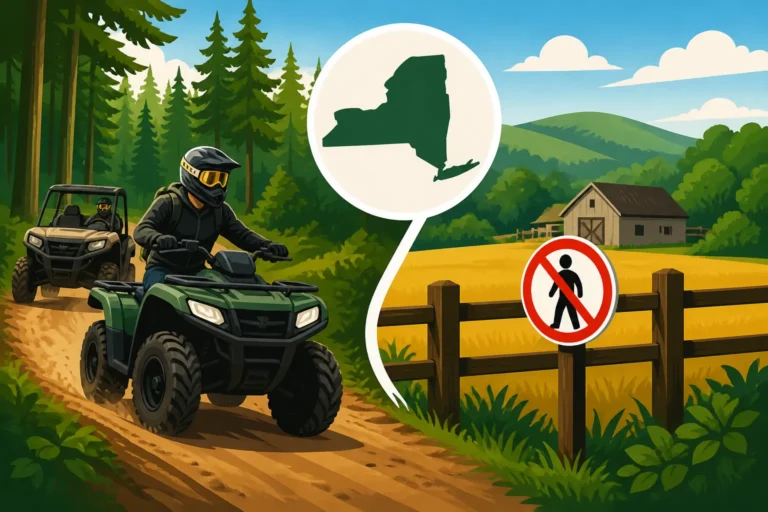
In northern New York, many riding opportunities depend on access agreements and landowner cooperation. Stay on authorized routes, observe signs and gates, and do not create a new path around a closed section. Driving off trail can damage ground and vegetation, and it can undermine the relationships that keep riding areas available.
If insects are especially bad, it may be tempting to cut across a field or use an unmarked lane to reach a more open area. Resist that impulse unless the route is clearly authorized. Check [New York Trail Etiquette With Landowners] before your trip, and follow posted directions even when they inconvenience your group.
A map app, including onX Offroad, can be useful for orientation, but a displayed line should not override signs, closures, or permission requirements. When route status is unclear, contact the county or trail operator before riding. That extra check is far better than discovering at a gate that the route is closed or that you have crossed onto land without permission.
What to do if bites happen
Even a well-prepared rider can get bitten. The practical response is to stop scratching where possible, clean the area if the skin is broken, and pay attention to how the reaction develops. Most irritation is manageable, but a severe or unusual reaction deserves professional attention.
Reduce irritation after the ride
Once you are back at camp or home, wash exposed skin and change out of riding clothes. A cool, damp cloth may ease discomfort. Try not to scratch, because broken skin can become irritated or infected. If a bite is unusually painful, swelling substantially, or not improving as expected, ask a health professional for advice.
Keep an eye on any symptoms that go beyond local itching or swelling. Trouble breathing, swelling of the face or throat, faintness, or other signs of a severe allergic reaction require urgent medical help. If you know you have a serious allergy to insect bites, plan with a clinician before riding and make sure companions know what to do in an emergency.
Learn from the outing before the next one
After the ride, note what worked and what did not. Perhaps your gloves left a gap at the wrist, your collar opened when you looked over your shoulder, or the group took a long break in a sheltered clearing. Small adjustments to clothing, repellent timing, and stop locations can make the next ride much more comfortable.
If the conditions were poor, check trail information before planning another outing rather than assuming the same route will be better on a different day. [New York Trail Conditions Before You Ride] can serve as a prompt to recheck access and conditions, while [Deer Ticks on a Summer Ride] covers another bite-related concern riders may want to consider when spending time in brush and woods.
A June ride in northern New York can still be enjoyable with black flies around. Cover exposed skin, protect your face without interfering with riding gear, use repellent as directed, and make route and access checks before you leave. Most importantly, give yourself permission to adjust the plan: turning back or choosing a more comfortable time is better than spending the whole ride distracted and miserable.
Disclaimer
This article is for general informational purposes only and does not constitute professional advice. Laws, prices and regulations vary by location and change over time. Consult a qualified professional for guidance on your specific situation.