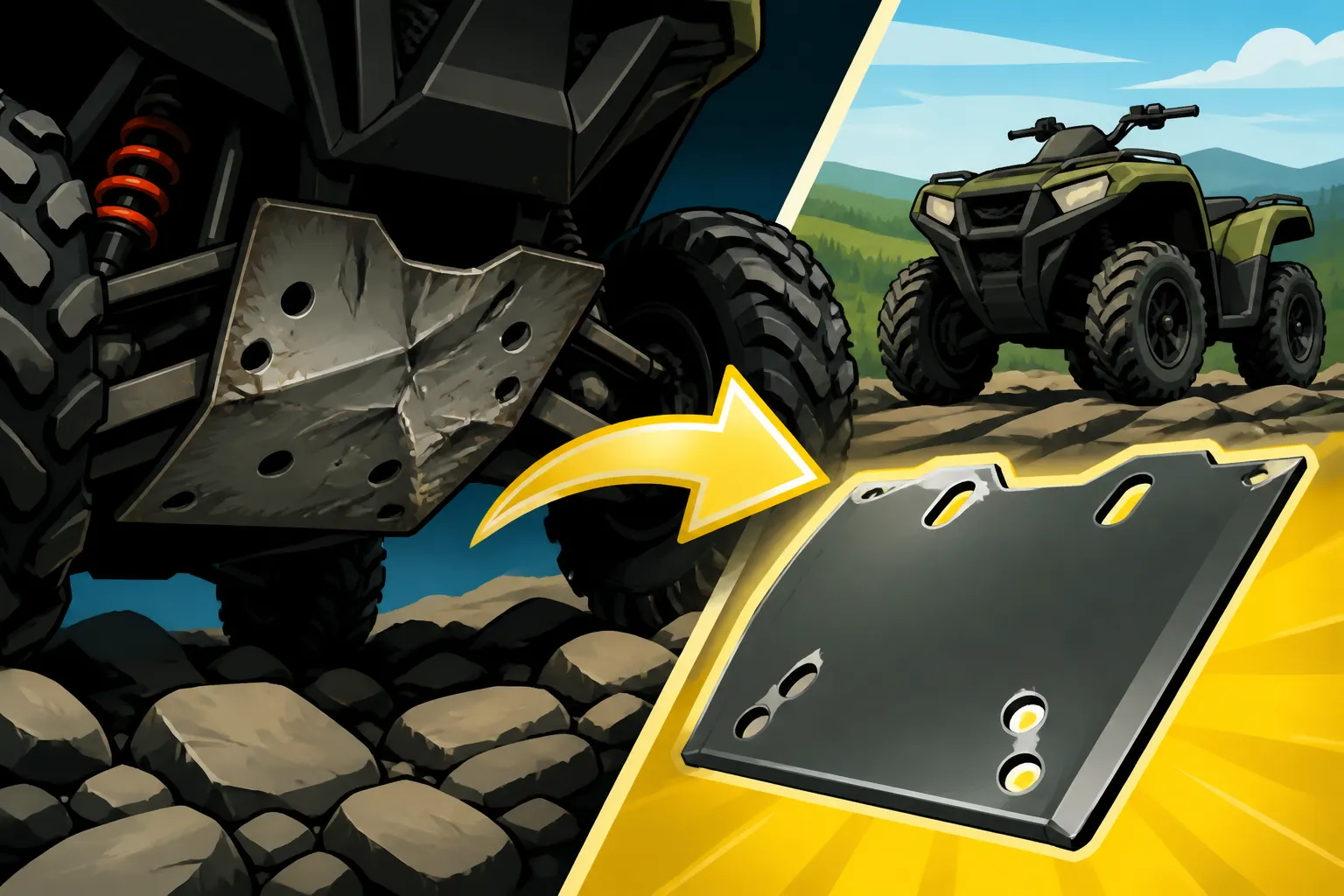
Replacing an ATV Plate Bent on the Tug Hill Rocks
It’s a tale as old as time on the trails – you’re out on the magnificent Tug Hill, navigating some truly gnarly terrain, maybe even pushing the limits a little bit, and wham! You hit a hidden rock, or perhaps get a little too close to a tree, and next thing you know, your New York ATV plate is bent, mangled, or barely hanging on. This isn't just a cosmetic issue; a damaged plate can lead to real headaches, from potential fines to hassles on the trail. This guide is here to walk you through exactly what to do when your plate gets the worst of an adventure, ensuring you can get a shiny new one and get back to riding legally and safely.
Why a Damaged Plate is More Than Just an Eyesore
When your ATV plate takes a beating, it's easy to think it's just a minor ding. After all, the machine itself is fine, right? But that bent, scratched, or partially obscured plate isn't just an aesthetic concern; it can quickly become a legal and practical problem that puts a damper on your riding. New York State has clear requirements for vehicle registration plates, and ATVs are no exception.
The Law Demands Readability
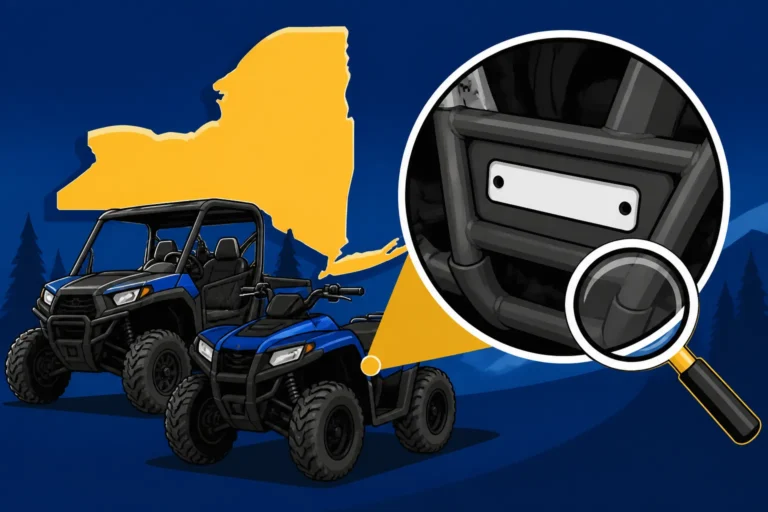
First and foremost, New York law requires your ATV registration plate to be clearly visible and legible at all times. This means the plate number, the state identifier, and the validation stickers must be intact and easy to read from a reasonable distance. A plate that's significantly bent, cracked, or has missing paint can fail this basic requirement. Imagine being out on a fantastic trail in Lewis County, only to be stopped by a forest ranger or a state trooper who can't make out your plate number. It immediately raises suspicion and can lead to an uncomfortable conversation, even if you’ve done nothing wrong. They might issue a warning, but they could also cite you for an unreadable plate, which nobody wants after a great day of riding.
Practical Hassles on the Trail
Beyond the legal aspect, an unreadable or damaged plate can also create practical issues. Many trail systems, especially those maintained by clubs or counties, rely on visible plates and decals to confirm your machine is properly registered and permitted. If a volunteer or trail monitor can't easily verify your registration, you might be asked to leave the trail or face delays while they try to sort things out. For example, if you’re riding on the extensive Lewis County ATV Trail System, having your plate in good order is crucial for smooth access and avoiding any unnecessary friction with trail staff or landowners whose property the trails cross. Plus, if you ever need assistance on the trail, like if you break down or get lost, a clearly visible plate helps responders quickly identify your machine and link it back to you.
The Step-by-Step Process for Replacing Your New York ATV Plate
Okay, so your plate is mangled. Don't fret! Replacing your ATV plate in New York isn't as complicated as it might seem. It involves a few straightforward steps at the Department of Motor Vehicles (DMV) or through your local issuing agent. The key is to gather your documents beforehand and know what to expect.
Gathering Your Essential Documents
Before you head to the DMV, it’s crucial to collect all the necessary paperwork. This saves you from making multiple trips, which is especially important if your local DMV office has limited hours or is a bit of a drive. You’ll typically need:
- Your current ATV registration document: This is the most important piece of paper. It proves that the ATV is registered in your name and provides all the details associated with your machine and its plate number.
- Proof of identity: A valid New York State driver's license or non-driver ID card is usually sufficient. This confirms you are the registered owner requesting the replacement.
- Proof of ownership (if requested): While not always explicitly required for a plate replacement if your registration is current, it's always a good idea to have additional proof of ownership on hand, just in case. This could be your original bill of sale. For machines that don't have titles in New York, a well-documented bill of sale is your primary proof of ownership. If you ever found yourself needing to create a new, official-looking bill of sale for a future transaction, a platform like LawDepot can be incredibly helpful for drafting such documents quickly and legally, ensuring all the right clauses are in place. Even if not for this specific transaction, knowing how to generate these documents can be very useful for other ATV-related needs.
- The damaged plate itself: You might be required to surrender the bent plate when you apply for a replacement. This prevents duplicate plates from being in circulation.
Make sure you have originals or certified copies of these documents. A quick call to your local DMV office before you go can confirm any specific requirements they might have, especially concerning the surrender of the old plate.
Submitting Your Application and Paying the Fee
Once you have your documents in order, you'll need to fill out a specific form for replacing plates. This is usually the same form used for [Replacing a Lost New York ATV Plate]. You'll indicate on the form that your plate was damaged and needs replacement.
The application process typically looks like this:
- Complete the form: The DMV staff can assist you if you have any questions about filling it out. Be clear about why you need a replacement – in this case, a damaged plate.
- Pay the replacement fee: There is a nominal fee for a replacement plate. It's not usually a significant amount, but it’s an important part of the process. It's crucial to understand that this fee is distinct from your annual registration fee. It's specifically for the physical replacement of the plate itself, and it covers the cost of manufacturing and issuing a new plate. This is another area where the state collects specific fees for specific services, and these funds often go towards supporting various programs, sometimes even related to trail maintenance or administration. You'll also likely pay the [New York ATV Plate Fee You Pay Only Once] again, if this is your first replacement.
- Surrender the old plate: As mentioned, be prepared to hand over your bent plate. If it’s absolutely beyond recognition or you’re worried about its condition, it’s best to contact the DMV ahead of time for specific instructions.
- Receive your new plate and decal: In most cases, you'll receive your new ATV plate and a corresponding validation decal on the spot. The decal needs to be affixed to the upper right corner of the new plate, just as it was on your old one. You’ll also get a new registration document reflecting the new plate number, if it's different, or simply a new copy if the number remains the same.
The process is generally designed to be efficient, but bringing all your paperwork, including the old plate, can significantly speed things up.
What to Expect Post-Application
After you've submitted your application and received your new plate, you're pretty much good to go! Bolt that shiny new plate onto the rear of your ATV, ensuring it's securely attached and clearly visible. Remember, the location of the plate is important; generally, it should be mounted to the rear of the machine, as specified in [New York ATV Plates and Where They Mount]. Ensure that your validation decal is correctly placed on the plate.
Keep your new registration document with you when you ride, as it's proof that your ATV is legally registered and the plate belongs to your machine. Always be prepared to show [New York Registration and Insurance Proof] if requested by law enforcement or trail officials.
Common Pitfalls and How to Avoid Them
Even with a straightforward process, sometimes things can go sideways. Knowing what common issues might arise and how to preemptively address them can save you a lot of grief. It’s all about being prepared and knowing the nuances of New York’s ATV registration system.
Missing or Incomplete Paperwork
One of the biggest time-wasters at the DMV is showing up with incomplete or incorrect paperwork. Perhaps you forgot your current registration, or maybe your proof of identity isn't considered acceptable. This is especially critical for ATVs since New York doesn't issue titles for them, making your registration and bill of sale the primary documents establishing your ownership. If you've ever had to prove ownership without a title, you know how important these documents are. A platform like LawDepot can be invaluable for creating ironclad bills of sale when you acquire or sell an ATV, or even for drafting affidavits of ownership if circumstances ever require more formal documentation beyond just a simple receipt. Having these kinds of documents ready, even for future needs, can prevent headaches.
To avoid this pitfall:
- Create a checklist: Before you leave home, literally list out every document you need and check them off.
- Call ahead: Confirm with your specific DMV office if they have any unique requirements for plate replacements, especially if your old plate is severely damaged or lost entirely.
- Keep originals safe: Always have physical copies of your essential ATV documents like your registration card and bill of sale in a safe place at home, and only carry copies when you ride.
Dealing with Old or Unclear Ownership Records
Sometimes, if you bought your ATV used, especially from a private seller or from a state that doesn't have a robust ATV registration program, your ownership records might be a bit fuzzy. This can complicate things when trying to replace a plate. The DMV needs to be absolutely sure you are the rightful owner. If your existing registration document doesn't clearly show you as the owner, or if there's any discrepancy, they might ask for additional proof. This is where a clear chain of ownership, often evidenced by a properly executed bill of sale, becomes paramount.
If you foresee an issue with proving ownership, consider:
- Locating past bills of sale: Try to find every bill of sale from previous owners, if possible, to establish a clear chain.
- Affidavits: In some rare cases, if a bill of sale is lost and the previous owner is unreachable, you might need to provide an affidavit of ownership. Again, resources like LawDepot provide templates for legal affidavits, which can be tailored to your specific situation and then notarized to add legal weight to your claim of ownership. While not directly for plate replacement, proactive use of such tools helps solidify your ownership profile for any DMV interaction.
- Pencil tracing of the VIN: The DMV might ask for [Why New York Wants a Pencil Tracing of the VIN], especially if there's any doubt about the machine's identity. Be prepared to provide this if requested.
Delays and Processing Time
While most plate replacements are done on the spot, sometimes there can be delays. This might be due to a system issue at the DMV, a backlog, or a need for further verification of your documents. While you'll typically get your plate immediately, it's wise to understand that unforeseen circumstances can occur.
To minimize potential frustration:
- Go during off-peak hours: If possible, visit the DMV during less busy times to avoid long waits.
- Follow up if necessary: If you're told there will be a delay, get a contact name and number so you can follow up on the status of your new plate.
- Understand temporary solutions: While generally not applicable for plate replacements where you surrender the old one, for lost plates, some jurisdictions might offer a temporary paper tag. Always confirm New York’s specific policy with the DMV.
Prevention is Key: Protecting Your Plate in the Future
Once you have your shiny new plate, you probably don't want to go through this hassle again! While accidents happen, there are definitely steps you can take to minimize the risk of another bent or damaged plate, especially when tackling aggressive terrain like the notorious Tug Hill.
Strategic Plate Placement and Protection
The location of your ATV plate is often dictated by the manufacturer's design and New York's regulations, which typically mean the rear of the machine. However, within those constraints, you might have some flexibility to improve its protection.
Consider these options:
- Relocate if possible: Some ATVs offer a bit of wiggle room for plate mounting. If your plate is currently in a highly exposed spot (e.g., hanging low off a rear rack where it’s prone to catching on obstacles), see if you can move it slightly higher or more inboard, perhaps closer to the rear grab bar, without obscuring it. Just make sure it still meets the visibility requirements.
- Invest in a plate protector: These are aftermarket accessories, often made of durable plastic or aluminum, that mount around or behind your plate, providing an extra layer of defense against impacts. They can deflect branches, rocks, or even minor bumps that might otherwise bend your bare plate. Think of it as armor for your license plate!
- Reinforce the mounting: Sometimes, plates bend because they are only attached at two flimsy points. If possible, consider adding a more robust backing plate or using all four mounting holes (if available) to give the plate more rigidity and distribute impact forces better. Just be careful not to drill through the plate number or validation sticker!
Mindful Riding Habits
While equipment helps, your riding style can make a huge difference. On challenging trails, especially those with tight trees, deep ruts, or rocky sections, a little extra caution can save your plate – and sometimes your machine!
- Scan the trail: Constantly look ahead for potential hazards that could snag your plate, especially when backing up or maneuvering in reverse.
- Slow down in technical sections: This gives you more time to react and choose a path that avoids direct impacts with obstacles that could damage your plate or other parts of your ATV.
- Be aware of your machine's dimensions: Know how wide and long your ATV is, particularly the rear overhang where the plate sits. This awareness helps you gauge clearances when navigating narrow passages or squeezing between trees.
By combining smart protection with attentive riding, you can significantly reduce the chances of needing to replace your ATV plate again. After all, the goal is to spend more time enjoying the incredible riding New York has to offer and less time at the DMV!
Disclaimer
This article is for general informational purposes only and does not constitute professional advice. Laws, prices and regulations vary by location and change over time. Consult a qualified professional for guidance on your specific situation.