New York’s 144-Acre Play Area
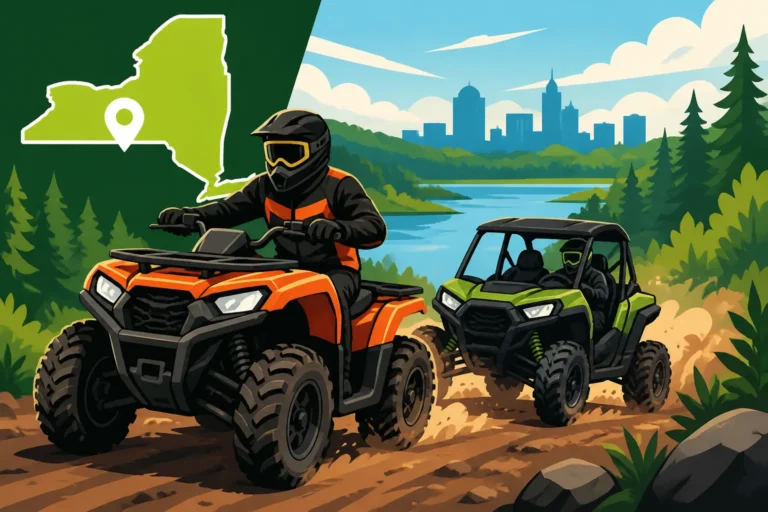
A dedicated ATV play area can sound like the easiest place to ride in Lewis County: unload, explore, and enjoy a more open setting than a narrow trail. But acreage alone doesn’t tell you what machines are allowed, how access works, or whether conditions have changed. This guide explains how to plan a visit to New York’s 144-acre play area and avoid common surprises.
What the 144-acre play area is and is not
A riding destination within a much larger network
The 144-acre play area is associated with Lewis County’s ATV recreation system, a regionally known network that includes trails as well as areas for riding. It’s useful to think of the play area as one destination within that broader system—not as a description of every trail in the county or a promise that every route leads directly to it. The wider Lewis County network is often discussed in terms of hundreds of trail miles, but those trails and the play area are different kinds of riding experiences. For context on the broader network, see [600 Miles in New York's Lewis County].
That distinction matters when you’re planning a day. A trail ride generally follows a marked route and can take you across different terrain and road connections. A play area is intended for riding within a defined space, though its specific layout, rules, permitted machines, and access arrangements still need to be confirmed before you go. Don’t assume that a large open-looking area is unrestricted, or that you can leave its boundaries to connect with any nearby road or trail.
If you’re visiting for the first time, treat the play area as one part of a larger trip plan. Find out where the authorized entrance is, which parking or staging location to use, and whether the route from that location to the riding area is open to your machine. [Where to Find the Play Area on Lewis County Trails] is a useful related topic when you’re sorting out where the destination fits within the county system.
A managed riding area, not an invitation to ride anywhere
The word “play area” can create an understandable impression of informal, open-ended riding. In practice, access to recreational land is shaped by land ownership, operating rules, trail agreements, signage, and seasonal conditions. The 144-acre figure describes the area’s size; it doesn’t, by itself, explain the boundaries or establish that every portion is open whenever you arrive.
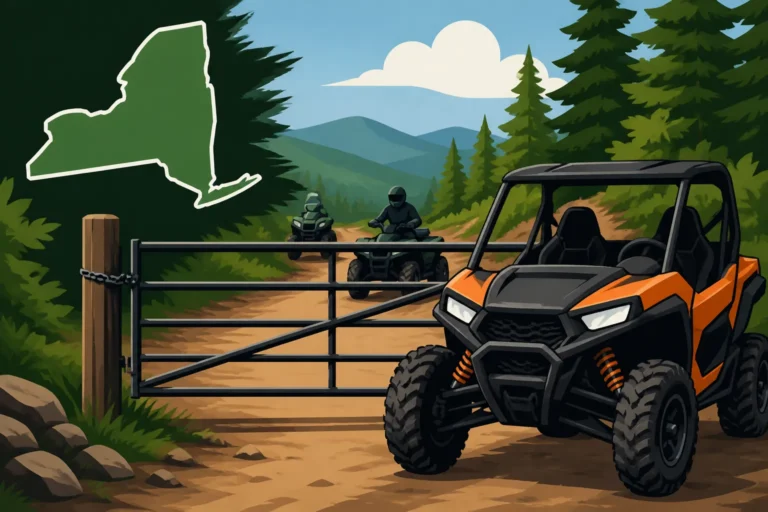
That can be frustrating when a map seems to show a simple route but signs or gates tell a different story. Follow the posted instructions at the site and don’t ride around a closed gate, onto an unmarked track, or past a boundary just because the ground looks rideable. Trail systems can cross private property, and continued access often depends on riders respecting the routes and conditions set by landowners and managers.
Before leaving home, confirm who maintains the area and which office or organization handles current access information. [Who Maintains the Lewis County System] can help you understand why it’s worth checking the appropriate local contact rather than relying on an old trip report. A map app such as onX Offroad can help you orient yourself, but it should be treated as a planning aid—not permission to ride across land or proof that a route is currently open.
Plan access before you load the machine
Check permits and registration requirements separately
A common planning mistake is to treat an ATV registration, a trail permit, and permission to use a specific riding area as the same thing. They serve different purposes. A registration is a vehicle-related requirement; a trail permit or access credential may be required by a local system; and an open trail or play area still has its own rules. Meeting one requirement does not automatically mean you have met the others.
Check the current rules for the Lewis County system before you set out, including what applies to your particular machine and the location you plan to use. Don’t rely solely on what a friend paid for in a previous season or on a sticker from another county. Permit arrangements and covered locations can differ, so confirm that the credential you have actually applies to your intended ride. For more detail, see [Lewis County ATV Trail Permit Cost and Rules].
Also confirm that your machine is eligible for the route or riding area. Width can be especially important in New York, where a machine that is too wide for the applicable ATV definition may not be treated like a conventional ATV for registration or access purposes. If you’re bringing a side-by-side or a wider utility machine, don’t assume it can use the play area just because it is marketed as an off-road vehicle. Verify the rules with the system operator before loading it.
Plan the staging location and arrival
A good ride can start off badly when a trailer arrives at a small lot that is already full, or when a group discovers that its intended unloading point is not the proper entrance. Identify the authorized staging location before you travel, and check whether parking is permitted for the length of time you expect to be there. If you’re bringing more than one trailer, make a plan for where the whole group will fit rather than counting on finding overflow space.
Think through the practical details, too: whether you can unload without blocking another vehicle, where passengers can wait safely, and how you’ll keep the loading area clear. If you’re meeting riders who are arriving separately, agree on a specific legal staging point rather than asking each person to follow a phone pin that may land on a private driveway or an unofficial access road. The related guide [Parking a Trailer at a County Trailhead] covers the same kind of logistics that can make a day go more smoothly.
Navigation apps can help you find your way, especially when cell service is inconsistent. onX Offroad can be useful for reviewing your planned route and keeping track of your position, but download or save what you need before reaching an area with weak coverage. Then compare the app with current official trail information and signs on the ground. A route line on a screen is not a substitute for a gate notice, a posted closure, or permission from the landowner.
| Planning question | What to confirm before leaving | Why it matters |
|---|---|---|
| Is the play area open? | Current operating status and any seasonal restrictions | Access can change with conditions or land-management decisions |
| Is my machine allowed? | Vehicle type, dimensions, and any local rules | Not every ATV, UTV, or side-by-side is eligible for every route |
| Do I need a permit? | Which credential applies to the specific system and area | A registration and a local trail permit are not interchangeable |
| Where do I unload? | Authorized entrance and staging location | Prevents parking problems and accidental use of private access |
| Are the routes rideable today? | Official condition reports, closures, and posted notices | Mud, maintenance, or other issues can affect access |
| Will I have navigation service? | Offline maps and a backup plan | Cell coverage may be unreliable in rural riding areas |
Match the ride to your group and machine
Choose a route and pace that fit the least experienced rider
A play area may be appealing to a mixed-experience group because it can offer a different format from a long trail loop. Still, don’t assume that every section is appropriate for beginners or young riders. Terrain, visibility, surface conditions, traffic, and the possibility of encountering other machines all affect how comfortable a route will feel.
Before the group starts, agree on a pace and a simple plan for what to do if riders become separated. Keep the least experienced rider in mind when deciding how far to explore, and don’t let the most confident person set a speed that leaves others feeling pressured. If someone needs a break, stop in a safe, permitted place where other riders can see you. Beginners may also benefit from reading [New York Trails for Beginners] before choosing a first riding destination.
For families, talk through basic expectations before anyone starts the engine: stay with the group, obey signs, give other riders room, and stop if a machine develops a problem. New York’s rules for young riders, supervision, helmets, and passenger use still apply at a recreational riding area. A destination’s “play” label does not create an exception to statewide safety requirements.
Confirm that the machine fits the access rules
Machine suitability is more than whether an ATV or UTV can physically get through a route. Check the system’s rules for permitted vehicle types and dimensions, and make sure your registration and insurance arrangements are in order for the riding you intend to do. A machine that works well on your own property might not qualify for a particular public or club-managed route.
This is especially important for owners of side-by-sides. New York’s ATV definition and registration restrictions can affect whether a particular model can be registered or used on an ATV trail system. Do not use the 144-acre size as evidence that a wider machine is accepted. If you’re uncertain, provide the operator with your machine’s make, model, and dimensions and ask specifically about access to the play area.
A mapping tool can help you assess general route shape and stay oriented, but it cannot settle a vehicle-eligibility question. onX Offroad may show terrain or mapped routes that help you prepare, yet the system’s current rules and signs remain the authority for where and what you can ride. The same care applies to borrowed and rental machines: confirm who is responsible for registration, insurance, permits, and any required safety equipment before you leave the staging area.
Check conditions and ride responsibly
Conditions can change the experience
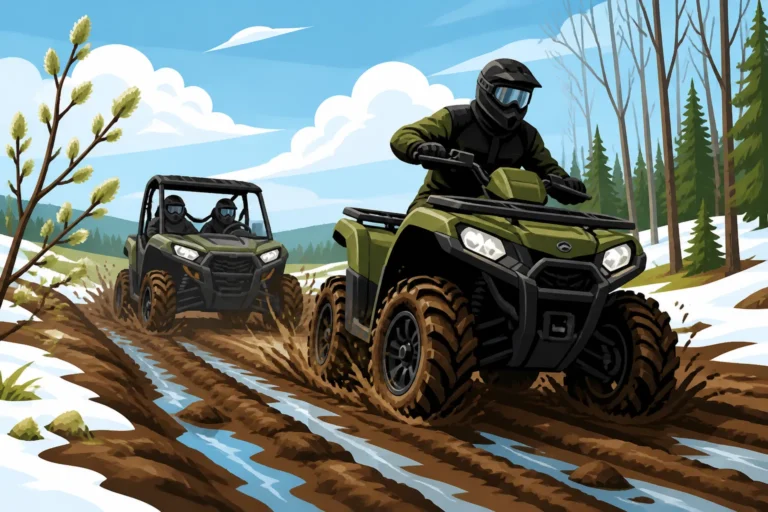
Even a permitted area can feel very different after rain, during a thaw, or after maintenance work. Soft ground can become deeply rutted, while standing water may hide rocks, holes, or other hazards. A route that felt easy on a dry day might be a poor choice for a novice group after a wet spell.
Check current local information shortly before your trip, not just when you first make plans. Look for notices about closures, trail work, weather-related restrictions, or changes to the operating season. [New York Trail Conditions Before You Ride] and [New York Trail Closures to Check First] are helpful reminders that access is not simply a matter of finding a destination on a map.
If conditions are questionable, be willing to change the plan. That may mean choosing a different legal route, postponing the ride, or turning around when you encounter a closure. Riding around a wet section to avoid mud can widen the trail, damage vegetation, or take you onto land where riding is not allowed. Staying on the marked route helps protect both the ground and the access agreements that make recreation possible.
Respect other riders, landowners, and posted boundaries
A managed riding area is shared space. Keep control of your machine, leave room for other riders, and slow down when visibility is limited or people are nearby. Be especially cautious near entrances and intersections, where riders may be starting, stopping, or joining a group. A friendly wave and a little patience can prevent the tense encounters that spoil a day for everyone.
Follow signs and stay on routes that are explicitly open. Don’t assume that a farm lane, logging road, field edge, or inviting track is available for riding. In many rural areas, trails depend on a landowner’s agreement, and riding beyond the designated route can jeopardize access for the entire community. [New York Trail Etiquette With Landowners] explains why considerate behavior matters beyond a single visit.
Carry out anything you bring in, including food packaging and broken equipment. Keep noise considerate near homes and working land, and avoid leaving machines idling unnecessarily at staging points. If you encounter damage, a blocked route, or an unsafe condition, report it through the appropriate local contact rather than trying to repair a gate or move a barrier yourself. Those small choices help keep a riding destination usable for the next group.
Make a practical day-trip plan
Pack for a rural riding day
A short ride can still turn into a long day if a machine breaks down, the weather shifts, or a group takes a wrong turn. Bring water, weather-appropriate layers, basic first-aid supplies, and the tools needed for ordinary trail-side problems. Make sure each machine has enough fuel for the planned outing, with a sensible reserve rather than a plan that depends on finding fuel immediately after the ride.
Check your machine before loading it. Look at tires, brakes, lights, controls, and visible leaks, and confirm that tie-downs and trailer connections are secure. If your route could take you away from the staging area, agree on a meeting point and a turnaround time. Tell someone who isn’t riding where you’re going and when you expect to check in, particularly if the group is unfamiliar with the area.
Save official maps and notices for offline use if possible. onX Offroad can be one part of that preparation, helping you review your route and location, but carry a backup navigation plan and don’t rely on a phone battery to last all day. Keep any required registration, insurance proof, permit, and safety documents accessible. It’s much easier to sort that out at home than at a trail entrance.
Use a simple before-you-go checklist
The night before your trip, check the route, the local access information, and the weather. Confirm the staging location and make sure everyone in the group understands the plan. If you are visiting from outside Lewis County, verify that your registration and insurance meet New York requirements; a plate from another jurisdiction does not automatically answer every question about riding here.
On arrival, take a moment to read posted notices before unloading. Make sure the group knows which entrance to use, where the authorized area begins, and what to do if someone needs to stop or return early. If the conditions or signs don’t match what you expected, pause and get clarification rather than improvising a route.
A useful final check is to ask three questions: Is the area open today? Is this machine permitted here? Are we using an authorized entrance and route? If you can answer all three confidently, you’re in a much better position to enjoy the ride without turning a simple day out into a paperwork, access, or safety problem.
Disclaimer
This article is for general informational purposes only and does not constitute professional advice. Laws, prices and regulations vary by location and change over time. Consult a qualified professional for guidance on your specific situation.