New York Rules for Campfires on a Ride
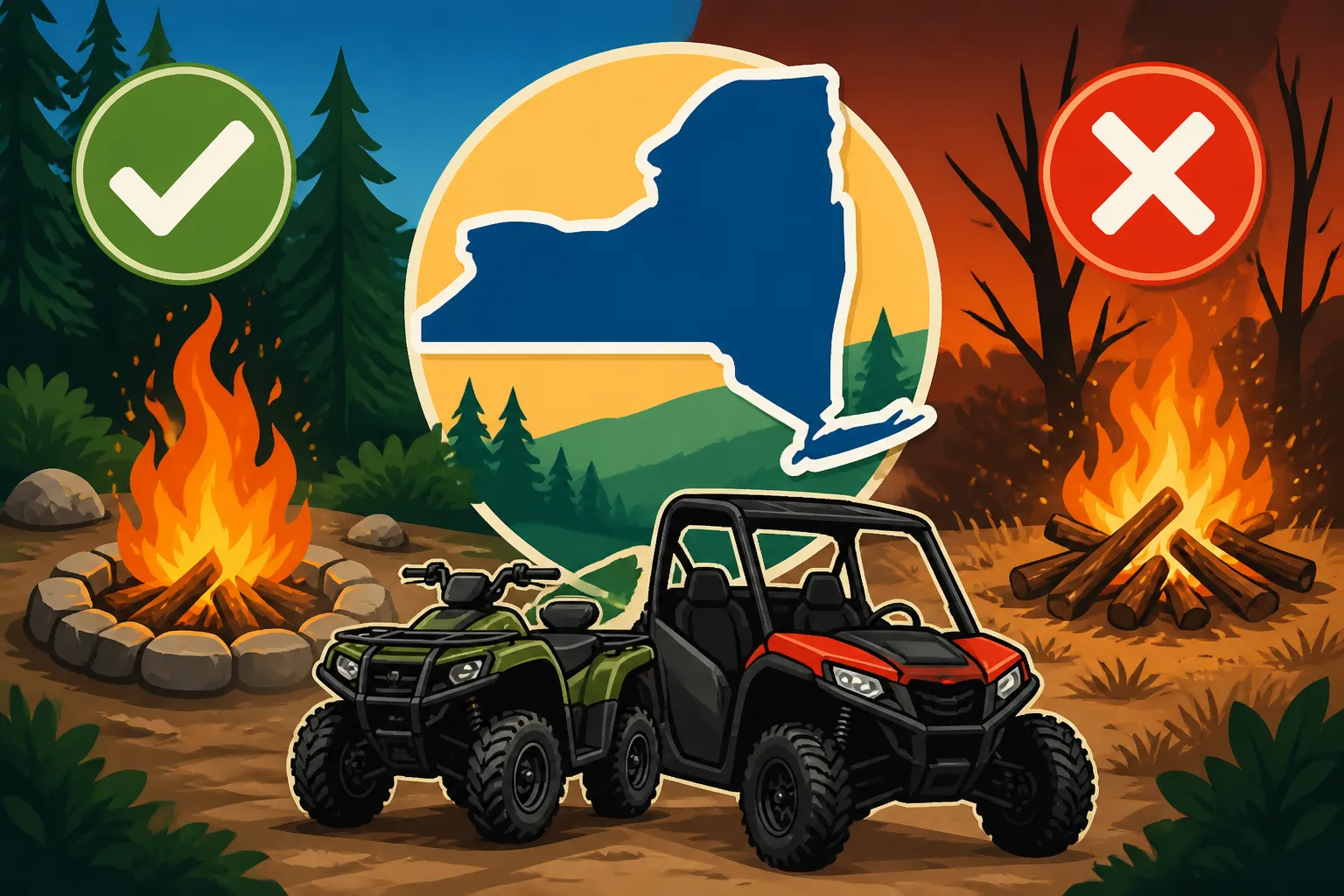
A ride plan may include a meal or overnight stop, but an ATV trail permit does not automatically give you permission to build a campfire. In New York, fire rules depend on the land, the site and current restrictions. Check who manages the stopping place before you pack matches, and know what to do if fires are prohibited.
Trail access does not automatically include campfire permission
An ATV registration, trail permit or club membership governs access to a machine or trail system. It does not, by itself, authorize camping or fire-building. A place where you may ride may not be a place where you may stop for the night, and permission to camp does not necessarily mean a campfire is allowed.
That distinction matters because New York riding routes can cross or approach land with different owners and managers. A trail may run over private property under an agreement with a club, through a municipal area, or across public land with its own restrictions. The rules can change as the route changes. For a broader look at access boundaries, see [New York Rules for Riding Public Land] and Club Trail Rules in New York.
Before planning a fire, answer three separate questions:
- Are you allowed to be there? Check whether riding, stopping and camping are permitted at that location. Do not assume a trailhead, pull-off or clearing is an approved campsite.
- Are you allowed to make a fire there? Look for an explicit rule or ask the landowner or managing agency. A designated campsite may still have seasonal or site-specific fire limits.
- Are fires allowed under current conditions? Restrictions can change with weather, drought, local orders or other fire danger. A site that usually permits a fire may be temporarily closed to them.
The safest approach is to use a designated campsite or other location where the responsible manager expressly allows fires. If there is no clear answer, treat that as a reason not to light one. Being able to reach a spot by ATV does not make it a campsite, and a fire ring left by a previous visitor is not reliable proof that fires are currently allowed.
Visitors should follow the same location-specific rules as local riders. An out-of-state registration or permit does not grant extra camping or fire privileges. If you are joining a ride or using a county trail network, ask the organizer or trail manager where stopping is permitted. For ideas on finding legal overnight bases, see Camping Near New York ATV Trails and Where to Ride an ATV in New York.
Check land rules and current fire restrictions before you leave
New York has multiple layers of land management and fire rules. A local town, private landowner, club, park or state agency may set restrictions for the property it manages. Statewide rules and temporary restrictions may also affect what is permitted. One rule does not replace the others: a landowner’s permission cannot override a government fire restriction, and a general allowance does not override a more restrictive site rule.
In particular, do not treat “campfire” as a single legal category that works the same everywhere. Rules may distinguish between fires used for cooking or warmth and other kinds of open burning. They may also limit where a fire can be made, what fuel can be burned or whether any open flame is allowed at all. Restrictions and exceptions can change, so confirm current information with the relevant land manager and local authorities before the trip.
A quick check can prevent a wasted journey or a dangerous mistake:
- Identify the exact stopping place. A route name or county is not specific enough. Find out which property the campsite, trailhead or overnight area is on.
- Contact the land manager. Ask whether camping and campfires are both permitted, and whether there are limits on fire rings, fuel or hours.
- Check for temporary restrictions. Look for current notices from the agency or local government responsible for the property. Check again close to departure if conditions are dry or windy.
- Confirm with a ride organizer. If you are attending a group ride, ask whether the planned stop is an authorized campsite and who has checked the fire rules.
- Have a no-fire plan. Pack a meal that does not require an open flame, and be ready to skip the fire if the site is closed or conditions change.
State land deserves particular care. Public ownership does not mean every activity is allowed everywhere. Rules can vary by unit, campground and designated route. Check the relevant property’s current restrictions before riding or camping there; New York Rules for Riding State Land offers related context on why public-land access is not blanket permission.
Private club trails require the same care. A club may have permission to maintain or use a trail without having permission to host overnight stays or fires along it. If the club has not specifically authorized a fire at a designated stop, do not infer that permission from trail access. Likewise, a farm lane or working property is not a rest area just because it is convenient. See New York Rules for Riding a Farm Lane and New York Trail Etiquette With Landowners when planning stops near private land.
Seasonal open-burning rules can be easy to misunderstand. A restriction aimed at one kind of burning may have exceptions, while a local order or property rule can be stricter. Do not rely on an old trip note, a social media post or a fire ring seen on a previous visit as confirmation. Check the current official notice for the place where you intend to stop, and follow the most restrictive applicable rule.
Make a legal fire only at an approved site
If the land manager confirms that a fire is allowed, use only the approved spot and follow the site’s instructions. A designated fire ring is generally the clearest indication that a campsite is designed for fires, but it does not cancel a temporary ban or guarantee that a fire is safe in current conditions. If the site is unmarked, the ring is damaged, or the instructions are unclear, ask before lighting anything.
A practical pre-fire routine is:
- Recheck the conditions. Wind, dry vegetation and nearby brush can turn a small fire into an uncontrolled one. Do not start a fire if conditions make it unsafe, even when the site normally permits one.
- Keep it contained. Use the approved ring or fire feature. Do not build a new ring, clear vegetation or move a fire to a more convenient spot without permission.
- Use permitted fuel. Burn only material the site allows. Avoid burning trash, plastics or treated materials. Do not collect wood from the surrounding property unless the manager says it is allowed.
- Stay with the fire. Keep a responsible adult present and have water and a way to put the fire out within reach. Do not leave it unattended to continue the ride.
- Extinguish it fully. Douse the embers, stir them and check for heat. Repeat until the fire and ash are cold to the touch. A fire that looks out can still contain hot embers.
- Leave the site as required. Follow local directions for ash and cleanup. Do not dump hot ash into brush, a ditch or a stream.
Use particular caution around parked machines. An ATV can have hot components, and its fuel system is not a safe place to set a stove, lantern or firewood. Keep flames and sparks well away from machines, fuel containers and trailers. Do not use a campfire to dispose of fuel or other hazardous material. If you carry extra fuel for a long ride, store it as directed by the container manufacturer and well away from heat; New York Rules for Carrying Fuel is useful related reading.
A small extinguisher can be sensible emergency equipment, but it is not a substitute for prevention or for following the site’s rules. If you source one through Amazon or another seller, check that it is appropriate for the likely hazards, maintained and secured for transport. A compact shovel and water can also help with routine fire control, though equipment does not make an unapproved fire permissible.
If the site prohibits fires, do not use a portable fire pit or stove as a workaround unless the manager explicitly allows that equipment. A ban may apply to all open flames, not just wood fires. When in doubt, use a cold meal or a cooking area that the site specifically provides and permits.
What to do when a ride plan includes a fire
The cleanest way to plan a campfire is to treat it as a separate activity from the ride. Choose the campsite first, confirm its rules, then plan a legal route to and from it. Do not ride onto a closed trail or across private land to reach a preferred fire spot. Check local notices again before loading the machines, since access and fire restrictions can change independently. New York Trail Closures to Check First can help with the trail side of that check.
For a group ride, agree in advance on who will confirm the campsite and current restrictions. Tell participants that a fire is conditional, not guaranteed. If the group reaches the site and finds a prohibition, a closed area or unsafe conditions, skip the fire rather than debating whether a prior visit or another rider’s experience counts as permission.
A simple decision table can help:
| Situation | What to do |
|---|---|
| The site manager clearly permits fires and no restriction is in effect | Use only the approved fire area and follow the site’s instructions |
| Camping is allowed, but fire rules are not stated | Ask the manager before lighting a fire; otherwise, do not make one |
| The route passes a convenient clearing with no campsite designation | Do not assume stopping or making a fire is allowed |
| A temporary ban or local closure is in effect | Do not make a fire, even if the site usually permits one |
| Wind or dry conditions make a fire unsafe | Skip it and use a no-flame meal plan |
| A group member says fires were allowed on an earlier visit | Verify the current rule for this visit and location |
If you are unsure who manages a spot, do not guess from the nearest road sign or trail marker. Ask the club, landowner or public agency responsible for that area. If no one can confirm that a fire is permitted, choose a different, clearly authorized site or go without one.
The same practical rule applies to riders who are passing through New York. Reciprocity for an out-of-state machine concerns riding privileges; it does not create a right to camp or make fires. Before the trip, check the rules for the specific route and overnight stop, and carry a backup plan that does not depend on an open flame.
A campfire can be part of a good overnight stop, but the permission must come from the right place and remain valid under current conditions. Confirm the land, confirm the fire rules, and be willing to leave the matches packed. That keeps a ride from becoming a trespass, a citation or a preventable wildfire.
Disclaimer
This article is for general informational purposes only and does not constitute professional advice. Laws, prices and regulations vary by location and change over time. Consult a qualified professional for guidance on your specific situation.