Members-Only Trails in Northern Oswego
Northern Oswego County can look like an inviting patchwork of ATV routes, but a trail on a map is not automatically open to every rider. Some routes depend on private land agreements and club membership, so arriving without confirming access can mean turning around at a gate. This guide explains how to check eligibility, plan a ride, and avoid common access and safety mistakes.
What members-only trails mean in Northern Oswego
Access depends on the trail agreement
A members-only trail is not simply a public route that charges an entry fee. It generally means access is limited by the club, landowner, or trail system’s rules. A club may maintain routes across private property with permission, and that permission can come with conditions about who may ride, when trails are open, and which machines are allowed. Those conditions are important: being able to see a trail on a map does not give you permission to use it.
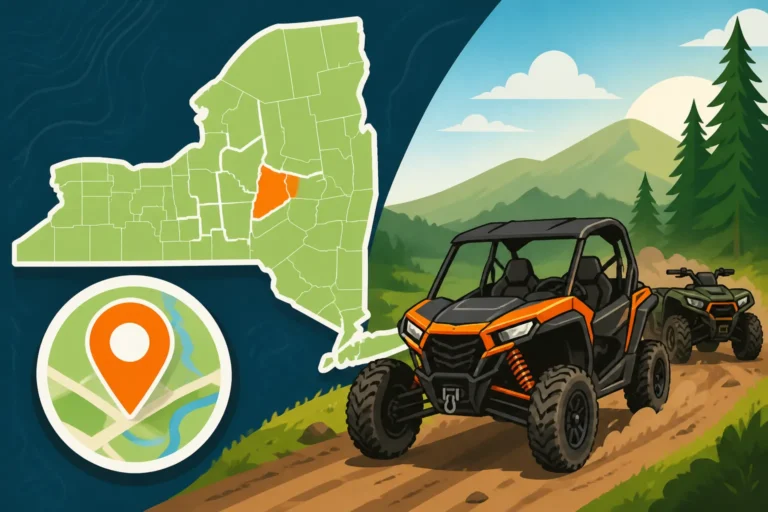
Northern Oswego County includes riding areas associated with communities such as Central Square, Hastings, and Sandy Pond. The exact routes and access arrangements can differ from one club or property to another. A rider who belongs to one club should not assume that membership covers every nearby trail. Likewise, permission to use a section for a scheduled club ride may not mean that individual, unscheduled riding is allowed.
Before loading up, identify the specific club or trail system you want to visit and check its current access instructions. Ask whether membership is required, whether guests are allowed, and whether you need a separate permit. The guide [Oswego County's Club Trails] can help you understand the broader local trail context, but a county reference is not a substitute for the rules attached to a particular route.
Club membership and trail access are related but not identical
Membership can support trail work, landowner relationships, signs, and other club activities. It may also make a rider eligible for access to routes that are restricted to members. But membership should not be treated as a universal pass. Clubs can have different agreements, separate ride requirements, or routes that are open only during specific periods.
When you contact a club, ask exactly what your membership covers. Does it apply to one trail network or several? Can you bring a guest? Does the guest need their own membership or permit? Are there restrictions on the machine’s width, passengers, or operating hours? Getting clear answers before the trip is much easier than sorting it out at a trail entrance with a trailer parked behind you.
If you are new to the region, [Joining a New York ATV Club] offers useful background on what club membership can involve. For a broader look at how organized access works, see [New York Club Memberships and Trail Access]. Treat those topics as a starting point, then confirm the details directly with the club that manages the route you intend to ride.
How to confirm whether you can ride
Check access with the club before you travel
The most reliable first step is to contact the club or trail operator responsible for the route. Ask for the current riding status, membership rules, guest policy, and any separate permit or check-in requirements. If you are planning a group ride, confirm that the same rules apply to every rider and every machine in the group.
Be specific when you ask. “Are your trails open?” may not be enough if some sections are closed, limited to members, or affected by a landowner request. A better question is: “We’re bringing two registered machines and one guest to ride near this area on this date. What access, membership, and permit requirements apply, and are there any closures we should know about?” Keep the response or instructions available during your trip.
Trail access can change when property changes hands, landowners withdraw permission, logging begins, or conditions make a route unsuitable. A page, post, or map saved months ago may not reflect what riders are allowed to do now. Check for a recent update close to your ride date and again before leaving home if the trip depends on a particular trail connection.
Use maps as planning tools, not permission
A map can help you understand where a ride may go, locate roads and staging areas, and plan a route that fits your group. Apps such as onX Offroad can be useful for reviewing mapped terrain and organizing a planned ride. But a line shown on an app does not prove that the route is open to ATVs, that the landowner allows access, or that club membership grants entry.
Use mapping tools alongside official club information. Compare the route you intend to follow with the club’s instructions, posted signs, and any current closure notice. If an app suggests a connection across private property that the club has not confirmed, do not ride it just because it appears to join two trails. Ask the club or leave that section out of the plan.
It also helps to save the relevant information before entering an area where cell coverage may be limited. Keep the club’s contact details, trail map, parking instructions, and access rules available offline where possible. For guidance on staying oriented, [Downloading a County Trail Map] is a useful companion topic. A digital map can support your decisions, but signs and current access instructions should guide where you actually ride.
| Question to confirm | Why it matters | What to ask |
|---|---|---|
| Is the route open to nonmembers? | Some trails limit access to club members or approved guests. | “Do I need to join before riding this route?” |
| Are guests allowed? | A member may not automatically be able to bring additional riders. | “Can I bring a guest, and what must the guest do?” |
| Is a separate permit required? | Membership and trail permits may be different requirements. | “Do I need a county or trail-system permit as well?” |
| Are there current closures? | Landowner needs, maintenance, or conditions can change access. | “Which sections are closed or rerouted?” |
| What machines are allowed? | Width, equipment, or route rules may exclude some machines. | “Are there restrictions for my machine’s size or type?” |
Prepare your machine and paperwork
Registration, insurance, and trail rules still apply
Club membership does not replace New York’s general requirements for ATV use. Before riding, check that your machine’s registration and required insurance documentation are in order, and carry the paperwork the rules require. Visitors should not assume that a club invitation or a membership card makes an otherwise noncompliant machine eligible to ride.
New York’s rules can also differ depending on where and how you ride. A private trail agreement does not necessarily make every nearby road or connecting route legal for ATVs. If the route crosses or approaches a public road, confirm the applicable rules and follow signs and crossing instructions. [New York ATV Reciprocity With Other States] is relevant for riders arriving with an out-of-state registration, while [New York ATV Insurance Requirement] covers a separate requirement riders should check before heading out.
Make a pre-ride document check part of loading the trailer. Confirm that each machine is registered as required, that the registration information matches the machine, and that required insurance proof is available. If you are uncertain about a machine’s eligibility, resolve that question before traveling rather than expecting a club volunteer or landowner to make an exception at the trailhead.
Confirm machine limits and rider readiness
Not every ATV or UTV can use every route. A narrow trail may not accommodate a wide machine, and a route’s club rules may be more restrictive than the general legal requirements. Ask about permitted machine types and any width restrictions before you commit to a trip, especially if you ride a side-by-side or a modified machine.
This is particularly important in New York, where the state’s ATV definition and registration rules can affect whether some larger side-by-sides qualify. Do not rely on a model name or a salesperson’s description to determine trail eligibility. Review [Can You Register a Side-by-Side in New York?] and confirm the machine’s measurements and status before planning a members-only ride.
Also consider whether the route suits everyone in your group. A young rider may have additional age, supervision, or safety-certificate requirements. A beginner may be better served by a shorter route with a clear turnaround point than by a long group ride through unfamiliar terrain. Ask the club about trail difficulty, expected riding conditions, and whether the route is suitable for your machine and experience level.
Plan for local conditions and responsible riding
Leave a practical route and timing plan
Northern Oswego rides can involve changing surfaces, intersections, and stretches where it is harder to stay in touch with the rest of the group. Before setting off, agree on a route, a meeting point, and what the group will do if riders become separated. Make sure everyone knows the turnaround plan and who to contact if a machine develops a problem.
Give yourself more time than the map’s distance alone suggests. A route that looks short can take longer when the group stops, follows signs carefully, or encounters a muddy or damaged section. Do not let a late start push the group into riding after dark or continuing into a route that nobody has verified. Check local weather and trail notices, and be ready to change plans if conditions deteriorate.
Fuel and basic equipment matter even on a familiar-looking network. Start with enough fuel for the planned ride and a reasonable margin, carry a way to contact help, and bring essentials such as water and suitable clothing. For longer outings, use [Fuel Stops on a Long Loop] as a planning prompt, but verify that any intended fuel stop is available and reachable on a lawful route.
Respect landowners, signs, and other trail users
Members-only access often depends on private landowners choosing to keep a route available. Stay on the marked trail, close gates if instructed, avoid disturbing crops, livestock, equipment, or property, and do not ride around a closure sign. A shortcut across a field or driveway can put a landowner relationship—and future trail access—at risk.
Be courteous when the route passes near homes, working farms, or other trail users. Slow down where visibility is limited, give people space, and follow posted speed and noise rules. If you meet a maintenance crew, landowner, or other group, stop when appropriate and follow directions. A recreational trail is also a place where people may be working or living nearby.
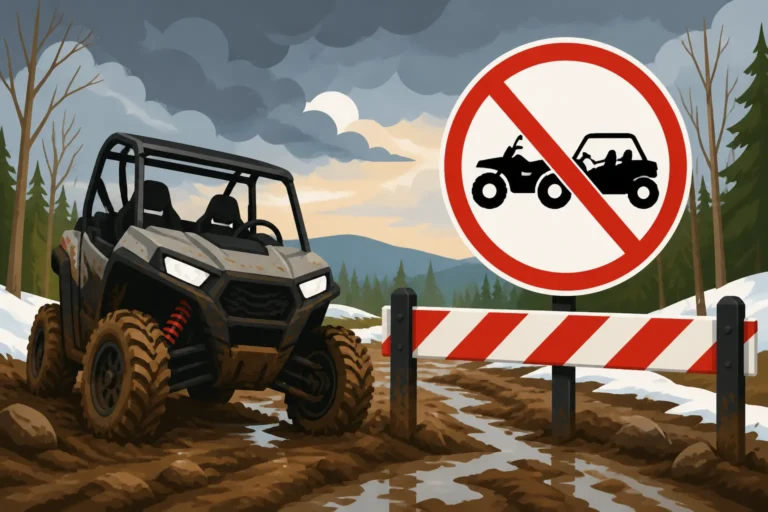
If you see a blocked route, damaged sign, washout, or gate that appears to have changed, do not assume it is safe to bypass. Turn back or follow an officially marked reroute, then report the issue to the club. [New York Trail Etiquette With Landowners] and [Landowner Agreements That Keep Trails Open] explain why small choices by individual riders can affect whether a route remains available.
Common mistakes and a smoother ride plan
Avoid assuming one club’s rules apply everywhere
A common planning mistake is treating Northern Oswego as one continuous trail system with one set of access rules. In practice, neighboring routes can be managed by different clubs, landowners, or local arrangements. Membership in one organization may not authorize riding on a nearby route, and a trail connection on a map may not be part of the network you are entitled to use.
Another mistake is treating an old social post or a downloaded map as a current access confirmation. Save the club’s official instructions and check for updates close to your ride. If you cannot establish who manages a route or whether your group is allowed, leave it out of the plan. It is better to ride a shorter confirmed route than to risk trespassing or being turned away.
Some riders also assume that a friend’s membership covers everyone in the truck. Ask whether guests need individual membership, a day pass, or another form of authorization. If the answer is unclear, contact the club directly. The topic [Why a Day Pass Is Only Sold One Month a Year] is a reminder that guest options, when available, can have specific conditions rather than being open-ended.
Use a simple pre-trip checklist
A short checklist can prevent the most frustrating problems: arriving at the wrong entrance, discovering a route is closed, or finding out that one machine cannot use the trail. Before leaving, verify the club and route, check current closures, confirm membership or permit requirements, and make sure the intended machines meet the route rules.
Then check the practical details. Confirm where to stage and park, whether overnight parking is allowed, what time the group plans to finish, and whether cell service may be unreliable. Share the plan with someone who is not riding, particularly if you are traveling in a small group or exploring an unfamiliar area.
Use this sequence as a final check:
- Identify the specific trail system and contact its club or operator.
- Confirm membership, guest, permit, and machine eligibility rules.
- Check current openings, closures, and any route changes.
- Verify registration, insurance, and rider requirements.
- Save the route and access instructions, and confirm the staging location.
- Agree on a turnaround time and a plan for breakdowns or separation.
A little preparation makes a members-only ride less stressful and helps protect the access that local clubs and landowners have worked to maintain. If a rule is unclear, ask before you ride; a confirmed answer is more useful than a guess at the gate.
Disclaimer
This article is for general informational purposes only and does not constitute professional advice. Laws, prices and regulations vary by location and change over time. Consult a qualified professional for guidance on your specific situation.