How a New York Town Designates a Road
Oh, the sheer frustration of looking at all those beautiful country roads in New York, knowing your ATV is parked just feet away, and having to wonder, "Can I really ride on that?" It's a common dilemma for countless riders across our state. So many of us feel stuck, navigating a confusing patchwork of regulations, or simply assuming every paved surface is off-limits. This guide is here to unravel that mystery, breaking down exactly how a New York town can, and sometimes does, officially designate a road for ATV use, giving you the clarity you need to understand the path to more legal riding opportunities.
The Reality of ATV Riding on New York Roads
Let's face it: for many of us, the default assumption is that ATVs and public roads simply don't mix in New York. And for the most part, that assumption is correct. It can be incredibly frustrating to see miles of scenic roads, perfect for connecting trails or simply enjoying a ride, rendered unusable due to a lack of clear designation. This "closed unless explicitly opened" mindset is the bedrock of ATV road access here, and understanding it is the first step toward advocating for change.
The "Closed Unless Opened" Default
Picture this: you've just loaded up your quad, you're ready for an epic day, and you glance at your GPS. There's a perfect stretch of town road that would connect two fantastic sections of trail. But a knot forms in your stomach, because you know, intuitively, that just because it's a quiet road doesn't mean it's legal. This isn't just a feeling; it's the law. New York State's Vehicle and Traffic Law generally restricts ATV operation on public highways unless a specific exception is made. This means that unless a road has been explicitly designated, and then properly marked, riding your ATV on it is likely illegal and could lead to fines. It’s a pain point many of us know all too well, constantly seeking out [Where New York Bars ATV Riding] instead of finding new opportunities.
This default restriction isn't arbitrary, even if it feels restrictive to riders. It stems from concerns about safety, vehicle differences, and the general intent of public roadways. Unlike street-legal vehicles, ATVs are typically designed for off-road use, lacking many of the safety features and operational characteristics expected on paved surfaces. This is why the burden falls on local municipalities to create exceptions, rather than the state broadly allowing ATV use.
Who Holds the Power: Local vs. State Authority
So, if the state generally says no, who says yes? The power to open roads for ATVs largely rests with local municipalities: towns, villages, and sometimes even counties. You might be dreaming of riding a major state highway connecting two towns, but that's almost certainly a non-starter. State highways and interstates are firmly off-limits to ATVs, and that's unlikely to change anytime soon. The focus for riders and advocates needs to be on the roads that fall under local jurisdiction – the smaller, less-trafficked town and village roads that often weave through rural landscapes.
It’s these local entities that have the authority to enact their own local laws and ordinances to permit ATV use on specific roads within their boundaries. This distinction is crucial because it means that advocating for more riding opportunities is often a grassroots effort, focused on convincing your local town board, rather than trying to lobby Albany. The rules for [New York Rules for Riding a Town Road] are different than for state routes, and that's where the opportunities lie.
The Official Path: How a Town Designates a Road
When a New York town decides to allow ATV riding on its roads, it's not a casual decision made over coffee. It's a formal, legal process that requires careful consideration, public input, and official action. Understanding these steps is vital if you ever hope to see more roads open in your area.
The Local Law Process: From Idea to Ordinance
The designation of an ATV-friendly road in New York always begins with the town board enacting a "local law" or ordinance. Think of it as a mini-law specific to that town. This isn't something that happens overnight, and it typically involves several key stages:
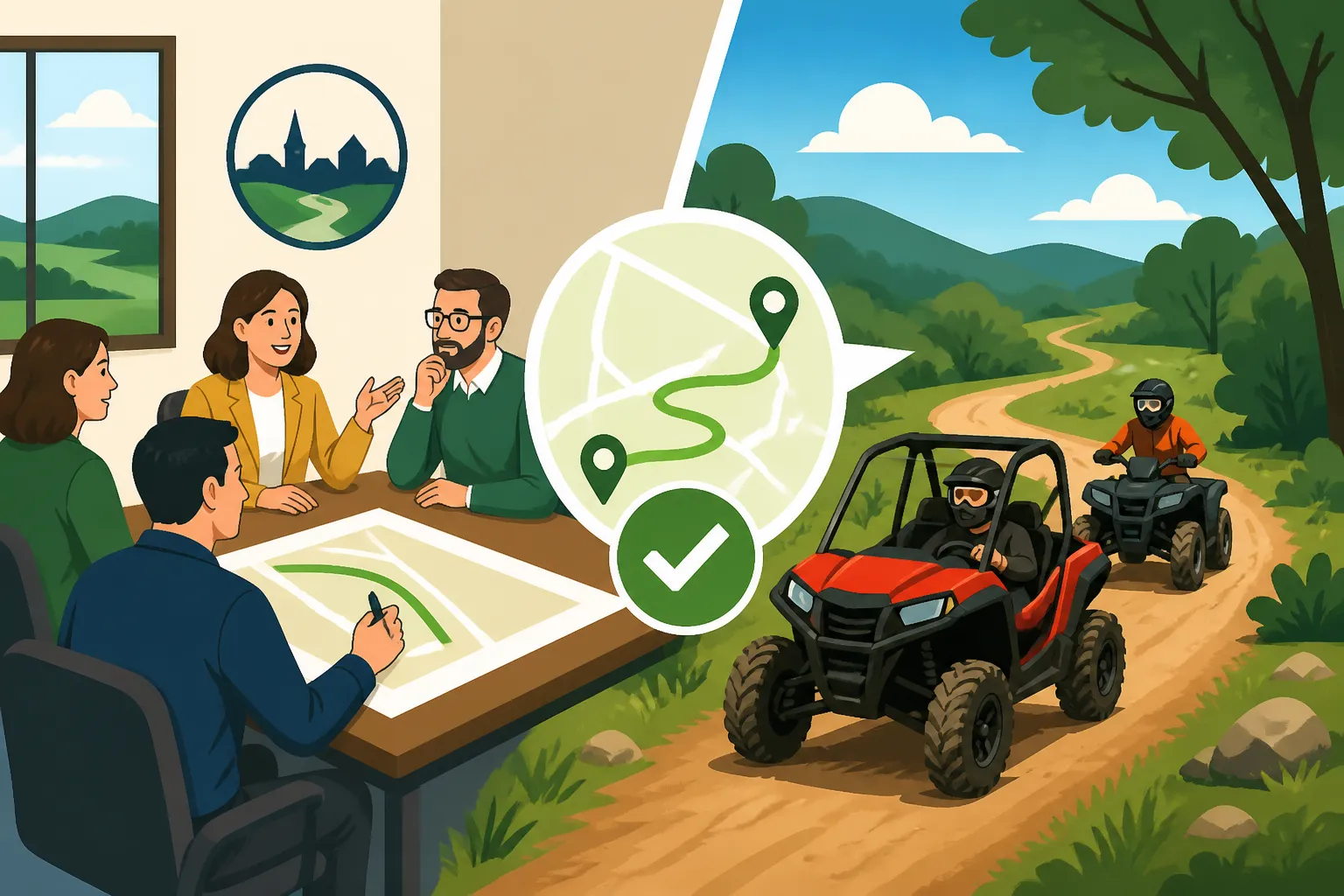
- Proposal and Discussion: Often, this starts with an individual rider, a local ATV club, or even a town board member bringing the idea forward. They might identify a specific road or a network of roads that would be beneficial to open. Initial discussions among board members will gauge interest and identify potential hurdles.
- Drafting the Local Law: If there's enough interest, the town's attorney or legal counsel will draft the actual text of the local law. This document will specify exactly which roads are being designated, under what conditions, and any restrictions that apply. It's a precise legal document, not just a casual suggestion.
- Public Hearing: This is a crucial step for you, the rider, to engage! Before a local law can be adopted, the town board must hold a public hearing. This is your chance to voice your support, explain the benefits, and address any concerns raised by residents. Conversely, it's also where those opposed to ATV access will share their views. This public discourse is a vital part of the democratic process and can significantly sway a board's decision.
- Adoption of the Local Law: After the public hearing, the town board will vote on whether to adopt the proposed local law. If a majority votes in favor, the law is formally enacted. This is the legal "designation" of the road.
- Filing and Publication: Once adopted, the local law must be filed with the Secretary of State and often published in the local newspaper. This makes it official and public knowledge.
Imagine a scenario where a group of dedicated riders from the local [Lewis County ATV Trail System in New York] club spent months gathering signatures, speaking with landowners, and mapping out a route that would connect an existing trail network to a small general store in a nearby hamlet. They present their findings, complete with projected economic benefits, to the town board. The board then drafts a local law proposing to open a three-mile stretch of County Route 17. At the public hearing, passionate riders speak about the tourism potential and enjoyment, while a few residents raise concerns about noise and dust. The town board then weighs all this input before making their final vote.
Key Components of a Designated Road Ordinance
When a town crafts one of these local laws, it’s not just a simple "ATVs allowed here" sign-off. These ordinances are quite specific and often include detailed provisions to ensure safety and mitigate concerns. You’ll typically find information on:
- Specific Roads or Sections: The law will list precisely which roads or parts of roads are designated for ATV use. It won't be a blanket permission for "all town roads."
- Operating Hours: Many towns will restrict ATV operation to certain hours, for example, from dawn to dusk, or only during daylight hours, to minimize noise disturbance to residents.
- Speed Limits: While state law already sets speed limits, the local law might reiterate them or impose lower ones for ATVs on specific designated roads.
- Seasonal Restrictions: In some areas, ATV use might be restricted during certain seasons, such as during mud season in early spring to prevent damage to roads or private property, or during deer hunting season in areas where game retrieval by ATV is a concern.
- Age and License Requirements: While state law covers these generally, the local law might emphasize compliance.
- Safety Equipment: Again, state laws already dictate helmet use ([New York Helmet Law for ATV Riders]) and other equipment, but the local law might specifically remind riders of these requirements.
- Connecting Points: The law might specify that the designated road is solely for the purpose of connecting two legal off-road areas, or for accessing services.
For instance, a local law might state: "ATVs are permitted on Maple Avenue from 8:00 AM to 6:00 PM, April 1st through November 30th, exclusively for the purpose of accessing the Lewis County ATV Trail System, provided operators adhere to a 20 MPH speed limit and all state ATV regulations."
The Critical Step of "Posting" the Road
Even after a town successfully passes a local law designating a road for ATV use, the process isn't complete. There's a vital physical step that must occur: the road must be properly "posted." You see, it's not enough for the law to exist on paper; riders need to know where they can legally ride.
"Posting" refers to the installation of official signage clearly indicating that ATV use is permitted on that specific road or section of road. This usually involves signs that say something to the effect of "ATVs Permitted" or "Designated ATV Route," often with specific hours or seasonal restrictions noted. Without these physical signs, even if a local law exists, riding on that road could still lead to confusion or even a ticket, because how would an officer (or a rider, for that matter) know it's designated? The concept of a [A Road Designated and Posted in New York] is two-fold for a reason.
The town is responsible for installing and maintaining these signs. This isn't just a nicety; it's a legal requirement to ensure that both residents and visitors are aware of the rules. Imagine the chaos if riders just had to guess based on obscure town meeting minutes! So, when you're looking for new places to ride, always keep an eye out for that clear, official signage. No sign, no go, even if you heard a rumor that the town passed a law.
Factors Influencing a Town's Decision to Open Roads
Getting a town to designate a road for ATV use isn't just about drafting a good law. It's a complex dance involving various community interests, safety concerns, and potential economic impacts. Understanding these influencing factors can help riders and advocates better tailor their arguments.
Balancing Community Needs and Concerns
This is often the trickiest part. While you might see designated ATV roads as a fantastic opportunity for recreation, others in the community might see them as a source of problems. Town boards are constantly trying to balance the desires of different groups, and ATVs can be quite divisive.
On one side, you have riders, often supported by local businesses, who see the benefit of expanded access. They emphasize recreational enjoyment, tourism dollars, and the opportunity to connect existing trail systems. On the other side, you might have residents living along proposed routes who worry about:
- Noise: ATVs, even with proper mufflers, can be noisy, especially in quiet rural areas. Concerns about disrupted peace and quiet, especially during evenings or early mornings, are common.
- Dust and Property Values: Frequent ATV traffic can kick up dust on unpaved roads, affecting nearby homes. Some residents also worry about the potential negative impact on their property values if ATV traffic increases significantly.
- Safety: Concerns about collisions with other vehicles, pedestrians, or even pets are often raised. Parents of young children, in particular, might worry about increased ATV traffic near their homes.
- Trespassing: A perennial concern is that opening a road will lead to riders illegally straying onto private property. Landowners often fear that a designated road will become a gateway to wider, unauthorized riding.
Successful designation often requires addressing these concerns head-on. This might mean proposing roads that are already less residential, suggesting stricter hours of operation, or emphasizing the responsible riding practices of local clubs.
Assessing Safety and Infrastructure Realities
Beyond community sentiment, town boards have to consider practical realities like safety and the existing infrastructure. Not every road is suitable for ATV use, regardless of how much riders might want to use it.
- Road Condition and Traffic Volume: A heavily trafficked road with blind curves and poor sightlines is a non-starter. Towns will look for quieter roads, perhaps those with lower speed limits or less vehicular traffic. They'll also consider the condition of the road itself – can it handle the potential increase in ATV traffic without rapidly deteriorating?
- Proximity to Homes and Schools: Roads running directly past numerous homes or near school zones are often avoided due to the increased risk of accidents and noise complaints.
- Intersections and Crossings: The number and type of intersections, especially with busier roads, will be a major safety consideration. If the designated road requires ATVs to cross a busier state or county route, the feasibility of safe crossing points will be scrutinized. [Crossing a Highway on an ATV in New York] is a specific skill and towns need to be sure it can be done safely.
- Emergency Services Access: Towns also need to consider how emergency services would respond to incidents on these designated routes and if current infrastructure allows for efficient response.
Imagine a town with a beautiful, winding dirt road that connects to a vast tract of state forest. It sounds perfect! However, if that road also serves as the primary access for 30 homes and a daycare center, the safety concerns might outweigh the recreational benefits in the eyes of the town board.
The Potential for Local Economic Boost
One of the most compelling arguments for designating ATV roads is the potential economic benefit. Riders need gas, food, and often places to stay. By opening roads that connect to trail systems or amenities, towns can tap into the ATV tourism market.
Consider a rider traveling from downstate to ride the [New York's Tug Hill Riding] trails. If a small town near the trailhead designates a few roads that lead directly to local diners, gas stations, or even lodging, those riders are far more likely to spend their money there. This isn't just theoretical; many communities in other states have seen tangible economic boosts from embracing ATV tourism.
Advocates often highlight:
- Increased Sales Tax Revenue: More visitors mean more purchases, which translates to more sales tax for the county and state.
- Support for Local Businesses: Gas stations, restaurants, convenience stores, and even small general stores ([Fuel Stops on a Long Loop]) can see a significant uptick in business from ATV riders.
- Lodging and Camping: If a town can provide designated routes to local campgrounds or motels, it encourages multi-day stays, further boosting the local economy.
For example, a group of riders might present data showing how neighboring communities with ATV-friendly policies have seen a 15-20% increase in seasonal tourism revenue, specifically citing gas sales and restaurant patronage. This kind of hard data can be a powerful motivator for town boards, especially in rural areas looking for ways to support local businesses.
Empowering Change: How Riders Can Advocate for Designated Roads
Feeling frustrated by the lack of riding opportunities? You don't have to just sit back and hope. There are concrete steps you can take to advocate for more designated ATV roads in your New York town. It requires effort, organization, and a good understanding of the process.
Strategic Engagement with Local Government
Changing local policy isn't about yelling at a town board; it's about respectful, persistent engagement. Here’s how to do it:
- Attend Town Board Meetings: This is absolutely critical. Go to regular town board meetings, even if your specific issue isn't on the agenda. It helps you understand how your local government operates, who the key players are, and what other concerns they're balancing. It also puts a face to the ATV community.
- Utilize Public Comment Periods: Most town board meetings have a time slot for public comments. This is your opportunity to briefly introduce your ideas, express your desire for more ATV access, and invite board members to discuss it further. Be polite, concise, and prepared.
- Contact Individual Board Members: Reach out to your town board members directly, either by phone or email. Share your thoughts, provide information, and ask for a meeting to discuss potential ATV road designations. Personal connections can be very effective.
- Form or Join an ATV Club: There is strength in numbers. A recognized local ATV club carries far more weight than an individual. Clubs can pool resources, organize advocacy efforts, demonstrate responsible riding, and present a united front. Many trail networks, like those in [Oswego County's Club Trails], are built on the back of such organized efforts.
Remember, town board members are often juggling many local issues, and they appreciate informed, organized input. Don't be discouraged if change isn't immediate. Building relationships and demonstrating a commitment to responsible riding can pave the way.
Crafting a Compelling Proposal for Your Town Board
When you approach your town board, don't just ask for "more places to ride." Present a well-thought-out, professional proposal. This shows you've done your homework and are serious.
Your proposal should ideally include:
- Clearly Identified Roads: Use maps to highlight the specific town roads you propose for designation. Explain why these roads are suitable (e.g., low traffic, connect to existing trails, access local businesses). Consider the [New York ATV Width Limit for Registration] when suggesting roads – ensure the machines that can be registered can actually fit.
- Rationale for Designation:
- Economic Benefits: Highlight potential increases in tourism, local business revenue (gas, food, lodging), and sales tax. Use any available data from other regions as examples.
- Recreational Opportunities: Emphasize the positive impact on local residents and visitors who enjoy ATV riding.
- Improved Trail Connectivity: Show how designated roads would create safer, more enjoyable, and continuous riding experiences.
- Addressing Concerns: Proactively address common concerns like noise, dust, trespassing, and safety. Propose solutions, such as specific operating hours, clear signage, or emphasizing rider education.
- Commitment to Responsible Riding: Outline how your club or group would promote responsible riding behavior, adhere to rules, and potentially assist with signage or maintenance.
- Supporting Data: Include any relevant information like accident statistics (or lack thereof) on similar roads in other towns, testimonials from riders, or endorsements from local businesses.
Think of it as presenting a business case. You're showing the town board the benefits, acknowledging the risks, and offering solutions. It's much harder for them to say "no" to a well-researched and respectfully presented plan.
The Long Haul: Persistence in Local Advocacy
Getting a road designated for ATV use in New York is rarely a quick win. It's often a process that spans months, if not years. There will be setbacks, delays, and opposition. This is why persistence is key.
- Don't Give Up After One "No": A rejection or deferral doesn't mean it's over. It might mean you need to refine your proposal, gather more support, or simply wait for a more receptive board composition.
- Celebrate Small Victories: Perhaps the town agrees to study the idea, or a board member expresses interest. These are steps forward, and they build momentum.
- Maintain Positive Relationships: Keep your interactions with town officials and other community members positive and constructive, even when disagreements arise. Burning bridges will only make future efforts harder.
- Stay Informed: Keep an eye on local news, town meeting agendas, and community discussions. Be ready to engage when the topic comes up.
The journey to opening up more roads for ATV riding in New York is a marathon, not a sprint. But with a strategic approach, community involvement, and unwavering dedication, you can absolutely make a difference in your local area. Imagine the satisfaction of riding a newly designated road, knowing you played a part in making it happen!
| Step | Description | Key Considerations |
|---|---|---|
| 1. Initial Proposal | A rider, club, or board member identifies potential roads for ATV use and brings the idea to the Town Board. | Focus on low-traffic, non-residential roads, or those connecting existing trails. |
| 2. Draft Local Law | The town's legal counsel drafts a specific local law or ordinance detailing the designated roads, operating hours, speed limits, and any other restrictions. | Law must be clear, concise, and align with state regulations. |
| 3. Public Hearing | The Town Board holds a public meeting where community members can voice opinions (for or against) the proposed designation. | Crucial opportunity for riders to show support and address concerns. Come prepared with facts and respectful arguments. |
| 4. Board Vote & Adoption | Following the public hearing, the Town Board votes on whether to adopt the local law. A majority vote enacts the law. | Requires strong advocacy and clear demonstration of benefits outweighing concerns. |
| 5. Filing & Publication | The adopted local law is formally filed with the Secretary of State and usually published in local newspapers. | Makes the law official and publicly accessible. |
| 6. Posting of Signage | The town installs official signs on the designated roads, clearly indicating that ATV use is permitted, along with any specific rules or restrictions (e.g., hours, seasonal dates). | Essential! Without proper physical signs, the road is not legally open for riding, even if the law exists. [Where to Stick a New York ATV Validation Decal] shows the importance of clear placement. |
Disclaimer
This article is for general informational purposes only and does not constitute professional advice. Laws, prices and regulations vary by location and change over time. Consult a qualified professional for guidance on your specific situation.