Lewis County ATV Trail Permit Cost and Rules
Lewis County’s trail permit can be confusing when you’re sorting out the permit itself, New York registration, insurance, and any club access rules. They’re separate requirements, and having one doesn’t automatically satisfy the others. This guide explains how the permit works, what can affect its cost, how reciprocity applies, and what to check before you haul your machine to the trailhead.
What the Lewis County ATV trail permit covers
A county permit is not a statewide pass
New York does not use one statewide ATV trail permit that automatically opens every county trail system. Access is organized locally, and Lewis County has its own permit requirements for the trails it administers or makes available through its trail network. A Lewis County permit should not be treated as permission to ride anywhere else in the state.
That distinction matters if you’re planning a multi-county trip. A rider may register an ATV in New York, carry proof of insurance, and still need a separate trail permit for a particular county system. Likewise, holding a permit for one county doesn’t automatically give you permission to ride a neighboring county’s trails or a private club route.
Before you load up, identify which trail system you plan to ride and who manages it. Check the current access rules for that system, including any permit requirements, seasonal openings, closures, and restrictions on which machines may use the route. For broader background, see Why New York Has No Statewide Trail Pass and County Permits Instead of a State Sticker.
A permit does not replace registration or insurance
A trail permit and a vehicle registration serve different purposes. Registration relates to the machine and its legal operation under New York rules. The trail permit relates to access to a specific trail system. Insurance is another separate requirement, and riders should not assume that buying a county permit provides liability coverage.
Picture a rider arriving near Lowville with a valid county trail permit but no current registration documents. The permit alone may not resolve that problem. The reverse can happen too: a machine may be registered and insured, but its rider may not have purchased the permit required to use that trail system.
Treat these as separate items to verify before the ride: machine registration, insurance, trail-system permit, and any age, safety, or equipment requirements that apply to the rider or machine. The general registration and insurance rules are covered in New York ATV Reciprocity With Other States and New York’s Mandatory ATV Insurance.
Trail access depends on the route and its conditions
A permit is not a promise that every route will be open on every day. Trail access can depend on the season, ground conditions, maintenance work, landowner agreements, and temporary closures. In a region with changing weather and wet ground, riding a route that is officially closed can damage the trail and create problems for the people who maintain access.
That means a permit is best understood as one part of the access requirements, not an all-purpose guarantee. Check trail notices before you leave home, then look for signs or gates when you arrive. A route shown on an older map may have changed, and a familiar trail can be closed for logging, repairs, a landowner issue, or unsafe conditions.
Keep the county’s trail information handy while planning, especially if you’re visiting from outside the area. The county’s own permit details and notices are the place to confirm the current rules, eligible routes, and any purchase instructions. For practical preparation, see New York Trail Conditions Before You Ride and New York Trail Closures to Check First.
Lewis County ATV permit cost and how to plan for it
Understand the cost structure before you buy
The total cost of riding can include more than the county permit. Depending on the current rules, a rider may need to account for a permit for each machine, possible differences between a first machine and an additional machine, and any qualifying club membership arrangement. Those details can change, so confirm them directly with Lewis County before paying.
When checking the cost, look for the specific permit category that matches your situation. Ask whether it is issued per rider or per machine, whether an additional machine requires its own permit, whether a club membership changes the price, and whether the permit is valid for a defined riding period. Don’t rely on a friend’s old receipt or a price quoted in a discussion group; it may apply to a different season or category.
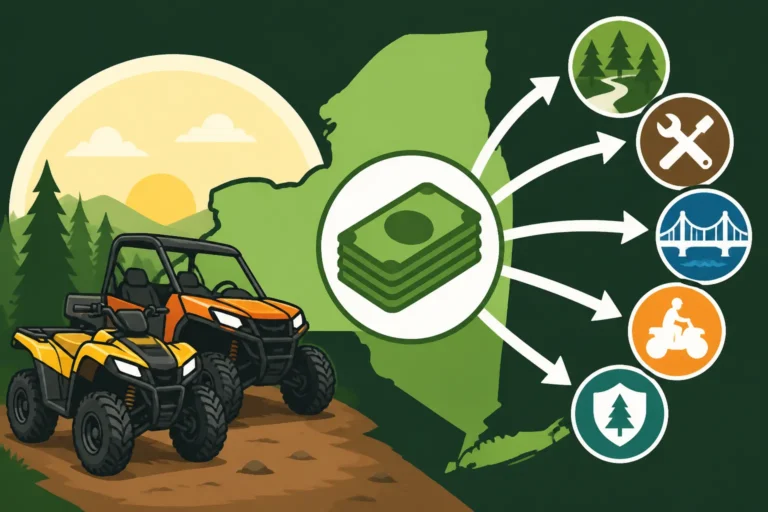
Also separate permit costs from other expenses. A county permit is not the same thing as registration, insurance, fuel, trail-side repairs, or club dues. If you’re budgeting for a weekend, list each item separately so that the permit doesn’t get mistaken for an all-in access fee.
Check the official source for current figures
Because county permit amounts and purchasing arrangements can change, use Lewis County’s official information when you’re ready to buy. Confirm the total for your machine and situation, where the permit is sold, the accepted payment method, and whether proof of a club membership is needed for any reduced-cost option.
If a website or social post gives a number without explaining the permit year or category, treat it as a clue to verify, not a final answer. A rider planning a family weekend, for example, may need to check whether each machine needs a separate permit rather than multiplying a single-machine figure by guesswork. A visitor buying at the last minute should also confirm whether the permit is available through the intended sales channel.
Keep a record of the purchase and read the instructions that come with the permit. If it must be displayed on the machine, attach it as directed. If the county provides a digital record or confirmation, save it somewhere accessible offline in case mobile service is unreliable at the trailhead.
Build a realistic riding budget
A useful budget starts by separating fixed access costs from expenses that depend on how far or how often you ride. Permit and club costs are easy to overlook when you’re focused on fuel, lodging, and getting the machine ready. Add them to the plan early, particularly if more than one machine will be on the trip.
| Budget item | What to check | Why it matters |
|---|---|---|
| Lewis County trail permit | Current category, validity, and purchase method | The permit may be required for each eligible machine |
| Club membership | Whether membership is optional or affects permit cost | A membership may have its own cost and rules |
| New York registration | Whether the machine meets registration requirements | A trail permit does not replace vehicle registration |
| Insurance | Required coverage and proof to carry | Permit purchase does not mean the machine is insured |
| Fuel and maintenance | Distance, machine condition, and refill options | Long rides can require planning beyond the trailhead |
| Lodging or camping | Access, reservations, and local rules | A nearby place to stay may have separate restrictions |
For a family or group, make a list of every machine and rider rather than budgeting as if the trip involved one vehicle. A second quad or a borrowed machine may have separate permit, registration, insurance, or eligibility questions. If you’re estimating the broader season cost, Where the Lewis County Permit Fits in a Season Budget offers a useful way to think through the categories without mixing them together.
How club memberships and trail access fit together
Membership and permit are not interchangeable
A club membership may be relevant to access or to a permit price, but it is not automatically the same as a Lewis County permit. Before joining a club for a discount or for trail access, confirm what the membership actually provides, which trail agreements it applies to, and whether the county still requires a separate permit.
This distinction can catch out-of-area riders by surprise. Someone may join a club because a friend says it helps with the permit, then discover that membership alone does not authorize riding the county system. Another rider may purchase a county permit but expect access to a club trail that has separate member-only rules.
Ask clear questions before paying: Does the membership affect the county permit cost? Does it include access to a particular club route? Is the trail open to nonmembers with a county permit? Are there extra conditions for organized rides or special events? These questions help you avoid assuming one purchase covers several separate forms of access.
Verify that the club agreement and route are active
Club access can depend on current agreements with landowners and on the status of individual routes. A club’s trail map or membership page may be helpful, but riders should check for current notices before relying on an old route description. Private land access is a relationship that can change, and a closed section should not be treated as open just because it appears on a saved map.
If you’re considering membership, look beyond the possible permit savings. Ask what the club does for trail maintenance, signs, landowner communication, and rider education. A club can be an important part of keeping routes available, but the details vary. Make sure you understand whether membership is needed for the route you actually plan to ride, rather than joining based on a general impression.
You can also contact the county or club if the rules are unclear. It’s better to ask before the trip than to reach a gate, find that a route is restricted, and have to improvise. See New York Club Memberships and Trail Access and How Lewis County Trail Agreements Keep Private Land Open for more on how membership and local trail access relate.
Reciprocity for out-of-county and out-of-state riders
A permit from another county may not carry over
New York’s county-by-county trail arrangements mean that a permit for another county should not be assumed to work in Lewis County. A local permit may be specific to its own system. If you’re planning to ride multiple areas, check the requirements for each one individually and keep the permits separate in your trip plan.
A rider who has a permit for an Oswego County club route, for example, should not assume it also covers a Lewis County trail. The two systems may have different administrators, participating clubs, purchase rules, or access boundaries. Even when routes connect geographically, that does not automatically make the permits interchangeable.
Before crossing a county line on a planned ride, confirm where the trail system ends and what rules apply on the next segment. Maps, signs, and county notices can help prevent an accidental ride onto a route for which you do not have the required authorization. The safest approach is to plan around each system’s published rules rather than relying on a general idea of statewide reciprocity.
An out-of-state registration is a separate question
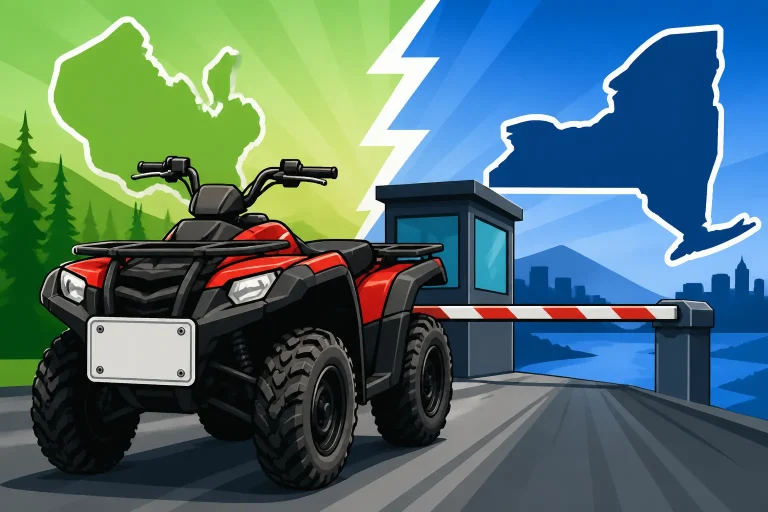
Visitors often use “reciprocity” to mean several different things: whether New York recognizes an out-of-state registration, whether insurance requirements are met, and whether a rider has permission to use a particular county trail. These are separate questions. A valid out-of-state registration does not necessarily eliminate the need for a Lewis County permit.
Before traveling from Pennsylvania, Vermont, Ontario, or another location, check the New York rules that apply to the machine and rider. Then separately confirm the Lewis County trail permit requirements. Carry the registration and insurance documents required for your circumstances, and keep the permit proof available as well.
Do not assume that a border-crossing or neighboring-state registration is a substitute for a county trail permit. Likewise, do not assume that a county permit makes an otherwise ineligible or improperly documented machine lawful to operate. For more on visiting riders, see Does New York Honor Out-of-State Registration? and Riding New York With an Out-of-State Plate.
Reciprocity does not erase local trail restrictions
Even when a rider’s registration is accepted, local trail rules still matter. A route may have machine-width limits, seasonal restrictions, posted closures, or conditions tied to a landowner agreement. A visitor unfamiliar with local signage can mistake a legal registration for permission to use every visible track.
For example, a rider may arrive with a properly registered machine and a valid county permit, but encounter a route marked closed or a trail segment reserved for a different access arrangement. The right response is to respect the closure and confirm an alternative route, not to treat the permit as overriding the sign.
Plan the ride so that you know the trail system’s boundaries, the permit rules, and any limitations on your machine. If you’re uncertain whether an out-of-state machine qualifies for a particular route, ask the county or the responsible trail organization before you ride. The extra check is especially worthwhile when traveling a long distance or towing several machines.
Who needs to buy a permit and what to confirm
Identify every machine before purchasing
Start with the machines you intend to ride. Write down the owner, registration status, and permit status for each ATV. If friends are bringing separate machines, don’t assume one person’s purchase covers the group. The county’s current instructions should explain how permits are assigned and whether one permit can be associated with more than one machine.
This step is useful for families too. A parent may be arranging the trip and buying permits for adult riders, while a teenager is bringing a youth machine. The youth machine may have distinct registration, operating, supervision, or trail-access requirements. Confirm each machine and rider rather than making a single purchase based on the number of people in the vehicle.
If you are borrowing a machine, check both the owner’s paperwork and the permit requirement. Borrowing the ATV does not necessarily mean you inherit the owner’s trail access or satisfy the county’s permit rules. For added guidance, review New York Rules for a Rented Machine and [New York Trail Access for Riders Under 16].
Check rider age and safety requirements
A trail permit does not cancel New York’s rider-age and supervision rules. If a young person will ride, verify which rules apply to their age, the machine, and the circumstances of the ride. A permit is about trail access; it is not a substitute for any required safety course, certificate, adult supervision, helmet, or equipment.
Parents can find this especially frustrating because several requirements may apply at once. A child may be permitted to ride only in certain circumstances, while the machine also needs appropriate registration and the trail system may have its own restrictions. Check the age rules before paying for access or making travel plans, not after arriving at the trailhead.
Carry any documents that are required or useful for the rider and machine. Keep them accessible, and make sure another adult in the group knows where they are stored. The specific rules can depend on a rider’s age and circumstances, so check the relevant state and county guidance before the trip. See New York ATV Safety Certificate Requirements and [New York Supervision Rules for Young Riders].
Confirm machine eligibility and route fit
A permit should not be treated as proof that every type of machine can use every trail. New York has rules that can affect whether an ATV qualifies for registration, and local trail networks may impose additional restrictions. Width is a common concern for larger machines, particularly side-by-sides, so check both the state rules and the specific trail system’s requirements.
Measure the machine as directed by the applicable rules rather than relying on the manufacturer’s general category or a salesperson’s description. A machine that is advertised as trail-capable may still exceed a legal or route-specific limit. If you have a large UTV, confirm eligibility before buying a permit or towing it to Lewis County.
The same caution applies to modified machines and equipment that changes the vehicle’s dimensions. A wider tire setup, added accessories, or a different configuration could affect fit. If the county’s information does not answer your question, contact the responsible office or trail administrator before riding. Related topics include New York Rules for a Machine Wider Than the Trail and Why Most Side-by-Sides Cannot Be Registered in New York.
Buying and displaying the permit
Use the current purchase instructions
Permit sellers and purchase methods can vary, so check the current county instructions before setting out. Verify whether permits are available online, through an in-person outlet, or through another authorized channel. If you plan to buy locally, check the outlet’s availability and operating details rather than assuming it will be open when you arrive.
Keep the permit confirmation or receipt until you understand how proof must be carried or displayed. If the permit is issued as a sticker, follow the placement instructions and avoid putting it somewhere that will be hidden by a rack, mud flap, or accessory. If proof is digital or paper-based, store it where it can be shown without searching through a phone with poor reception or a glove box full of gear.
A weatherproof document pouch can help keep registration, insurance, and permit paperwork together without leaving loose papers exposed to rain or mud. Some riders look on Amazon for a suitable pouch or similar storage item, while others use a local outdoor or powersports shop. Whatever you choose, keep originals and copies secure and make sure the documents remain readable.
Keep proof accessible during the ride
A permit is most useful when you can show that you obtained it and understand what it covers. Store the proof according to the county’s instructions and carry any related documents required for the machine. Before leaving the staging area, check that your group knows where the permit information is kept.
If your group includes several riders, decide who is carrying each document. A leader may hold a group’s maps and route notes, but each machine should still have the proof required for its own status. Do not assume that a photo of another rider’s permit will cover your machine if permits are issued individually.
A small waterproof organizer can keep paperwork from getting soaked during a muddy ride. Riders sometimes compare options on Amazon, but a basic pouch from a local store can do the same job if it closes securely and fits the documents. The important part is not the brand; it is being able to retrieve readable proof when you need it.
Ask before making changes or transferring access
If you sell a machine, switch to another ATV, or change the group of machines in your trip, don’t assume the original permit automatically transfers. Check the county’s terms for changes, replacement proof, or refunds. A permit connected to one machine or riding period may not be transferable to another person or vehicle.
This is particularly important if you’re buying a used machine shortly before a planned trip. The seller’s old permit, trail sticker, or receipt may not give the new owner access. Confirm the registration and ownership paperwork separately, then obtain whatever trail permit is required for your own ride.
If your permit is damaged, lost, or unreadable, contact the county or authorized seller rather than making a homemade replacement. Keep the purchase record, if available, because it may help explain what happened. Do not alter a permit or move it to another machine unless the official rules say that is allowed.
Preparing for a Lewis County ride
Check closures and trail conditions before loading
Trail status can change after rain, during thaw, or when maintenance or landowner work affects a route. Check the latest notices shortly before departure, even if you reviewed a map when planning the trip. A route that was open when you booked a campsite may be closed by the time you arrive.
This is more than a convenience issue. Wet, soft trails can rut quickly, and riding a closed section can damage the surface or strain local relationships that help keep access available. Follow signs and barriers, and do not go around a gate simply because you see tracks on the other side.
Pack a paper map or save reliable route information for offline use. Cell service can be inconsistent in rural areas, and a phone map may not load when you need it most. A compact tire gauge and basic repair supplies can also help with ordinary ride preparation; some riders find them through Amazon, but a powersports shop or local hardware store may offer suitable alternatives.
Plan fuel, equipment, and group communication
A good ride plan includes more than a permit and a route. Estimate fuel needs based on the machine, distance, pace, and likely detours. Carry water, basic first aid supplies, and tools appropriate to your machine. Tell someone who is not riding where you plan to go and when you expect to return.
Agree on a simple group plan before leaving the staging area. Decide who leads, who rides at the back, where you will stop, and what everyone should do if the group gets separated. New visitors may be unfamiliar with local roads, trail markers, and access points, so a brief plan can prevent confusion later.
Check the machine before the trip: tires, brakes, lights, fuel, fluids, and any load or cargo straps. A portable tire gauge is a small item that can help with a basic check; if you shop for one on Amazon, compare it with options from local automotive or powersports stores and choose one suited to your needs. A short inspection at home is easier than discovering a problem at a remote trailhead.
Respect landowners, other trail users, and local rules
Many trail systems depend on cooperation among public agencies, clubs, and private landowners. Stay on marked routes, avoid cutting across fields or driveways, and leave gates as posted. A permit is not permission to wander onto nearby land or use an unmarked track.
Ride at a pace that lets you respond to people, animals, vehicles, and changing trail conditions. Be especially cautious where routes pass farms or connect with roads. Yield appropriately, keep noise reasonable, and avoid riding in a way that creates conflict for residents or landowners.
If a trail marker is missing, confusing, or damaged, don’t guess your way onto a private route. Stop, check your map or current notices, and ask the trail administrator if needed. Courtesy is practical: when riders respect the route and the people who make access possible, the system is more likely to remain usable for everyone.
Common permit mistakes and how to avoid them
Assuming one permit covers several machines
One of the easiest mistakes is buying a permit for the trip without checking how it is assigned. If the permit is associated with a machine, a family bringing three ATVs may need to follow a different purchase process than a solo rider. The county’s instructions should clarify whether permits are machine-specific and how additional machines are handled.
Write down the machine details before buying and compare them with the permit form or sales instructions. If the process asks for registration details or a machine identifier, have the information ready. That reduces the chance of buying the wrong category or discovering a missing detail at the counter.
If you are unsure, ask the permit provider directly. It is better to clarify a question about additional machines before the purchase than to assume one permit covers the whole trailer. The same advice applies when a machine is borrowed, rented, newly purchased, or being used by a different rider than usual.
Confusing permit cost with total trip cost
The permit is only one part of the outing. Riders sometimes budget for the access fee, then overlook registration, insurance, fuel, club membership, lodging, or machine preparation. The result is a last-minute scramble when a separate requirement turns out to be necessary.
Make a simple checklist with one line for each item. Include the permit, registration, insurance proof, any club membership, and the practical expenses of the trip. If you’re riding with a group, confirm who is responsible for each purchase instead of relying on assumptions about what someone else has handled.
Keep the cost information tied to the right riding period and machine category. A previous season’s figure may not reflect current rules, and a club-related price may apply only when membership conditions are met. Use official county information for current permit details and treat old online discussions as background rather than confirmation.
Treating a permit as permission to ignore closures
A permit does not override a gate, a closure notice, a landowner restriction, or a route limit. A rider who sees tire tracks beyond a barrier may be tempted to follow them, especially after towing a long way to reach the area. Resist that temptation. Tracks do not prove that a route is open or that a rider has permission.
If conditions change during the day, take the marked open route or turn back. Do not create a new path around mud, a washout, or a closed section. Going off-route can damage land and create a safety risk for your group.
If a closure is unclear, contact the county or trail organization and ask for the correct alternative. Keep a current map available, and check updates before departure. A little flexibility in the day’s plan is better than jeopardizing access for future riders.
Lewis County ATV permit checklist
Before your ride, confirm each of the following:
- Trail system: Make sure your planned route is within the Lewis County system covered by the permit you intend to buy.
- Current permit rules: Check the county’s official instructions for the current cost, permit category, validity, and purchase method.
- Every machine: Confirm whether each ATV needs its own permit and whether any additional-machine rules apply.
- Club requirements: Find out whether a club membership is optional, affects the permit cost, or is required for a particular route.
- Registration: Verify that the machine’s registration is appropriate for the ride and that you have the required proof.
- Insurance: Check the applicable New York insurance rules and carry the required evidence.
- Rider eligibility: Confirm age, supervision, safety certificate, and equipment requirements for every rider.
- Machine eligibility: Check width and any other restrictions that could affect registration or trail access.
- Conditions and closures: Review current notices shortly before leaving and follow gates and signs on the trail.
- Trip preparation: Plan fuel, route, emergency contacts, supplies, and a way to keep permit and vehicle paperwork dry and accessible.
Disclaimer
This article is for general informational purposes only and does not constitute professional advice. Laws, prices and regulations vary by location and change over time. Consult a qualified professional for guidance on your specific situation.