Gates on a Club Trail
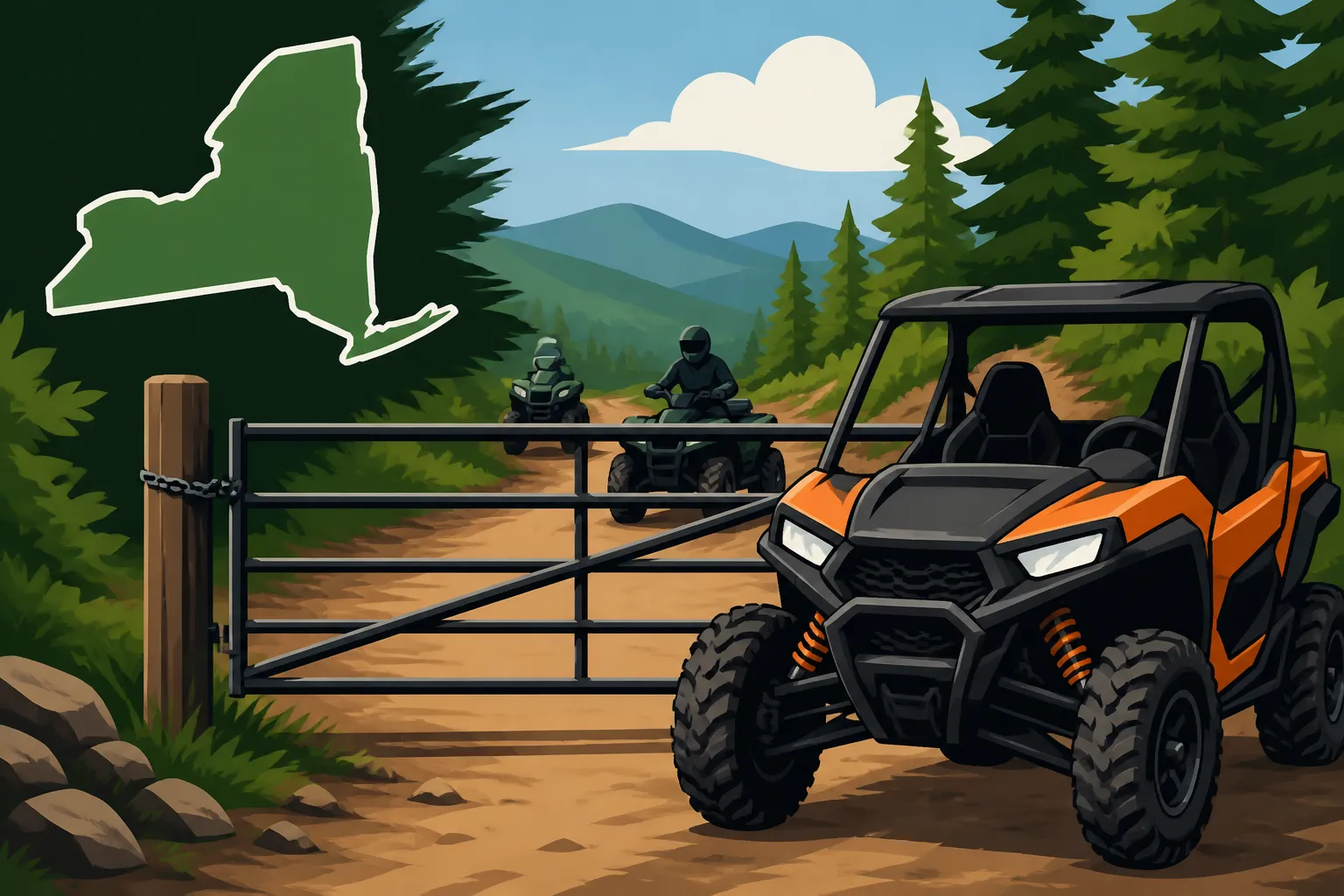
A closed gate on a New York ATV club trail can leave you wondering whether the route is temporarily blocked, closed for the season, or off-limits altogether. This guide explains how to interpret trail gates, what to do when you encounter one, and how to avoid trespassing or damaging access agreements that keep trails open.
Why Club Trails Have Gates
Gates protect private-land access
Many New York ATV routes cross land that is not publicly owned. A club or local trail organization may have permission to route riders across a farm, timber property, or other private land, but that permission does not turn the property into public land. The landowner may set conditions on when and how riders can pass.
A gate is a practical way to manage those conditions. It may help keep out unauthorized vehicles, prevent access during a logging operation, reduce damage in wet weather, or control entry while a property is being used for farming. Sometimes a gate is part of the landowner’s existing fence system rather than a barrier installed specifically for ATV riders.
That distinction matters. Seeing a marked ATV route on a map does not necessarily mean every entrance is open at every moment. Trail permission can be limited by season, weather, time of day, or landowner needs. If access is withdrawn or temporarily restricted, riders may have to turn around even if the route appears on an older map.
A gate may signal a closure, not a challenge
A closed gate is not an invitation to squeeze around it, lift it off its hinges, or ride through an opening beside the fence. It may be there because the trail is closed, because access is restricted to certain users, or because the landowner needs the area secured. Unless a clear sign or current trail notice says otherwise, treat a closed gate as a stop.
Even an unlocked gate can be closed for a reason. A rider might assume it was left that way by the previous group, but reopening it without knowing the rules can allow livestock to escape or unauthorized traffic to enter. If the route’s instructions say to open and close a gate, follow them carefully and leave it exactly as you found it. If there are no instructions, don’t guess.
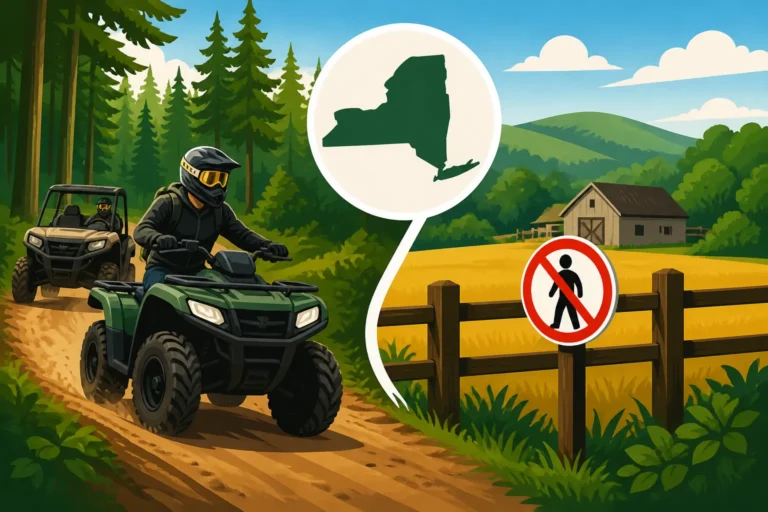
This is especially important on routes crossing working farms. A gate may separate riders from cattle, equipment, or a field where crops are growing. Respecting the barrier helps protect the landowner’s property and the trail agreement that allows riders through in the first place. For more context, see Riding a Trail That Cuts Across a Working Dairy Farm and Landowner Agreements That Keep Trails Open.
Trail maps do not replace current access notices
Maps can help you plan, but they may not reflect a recent closure or a gate that has been locked since the route was last updated. Check the trail system’s current notices before loading your machine, and pay attention to signs at the staging area and along the route.
Apps such as onX Offroad can help riders follow mapped routes and understand where a trail appears to go. They should be treated as planning aids, not permission to pass through a gate. A route shown on a screen cannot override a closure sign, a landowner’s instruction, or a trail organization’s current notice.
| What you encounter | A cautious response |
|---|---|
| A closed gate with a closure or private-property sign | Stop and turn around. Do not cross or go around it. |
| An unlocked gate with instructions for riders | Follow the posted instructions and leave it as directed. |
| A gate with no sign and no clear trail guidance | Do not assume it is open. Check current notices or ask the trail organization. |
| A damaged gate or fence | Do not try to repair it unless you are authorized. Note the location and report it. |
| A map showing a route beyond a closed gate | Treat the on-the-ground closure as controlling and find another legal route. |
What to Do When You Reach a Gate
Stop before approaching the barrier
Slow down well before the gate. Coming in too fast can make it difficult to stop safely, especially on a muddy, rocky, or sloped trail. Leave space between your machine and the barrier, and keep other riders behind you from crowding forward.
Look for signs, trail markers, posted instructions, and clues about the route’s condition. A gate may have a notice about seasonal closure, construction, logging, private land, or a temporary hazard. Read it before deciding what to do. Do not assume that a familiar trail is operating under the same conditions as the last time you rode it.
If you are riding in a group, tell everyone to stop and wait. It can be tempting for one rider to investigate while others continue forward, but that creates confusion and may lead to someone entering the property without authorization. Keep the group together while you check the available information.
Follow explicit instructions and leave the area undisturbed
Some trail systems may provide instructions for passing a gate, such as opening it for the group and closing it behind the last rider. If those instructions are current and clearly apply to the gate you are at, follow them. Move slowly, avoid striking the post or fence with your machine, and make sure the barrier is secured as directed.
If you are unsure whether an instruction applies, don’t improvise. A gate that is meant to remain closed may look similar to one riders are permitted to open. Nor should you assume that a gap beside a gate is an approved route. Riding around a barrier can widen a muddy track, damage vegetation, or create a new path that the landowner never authorized.
When someone in the group has already passed through, do not treat that as proof that the route is open. A rider may have misunderstood the sign, or the circumstances may have changed. Stop, regroup, and verify rather than following simply because others have gone ahead.
Check current trail information before rerouting
If a gate blocks your planned route, don’t create your own detour across a field, logging road, utility corridor, or neighboring property. A nearby track may look passable without being part of the legal trail network. Use an authorized alternate route only if the trail organization or current map information indicates it is open.
Before leaving home, check the relevant county or club trail notices, including any closure information for the system you intend to ride. If you use onX Offroad to review a route, compare that planning information with notices from the organization responsible for the trail. Save a phone number or contact method for the club when available; a quick question can prevent a long ride toward a closed section.
This is useful in areas such as Tug Hill and the Black River Valley, where riders may encounter changing trail conditions, private-land crossings, and routes maintained by local organizations. Conditions and access can differ from one segment to another. A gate at one entrance does not tell you that every trail in the county is closed, but it does mean you should not continue through that barrier without clear authorization.
Common Gate Situations and How to Handle Them
The gate is open when you arrive
An open gate does not automatically mean the trail is open to riders. It could have been left open accidentally, opened for farm or maintenance equipment, or left unsecured by someone who was not following trail instructions. Check for signs and current notices before proceeding.
If posted instructions say riders should close the gate after passing, do so only if that direction is clear and the gate is safe to handle. Make sure the group has passed before securing it, and confirm the barrier is not pinching a tire, rack, or rider. If the instructions say to leave it open, do not close it simply because that seems more secure.
When there are no directions, the safest choice is not to invent a rule. Contact the club or trail organization if possible. If you cannot verify access, turn back rather than risking a trespass complaint or causing a problem for the landowner.
The gate appears damaged or blocked
A bent gate, broken fence, fallen tree, or fresh equipment activity may indicate a maintenance issue or a temporary closure. Do not move a heavy obstruction with your ATV, cut a chain, lift a barrier, or attempt repairs unless the responsible organization has specifically authorized you to do so.
If it is safe, make a note of the location and describe what you saw. A nearby trail marker, road name, or map position can help the club identify the spot. You can use onX Offroad or another mapping tool to note an approximate location, but avoid publishing details in a way that encourages others to bypass the closure.
Report the issue through the trail system’s official contact channel. A concise report is most useful: where the gate is, whether it is open or closed, what appears damaged, and whether the route is passable without crossing the barrier. Do not include private personal information about a landowner or speculate about why the gate was changed.
The group is split by a closed gate
If some riders have already passed and others are still on the near side, stop the group and communicate. Do not send more riders through just to catch up. The riders ahead should return by the authorized route if they can do so safely, or follow instructions from the trail organization if there is an established procedure for that situation.
This is one reason groups should agree on basic ride rules before setting out. Decide who will lead, who will sweep, and how the group will respond to a closure. Keep enough distance to stop safely, but not so much that the last rider misses a sign or turn. On a larger ride, appointing someone to relay information back through the group can prevent a confusing pileup at the gate.
For broader guidance on staying on marked routes and checking trail status, see [Following County Trail Markers], New York Trail Closures to Check First, and New York Trail Conditions Before You Ride.
How to Help Keep Club Trails Open
Respect the route and report problems calmly
Trail access often depends on riders behaving predictably and respecting property boundaries. Close a gate only when the instructions tell you to, stay on the marked trail, and do not ride across a field or around a fence to reconnect with a route. Small shortcuts can create ruts, damage crops, disturb livestock, and give a landowner a reason to reconsider access.
If you see another rider bypass a gate, avoid escalating the situation on the trail. Do not damage the person’s machine or block them in. If it is safe to do so, explain that the barrier may indicate a closure and suggest checking with the club. Report serious or repeated issues through the organization responsible for the trail.
Landowner relationships are fragile in practical ways. One incident may lead to a gate being locked for a day; repeated problems can threaten access for an entire route. The actions of one rider can affect everyone who relies on that trail. Learn more about the consequences of changing access with What Happens When a Landowner Pulls Trail Permission and When a Property Sale Forces a Trail Reroute.
Plan for a turn-around before you need one
Before riding, identify where your route could be shortened or reversed if a gate is closed. Make sure your group has enough fuel and daylight to return without depending on an unauthorized shortcut. This is particularly helpful on longer rides where a closure several miles into the route can turn a casual outing into a stressful backtrack.
Tell someone at home where you plan to ride and when you expect to be back. Carry a charged phone, but do not rely on cell service everywhere; coverage can be limited in wooded and remote areas. If you use a navigation app such as onX Offroad, prepare your route before entering areas with weak reception and understand how to return along the route you came in on.
If the closure leaves you unsure where to go, choose the conservative option: turn around, return to a known staging area, and contact the trail organization. A missed section is disappointing, especially after towing to the trailhead and getting the group ready. But it is much better than crossing private property, damaging a gate, or putting future access at risk.
Keep expectations realistic across different trail systems
A club trail is not necessarily open every day or under identical rules throughout the season. Some segments may rely on specific landowner agreements, while another section nearby may have different access conditions. Even within a single county, a route can pass through property managed by different owners or organizations.
For example, a rider planning to connect routes around central Oswego County or Lewis County should check the notices for the exact trail system and segment, not just assume a neighboring trail is open. County and club maps can help with planning, but permission and conditions can change. For more on understanding these systems, see New York’s County Trail Systems Compared, How Lewis County Trail Agreements Keep Private Land Open, and New York Trail Maps From a County.
A gate is not merely an obstacle to get around. It is a signal to pause, check the rules, and protect the access that makes the ride possible. When the instructions are unclear, stop and verify rather than guessing. That habit keeps riders safer, respects landowners, and helps preserve club trails for the next trip.
Disclaimer
This article is for general informational purposes only and does not constitute professional advice. Laws, prices and regulations vary by location and change over time. Consult a qualified professional for guidance on your specific situation.