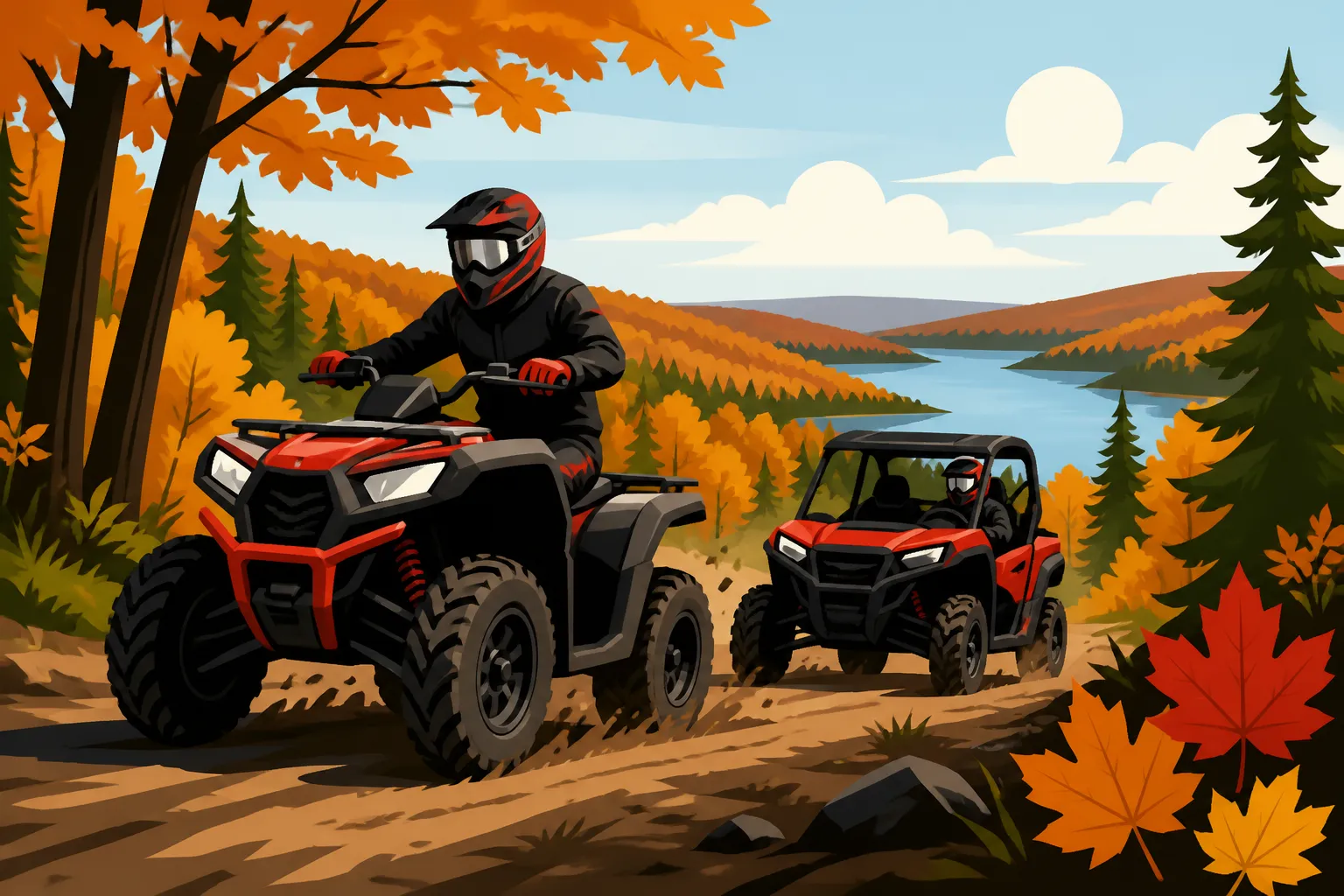
Oswego County Club Trails in September
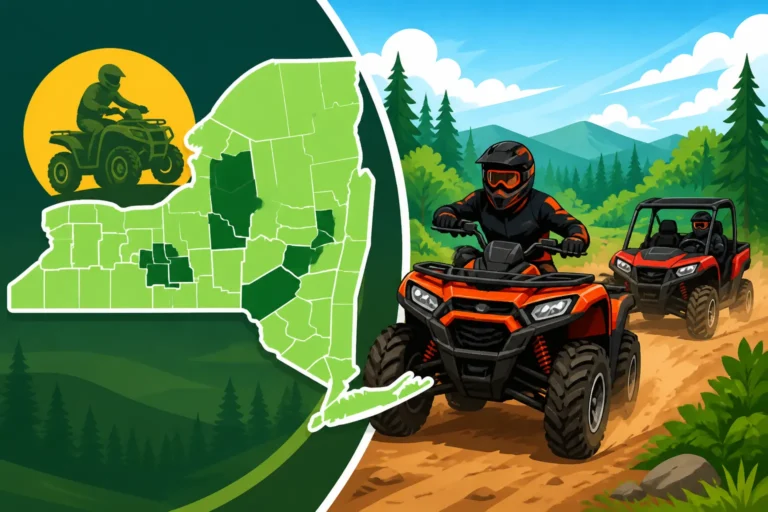
September can be a rewarding time to ride Oswego County’s club trails: summer crowds may ease, the air turns cooler, and the landscape begins to change. But access is not automatic. Trail conditions, club rules, permits, landowner agreements, and hunting-season activity can all affect a ride. This guide explains how to plan a September trip, check access, and avoid common surprises.
What to expect on Oswego County club trails in September
Trails depend on clubs and landowner permission
Oswego County riding is not simply a matter of spotting a trail on a map and unloading your ATV. Club routes can cross private property, and access depends on agreements with the landowners along the route. A trail that was open during one visit may be rerouted, temporarily closed, or unavailable later if conditions or an agreement changes.
Local clubs do much of the work that keeps routes usable, from maintaining sections to communicating with landowners. Their updates are especially helpful in September, when weather, harvest activity, and hunting season can change how a trail is being used. For background on the scale of the local network, see [Oswego County's 100 Miles of New York Trail] and [Volunteer Clubs That Cut Oswego Trail].
A route associated with Central Square, Sandy Pond, or Hastings may sound like a good starting point, but don’t assume every connection is open on the day you ride. Check the current map and access notices for the specific club system you plan to use. [Riding the Club Trail From Central Square to Sandy Pond] and [Riding From Hastings Toward Tug Hill] offer useful context for thinking about those areas, but current club information should guide your actual route.
September brings mixed riding conditions
Early September can still feel like summer on a sunny afternoon, while mornings and evenings may be cool and damp. Later in the month, rain, fallen leaves, and shorter daylight can make a familiar loop feel very different. Low spots may hold water after a wet week, and leaf cover can hide ruts, loose rocks, or changes in the trail surface.
A ride that looks manageable on a dry map may take longer after rain. Give yourself room in your schedule, particularly if you are riding an unfamiliar route or connecting several trail sections. Download or save the map before leaving an area with good reception; cell service can be unreliable in rural and wooded locations. A mapping app such as onX Offroad can help you review your planned route and keep track of where you are, but it does not confirm that a trail is currently open or that you have permission to ride it.
| September factor | Why it matters | A practical response |
|---|---|---|
| Rain and wet ground | Soft sections can become slow, rutted, or unsuitable for riding | Check local trail notices and avoid making deep ruts |
| Hunting activity | Land use and safety considerations may affect access | Ask the club about current guidance and wear visible clothing |
| Shorter daylight | A route may take longer than expected, especially in unfamiliar areas | Start early and plan a conservative turnaround time |
| Changing landowner access | A trail connection may close or move | Check the latest club map and notices before unloading |
| Limited cell service | Online maps and messages may not load consistently | Save maps and important contact details in advance |
How to check access, permits, and trail conditions
Confirm the rules for your chosen route
Before traveling, identify which club system or trail section you intend to ride. Then check that organization’s current map, access rules, and notices. A county-wide overview is useful for understanding the general network, but it is not a substitute for the rules that apply to a particular club trail. Look for details about permitted machines, open dates, trail direction, parking, and any temporary closures.
Access options can differ. Some riders join a club, while other systems may offer limited day access under specific conditions. The details can change, so confirm the process directly with the club or permit provider before making the drive. [Joining an Oswego Club for the Season] and [Buying a Day Pass in Oswego County] are helpful topics to review when comparing access approaches. If day access is offered, verify where and when it is available, what trails it covers, and whether it applies to every machine in your group.
A permit or membership is not blanket permission to leave a marked route. Stay on the trails shown as open, respect gates and signs, and do not use a nearby woods road or field as an alternate route unless it is clearly authorized. If a section is blocked or unclear, turn around rather than guessing. A short detour across private land can create problems for the rider and threaten access for everyone who follows.
Check for closures close to departure
Trail information can change between the day you plan a trip and the day you arrive. Check notices again before loading the trailer, then take a final look before setting off from the staging area. Closures can result from weather, maintenance, landowner requests, logging, or other local activity.
Make sure you understand whether a notice applies to one short connector or an entire trail system. If the wording is unclear, contact the relevant club rather than relying on an old map or a post shared without context. [New York Trail Conditions Before You Ride] and [New York Trail Closures to Check First] can help you build a sensible pre-ride checking routine.
It is also worth saving the route information offline. onX Offroad can be useful for viewing saved maps when service is weak, but keep the club’s official map and closure announcements as your authority for access. A GPS track shows where a line runs; it does not prove that a line remains open or that riding it is allowed.
Riding responsibly during hunting season
Give hunters, landowners, and other trail users room
September overlaps with hunting activity across much of New York. That does not mean every trail is closed, but it does make awareness and courtesy especially important. Wear bright, visible clothing where appropriate, keep your group together, and be alert for people on foot or vehicles using the same access roads. Avoid riding into areas that are posted or closed, even if you can see a trail continuing beyond the sign.
Noise and speed matter, too. Slow down near homes, farms, trail crossings, parking areas, and places where visibility is limited. If you meet a hunter, landowner, farm vehicle, or another trail user, ease off the throttle and give them space to pass safely. A friendly interaction can help preserve goodwill; an unnecessary confrontation can make a landowner less willing to keep a route open.
Stay on the marked trail rather than cutting around mud, branches, or a gate. Going around an obstacle may seem like a small decision in the moment, but repeated off-trail riding can damage property and undermine club agreements. If the route is blocked, report the issue to the club and choose an authorized alternative.
Prepare your machine and group for a longer ride
Give your ATV a basic check before leaving home. Inspect tires, brakes, lights, and controls, and make sure your fuel plan matches the ride you intend to make. Bring water, warm layers, a first-aid kit, a charged phone, and any essential tools. A small repair item that seems unnecessary in the driveway can be welcome when you are several miles from the staging area.
Decide on a turnaround time before you start. September daylight fades earlier than midsummer daylight, and an unfamiliar trail can take longer than the map suggests. Keep the group’s pace suited to its least experienced rider, agree on what to do if someone gets separated, and avoid splitting up to explore an unconfirmed connector.
If you use onX Offroad to follow a saved route, download it before you reach a dead zone and carry a backup way to navigate. Tell someone at home where you plan to ride and when you expect to return. For more on seasonal route planning, see [New York Riding in Autumn Color] and [New York Trail Etiquette With Landowners].
Legal and practical checks before you unload
Make sure your machine and paperwork are in order
Trail access and legal permission are separate questions. Before riding, check that your machine meets the applicable New York registration and equipment requirements, and carry the required documents. Visitors should not assume that an out-of-state registration automatically settles every New York requirement. Review [New York ATV Reciprocity With Other States] and confirm how the rules apply to your own machine and situation.
Insurance is another important check. Do not treat a club membership, trail permit, or event entry as a replacement for required insurance. Review [New York's Mandatory ATV Insurance] and make sure you understand what proof you need to carry. Keep paperwork accessible rather than buried under gear in a trailer box.
You should also know the rules that apply to the specific place you are riding. A trail network can include different roads, properties, and access points, each with its own restrictions. The fact that a connector appears on a riding map does not necessarily mean it is open to every vehicle or that you may ride beyond its marked limits.
Use a simple pre-ride checklist
A short checklist helps catch the easy-to-miss details that can derail a September trip:
- Confirm the club trail system and the exact sections you plan to ride.
- Check the latest map, permit or membership requirements, and closure notices.
- Verify that your machine and required documents are in order.
- Save maps and contact information for offline use.
- Check the weather, daylight, and any local guidance about hunting activity.
- Pack water, suitable layers, basic repair supplies, and a first-aid kit.
- Set a turnaround time and tell someone your plan.
- Stay on authorized trails and report unclear signs or closures to the club.
A little preparation pays off most when plans change. If a route is closed, the ground is too wet, or you cannot confirm access, choose another authorized option rather than trying to improvise. That approach protects your group, the trail, and the landowner relationships that make riding possible.
Disclaimer
This article is for general informational purposes only and does not constitute professional advice. Laws, prices and regulations vary by location and change over time. Consult a qualified professional for guidance on your specific situation.