Camping at Tall Pines in Allegany County
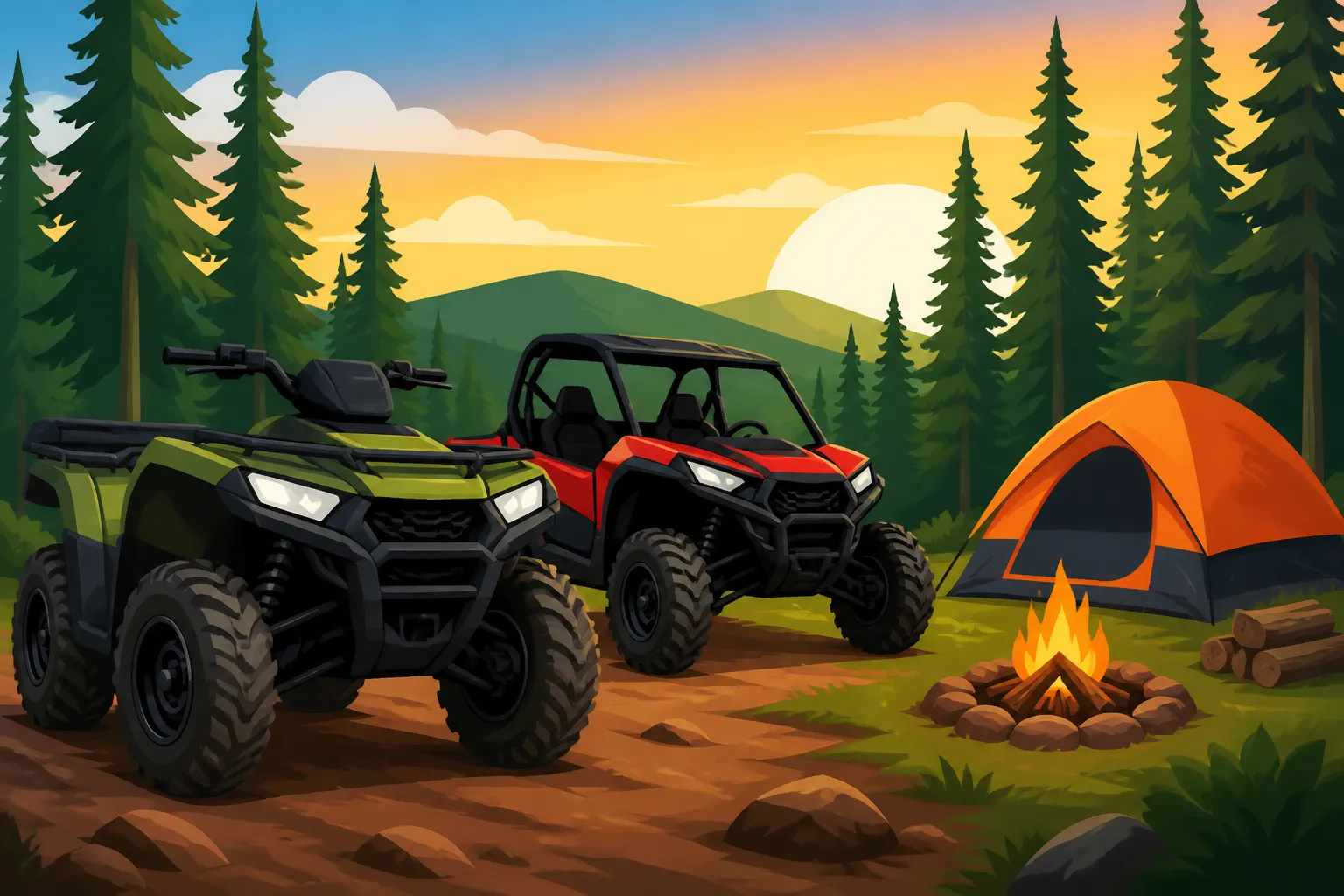
Camping at Tall Pines in Allegany County can make an ATV weekend easier, but only if you plan the campsite, machine, trail access, and current park rules together. Riders often arrive expecting to sort everything out at the gate, then discover they needed to confirm lodging or bring their own quad. This guide explains what to check before you head to Andover.
Plan your Tall Pines stay before loading the trailer
Confirm what camping and cabins mean for your trip
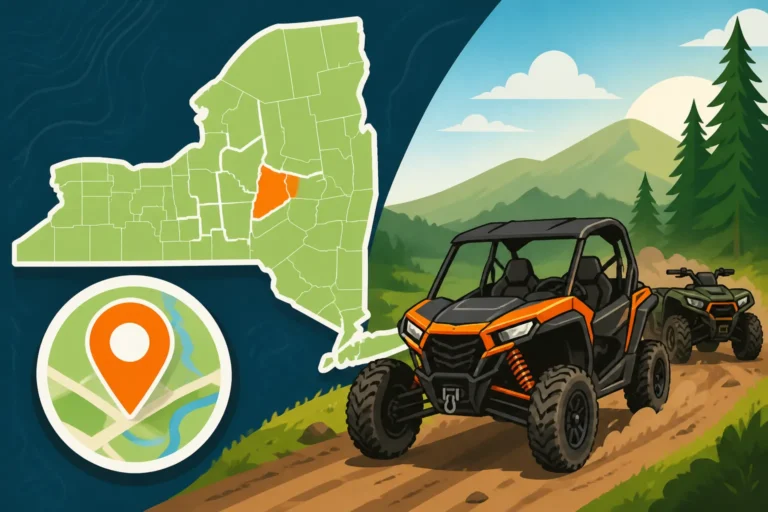
Tall Pines ATV Park is in the Andover area of Allegany County, a rural setting where a little advance planning can save a lot of backtracking. The park has camping and cabin options, but don’t assume every type of site or accommodation is available for every visit. Ask the park directly what is open for your dates, what is included, and whether reservations are needed.
Be specific when you inquire. “Do you have camping?” is less useful than asking whether your group can bring a travel trailer, whether tent camping is an option, what services are available at the site, and whether your accommodation is near the riding area or requires a separate drive. If you’re considering a cabin, ask what you need to bring, how many people it can accommodate, and whether bedding, cooking equipment, or other essentials are provided. Details can change, so confirm them rather than relying on an old review or a friend’s memory.
It also helps to describe your group honestly. A couple staying for one night has different needs from a family with children, two machines, a trailer, and a dog. Ask about parking for both your tow vehicle and trailer, quiet hours, fire rules, and any restrictions on pets or generators. These small questions can prevent an awkward arrival when everyone is tired and eager to get settled.
For an overview of the park’s accommodation options, see [Camping and Cabins at Tall Pines]. Use that as a starting point, then verify the current setup directly with the park. Lodging descriptions may not answer practical questions about your particular trailer, group size, or arrival time.
Match the campground setup to your riding group
Choose a campsite or cabin based on how you actually travel, not just the number of beds or the appeal of a quiet weekend. A family with young riders may value an easy route between the lodging area and the staging area. A group with several machines may care more about trailer parking, space to unload, and a place to keep riding gear organized.
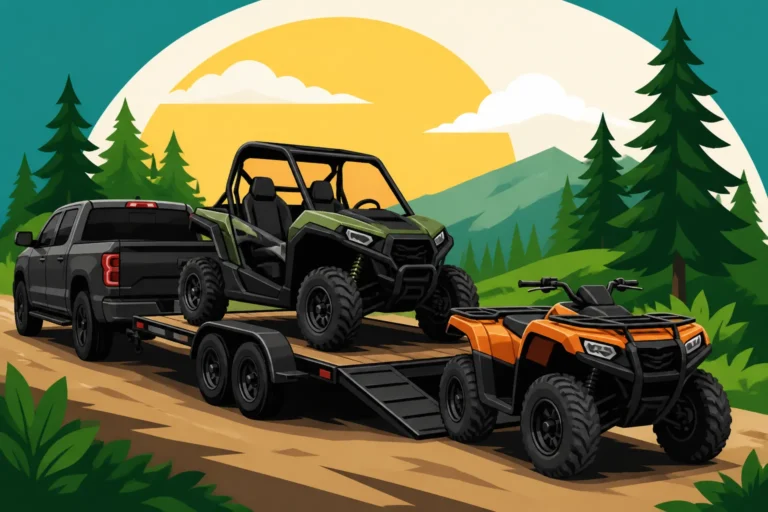
Think through the first hour after you arrive. You’ll need somewhere to park, unload safely, check your machine, and keep helmets, boots, and wet layers from turning the whole campsite into a pile. If you’re bringing a large trailer, ask whether the access road and parking arrangement suit its size. It’s much easier to confirm clearance and turning room before departure than to discover you cannot maneuver comfortably after dark.
Then picture the end of the day. Muddy boots, damp gloves, and dusty equipment are part of riding, but they can make a small cabin or tent feel cramped quickly. Bring a few storage tubs or bags to separate clean clothes from riding gear. A basic doormat, towels, and a change of footwear can make the transition from trail to campsite noticeably more comfortable.
If you’re comparing camping with a cabin, think about weather and the length of your stay. Camping gives you more control over your setup and may suit riders who already travel with a well-equipped trailer. A cabin can reduce the amount of equipment you need to pack, but you’ll want to know exactly what is supplied and what is not. Neither option is automatically better; the right choice is the one that fits your group, equipment, and comfort needs.
Bring the machine and equipment you need
Plan to bring your own ATV
Don’t book a weekend assuming you can rent a machine at Tall Pines. The park does not rent machines, so visitors should plan to bring their own. If you’re borrowing a quad, arrange permission and pickup well before your trip, and make sure you know who is responsible for hauling it, checking it, and returning it in good condition. A last-minute machine swap can create problems with trailer space, tie-downs, and paperwork.
Before loading, check the machine for the kinds of issues that tend to surface far from home: a weak battery, low tire pressure, loose controls, worn brakes, or a belt that is already showing signs of trouble. Pack basic tools and the supplies you know how to use. It’s not necessary to haul a full workshop, but bringing the right small items can prevent a minor problem from ending the day.
Confirm that your machine is suitable for the trails you plan to ride. A large or wide machine may be a poor fit for some routes, and a machine that is comfortable on a farm lane may feel different on a narrow, uneven trail. Don’t assume that a machine’s model name or advertised use tells you whether it will suit a particular riding area. Ask the park about its current machine requirements and trail restrictions before you travel.
The park information at [Why Tall Pines Rents No Machines] and [Bringing Your Own Machine to Tall Pines] can help set expectations. For more context about the location, see [Tall Pines ATV Park at Andover] and [New York's Tall Pines and Its 70 Miles]. Check directly with the park for current access rules rather than treating a general description as a guarantee that every route will be open or suitable for every vehicle.
Pack for riding, camping, and muddy conditions
Packing for a riding weekend is different from packing for an ordinary campground stay. You need comfortable camp clothes, but also a second set of riding layers in case the first gets soaked or covered in mud. Bring the protective gear you use for riding, plus spare gloves and socks. Even on a warm day, a wet ride or a cool evening can make dry layers feel essential.
Use a simple packing plan so the things you need first are easy to reach. Keep helmets, eye protection, gloves, and boots together rather than buried under sleeping bags. Put paperwork, keys, and any essential medication somewhere dry and easy to find. If you’re traveling with children, make each rider’s gear easy to identify; a jumble of similar gloves and helmets can become a frustrating scramble when it’s time to ride.
A practical checklist includes:
- Riding clothes and protective gear for each rider
- Dry clothing and footwear for camp
- Rain layers and extra socks
- Drinking water and snacks for the riding day
- A first-aid kit and personal medications
- Basic tools and machine-specific supplies
- Tie-downs, trailer checks, and spare trailer equipment
- A flashlight or headlamp for setting up after arrival
- Bags or tubs to separate wet and muddy gear
- Any bedding, cooking items, or toiletries not provided with your accommodation
If you’ll be riding through mud, plan for cleanup without assuming the campground has a wash station or that any particular cleaning method is allowed. Ask about the park’s rules for washing machines and disposing of muddy water. A stiff brush, old towels, and a dedicated gear bag can keep much of the mess contained until you get home. For additional cleanup planning, see [Washing a Machine After a Muddy Loop].
Organize trail access and the ride itself
Check access rules, maps, and conditions
A campsite booking does not automatically answer every question about riding access. Confirm what trail access comes with your stay, whether any separate permit or fee applies, and how to display or carry any required proof. Don’t assume a state registration, a county trail permit, or a private park access requirement can substitute for another. Ask which rules apply specifically at Tall Pines and what each rider needs to have with them.
Before you leave home, check whether the routes you want to ride are open and whether weather or trail work has changed access. A route that looked inviting in a post or on a map may be closed, muddy, or unsuitable when you arrive. Park staff or official park information should be your main source for closures and local access rules.
A mapping app such as onX Offroad can help you prepare by organizing a route plan and giving you a clearer sense of the surrounding area. It’s useful to review your plan before the trip, save the information you may need, and identify where you’ll turn around if conditions change. Still, an app is a planning aid, not permission to ride a route. Follow Tall Pines’ current maps, signs, staff directions, and closed-gate notices.
A sensible pre-trip routine is to check the park’s official information, confirm access with staff, and then use your preferred mapping tools to understand the route and travel logistics. [New York Trail Conditions Before You Ride] and [New York Trail Closures to Check First] offer useful reminders about why a quick conditions check matters. Don’t rely on a map screen alone to establish that a trail is open.
Ride with the setting and other users in mind
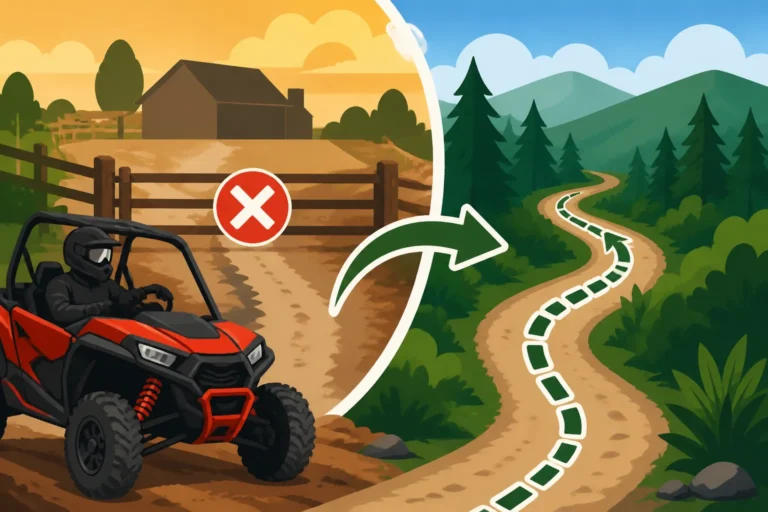
Tall Pines sits in a rural part of Allegany County, where trails and surrounding land may be close to working properties and private land. Stay on marked routes, respect gates and signs, and do not assume that a path is open just because it appears on a map or someone else has ridden it. If a route is unclear, stop and ask rather than guessing.
Keep your group together at turns and intersections, and agree on a simple plan before the first ride. Decide who leads, who rides at the back, and where you’ll regroup if someone needs to stop. This is especially helpful when riders have different experience levels. A fast rider disappearing around every bend can make a relaxed group outing stressful, particularly for children or beginners.
Be considerate around other riders, residents, and landowners. Keep noise under control near homes and campsites, use designated parking areas, and pack out your trash. Don’t ride around a closure barrier or onto a field to get around a muddy section. Landowner permission and trail agreements are part of what keeps riding routes available. For more on that relationship, see [New York Trail Etiquette With Landowners].
If your group is visiting from outside the area, remember that local park access rules and New York riding requirements are separate questions. Check the park’s requirements and review applicable state rules before the trip. The guide [New York ATV Trail Permits Explained] can help you understand the broader distinction between trail access and other riding requirements, but confirm directly which rules apply at Tall Pines.
Make the weekend smoother from arrival to departure
Set up camp before the first ride
If possible, arrive with enough daylight to find your accommodation, park the trailer, and unload without rushing. A late arrival can make a simple setup feel complicated, especially if the group is trying to locate keys, sort out equipment, and prepare machines at the same time. Confirm check-in instructions and arrival expectations before leaving home.
Once you’re settled, keep the riding area organized. Put keys, registration documents, and other important items in one consistent place. Set aside an area for dirty boots and gear, and keep food and camp supplies separate from machine supplies. This simple separation makes it easier to get moving in the morning and helps keep mud and grease away from sleeping and eating spaces.
Before the first ride, do a group equipment check. Make sure each rider has their protective gear, knows the route plan, and understands where to regroup. If someone is new to the park or riding with a child, choose a manageable first outing rather than trying to cover as much ground as possible. It’s easier to extend a comfortable day than to recover from a route that was too ambitious.
Leave time for the ride home
Plan your departure as carefully as your arrival. Give yourself time to clean or secure muddy machines according to park rules, pack the campsite, and check the trailer before hitting the road. Mud and debris can conceal loose straps or make it harder to see whether a machine is seated securely. Walk around the trailer and check each tie-down before you leave.
Do one final sweep of your campsite or cabin. Check storage areas, bathrooms, and the space around the trailer for gloves, chargers, keys, and small tools. If you borrowed a machine or traveled with another family, confirm that each person has the right equipment and paperwork before departing. A few minutes of checking is much less frustrating than discovering something important is missing after you’re back home.
Finally, think of the weekend as a combination of lodging, riding access, and preparation—not just a place to sleep beside a trail. Confirm accommodation details, bring your own machine, check current conditions and rules, and pack for wet gear and changing plans. That preparation lets you spend less time solving avoidable problems and more time enjoying the trails and the quiet rural setting around Andover.
Disclaimer
This article is for general informational purposes only and does not constitute professional advice. Laws, prices and regulations vary by location and change over time. Consult a qualified professional for guidance on your specific situation.