70 Miles Beside a Dairy Farm
A 70-mile trail system beside a working dairy farm offers a very different ride from a wide-open public trail network. At Tall Pines ATV Park near Andover in Allegany County, riders need to plan around property rules, changing trail conditions, and the realities of sharing a rural landscape. This guide explains how to prepare, navigate responsibly, and make the most of a visit.
What to Expect at Tall Pines ATV Park
A trail system in a working rural landscape
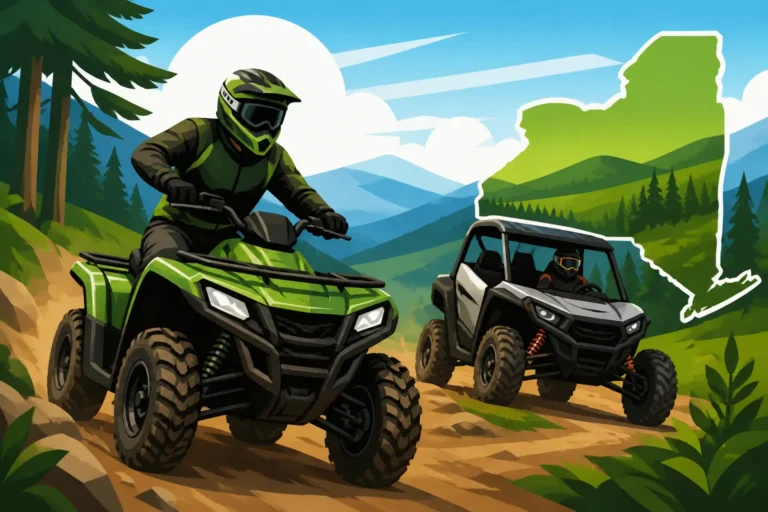
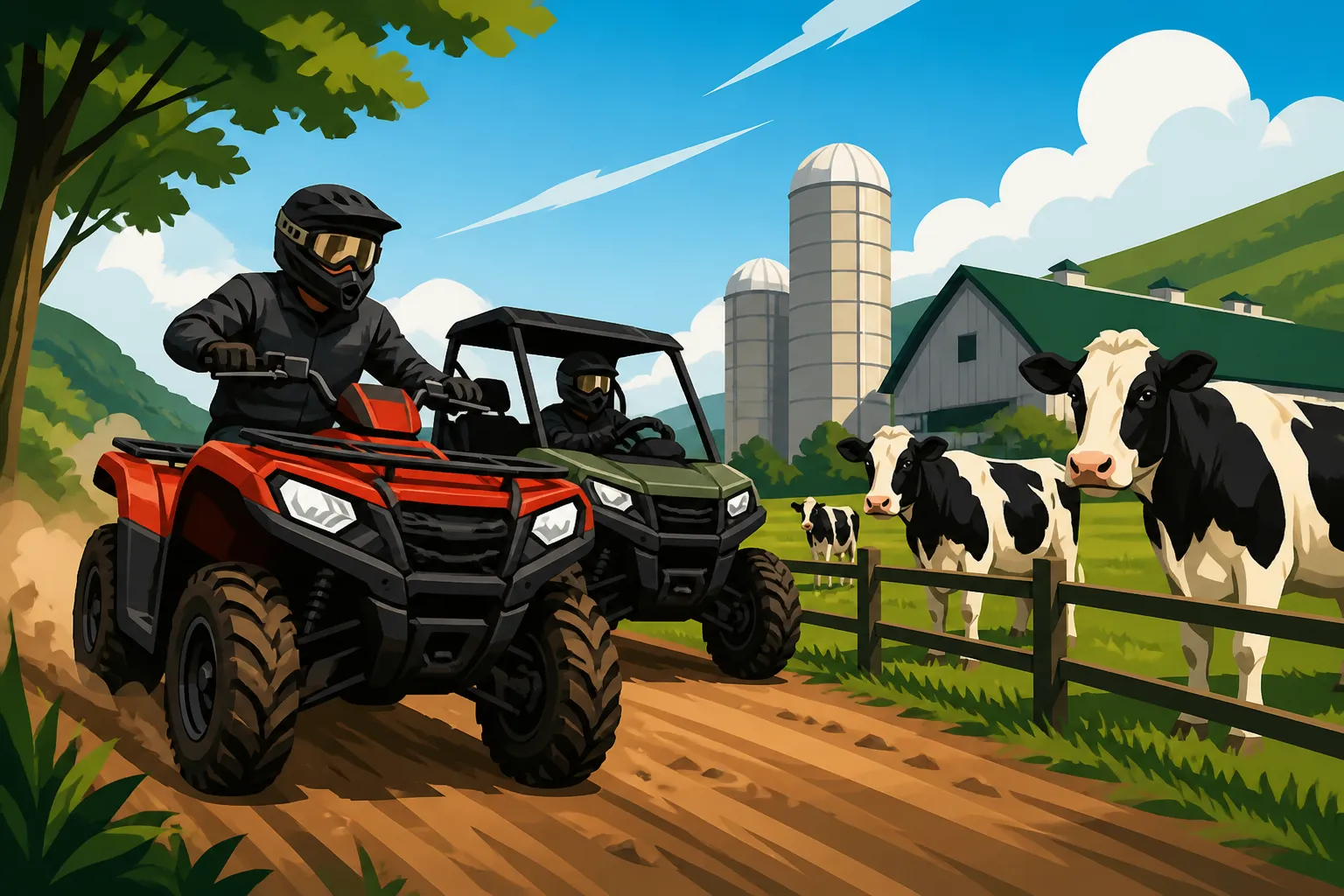
Tall Pines is known for roughly 70 miles of trails alongside a working dairy farm. That setting is part of the experience: a ride may take you through wooded stretches and open rural terrain, with farm operations nearby. It also means riders should treat the property as an active place of work, not as an empty tract where every route is automatically open.
Farm equipment, livestock, gates, and other activity may affect how a section can be used. Follow posted signs and directions from the property, and don’t assume a track visible on a map is an approved riding route. If a gate is closed or a trail is marked off-limits, turn around rather than trying to find a way around it.
This is a private riding destination, so access rules may differ from those on county-managed trail systems. Before loading up, review the park’s current information for admission, permitted machines, riding hours, and operating conditions. For a wider look at what to expect from the property, see [New York's Tall Pines and Its 70 Miles].
A different kind of ride from public trail networks
A private park can be a practical choice when you want a defined place to ride without piecing together access across several towns or landowners. The trade-off is that you need to follow that property’s particular rules. Route access, parking arrangements, and allowed machine types are set by the park, not by a statewide trail pass.
That difference matters in New York. A machine’s registration does not automatically give you permission to ride on private land, and permission to use one property does not extend to nearby land. Read [New York Rules for Riding Private Land] before your trip if you are unsure where your riding rights begin and end.
Tall Pines is also not the same thing as a public trail system where you can assume routes connect beyond the riding area. Plan your day around the park’s approved trails, and don’t follow roads or paths off the property simply because they appear to continue. For more on this style of riding, [New York Private Trail Systems] explains why access rules can be specific to each location.
Plan Your Visit Before You Load the Machine
Check access and operating information first
A little checking before departure can spare you a frustrating drive with a trailer in tow. Confirm the park’s current operating information directly, including whether it is open on your intended day, what the entry process requires, and whether any trails are closed or restricted. Conditions and access details can change, and a map or an old social post may not reflect what is happening at the property now.
Also confirm which machines are allowed. New York’s ATV registration rules can be restrictive for some side-by-sides, so don’t assume that a machine sold as an ATV or UTV qualifies for registration or access. Review [Can You Register a Side-by-Side in New York?] and [Why Most Side-by-Sides Cannot Be Registered in New York] before planning a trip with a wider machine.
Check your paperwork and equipment while the machine is still at home. New York has rules concerning registration, insurance, helmets, and required equipment. The details can depend on how and where you ride, so use [New York ATV Registration and Insurance Proof] and [New York Equipment Rules for ATVs] as starting points, then verify that your own setup meets the applicable requirements.
Prepare for the day, not just the ride
A trail day can be tiring even when you are familiar with your machine. Bring drinking water, food, basic tools, and any medication you may need. Pack weather-appropriate layers; conditions in Allegany County can feel different in wooded areas than they do in an exposed parking area. Secure loose items so they don’t bounce off a rack or become a hazard on the trail.
Before leaving, check fuel level, tire condition, brakes, lights, and the machine’s general readiness. If you are riding with a group, agree on a simple plan: who leads, who rides at the back, where you will regroup, and what to do if someone has a mechanical problem. Riders who prefer to track their route with onX Offroad or another navigation app should download any relevant maps ahead of time, since mobile coverage can be unreliable in rural areas.
Navigation technology is useful for orientation, but it does not determine where riding is permitted. Treat property signs and park instructions as authoritative. If an app shows a line beyond the park’s approved riding area, do not treat that line as permission to continue.
| Before you leave | What to confirm |
|---|---|
| Park access | Open status, entry process, and current visitor instructions |
| Machine eligibility | Allowed machine types, dimensions, registration, and required equipment |
| Trail conditions | Closures, wet areas, maintenance, or other restrictions |
| Group plan | Meeting point, leader, sweep rider, and regrouping plan |
| Supplies | Fuel, water, food, tools, and weather-appropriate gear |
| Navigation | Downloaded map or route information, while following posted rules |
Ride Responsibly Around Trails and Farm Operations
Follow signs and respect working areas
A trail beside a dairy farm is part of a larger working landscape. Farm staff may need to move equipment, manage animals, or use access roads. Give machinery room, slow down near buildings and work areas, and follow any directions from staff. Avoid startling livestock by revving, crowding fences, or stopping where animals are being moved.
Stay on routes the park has authorized. Cutting across fields or creating a shortcut can damage land, interfere with farm work, and put future access at risk. A gate is not an invitation to pass through unless it is clearly part of the riding route and the park’s instructions allow it. Close gates only when directed to do so; otherwise, follow the posted guidance for that location.
Responsible riding helps protect the access that makes a private trail system possible. Landowners can change or withdraw permission, and one rider’s decision to ignore a closure can affect everyone who hopes to return. [Landowner Agreements That Keep Trails Open] describes why respectful behavior and clear boundaries matter to trail access.
Adjust your riding to the conditions
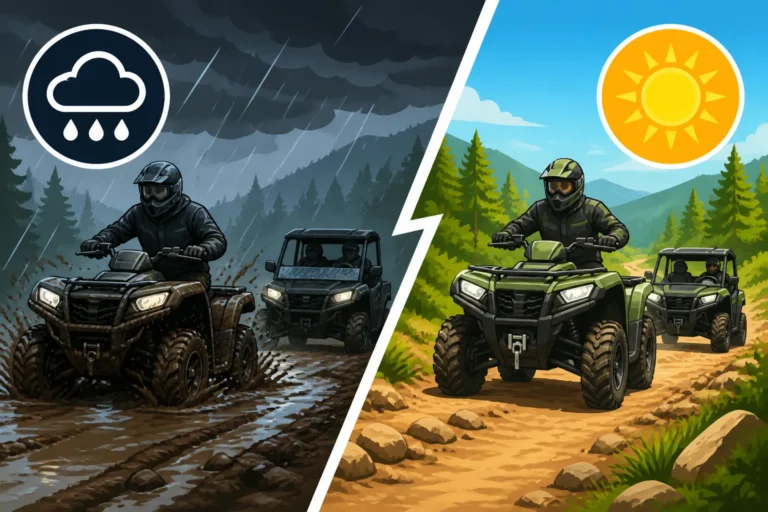
Wet ground, loose gravel, ruts, and changing weather can make a familiar trail feel different from one visit to the next. Slow down when visibility is limited or the surface is slick. Leave space between machines, especially on hills or in dusty conditions, and avoid sudden stops in places where riders behind you cannot see you clearly.
If a route looks damaged or unsafe, don’t try to force your way through. Turning around is usually better than deepening a rut, damaging the machine, or creating a recovery problem. Follow any closure signs and ask park staff if you are uncertain about an alternate route.
Navigation apps such as onX Offroad can help you keep track of your position, but they are not a substitute for local instructions. A displayed trail line may be outdated, may not show a temporary closure, or may represent a route that is not open to your machine. Use the app as a planning aid, stay within the authorized riding area, and carry a backup plan in case your phone loses power or signal.
Make the Most of a Tall Pines Ride
Choose a pace that suits your group
A group ride works best when everyone agrees on a pace before setting out. Newer riders may need extra time to navigate turns and uneven ground, while experienced riders can be tempted to move ahead. Keep the group together, stop in safe places, and check that everyone is ready before continuing.
If children or less experienced riders are coming along, match the route and pace to their abilities. Review New York’s age and supervision rules before the trip; [New York Trail Access for Riders Under 16] is a useful place to start. Make sure younger riders understand that staying on the approved route and listening to the group leader are part of the ride, not optional extras.
Don’t treat a 70-mile system as a promise that your group should cover a particular distance in one visit. Actual mileage depends on which routes are open, the conditions, the riders, and the time you have. Build in breaks and leave enough daylight to finish without rushing.
Consider camping and overnight logistics separately
Some riders turn a visit into a weekend by looking for nearby camping or lodging. Confirm what is available directly with the park or accommodation provider before making plans; don’t assume that camping, cabins, or overnight machine storage are included with trail access. Ask where trailers may be parked and whether machines can remain at the property overnight.
If you are comparing places to stay, [Camping and Cabins at Tall Pines] can help you focus on that part of planning. For broader trip ideas, [Camping Near New York ATV Trails] covers considerations for finding accommodations near riding areas. In either case, check the details for your specific dates and confirm whether lodging arrangements and riding access are handled separately.
A navigation tool can also make it easier to organize a multi-stop trip. onX Offroad may help you keep route notes or orient yourself while traveling, but use the park’s own instructions for access, parking, and trail use. Save important details before you leave home rather than relying on a phone connection at the trailhead.
Keep the property visit straightforward
The best way to enjoy Tall Pines is to arrive prepared, follow the rules, and leave the property as you found it. Respect farm activity, stay on authorized trails, and be considerate of other riders. If something is unclear, ask before riding rather than guessing. That approach makes the day smoother for your group and helps preserve a riding opportunity in a landscape where recreation shares space with daily work.
Before your next trip, check the park’s direct updates, review your machine and paperwork, and make a realistic plan for your group. A little preparation can make the difference between spending the day riding and spending it sorting out access, equipment, or route questions at the gate.
Disclaimer
This article is for general informational purposes only and does not constitute professional advice. Laws, prices and regulations vary by location and change over time. Consult a qualified professional for guidance on your specific situation.