Buying a Day Pass in Oswego County
A day-pass ride in Oswego County can take more planning than expected: access may be limited to a specific part of the season, and a pass does not necessarily open every trail or replace your ATV registration. This guide explains when to look for a day pass, what to confirm before you travel, and how to prepare for a smooth ride.
How Oswego County day passes work
A day pass is for trail access, not general riding
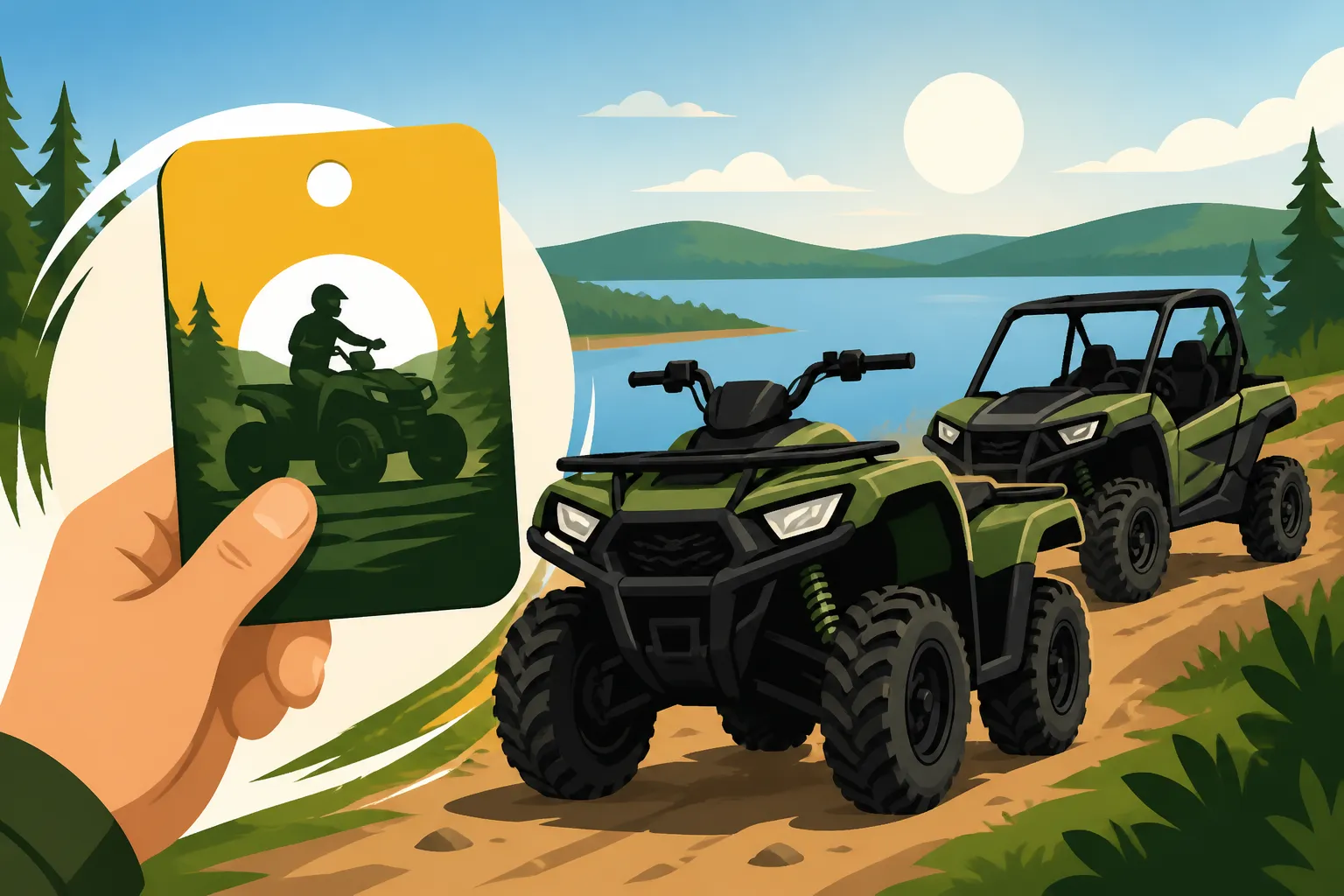
A day pass is permission to use the trail system or trails covered by the pass for a limited visit. It is not a general license to ride anywhere in Oswego County. Trail access can depend on the route, the season, current conditions, and the rules of the club or organization maintaining that section.
That distinction matters when planning a ride near Central Square, Hastings, or Sandy Pond. A pass that covers one trail network may not cover another, even if the routes appear close together on a map. Before setting out, check the pass terms and the map or directions that come with it. For background on the local network, see Oswego County's 100 Miles of New York Trail.
Oswego County day passes have been offered only during September. Because that is a narrow window, confirm that the option is available for your intended riding date before loading your machine. Do not assume a pass can be purchased at the trailhead or that a previous season’s process still applies. The current county or trail-club notice should spell out the sales period and where riders can obtain a pass.
Know what the pass does not cover
A day pass does not replace state requirements such as registering the machine, carrying required insurance, or following applicable equipment and riding rules. It also does not grant permission to leave a marked route, cross private property outside an authorized trail, or ride on a closed section. Trail access and legal eligibility to operate the ATV are separate questions.
This can be easy to overlook when a group is focused on the outing itself. One rider may have a valid pass while another machine is missing its registration or required proof. Before leaving home, review [New York ATV Trail Permits Explained] alongside the rules that apply to your machine and rider. Keep registration and insurance documents accessible rather than buried under gear.
A pass may also have conditions on how it must be displayed or which routes it covers. Read the instructions instead of relying on another rider’s recollection. If a trail sign, posted notice, or official closure conflicts with an old screenshot or printed map, follow the current restriction and check with the organization responsible for the trail.
| Before you ride | What to confirm |
|---|---|
| Day-pass availability | Whether passes are being sold for your chosen date |
| Pass coverage | Which trails or sections the pass allows you to use |
| Machine requirements | Registration, insurance, and any applicable equipment rules |
| Trail status | Seasonal openings, closures, and weather-related restrictions |
| Pass instructions | Purchase method, display requirements, and any rider conditions |
| Ride logistics | Parking, fuel, route length, and a plan for returning before dark |
Plan the purchase and trip before loading up
Confirm the sales window and purchase method
Since the day-pass option is limited to September, begin by checking the current notice from the county or the trail organization administering access. Confirm the actual dates, whether passes are available for the day you want to ride, and whether purchase is online, through a local seller, or by another stated method. Never assume that a pass will be available on arrival.
Ask about practical details, too: whether the pass is tied to a particular machine, whether each rider needs a separate pass, and how the pass should be shown on the machine or kept with the operator. Those small details can create a frustrating delay when a group reaches the trailhead and discovers that everyone understood the instructions differently.
If you are coordinating a group, have one person verify the details and share them with everyone in writing. Include the pass terms, route plan, parking location, and a reminder to bring the required paperwork. It is much easier to resolve a question at home than at a crowded staging area with trailers, helmets, and several riders waiting.
Match your route to the trail system
Start with the official county or club trail map rather than choosing a route from a general road map. Mark the approved trail, the access point, and any places where the route crosses a road or passes through a community. The route you see on a phone may include public roads or unapproved paths, so do not treat every visible line as an ATV trail.
Digital tools can help with orientation and offline planning. For example, onX Offroad can be useful for reviewing your planned route and saving information before you enter an area with weak reception. Treat it as a planning aid, not proof that a trail is open or that your pass covers it. Confirm route access and closures with the official trail information before riding.
The local route may connect with other trail sections, but a connection on a map does not automatically mean you are authorized to continue onto them. A pass may have a defined boundary, and another segment may require separate access permission. If you are considering a route such as Riding the Club Trail From Central Square to Sandy Pond, verify that the specific section is open and included in your access plan.
Check trail conditions and ride responsibly
Verify openings, closures, and weather impacts
September does not guarantee that every trail is open every day. Heavy rain, soft ground, maintenance work, landowner requests, or seasonal changes can affect access. Before you leave, check for recent notices from the organization responsible for the trails. A route that was open the previous weekend may have changed since then.
Pay particular attention to closures and reroutes. An open trail can have a short closed section, a temporary detour, or a restriction that is easy to miss if you rely on an older map. Review New York Trail Closures to Check First and New York Trail Conditions Before You Ride as part of your planning, then check the specific local notices for Oswego County.
If you use onX Offroad or another mapping app, download the information you need before traveling and consider weak-signal areas. A saved map can help you understand where you are, but it cannot tell you by itself whether a landowner has withdrawn access or a trail has been closed. Follow posted signs and official updates even when an app continues to show the route.
Respect trail markers, landowners, and other users
Stay on the marked route. In a mixed-use or privately hosted trail system, riding off the trail can damage property and threaten future access for everyone. Do not use a field edge, logging road, driveway, or connecting track as a shortcut unless the official route map or signage clearly authorizes it.
Follow trail markers carefully, especially at intersections and near roads. Markers can be harder to spot in changing light or after foliage grows in, so slow down when approaching a junction and check your route before committing. [Following County Trail Markers] is a useful companion when you are learning how county trail systems identify the correct way to go.
Ride at a pace that gives you time to react to other users, changing surfaces, and trail traffic. Keep noise and dust considerate near homes and working land, and leave gates as you find them unless signs instruct otherwise. If you encounter a closure or a damaged marker, do not bypass the restriction; report the issue through the appropriate county or club channel.
Prepare your machine and group for a day ride
Make a pre-ride checklist
A little preparation prevents common trip problems. Check the machine before loading it: tires, brakes, steering, lights, fuel, and any cargo or recovery equipment you expect to use. Bring water, basic tools, a charged phone, and weather-appropriate clothing. If your group includes newer riders, choose a route and pace that suit their experience rather than pushing them to keep up.
Confirm that the machine meets New York’s registration and insurance requirements before the trip. If you are unsure what proof to carry, review [New York ATV Registration and Insurance Proof]. Pack documents where they can be reached without unpacking the entire trailer, and make sure each rider knows who has the pass information and route details.
A sensible checklist can look like this:
- Confirm the day-pass sales window and coverage.
- Check the local trail map and current closure notices.
- Verify each machine’s registration and required insurance.
- Inspect tires, brakes, lights, fuel, and tie-downs.
- Save the route and official contact information for offline use.
- Share the staging location, meeting time, and return plan with the group.
Plan for the return, not just the ride out
Estimate the route length and allow time for stops, slower riders, and unexpected delays. A group that starts late may end up riding in fading light or rushing through a section that deserves care. Set a turnaround time and agree on what to do if the group becomes separated.
Think through fuel and support before starting. Identify whether fuel is available near your route rather than assuming you will find a station immediately. Carry only what you can secure safely, and avoid letting a low fuel gauge turn the final part of the ride into a stressful scramble.
If you enjoy the area and expect to return, explore whether [Joining a New York ATV Club] offers a better fit for your future plans. Membership and day-pass access are different arrangements, and their benefits and rules can vary. Compare the actual access offered before deciding which option suits your riding schedule.
Disclaimer
This article is for general informational purposes only and does not constitute professional advice. Laws, prices and regulations vary by location and change over time. Consult a qualified professional for guidance on your specific situation.