Studs on a Frozen New York Trail
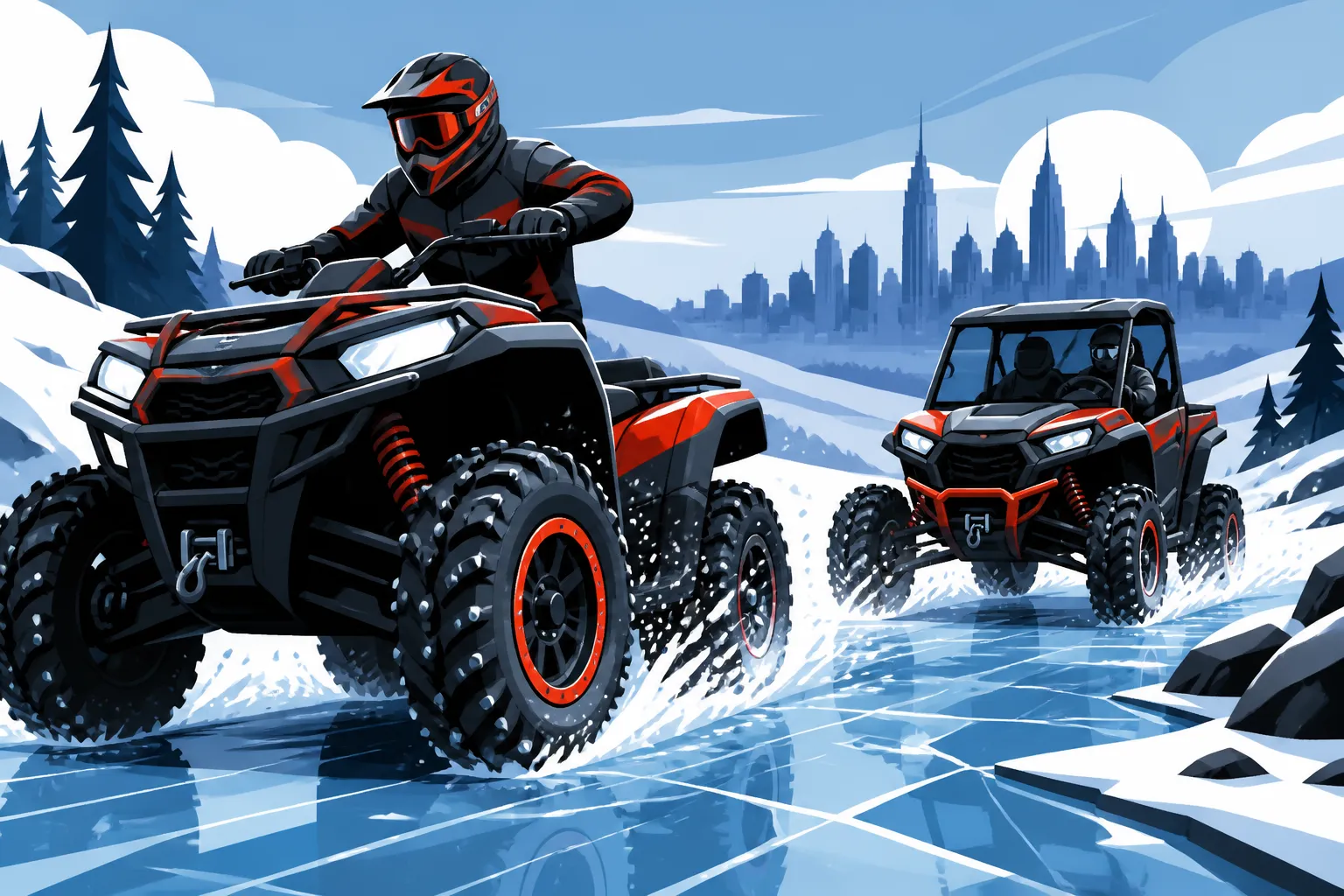
Winter riding in New York offers some of the most spectacular, serene, and often challenging ATV experiences you can find. Picture crisp air, snow-laden trees, and miles of glistening white trails stretching out before you. But let's be real: that idyllic scene can quickly turn treacherous when you hit a patch of hidden ice or hard-packed, frozen snow that your standard tires just can't grip. Many riders find themselves white-knuckling it, desperate for more traction and wondering if studded tires are the answer. This guide is here to cut through the confusion and give you the full scoop on studs on a frozen New York trail, covering everything from the rules to the realities of using them.
Why Studs Are Even a Question for New York Riders
When the temperatures drop and winter truly sets in across New York, especially in those prime riding areas like the Tug Hill Plateau or the Adirondack foothills, the terrain transforms. The mud of autumn gives way to packed snow, icy ruts, and treacherous frozen puddles. Your everyday ATV tires, even those with aggressive mud treads, suddenly feel like racing slicks on a wet track when faced with these conditions. It's a frustrating and often unsettling experience, and it's precisely why the thought of adding studs to your tires starts to sound like a genius idea.
The Slippery Slope of Winter Riding
Standard ATV tires, no matter how knobby they are, rely on soft terrain to dig in and find traction. On solid ice or rock-hard, frozen ground, those lugs just can't penetrate. This means you're often left spinning your tires, sliding sideways, or feeling a terrifying loss of control, especially when going downhill or trying to climb a slight incline. You want to enjoy the incredible beauty of [New York Riding in a Tug Hill Winter], but the constant fear of a slide-out can seriously dampen the fun. It’s a common frustration that can make you second-guess even heading out for a ride, despite having a machine perfectly capable of handling the snow.
The Allure of Added Grip
This is where studs enter the conversation. Imagine tiny, sharp claws embedded in your tire tread, each one designed to bite into the ice and hard-packed snow, providing a level of grip that un-studded tires simply cannot achieve. It's about stability, control, and ultimately, confidence. Riders dream of being able to navigate those icy creek crossings or slick, frozen hills with ease, knowing their machine will actually respond to their input. Whether you're considering pre-studded tires or screw-in studs that you can install yourself – a popular option offered by accessory makers like SuperATV – the appeal is undeniable. That extra traction can transform a terrifying, unpredictable ride into a much more enjoyable and safer experience.
Safety Versus the Rules: A Common Dilemma
For many, the question of studs boils down to a fundamental tension: personal safety versus the specific regulations that might or might not exist. When you're facing a steep, icy descent on a trail, the thought of sliding uncontrollably and potentially injuring yourself or damaging your machine is a powerful motivator. You want to do everything you can to mitigate that risk. However, the legalities surrounding tire modifications like studs in New York are often murky, leaving riders in a gray area. This uncertainty can be a real headache, making it hard to know if you’re making the right choice, even if it feels like the safest one. It's not just about what gives you the best traction, but what keeps you out of trouble with trail authorities and respectful of the trails themselves.
The Legal Landscape of Studs in New York
Navigating the rules for ATV riding in New York can sometimes feel like a puzzle, and when it comes to tire studs, that puzzle gets even more complicated. Unlike some other states or provinces that have clear-cut guidelines, New York's stance on studded ATV tires isn't always a simple "yes" or "no." It requires a bit of detective work into state law, local ordinances, and even the specific rules of the trail system you plan to ride.
State Law and the Ambiguity
Generally speaking, New York State's Vehicle and Traffic Law, which governs ATVs, tends to focus on broad operational safety, registration, and permitted riding areas. It doesn't typically delve into the minutiae of tire construction or modifications like studs for off-road vehicles. This silence can be both a blessing and a curse. On one hand, it means there isn't a blanket state ban prohibiting studded ATV tires specifically for off-road use. On the other hand, it leaves a lot of room for interpretation and local control, which is where things can get tricky. If a state law isn't explicitly addressing an issue, it often falls to lower jurisdictions or land managers to set their own rules.
Local Ordinances and Trail System Rules
This is where the real complexity kicks in. While state law might be quiet, individual counties, towns, and even private organizations that manage trail systems in New York have the authority to create their own ordinances and rules. And many of them do, especially when it comes to protecting the integrity of the trails they maintain. What might be permissible on one county trail might be strictly forbidden on another just across the county line. This fragmented approach is why [Why New York Has No Statewide Trail Pass] is a reality; each jurisdiction can set its own terms. Before you even think about hitting the trail with studs, you absolutely must check with the specific land manager or local municipality where you intend to ride. A quick call to the county parks department, the local town clerk, or the ATV club that maintains the trails can save you a lot of grief (and potential fines).
Shared Trails and Snowmobile Concerns
One of the biggest factors influencing the local stance on studded ATV tires is the prevalence of shared-use trails, particularly those groomed and maintained for snowmobiles. Many winter ATV routes in New York run along these same corridors. Snowmobile clubs put in an incredible amount of volunteer effort and financial resources into maintaining these trails, often compacting and grooming the snow base to create a smooth riding surface for sleds.
The concern with studded ATVs on these shared trails is simple: damage. Even small studs can chew up a groomed snowmobile trail, especially if the snow base isn't completely frozen or if there are exposed patches of gravel underneath. This can create ruts and damage that is costly and time-consuming for snowmobile clubs to repair, causing friction between user groups. Respect for these dedicated volunteers and their hard work is paramount. This is a critical point when considering [Sharing a Corridor With Sleds]; what might be good for your ATV traction might be detrimental to another user's experience and the trail itself.
The Impact on Paved and Gravel Crossings
Even if you're riding exclusively off-road, ATVs often need to cross paved roads or ride short sections of town or county roads to connect trail segments. This is another area where studded tires can run into trouble. Studs are notorious for chewing up asphalt and leaving marks on hard surfaces. While New York State law allows studded car tires during certain winter months, this exception doesn't automatically extend to ATVs, especially if the studs are more aggressive or deemed damaging to public roadways. When you're hitting a [Riding a Town Road Plowed to Bare Pavement] section with studs, you risk not only damaging the road but also attracting unwanted attention from law enforcement, who might view it as property damage or a violation of local vehicle codes, regardless of the ATV's off-road intent.
Here’s a general overview of how different trail types might approach studded ATV tires in New York:
| Trail Type | Typical Stance on Studded ATV Tires | Reasoning |
|---|---|---|
| State Forest / Parks Land | Generally Discouraged or Prohibited | Protect multi-use trails, minimize environmental impact, prevent surface damage |
| County-Managed Trail Systems | Varies, often Prohibited by Ordinance | Preserve trail surface, prevent damage on shared snowmobile corridors |
| Private Club Trails (e.g., Tug Hill) | Check Specific Club Rules (often Banned) | Clubs maintain trails; studs can damage grooming equipment and snow base |
| Private Land (Your Own Property) | Permitted at Owner's Discretion | No public regulations apply; owner accepts responsibility for surface damage |
| Town/Village Road Crossings | Legal Risk / Potential Damage | Studs can damage paved surfaces; local laws may have restrictions |
Practical Considerations for Studded Tires on New York Trails
Beyond the legalities, there are several practical realities to weigh when considering studded tires for your New York ATV. While the allure of superior grip on ice is strong, studs come with their own set of performance trade-offs, maintenance demands, and potential impacts on both the trails and your machine. Understanding these factors is crucial for making an informed decision that balances safety, performance, and trail stewardship.
Performance Trade-Offs
Studded tires are undeniably excellent on pure ice or hard-packed, frozen snow. They bite in, providing phenomenal traction and stability. However, New York winter trails are rarely just one type of surface. You'll encounter sections of deep, soft snow, exposed rocks, gravel, frozen dirt, and even thawed patches during a warmer spell. On these varied surfaces, studded tires can actually perform worse than a good set of aggressive, un-studded snow tires. The studs can make the machine feel "skatey" or unstable on dry ground or rock, reducing the contact patch of the rubber itself. In deep, soft snow, the studs don't have anything hard to grab onto, and the tire's tread pattern becomes more critical for flotation and propulsion. It's a compromise: optimizing for ice often means de-optimizing for everything else.
Installation and Maintenance
If you opt for screw-in studs rather than a dedicated pre-studded tire, the installation process requires care and attention. You need to ensure the studs are installed at the correct depth and angle for optimal performance and retention. Brands like SuperATV offer kits and tools to make this process easier, but it's still a job that demands patience. Once installed, studs aren't "set it and forget it." They can wear down, particularly if ridden frequently on abrasive surfaces like pavement or gravel, and occasionally a stud might pull out. Regular inspection and replacement of worn or missing studs are necessary to maintain performance and prevent further damage to the tire carcass. Skipping this maintenance means you'll gradually lose the very advantage you sought.
Potential Trail Damage
This is a point that cannot be stressed enough, especially on multi-use trails or those maintained by clubs. While studs are great for your machine's traction, they can be incredibly destructive to the trail surface, particularly during periods of thaw or in areas with shallow snow cover. [New York Trails Closed by Weather] often highlights how fragile trails can be. Studs can rip up dirt, gravel, and even vegetation when they're not biting into solid ice. This not only creates ruts and uneven surfaces that are unpleasant for other riders but also contributes to erosion and makes trail maintenance a nightmare for the organizations and volunteers who keep these trails open. Choosing to ride with studs, even if technically permitted in some obscure corner, requires a deep ethical consideration for the long-term health of the trails we all share. This is a core tenet of [Trail Etiquette With Landowners] and on [New York Trails That Cross Private Land].
Wear and Tear on Your Machine
Increased traction isn't always a free lunch for your ATV. When your tires grip the surface much more effectively, that force has to go somewhere, and often it translates into increased stress on your machine's drivetrain components. Axles, CV joints, U-joints, and differentials can all experience higher loads, potentially leading to premature wear or failure, especially if you're riding aggressively or have an older machine. Additionally, the stiffer, more direct grip can make steering heavier and less forgiving, as the tires are less likely to slide slightly to accommodate steering inputs. It's a subtle but important factor to consider for the longevity and maintenance costs of your ATV.
Alternatives and Best Practices for Winter Riding
Given the complexities and potential drawbacks of studded tires, many New York riders opt for alternative strategies to tackle frozen trails safely and effectively. It’s all about choosing the right gear, refining your technique, and staying informed about conditions. After all, the goal is to enjoy the incredible beauty of winter riding without putting yourself, your machine, or the trails at undue risk.
Aggressive Snow-Specific Tires
Instead of studs, many riders invest in dedicated snow tires for their ATVs. These tires are designed with unique tread patterns that often feature deeper, more open lugs, sometimes with siping (small cuts in the tread blocks) to provide better grip in snow and on marginal ice. They might not have the pure ice-biting power of studs, but they excel in deep snow, slush, and packed snow conditions, offering a much better all-around winter performance than a typical mud or all-terrain tire. They're also generally trail-friendly and less likely to cause damage. Look for tires explicitly marketed for snow and ice, as their rubber compounds are often formulated to remain pliable in cold temperatures, enhancing grip.
Tire Pressure Adjustments
A simple yet highly effective trick for improving winter traction, especially in snow, is to adjust your tire pressure. By slightly lowering the air pressure (within safe limits, consult your ATV's manual or tire manufacturer's recommendations), you can increase the tire's footprint on the ground. This larger contact patch provides better flotation in deep snow, preventing you from digging in, and can also offer a bit more grip on slick surfaces. Just remember to air back up when you return to harder terrain or transport your machine on a trailer. This is a critical skill for [New York Riding in Winter].
Riding Technique for Traction
No matter your tire choice, good riding technique is paramount for safety in winter. Smooth, deliberate movements are key. Avoid sudden throttle inputs, which can easily break traction and send you sliding. Similarly, brake gently and progressively, using both front and rear brakes, to maintain control. Shift your body weight to keep the machine balanced and to put more pressure on the tires that need the grip. Anticipate turns and obstacles well in advance, and always look far down the trail. Maintaining a steady, controlled speed is often more effective than trying to power through slick spots. Learning how to manage traction effectively with an un-studded tire is a skill that will serve you well in all conditions.
Essential Winter Gear
Beyond tires, equipping yourself and your ATV properly for cold weather riding is non-negotiable. A winch is practically a must-have for winter excursions, as getting stuck in deep snow or mud can quickly become a serious situation in freezing temperatures. [New York Equipment Requirements for ATVs] also emphasize safety gear. Always carry recovery straps, a small shovel, and a way to communicate, like a satellite messenger or fully charged cell phone (though cell service can be spotty in remote areas). Dress in layers to manage your body temperature, ensuring you have waterproof and windproof outer layers, insulated gloves, and appropriate headwear. Staying warm and dry is not just about comfort; it's about survival if something goes wrong. And don't forget plenty of water and high-energy snacks.
Checking Trail Conditions and Permits
Before you even load your ATV onto the trailer, make it a habit to check the most current trail conditions. Many county trail systems and private clubs provide updates on their websites or social media pages regarding openings, closures, and surface conditions, especially for [Lewis County ATV Trail Permit Cost and Rules]. A warm spell or heavy rainfall followed by a hard freeze can turn a packed snow trail into an ice rink or create significant washout issues, leading to [Riding After a Thaw]. It's also crucial to ensure you have the necessary permits for any specific trail system you plan to ride. Showing up unprepared for the conditions or without the correct paperwork is a recipe for frustration, or worse, a citation. Always ride defensively and be prepared for rapidly changing conditions that are characteristic of a New York winter.
Disclaimer
This article is for general informational purposes only and does not constitute professional advice. Laws, prices and regulations vary by location and change over time. Consult a qualified professional for guidance on your specific situation.