Asking a Town Board to Post a Road
It can be incredibly frustrating to look at all those quiet town roads and connecting lanes, knowing your ATV is just sitting in the garage, perfectly capable of navigating them, yet legally barred. Many of us yearn for more local riding opportunities, linking up properties, accessing trails, or simply enjoying the scenic routes our communities offer. This guide is all about empowering you, the local rider, to take action and understand the process of asking your New York town board to designate specific roads for ATV use.
Understanding New York's Local Road Rules for ATVs
Before you even think about approaching your town board, it's crucial to understand the lay of the land when it comes to New York's ATV laws. It’s not just about what you want, but what the law actually permits local municipalities to do. This knowledge will be your greatest asset in building a credible and persuasive case.
The Basic Legal Framework
Here in New New York, ATVs are generally not considered "street legal" vehicles like cars or motorcycles. This means they cannot just roll down any public road at will. The state Vehicle and Traffic Law sets the broad parameters, but it also gives local municipalities – towns, villages, and even some counties – the power to make their own decisions about certain local roads. It’s this local authority that offers a glimmer of hope for expanding your riding opportunities. You can't just get a blanket permit to ride anywhere; it has to be a specific, designated road. Without local action, the answer to [Are ATVs Street Legal in New York?] is a firm no.
Think of it like this: the state law is the big fence around the pasture. But within that fence, towns have small gates they can choose to open, and only for certain, well-defined paths. Your goal is to convince them to open one of those gates. This isn't about changing state law; it's about leveraging the flexibility already embedded within it. Many riders initially feel helpless, but realizing this local power is the first step in advocacy.
Why Local Control Matters So Much
The reason local control is so important for ATV access is multifaceted. Towns know their roads, their traffic patterns, their residents' concerns, and their budgets far better than a state agency ever could. They can assess specific routes for safety, environmental impact, and community acceptance. This localized decision-making means that what might work for a rural town in Lewis County could be entirely inappropriate for a more suburban community outside Albany.
This local autonomy is also why you'll find such a patchwork of ATV access across the state. Some towns have embraced ATVs, seeing them as a boon for tourism or local recreation, while others remain staunchly opposed, citing noise, safety, or environmental worries. It means your advocacy needs to be hyper-local, tailored to your specific community, its values, and its unique geography. What worked for a club in Oswego County might not be the right angle for your town in the Southern Tier. Understanding this dynamic helps you frame your argument effectively, speaking to the specific needs and concerns of your town.
Designated and Posted Roads Explained
So, what exactly does it mean for a road to be "designated and posted" for ATVs? It’s not just a handshake agreement. Under New York law, a town board must pass a resolution or local law specifically allowing ATV operation on certain roads. This isn't a secret memo; it has to be a formal public act. Once passed, the town is then required to physically "post" these roads with signs clearly indicating that ATV use is permitted. You can't just assume a road is open because no one told you otherwise.
The "designated" part means the board has officially identified these routes. The "posted" part means there are visible signs, usually at the entry and exit points of the designated section, informing riders and other road users of the change. This helps prevent confusion and ensures that law enforcement can properly enforce the rules. For more detail, you might want to look into [How a Town Posts a Road Open for ATV Season]. Without both designation and posting, any ATV riding on these public roads would still be illegal, potentially leading to fines or other penalties, even if you had good intentions.
Preparing Your Proposal for the Town Board
Walking into a town board meeting without a plan is like heading out on a rough trail without a good set of tires from SuperATV – you're likely to get stuck. A well-researched, thoughtful, and community-minded proposal is your best tool for success. This isn't just about making a request; it's about presenting a solution to a perceived problem.
Gathering Support and Research
Before you even draft a word, you need to do your homework and rally your troops. First, research the specific roads you're proposing. Are they low-traffic? Do they connect to existing trails or private lands where riding is permitted? Are there residences along these roads that might be affected by noise? Identify potential routes on a map, perhaps even drawing them out with markers, and note why each is suitable. Think about how these routes might create a larger network, like how some towns work to connect to systems such as the Lewis County ATV trails.
Second, gather local support. Talk to your neighbors, fellow riders, and local business owners. A petition signed by residents, especially those living near the proposed routes, can carry significant weight. If local businesses see potential economic benefit from increased ATV tourism (think gas stations, diners, lodging), ask them for letters of support. Numbers speak volumes, and showing that this isn't just one person's idea but a community desire makes your case much stronger. Consider forming a local ATV club; organized groups often have more leverage.
Finally, look at other towns. Has a neighboring town successfully opened roads for ATVs? If so, find out how they did it, what challenges they faced, and what benefits they've seen. This "best practices" research can provide valuable precedents and answers to questions your board might raise.
Crafting a Compelling Case
Your proposal should clearly outline the benefits and address potential concerns. Don't just list the roads; tell a story.
Key elements to include:
- The "Why": Why is this good for the town? Highlight economic benefits (tourism, gas sales, local businesses), increased recreational opportunities for residents, or even improved access for landowners to their own property.
- The "What": Clearly list the specific roads or road segments you propose for ATV use. Use a map as a visual aid.
- The "How": Explain how this can be done safely and responsibly. This is where you address concerns upfront.
- Safety: Emphasize that all riders will adhere to state laws, including wearing helmets (see [New York Helmet Law for ATV Riders]) and carrying proper insurance ([New York ATV Insurance Requirement]). Propose speed limits for ATVs on these roads, perhaps even lower than car limits.
- Noise: Suggest quiet hours or specific times of day when riding is permitted. Point out that modern ATVs are significantly quieter than older models, especially if fitted with aftermarket mufflers from brands like SuperATV that prioritize noise reduction.
- Environmental Impact: Stress the importance of staying on marked trails and designated roads, preventing off-road damage.
- Enforcement: Assure the board that riders want to be good citizens and will report violations, helping law enforcement maintain order.
- Precedents: Refer to other towns in New York that have successfully implemented similar programs.
Your case needs to be more than just "we want to ride." It needs to demonstrate a clear understanding of the town's responsibilities and how your proposal aligns with community well-being.
Anticipating Objections and Solutions
It’s inevitable that your proposal will face questions and objections. By anticipating these, you can have ready-made, well-reasoned responses.
Common Objections and How to Address Them:
- "It's unsafe! ATVs don't belong on roads."
- Response: Emphasize existing safety laws (helmets, insurance, age limits). Propose lower speed limits for ATVs on designated roads. Highlight rider education courses (like those required for [New York ATV Safety Certificate Requirements]). Suggest using roads with minimal traffic.
- "The noise will bother residents."
- Response: Point to quieter modern machines. Propose specific riding hours (e.g., 9 AM to dusk, no early mornings or late evenings). Highlight the low-traffic nature of the proposed roads.
- "It will cause environmental damage/litter."
- Response: Stress that riders will stay on pavement/shoulder of the designated road, not go off into ditches or private property. Emphasize responsible riding ethics, such as "leave no trace."
- "Who will enforce these rules?"
- Response: Reiterate that existing law enforcement (local police, sheriff's department, state troopers) already enforce ATV laws. Emphasize that responsible riders will self-police and report violations, making enforcement easier.
- "Our roads aren't built for ATVs."
- Response: Unless you're talking about extremely heavy utility vehicles, ATVs are generally lighter and cause less wear and tear than cars or trucks. Focus on roads that are already maintained for vehicular traffic.
- "What about wider side-by-sides? Our roads are too narrow."
- Response: Acknowledge New York's [New York's 70-Inch Width Limit] for ATVs, which inherently restricts larger UTVs from state-designated trails and often serves as a guideline for town-designated roads. This shows you understand the limitations and are advocating for vehicles that can legally operate.
Having these answers prepared demonstrates foresight and a commitment to responsible riding, which will go a long way in building trust with the town board.
Presenting Your Case to the Town Board
The moment of truth arrives when you stand before your town board. This is where all your preparation culminates. How you present your case, how you interact, and how you follow up can make all the difference.
Attending Public Meetings
Town board meetings are generally open to the public, and they usually have a segment for public comments or citizen input. This is your opportunity to formally present your proposal. Attend a meeting or two beforehand just to observe the flow, understand the decorum, and get a feel for the personalities on the board.
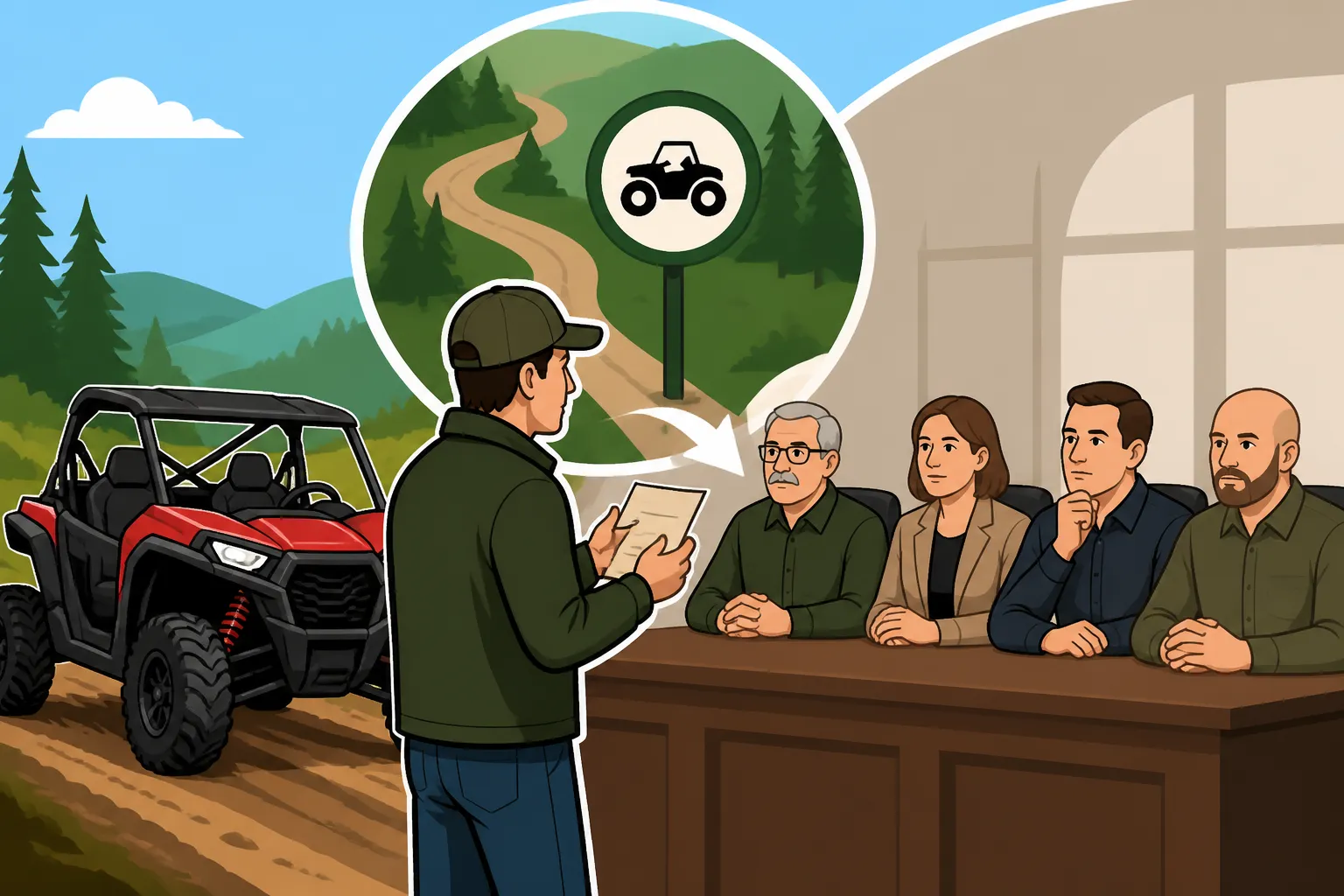
When it's your turn to speak, be concise, clear, and respectful. Introduce yourself and explain why you're there. Briefly outline your proposal, focusing on the key benefits and how you've addressed potential concerns. Bring your maps, your petition, and any letters of support. Remember, you're not just presenting data; you're building a relationship with your elected officials. Being prepared to discuss topics such as [New York Rules for Riding a Town Road] shows you’ve done your research.
It's common for board members to ask questions. Answer them directly and honestly. If you don't know an answer, admit it and offer to find the information and follow up. Avoid getting defensive or emotional, even if faced with skepticism. Your calm, rational approach will be far more effective.
Making Your Presentation
Your presentation should be structured and easy to follow. Visual aids can be incredibly powerful. A large, clear map marking the proposed ATV-friendly roads is essential. You could also prepare a concise handout summarizing your key points, benefits, and proposed solutions to common objections.
Consider these presentation tips:
- Start strong: Grab their attention with the potential benefits to the community (e.g., "Our proposal will bring more recreational opportunities and potential economic growth to our town…").
- Be specific: Clearly state which roads you want designated. "We are requesting the designation of Jones Road, Smith Lane, and the connecting section of Maple Avenue for ATV use, linking existing private access points and promoting safe recreational travel."
- Address concerns directly: "We understand concerns about noise and safety, which is why we propose riding hours from 9 AM to 6 PM and strict adherence to all state safety laws, including helmets and speed limits."
- Show support: "We have a petition signed by over 50 residents and letters of support from three local businesses."
- Conclude with a clear request: "We respectfully ask the board to consider drafting a local law to designate these specific roads for ATV use, initiating a public hearing on the matter."
Remember, you might only have a few minutes, so practice your presentation to make sure it's impactful and within any time limits the board sets.
Following Up and Staying Engaged
After your initial presentation, your work isn't over. This is often a process that takes time, sometimes many months.
- Send a thank-you note or email: Thank the board members for their time and consideration. Reiterate your commitment to working with them.
- Offer to provide more information: If there were questions you couldn't answer, follow up with the research.
- Stay in touch: Periodically (but not incessantly) check in with the town clerk or a specific board member who seemed receptive. Ask about the status of your proposal. Has it been assigned to a committee? When might it be on the agenda again?
- Engage your supporters: Keep your network informed. If a public hearing is scheduled, encourage your supporters to attend and speak. A strong turnout demonstrates continued community interest.
- Be patient: Local government processes can be slow. Don't get discouraged by delays. Persistence, coupled with politeness and a well-thought-out plan, is key.
This continued engagement shows your dedication and helps keep your proposal on the board's radar.
What Happens After the Board Meeting (Potential Outcomes)
Once you've made your case, the ball is in the town board's court. There are several paths your proposal could take, and being prepared for each can help you adjust your strategy.
The Board Votes Yes: What Comes Next
If your town board votes to move forward with your proposal, that's fantastic news! However, it's usually not an immediate "go ride" situation. Typically, the process involves:
- Drafting a Local Law/Resolution: The town attorney or clerk will draft the specific legal language that designates the roads and outlines any rules (e.g., hours of operation, speed limits). This might involve setting up signage requirements, just like you'd see on a state trail.
- Public Hearing: Before final adoption, the town will usually schedule a public hearing. This is another opportunity for community input, both for and against the proposal. Encourage your supporters to attend and speak in favor. This is where the specifics of [New York's Designated and Posted Roads] will be formally debated.
- Final Vote and Adoption: After the public hearing, the board will hold a final vote. If passed, the local law is officially adopted.
- Posting Signs: The town highway department will then be responsible for installing the required signs on the designated roads. Until these signs are physically in place, the roads are not legally open for ATV use. This is a critical point; don't jump the gun.
- Education and Awareness: Work with the town to help spread the word about the new rules. Encourage responsible riding and share information on where riders can get essential accessories like a robust skid plate from SuperATV, ensuring they are prepared for the trails.
Celebrate this victory, but continue to emphasize responsible riding to ensure the privilege isn't revoked down the line.
The Board Votes No: Rethinking Your Approach
A "no" vote can be disheartening, but it's not necessarily the end of the road. It's a chance to learn and adapt.
- Ask for Clarification: Politely inquire about the specific reasons for the denial. Was it safety? Noise? Opposition from a vocal minority? Lack of perceived benefit?
- Address the Core Objections: Once you understand the reasons, you can refine your proposal. Perhaps you need to propose fewer roads, different hours, or more stringent safety measures. Could you focus on linking to existing [New York Rules for Riding Private Land] instead of creating a long loop?
- Gather More Data: Did you have enough signatures? Could you get more support from local businesses? Could you find more success stories from other towns?
- Consider a Phased Approach: Instead of proposing multiple roads, start with just one or two less-trafficked roads as a pilot program. Prove it can work safely and responsibly, then come back later for more.
- Educate the Board: Sometimes, opposition comes from a lack of understanding about modern ATVs or the economic benefits of responsible ATV use. Look for opportunities to share factual information. Perhaps invite them to a local club event or show them well-maintained equipment like a SuperATV winch kit, demonstrating the commitment to preparedness that riders have.
- Wait and Reapply: Sometimes, board compositions change, or community attitudes evolve. After some time, and with a revised plan, you might find a more receptive audience.
A "no" isn't a failure; it's feedback that helps you improve your next attempt.
The Waiting Game: Delays and Committee Reviews
Often, a proposal doesn't get an immediate yes or no. Instead, it might be referred to a committee (e.g., highway committee, recreation committee), tabled for further discussion, or simply left in limbo.
- Committee Review: If sent to a committee, politely ask who is on the committee and when they meet. You might need to present your case to them as well. Committees can be a place where the real legwork happens, so building a good rapport here is essential.
- Tabling: If tabled, try to understand why. Is the board overloaded? Do they need more information? This is where your follow-up and persistence are crucial to ensure your proposal doesn't get forgotten.
- Seasonal Delays: Sometimes, proposals involving outdoor recreation might be pushed to a different season, or simply moved down the priority list. Be mindful of their workflow.
During these periods of waiting, continue to be a positive advocate for responsible ATV riding in your community. Show by example that ATV riders are responsible citizens who care about their town and its future. The more you demonstrate this, the more likely your efforts to open local roads will eventually succeed.
Disclaimer
This article is for general informational purposes only and does not constitute professional advice. Laws, prices and regulations vary by location and change over time. Consult a qualified professional for guidance on your specific situation.