Lights Half an Hour After Sunset
There's nothing quite like the freedom of hitting the trails on your ATV in New York, but as the day starts to wind down and the sun dips below the horizon, things change. Suddenly, that golden hour glow gives way to twilight, and before you know it, you're riding in conditions that demand much more than just daylight vision. Many riders, especially those new to the sport or just new to New York's specific regulations, find themselves scratching their heads about when exactly those headlights and taillights need to be blazing. This guide is here to clear up all the confusion around New York's ATV lighting laws, particularly that tricky "half an hour after sunset" rule, so you can ride safely and legally, no matter the time of day or night.
Understanding New York's "Half an Hour After Sunset" Lighting Rule
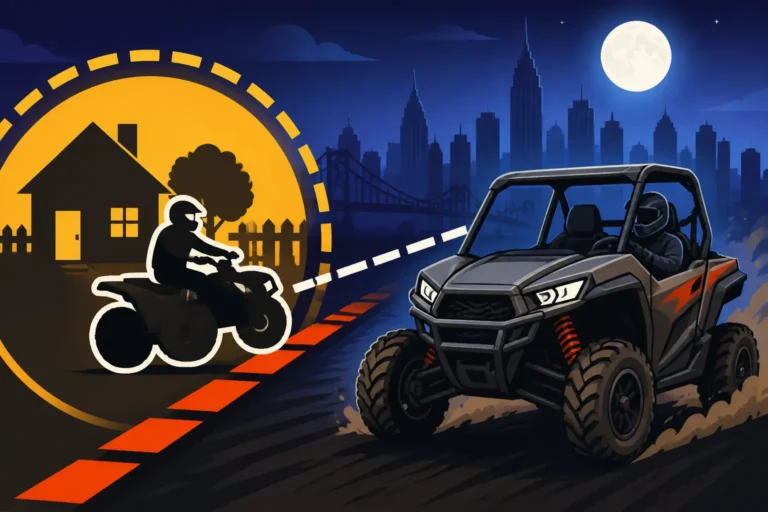
New York State law is quite specific about when your ATV needs to be properly lit. It's not just about "when it gets dark," which can be a subjective and often misleading assessment, especially during twilight. The law explicitly states that your ATV's lights must be on and operational from a specific point in the evening until a specific point in the morning. This is often referred to as the "half an hour after sunset" rule, and it's a critical safety measure designed to ensure all vehicles, including ATVs, are visible to others on trails, during road crossings, and anywhere else they might encounter other traffic or people.
This rule isn't some arbitrary bureaucratic decree; it's rooted deeply in practical safety. As the sun sets, the ambient light diminishes rapidly, and human vision struggles to adapt. What might seem bright enough to you, especially if you're coming from a brightly lit area or just haven't given your eyes time to adjust, can be completely inadequate for someone else trying to spot your machine. Imagine a fellow rider coming around a bend on a trail, or a motorist approaching a designated road crossing point. If your ATV isn't clearly visible, the risk of a collision skyrockets. This rule is designed to create a consistent standard, removing guesswork and ensuring that all ATVs present a predictable visual profile during periods of low light.
It's also important to understand that while "half an hour after sunset" marks the mandatory start time, common sense and a commitment to safety dictate that you should consider turning your lights on even earlier if conditions warrant it. Think about those notoriously foggy mornings in the Adirondacks, or a heavy rainstorm rolling through the Catskills during the middle of the day. Even though the sun might technically be above the horizon, visibility can be severely compromised. In such scenarios, your lights are no longer just a legal requirement but an immediate, life-saving necessity. The rule gives you a baseline, but you, as a responsible rider, should always use your best judgment to activate your lighting system whenever your visibility, or the visibility of your machine to others, is in doubt. The same goes for half an hour before sunrise; your lights are required until that period ends, ensuring visibility during the darkest parts of the early morning.
Essential Lighting Equipment Your ATV Needs for Night Riding in New York
When the time comes to flip those switches, what exactly should light up on your ATV? New York State law specifies the minimum equipment you need to legally operate your machine during those low-light hours. It's not just about having any light; it's about having the right lights, in the right places, and functioning correctly. Overlooking these details can lead to fines, but more importantly, it compromises your safety and the safety of others.
Headlights: Illuminating Your Path Forward
Your ATV must be equipped with at least one headlight, capable of casting a white or amber light forward. While many ATVs come from the factory with perfectly adequate headlights for casual riding, it's crucial to ensure they are clean, properly aimed, and functioning as intended. A dim, dirty, or misaligned headlight isn't doing its job effectively. Think about the terrain you ride on in New York – dense forests, winding trails, uneven surfaces. You need to see far enough ahead to react to obstacles like fallen logs, washouts, or unexpected wildlife.
For serious night riders, the factory headlights, while legal, often leave something to be desired. They might not offer the spread or intensity needed for comfortable and safe high-speed riding, or for navigating particularly technical sections after dark. This is where many riders look to aftermarket solutions. Whether it's a brighter LED bulb replacement for the stock housing or a full auxiliary light bar, upgrading your forward lighting can make a world of difference. Companies like SuperATV offer a wide range of lighting solutions specifically designed for ATVs, from powerful LED light bars that turn night into day, to individual pod lights that can be aimed to fill in dark spots. Just be sure that any auxiliary lighting you add can be turned off independently when not needed, especially if you're riding in areas where excessive glare could be an issue for other trail users or if you're making a brief, legal road crossing. You can find more details about all equipment required in [New York Equipment Rules for ATVs].
Taillights and Brake Lights: Ensuring You're Seen From Behind
Just as important as seeing where you're going is ensuring that you're seen by those behind you. Your ATV needs to have at least one taillight that emits a red light to the rear. This light must be illuminated whenever your headlight is on, establishing your presence from behind. Think of how crucial this is when you're on a shared trail, or even when briefly crossing a public road where cars might be approaching from the rear. Without a visible taillight, you're essentially a ghost, and that's a recipe for disaster.
Beyond the basic taillight, your ATV must also have a functioning brake light. This light, typically integrated into the taillight assembly or a separate unit, must illuminate brightly red whenever you apply the brakes. This is a vital communication tool, signaling to anyone following you that you are slowing down or stopping. Imagine the scenario: you're riding a club trail, perhaps one of the great routes in Lewis County, and the rider behind you is keeping a safe distance, but a sudden deer crossing requires you to brake hard. That bright red flash of your brake light is their immediate cue to react, helping to prevent a rear-end collision. Make it a habit to check both your taillight and brake light before every ride, especially if you anticipate being out after dark. You can learn more about specific requirements in [Headlight and Taillight After Sunset].
Reflectors: Passive Safety When the Power's Off
Even with all your active lighting, New York law also requires your ATV to be equipped with reflectors. These passive safety devices don't require power, but they greatly enhance your visibility by reflecting light from other sources back to where it came from. Typically, you'll need red reflectors mounted on the rear of your machine and amber reflectors on the sides.
While they might seem like a small detail, reflectors can be life-savers in scenarios where your active lighting might fail, or if your machine is stopped off to the side of a trail in an emergency. If another rider or a passing vehicle has their own lights on, your reflectors will catch that light and make your ATV stand out, even if your own battery has died or a bulb has blown. Always ensure your reflectors are clean, intact, and not obscured by mud, equipment, or stickers. They are a backup system that's always on duty.
Beyond the Basics: Enhancing Your Visibility and Safety for New York Night Rides
Meeting the minimum legal requirements for ATV lighting in New York is essential, but for many riders, especially those who frequently find themselves on the trail as dusk settles or who purposefully plan night rides, "minimum" simply isn't enough. The truth is, the darker it gets, and the more varied the terrain, the more you'll appreciate having extra light and enhanced visibility. This isn't just about comfort; it's about pushing the boundaries of safety and enjoying your ride to the fullest.
Auxiliary Lighting: Turning Night Into Day
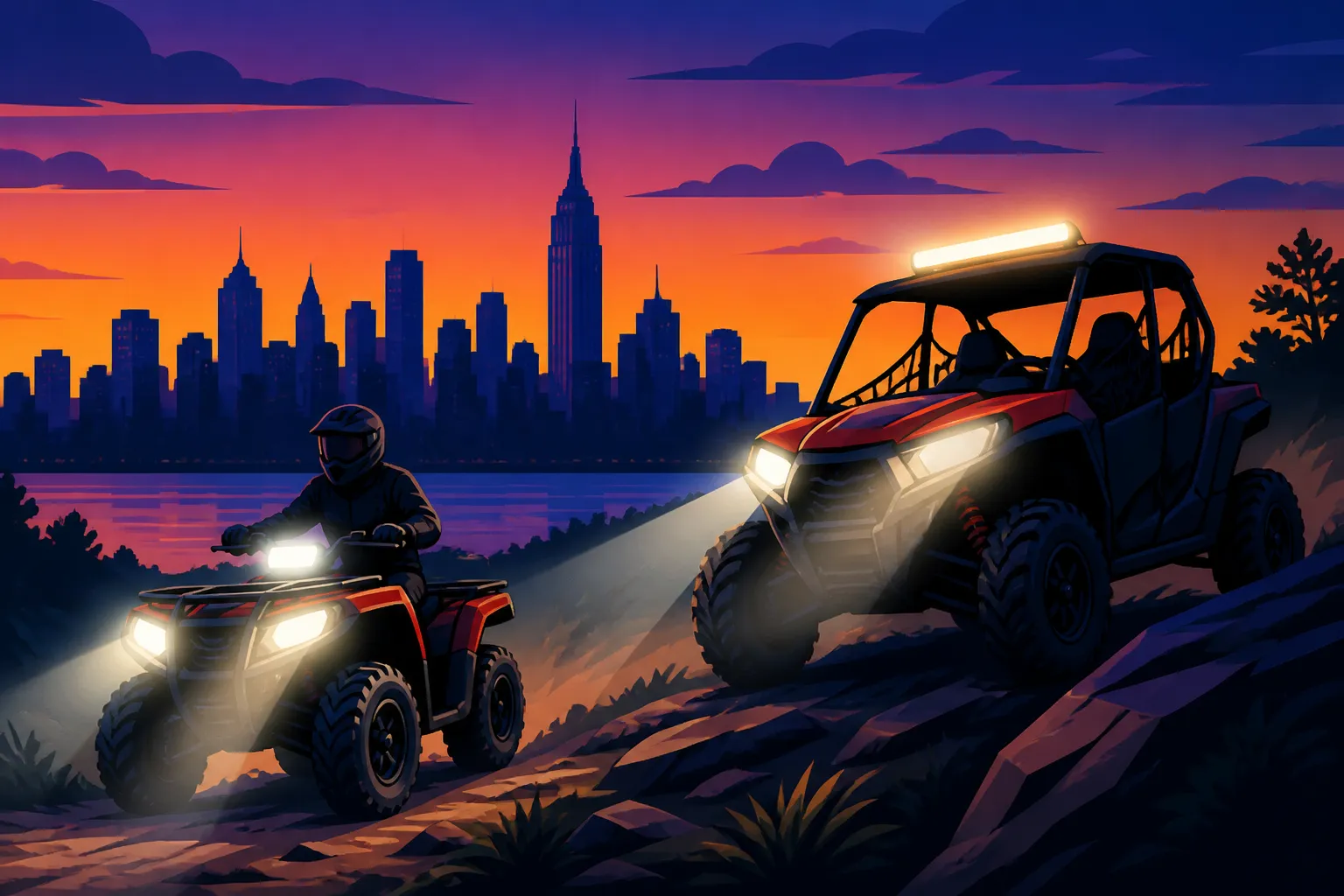
While your OEM headlights fulfill the legal requirement, they often provide a relatively narrow beam and limited reach. For true night riding confidence, auxiliary lighting is a game-changer. Light bars, LED pod lights, and ditch lights are popular choices, and for good reason. These units can vastly increase your field of vision, illuminating the trail far ahead and to the sides, helping you spot obstacles, turns, and potential hazards much earlier.
Consider a 20-inch LED light bar mounted to your front bumper or roof rack. Brands like SuperATV offer robust, weather-sealed light bars that are designed to withstand the rigors of off-road riding in New York's varied conditions, from dusty summer trails to muddy spring thaws. These aren't just for looking cool; they serve a crucial function. A "spot" beam pattern can help you see deep down a long straight section of trail, while a "flood" pattern broadens your view for tight, winding paths or open fields. Many riders opt for a "combo" beam, offering the best of both worlds. Just remember to use these powerful lights responsibly. While incredible for trail riding, they can be blinding to oncoming riders or motorists during [New York Rules for Crossing a Public Road], so always be prepared to dim or switch off auxiliary lights when approaching others.
Helmet-Mounted Lights and Reflective Gear: Personal Visibility Matters
Your ATV isn't the only thing that needs to be seen; you do too. A helmet-mounted light, even a small, bright one, can be incredibly useful. It directs light wherever you're looking, which is invaluable when you're trying to glance at your instruments, look around a blind corner, or even just find something in your pack. It adds another layer of illumination that moves with your head, offering a dynamic lighting solution that your fixed ATV lights simply can't match.
Beyond active lighting, reflective gear is a passive, yet highly effective, way to boost your personal visibility. Wearing a jacket, vest, or even having reflective strips on your helmet and backpack significantly increases the chances of you being seen by others, even if their lights only briefly sweep across you. This is especially important if you have to dismount your ATV on the side of a trail after dark due to a breakdown or to assist another rider. Every little bit of reflective material helps you stand out against the darkness.
Pre-Ride Checks and Night Riding Strategy: Preparation is Key
Before you even think about heading out after dark, make meticulous pre-ride checks. Test all your lights: headlights, taillights, brake lights, and any auxiliary lights. Check wiring for loose connections or damage. Ensure your battery is fully charged, as running multiple powerful lights can draw significant current. It's a small habit that can prevent big problems. For other vital checks, see [Checking Tread Before a Ride].
When riding at night, adjust your strategy. Reduce your speed. The darkness can play tricks on your depth perception and make familiar terrain seem entirely new. Look further ahead than you normally would, scanning for changes in elevation, obstacles, and wildlife. Avoid riding unfamiliar trails at night, or at least go significantly slower if you do. Be extra cautious around water crossings and muddy sections, as their true depth and slipperiness can be deceptive in low light. Always consider the [New York Rules for Riding After Dark] and any local ordinances that might apply to your specific riding area. By combining proper lighting, reflective gear, and a cautious riding approach, you can turn a potentially hazardous night ride into a thrilling and safe adventure.
| Feature | OEM Lighting (Typical) | Aftermarket Lighting (e.g., SuperATV) |
|---|---|---|
| Headlight Output | Moderate intensity, fixed beam pattern | High intensity, varied beam patterns (spot, flood, combo) |
| Taillight/Brake | Standard brightness, functional | Often brighter LEDs, enhanced visibility |
| Auxiliary Lights | None typically included | Light bars, pod lights, ditch lights available |
| Visibility | Meets legal minimum, basic safety | Significantly enhanced, superior safety and vision |
| Durability | Good, designed for general use | Often heavy-duty, weather-sealed, impact-resistant |
| Installation | Factory installed, no fuss | Requires wiring, mounting, and often custom switches |
| Cost | Included with ATV purchase | Additional investment, varies widely |
| Primary Benefit | Legal compliance, basic illumination | Extended vision, increased reaction time, reduced eye strain |
Consequences of Riding Without Proper Lighting in New York
It's easy to dismiss lighting requirements as mere technicalities, but in New York, failing to have proper lights, or to use them during the legally mandated times, carries real consequences. These aren't just abstract rules; they're enforceable laws designed for your safety and the safety of everyone else. Ignoring them can lead to a range of issues, from financial penalties to severe legal and insurance problems, not to mention the increased risk of a serious accident.
Fines and Citations: The Cost of Non-Compliance
The most immediate consequence of being caught riding without proper lighting or using your lights during the "half an hour after sunset" window is a fine. A New York State Trooper or a local law enforcement officer who observes you operating an unlit or improperly lit ATV after dark will likely issue a citation. The specific amount can vary, but these fines are never cheap, and they add up quickly. This isn't a simple warning; it's a formal legal infraction that can put a significant dent in your wallet.
Imagine you're enjoying a late afternoon ride near [The Lewis County ATV Trail System in New York], and you misjudge the sunset. Suddenly, an officer is flagging you down. What might have felt like just a few minutes of twilight riding instantly turns into a costly lesson. These fines are designed to deter unsafe behavior, and law enforcement officers are trained to look for these types of violations, especially on popular riding routes or during times when visibility is naturally poor. You can learn more about general penalties in [New York Fines for an ATV Violation].
Increased Risk of Accidents and Liability Issues
Far more serious than a fine is the heightened risk of an accident. Riding without proper lighting dramatically reduces your visibility to others – fellow riders, pedestrians, or even motorists if you're making a legal road crossing. It also severely limits your ability to see hazards on the trail, like unexpected dips, rocks, or wildlife. A moment of poor visibility can lead to a collision, a rollover, or a serious injury.
If an accident does occur and you were found to be in violation of lighting laws, you could face significant liability. Even if you believe another party was at fault, your non-compliance could be used against you in court, potentially making you partially or wholly responsible for damages, medical bills, and other costs. This is a heavy burden no one wants to carry.
Insurance Implications: When Your Policy Doesn't Cover You
Your ATV insurance policy is there to protect you in case of an accident, but that protection isn't absolute. Most insurance policies contain clauses that allow the insurer to deny or limit coverage if the insured party was operating the vehicle illegally or negligently. If you're involved in an accident while riding without the legally required lighting, your insurance company could argue that you were operating your ATV illegally, potentially voiding your coverage.
This means that you could be on the hook for all expenses – your own medical bills, repairs to your ATV, and any damages or injuries you caused to others. What seemed like a minor oversight could lead to tens of thousands of dollars in out-of-pocket costs. It's a stark reminder that staying compliant with all ATV laws, including lighting requirements, is crucial for maintaining your insurance coverage. For details on your coverage, review [New York ATV Insurance Requirement]. Officers at a roadside stop will check your documents; for more information, see [What a New York Officer Checks Roadside].
Vehicle Impoundment: Losing Your Ride
While less common for a simple lighting violation, persistent non-compliance or a combination of violations could potentially lead to your ATV being impounded. If an officer determines that your machine is unsafe to operate due to a lack of proper lighting, or if you're found to be riding without registration or under the influence, they may have the authority to remove your ATV from the trail and impound it. Retrieving an impounded vehicle is a costly, time-consuming, and frustrating process, adding another layer of significant expense and inconvenience to what began as a simple ride.
Ultimately, New York's ATV lighting laws are there for your protection. By understanding them, adhering to them, and even exceeding the minimum requirements, you're not just avoiding fines; you're actively ensuring safer, more enjoyable rides for yourself and for everyone else who shares the trails and roads. So, before you head out, always double-check those lights, especially as the sun begins its descent.
Disclaimer
This article is for general informational purposes only and does not constitute professional advice. Laws, prices and regulations vary by location and change over time. Consult a qualified professional for guidance on your specific situation.