New York Fines for an ATV Violation
It’s an all too familiar story: you’re out enjoying a beautiful day on your ATV, feeling the freedom of the open trail, when suddenly, those flashing lights appear in your rearview. A sinking feeling washes over you as you realize that what started as a fun ride might now turn into a costly lesson. Getting pulled over for an ATV violation in New York can be a real headache, not to mention a drain on your wallet. This guide is here to walk you through the various violations, what kind of fines and penalties you might face, and most importantly, how to stay on the right side of the law so your next ride is worry-free.
Understanding Common ATV Violations That Lead to Fines in New York
New York State has a robust set of regulations governing ATV use, designed to ensure rider safety, protect the environment, and maintain peace within communities. While most riders are out there to have a good time, it's incredibly easy to inadvertently cross a line, especially if you're not fully up to speed on the nuances of the law. The most common violations generally fall into three big buckets: not having your paperwork in order, riding where you shouldn't be or behaving inappropriately, and not having the right gear. Understanding these categories is your first line of defense against a surprise ticket.
Riding Without Proper Registration and Insurance
Let's be real, dealing with paperwork is hardly anyone's idea of a fun afternoon, but when it comes to your ATV in New York, getting it registered and insured is non-negotiable for riding anywhere but your own private property. If you plan to hit any public trails, cross a town road, or ride on designated private club trails, these two items are your golden ticket. The state mandates that all ATVs operated off private land be registered with the DMV. This isn't just a suggestion; it's law. Without a current registration, you're looking at fines that can quickly add up. An expired registration is just as bad as no registration at all in the eyes of the law.
Beyond registration, carrying adequate insurance is also mandatory for operating an ATV in New York. This isn't just about protecting yourself; it's about protecting others in case of an accident. Imagine a scenario where you're out on the [Lewis County ATV Trail System in New York] and an unforeseen mishap occurs, causing damage or injury to another party. Without insurance, you'd be personally liable for those costs, which could be catastrophic. The state has minimum coverage requirements, and failing to meet them or simply not having any policy at all is a serious offense. Officers often check for both registration and proof of insurance during roadside stops, so make sure your documents are always current and accessible. Not having them can lead to significant [New York Fines for Riding Without Insurance] and ruin your day.
Improper Riding Locations and Conduct
This is perhaps the trickiest area for many riders, because rules about where you can and cannot ride vary so much across the state, and even from town to town. Many people assume if it looks like a trail, it's fair game. Unfortunately, that's often not the case. Riding on prohibited public lands, like the Adirondack Forest Preserve or many New York State Parks, is a common and costly mistake. These "forever wild" areas are beautiful, but they generally ban motorized vehicles, and the fines for violating these rules can be substantial, often accompanied by having your machine impounded.
Trespassing on private property is another big one. Just because there isn't a "No Trespassing" sign every ten feet doesn't mean you have free rein. Landowners have rights, and riding on their property without explicit written permission can lead to fines, legal battles, and understandably, a very angry property owner. This is why many club trails have agreements with private landowners to keep trails open. Similarly, while you might occasionally cross a road or ride a short distance on a shoulder, most public roads are closed to ATVs. Knowing [New York Rules for Riding a Town Road] or county roads, and understanding that only designated and posted roads are legal, is crucial. And remember the rules about riding after dark, especially near homes – [New York Rules for Riding Near a House at Night] are specific and designed to prevent noise complaints, carrying fines if violated. Lastly, operating an ATV while impaired by alcohol or drugs is treated as seriously as driving a car under the influence, with severe legal consequences.
Equipment, Safety Gear, and Rider Age Violations
New York isn't just concerned with where you ride, but also how you ride and what your machine is equipped with. Safety is paramount, and certain equipment rules are in place for a reason. For example, wearing a helmet is not just a good idea; it's the law for all ATV riders, regardless of age. Yes, even adults need to wear them. If you're pulled over without one, you're looking at a fine. [New York Helmet Law for ATV Riders] is very clear on this point. Your machine also needs to meet certain standards. A functional spark arrester, proper headlights and taillights for riding after dark, and a muffler that meets federal noise standards are all basic requirements. Many riders customize their machines, adding performance parts or accessories from companies like SuperATV, but it's vital to ensure these modifications don't compromise legal compliance. For instance, an aftermarket exhaust might be louder than allowed or lack a spark arrester, leading to a ticket.
Then there are the rules surrounding youth riders. New York has specific age requirements and supervision guidelines. For instance, riders under a certain age need to complete an approved ATV safety course and carry their safety certificate with them. Failing to meet these requirements, or allowing an underage, unsupervised, or uncertified rider on your machine, can result in fines for both the rider and the adult in charge. It's not just about letting a kid have fun; it's about making sure they're safe and that everyone understands the legal responsibilities involved. Be sure to check [New York ATV Safety Certificate Requirements] to ensure all riders in your party are compliant.
The Financial and Legal Bite of New York ATV Fines
When you receive an ATV violation in New York, it's not just a slap on the wrist. These infractions can carry significant financial penalties, and sometimes, even more severe legal ramifications that extend far beyond a simple ticket. It's easy to dismiss a small fine, but multiple violations, or more serious offenses, can have a lasting impact on your wallet and your riding privileges.
Monetary Penalties for Common Offenses
The specific dollar amount of a fine for an ATV violation in New York can vary widely depending on the nature of the offense, whether it's a first-time infraction or a repeat offense, and even the discretion of the issuing officer or court. However, you can expect fines to start anywhere from tens of dollars for minor equipment issues or an expired decal, and quickly escalate into hundreds for more serious offenses like riding unregistered or uninsured. For example, [New York Fines for an Unregistered ATV] can be a significant hit to your budget, often surpassing the cost of annual registration itself. It’s a classic case of prevention being far cheaper than the cure.
Consider a scenario where you've modified your machine with some aftermarket accessories, perhaps a lift kit or wider A-arms from a company like SuperATV, and it pushes your ATV over the [New York's 70-Inch Width Limit] for certain trails. While the modifications might make your machine look impressive, if it's found to exceed the legal width for a designated trail, you could be issued a fine for operating an illegal vehicle on that particular route. These fines are not just annoying; they are designed to deter non-compliance, and they really do sting when you have to fork over hard-earned cash. It's a costly reminder that even seemingly minor infractions can carry a financial punch.
Beyond the Immediate Fine: Other Consequences
Sometimes, the monetary fine is just the beginning. More serious ATV violations can trigger a cascade of additional consequences. For example, if you're caught riding an unregistered or uninsured ATV, especially on public land or a designated trail, the machine itself could be impounded. Imagine the headache and expense of recovering your ATV from an impound lot, which typically involves paying towing fees, daily storage fees, and often proving ownership and rectifying the original violation (like getting it registered) before you can even get it back. This process can quickly add hundreds, if not thousands, of dollars to your overall cost, not to mention the loss of your machine for a significant period.
Beyond impoundment, certain violations can affect your regular driver's license. Operating an ATV while intoxicated, for instance, can lead to charges of Driving While Intoxicated (DWI) or Driving While Ability Impaired (DWAI), just as if you were in a car. This means potential license suspension, mandatory alcohol education programs, substantial court costs, and significantly increased insurance premiums for all your vehicles. Furthermore, repeat offenses, especially for things like reckless operation or trespassing, can result in a loss of riding privileges on public lands, making it impossible to legally enjoy the trails you love. It's a tough lesson, but it highlights the importance of taking ATV laws seriously.
Repeat Offenses and Escalating Penalties
New York State does not treat repeat offenders lightly. If you get caught violating ATV laws multiple times, the penalties typically escalate significantly. What might be a moderate fine for a first offense could become a substantially larger fine, coupled with more severe legal repercussions, for a second or third violation. For instance, a second offense for riding without registration could not only result in a higher fine but also a longer impoundment period or even the confiscation of your machine. The state's goal is to deter habitual disregard for the rules, and they'll hit you where it hurts – your wallet and your ability to ride.
Consider a scenario where you've been ticketed for riding on private land without permission once. The fine might be manageable. However, if you're caught a second or third time on the same or different private property, the landowner might press more severe charges, and the court may impose much stiffer penalties, potentially including criminal trespassing charges that go on your record. These escalating penalties serve as a stark reminder that while a single mistake can happen, a pattern of non-compliance will lead to increasingly harsh consequences. It emphasizes the importance of learning from your mistakes and making sure you understand and adhere to all regulations to avoid future, more serious, run-ins with the law.
Navigating the Rules: How to Avoid Those Costly Tickets
Nobody wants to get a ticket, especially when you're just trying to enjoy your passion for ATV riding. The good news is that most violations are entirely preventable with a little preparation, education, and attention to detail. Staying informed and making responsible choices are your best tools for avoiding fines and ensuring your rides are always enjoyable and stress-free.
Mastering Registration, Insurance, and Ownership Proof
The absolute cornerstone of legal ATV riding in New York is having your machine properly registered and insured. Don't procrastinate on this; it's truly the most common reason riders get stopped and fined. Make sure your registration is current and renewed before its August 31st expiration date, and always carry proof of registration with you when you ride. The same goes for insurance. [New York ATV Insurance Requirement] is mandatory, so ensure your policy is active and that you have your insurance card or declaration page readily available. Many riders keep digital copies on their phone, but it’s often wise to have a physical copy too, just in case.
Beyond registration and insurance, proving ownership is also critical, especially in New York where ATVs are generally not titled. If you bought your machine used, make sure you have a proper bill of sale. If you're registering for the first time, you'll need this documentation. Keep all your ownership paperwork organized and accessible. It might seem like a hassle, but having everything in order can save you a world of grief if you're stopped by an officer or, worse, if your machine is ever stolen. Being able to show proper documentation immediately validates your right to be on the trail and often streamlines any interaction with law enforcement. Understanding [New York ATV Proof of Ownership Requirements] is key.
Knowing Your Ride Zones and Local Ordinances
One of the biggest challenges for ATV riders is figuring out where they can actually ride legally. New York has a patchwork of regulations, with state lands, county trails, town roads, and private properties all having different rules. The best practice is to always assume a trail or area is closed to ATVs unless it is explicitly marked and designated as open. Don't rely on assumptions or hearsay. Always check county trail maps, local government websites, or contact local ATV clubs, like those that maintain parts of the [Oswego County's Club Trails], for current information on legal riding areas.
Furthermore, local towns and villages often have their own specific ordinances regarding ATV use. What might be permissible in one town might be strictly prohibited just across the county line. Always research the local rules for the specific area you plan to ride in. This includes understanding speed limits on designated trails, rules about riding after dark, and whether specific trails are open only during certain seasons (e.g., closed during mud season). Ignoring these local nuances is a surefire way to get a ticket for riding in a prohibited area or at an improper time. Obtaining written permission is also essential if you plan to ride on private land, even if it's a friend's or family member's property. Always carry that permission with you, just as you would your registration.
Equipping for Compliance and Safety
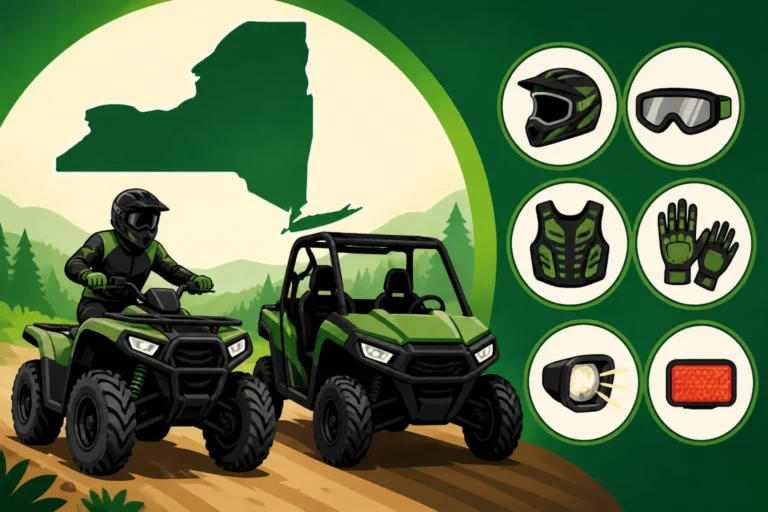
Your ATV needs to meet New York's equipment standards, and you need to wear the right safety gear. First and foremost, a properly fitted, DOT-approved helmet is legally required for every rider in New York. There are no exceptions for adults. This isn't just about avoiding a fine; it's about protecting your brain. Beyond the helmet, ensure your machine has a functional spark arrester to prevent wildfires, a muffler that keeps noise levels within legal limits, and working headlights and taillights if there's any chance you'll be riding near dusk or after dark. Regularly inspect your tires for adequate tread depth and ensure your brakes are in good working order.
When it comes to modifying your machine, be mindful of how aftermarket parts might affect compliance. While a lift kit or wider A-arms from a company like SuperATV can enhance performance or appearance, they can also push your machine beyond New York's [New York's 70-Inch Width Limit] for certain registrations or trails. A machine that is too wide might not be registrable or might be prohibited from specific trails, leading to violations. Always verify that any modifications you make keep your ATV within legal operating parameters for the areas you intend to ride. Being proactive about your machine's condition and your safety gear goes a long way in preventing avoidable tickets and, more importantly, keeping you safe on the trails.
Investing in Training and Responsible Riding Habits
Beyond paperwork and equipment, your riding habits play a huge role in avoiding fines and ensuring a positive experience for everyone on the trail. Taking an ATV safety course is an excellent investment, not just for new or young riders (where it's often legally mandated), but for experienced riders too. These courses teach not only safe operation techniques but also the specific laws and etiquette for riding in New York. [New York ATV Safety Certificate Requirements] are in place for a reason, and fulfilling them means you're better informed and less likely to make costly mistakes.
Practicing responsible riding means always operating your ATV sober, respecting posted speed limits, and staying on marked trails. Deviating from designated paths can lead to trespassing charges, environmental damage, and potential fines. Be courteous to other riders, hikers, and anyone you encounter on or near the trails. Slow down and give a wide berth to horses or pedestrians. Avoiding late-night riding near residential areas respects noise ordinances and prevents neighbor complaints. Ultimately, being a responsible, well-informed rider not only helps you avoid fines but also contributes to the positive perception of ATV riders in New York, helping to keep trails open for everyone to enjoy for years to come.
Here's a quick overview of common ATV violations and their potential repercussions in New York:
| Violation Category | Common Examples | Potential Consequences |
|---|---|---|
| Registration & Insurance | Unregistered ATV, Expired registration | Fines, machine impoundment, increased future insurance costs |
| No proof of insurance, Lapsed policy | Fines, suspension of driving privileges, impoundment, personal liability for damages | |
| Riding Location & Conduct | Trespassing on private land, Riding on public roads | Fines, arrest, impoundment, criminal charges, legal fees, civil lawsuits by landowners |
| Riding in prohibited state parks/forests, Off-trail riding | Fines, machine impoundment, loss of riding privileges, environmental damage charges | |
| Operating Under Influence (DWI/DUI) | Significant fines, license suspension, jail time, impoundment, mandatory education programs | |
| Reckless operation, Excessive speed, Riding near homes at night | Fines, points on license, potential injury liability, noise ordinance violations | |
| Equipment & Safety | No helmet, Improper helmet for age | Fines, serious injury risk, medical expenses, negligence claims |
| Missing spark arrester, Loud muffler | Fines, environmental impact, disturbance complaints, fire hazard | |
| No working lights after dark, Worn tires | Fines, safety hazard, increased accident risk, reduced control | |
| Rider Eligibility | Underage rider, Unsupervised minor | Fines for rider and/or parent/guardian, liability issues, prevention from future riding |
| No safety certificate (where required) | Fines, prevention from riding, potential liability if an accident occurs due to lack of training |
Disclaimer
This article is for general informational purposes only and does not constitute professional advice. Laws, prices and regulations vary by location and change over time. Consult a qualified professional for guidance on your specific situation.