New York Rules for Riding a State Park
It's a common misconception, especially for those new to the sport or visiting from out of state, that any piece of public land is fair game for ATV riding. The reality, particularly here in New York, is often quite different and can lead to frustration and even hefty fines if you're not careful. Navigating where you can and cannot legally ride your ATV can feel like deciphering a cryptic code, but this guide will help clarify the rules specifically concerning New York State Parks, and point you towards the places where you can truly enjoy your machine without worry.
The Hard Truth: ATVs and New York State Parks Don't Mix
Let's get straight to the point right out of the gate: New York State Parks are generally not open to ATV riding. This often comes as a surprise to riders, who might assume that public land means open access for all recreational vehicles. Unfortunately, for those of us who love the rumble of an ATV engine or the challenge of a technical trail, state parks are almost universally off-limits.
Why OPRHP Land Is a No-Go Zone
The Office of Parks, Recreation and Historic Preservation (OPRHP) manages New York's vast network of state parks and historic sites. Their mission is primarily focused on preserving natural and cultural resources, offering diverse recreational opportunities, and ensuring public enjoyment in a way that is compatible with conservation. For the most part, this means prioritizing passive recreation – think hiking, picnicking, birdwatching, and non-motorized boating.
The very nature of ATV riding, with its noise, potential for trail degradation, and impact on sensitive ecosystems, often conflicts directly with the conservation goals of OPRHP. These areas are carefully managed to protect wildlife habitats, maintain water quality, and preserve the natural beauty for all visitors, many of whom are seeking a quiet escape into nature. This is a fundamental difference in how these lands are conceived and managed compared to, say, a dedicated multi-use trail system. You won't find designated ATV trails carved through the scenic landscapes of a New York State Park because their operational mandate doesn't align with that activity. This is also why you'll find that [Why OPRHP Land Is Closed in New York] to ATVs.
Understanding the "No ATV" Signage and Regulations
When you approach a New York State Park, you'll almost always encounter clear signage indicating what activities are permitted and, crucially, what is prohibited. "No Motorized Vehicles" or specific "No ATVs" signs are common. These aren't just polite suggestions; they are enforceable regulations backed by state law. These rules apply to all types of ATVs, whether it's a traditional quad, a smaller youth machine, or even an electric ATV. The power source or the size of the machine doesn't change its classification as a motorized recreational vehicle and its general exclusion from state park lands.
Park rangers, New York State Police, and other law enforcement agencies are tasked with upholding these regulations. They take their role seriously in protecting these natural resources, and they are well-versed in the various state laws that govern vehicle use within park boundaries. If you're ever in doubt, it's always best to err on the side of caution and consult the park's official website or contact their office directly. Assuming that a quiet dirt road within a park is open to your ATV could lead to an unwelcome and expensive surprise.
The Ramifications of Riding Where You Shouldn't
It's easy to think, "What's the harm in just a quick ride?" when faced with tempting, seemingly open trails in a state park. However, the consequences of riding your ATV in a prohibited area are far more significant than just being asked to leave. There are legal, financial, and community-wide repercussions that every rider should be aware of.
Facing Fines and Penalties
New York State takes unauthorized vehicle use on state park lands seriously. The penalties for riding an ATV where it's not allowed can range from substantial fines to, in more severe or repeat instances, the confiscation of your machine. We're not talking about a small parking ticket here; these can be hundreds of dollars, possibly coupled with court appearances and other legal costs.
Imagine driving for hours to reach a beautiful location, unloading your machine, and just a few minutes into what you thought would be a relaxing ride, you're stopped by a ranger. Not only is your ride over, but you're now facing a hefty fine, the inconvenience of dealing with law enforcement, and the potential for your vehicle to be impounded. Ignorance of the law is rarely accepted as an excuse, and officers are trained to identify ATVs on prohibited land. This is a situation that no rider wants to find themselves in, and it's easily avoidable by knowing [Where New York Bars ATV Riding] for ATVs.
Impact on Future Riding Opportunities and Land Access
Beyond the immediate legal and financial hit, riding illegally in a state park has a broader, more detrimental impact on the entire ATV community. Every instance of unauthorized riding, whether it's through trespass or riding on closed public land, creates a negative perception of ATV riders as a whole. Landowners, state park officials, and the general public often view such actions as irresponsible and disrespectful.
This negative perception can directly contribute to stricter regulations, the closure of existing legal trails, or even a reluctance to open new ones. When public officials see frequent violations, they naturally become more hesitant to designate land for ATV use. It fuels the narrative that ATVs are destructive and that riders cannot be trusted to follow rules. This makes it harder for responsible organizations and clubs to advocate for more riding opportunities. In some cases, repeated trespass could even lead to criminal charges, which can have long-lasting effects on your record, far beyond just a simple ticket.
Finding Your Thrill: Legal Alternatives to State Parks in New York
While New York State Parks are off-limits, that absolutely doesn't mean there are no places to ride your ATV in the Empire State! In fact, New York offers some fantastic legal riding opportunities, you just need to know where to look and how to access them properly.
Embracing County and Club Trail Systems
The absolute best way to experience legal and well-maintained ATV riding in New York is through dedicated county and club trail systems. These are organized, managed, and often volunteer-maintained networks designed specifically for off-road vehicles.
- Lewis County: Perhaps the most famous and extensive system in the state is the [Lewis County ATV Trail System in New York]. This network boasts hundreds of miles of diverse trails, offering everything from scenic woodland paths to challenging mud bogs. To ride here, you'll need a county permit, which often comes with a discount if you're a member of a local ATV club. These trails are carefully managed through agreements with private landowners, so sticking to the marked paths is crucial for their continued operation.
- Oswego County: Further west, Oswego County also offers significant riding opportunities, often maintained by dedicated clubs. These trails might require club membership or day passes, and they provide another excellent option for legal riding.
These systems thrive on responsible ridership and a strong community spirit. Joining a local ATV club is not only a great way to meet fellow enthusiasts but also directly supports the maintenance and expansion of these vital trail networks. Clubs work tirelessly with landowners and local governments to secure and maintain access, and your membership or permit fees go directly back into the trails. Many riders even enhance their machines with durable aftermarket parts, perhaps from a brand like SuperATV, to tackle the varied terrain these trails offer, knowing they're riding legally and responsibly.
Exploring Private Land and Designated State Forests
Another viable option for ATV riding in New York is on private land, provided you have explicit permission from the landowner. This isn't just a courtesy; it's a legal requirement. Riding on someone's property without their consent is trespassing and can lead to severe penalties, including fines and potential legal action. Always get permission in writing if possible, or at the very least, ensure you have a clear, verbal agreement. Respecting private property is paramount for maintaining good relationships with landowners and preventing further closures of riding areas. You can find more details on [New York Rules for Riding Private Land].
While general New York State Forests (managed by the Department of Environmental Conservation, or DEC) are distinct from State Parks (managed by OPRHP), access for ATVs on these lands is also highly restricted. There are very few, if any, designated ATV trails within the vast majority of state forests. Some multi-use trails might permit ATVs, but this is rare and requires checking the specific regulations for that particular state forest with the regional DEC office. Do not assume. Unlike some other states, New York does not have an extensive network of ATV trails on state forest land. The general rule is that if a trail isn't explicitly marked and managed for ATV use, it's likely off-limits. This is also different from [New York's Designated and Posted Roads], which refer to town or county roads specifically opened for ATV traffic.
Here's a quick comparison of various land types in New York concerning ATV access:
| Land Type | ATV Access Status | Key Characteristics |
|---|---|---|
| New York State Parks | Generally PROHIBITED | Managed by OPRHP for conservation, passive recreation, historic preservation. Focus on natural beauty and quiet enjoyment. |
| Forest Preserve | PROHIBITED | Adirondack and Catskill Parks. Constitutionally protected "forever wild." Strict wilderness preservation. [Why the Forest Preserve Is Closed to Machines] |
| County Trail Systems | PERMIT REQUIRED (e.g., Lewis County) | Dedicated, managed trails, often in partnership with private landowners. Requires specific county permit and often club membership. |
| Club Trail Systems | MEMBERSHIP/DAY PASS REQUIRED (e.g., Oswego County clubs, Tall Pines) | Private or leased land, managed by ATV clubs. Specific rules apply. |
| Private Land | PERMITTED WITH LANDOWNER CONSENT | Requires explicit, verifiable permission from the property owner. Trespassing is illegal. |
| NYS Forests (DEC) | GENERALLY PROHIBITED; rare designated trails may exist, verify locally | Managed by DEC, often for timber, wildlife, and recreation. Most trails are not for ATVs. |
| Town/County Roads | PERMITTED ONLY IF DESIGNATED & POSTED | Specific roads officially opened by local ordinance. Must be registered, insured, and follow all road rules. |
Preparing for a Responsible and Legal Ride
Being a responsible ATV rider in New York means more than just having a powerful machine and a thirst for adventure. It means understanding and adhering to the rules, ensuring your machine is up to snuff, and always prioritizing safety and respect for the environment and others.
Ensuring Your Machine Meets New York Standards
Before you even think about loading up your ATV for a legal trail ride, you need to make sure your machine and you as a rider are compliant with New York State laws.
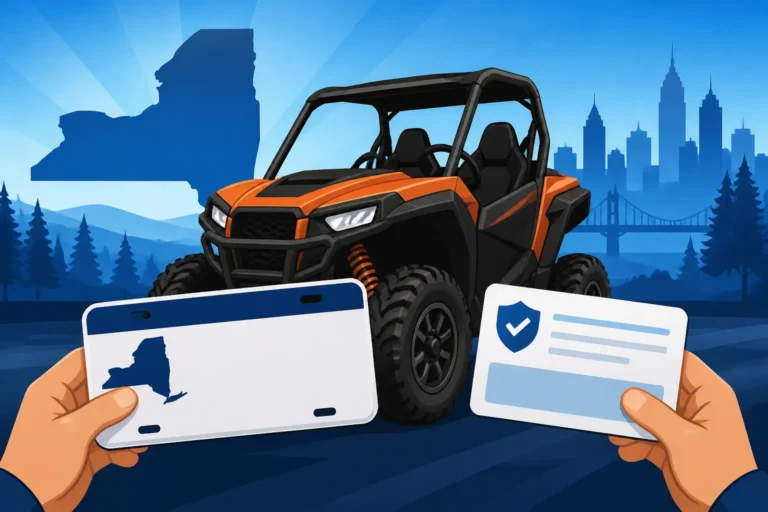
- Registration: Every ATV operated in New York, even if just on your own private property, must be registered with the DMV, unless specifically exempt. This means having a valid plate and current registration.
- Insurance: New York mandates specific liability insurance coverage for ATVs. Just like with a car, you need to be able to show proof of insurance. [New York ATV Insurance Requirement] will tell you more.
- Safety Certificate: Riders aged 10-15 must possess an ATV Safety Certificate to operate an ATV off their own property. While not mandatory for adults, taking a safety course is always a good idea. For more information, check out [New York ATV Safety Certificate Requirements].
- Machine Specifications: New York has specific rules regarding ATV width and weight for registration purposes. Most traditional ATVs will fit, but some modern side-by-sides might exceed the 70-inch width or 1,000-pound weight limit, making them unregisterable as ATVs. Even if your machine has custom parts like a lift kit or specialized tires from a brand like SuperATV, it still needs to meet New York's specific width and weight requirements for legal trails. If your machine is wider than 70 inches, it limits your legal riding options drastically.
- Pre-Ride Checks: Always conduct a thorough pre-ride inspection. Check your tires, brakes, lights, fluid levels, and ensure all parts, from your SuperATV skid plates to your handlebars, are secure and in good working order. A well-maintained machine is a safe machine, and it prevents breakdowns that can damage trails or require costly rescues.
Understanding General New York ATV Law and Etiquette
Riding legally also means understanding the broader context of ATV laws in New York and practicing good trail etiquette.
- Helmets: Helmets are mandatory for all ATV riders in New York, regardless of age. No exceptions.
- Passengers: Passengers are only permitted if the ATV is specifically designed by the manufacturer to carry more than one person, with a dedicated seat and handholds. Two people on a single-rider quad is illegal and extremely dangerous.
- Lighting: If riding after sunset or in conditions of reduced visibility, your ATV must be equipped with working headlights and taillights.
- Stay on Marked Trails: This is perhaps the most crucial etiquette rule. Do not create new trails, bypass obstacles by riding off-trail, or venture into clearly marked closed areas. Straying from marked trails can damage sensitive habitats, erode soil, and create conflicts with landowners or other trail users. This is especially true on shared trails or those crossing private land.
- Respect Others: Remember that you're often sharing trails and public lands with hikers, mountain bikers, horseback riders, and even snowmobilers in the winter. Slow down, be courteous, and yield the right-of-way when appropriate.
- Tread Lightly: Pack out everything you pack in. Do not litter. Avoid excessive wheelspin that can tear up trails, especially in wet conditions. If a trail is too muddy, turn back. Your actions directly impact the future of ATV access.
- Alcohol and Drugs: Never operate an ATV under the influence of alcohol or drugs. New York's DWI laws apply to ATVs just as they do to cars, and the consequences are severe.
- [New York Rules for an Electric ATV on a Trail]: While electric ATVs are growing in popularity, they still fall under the same general registration and operating rules as their gas-powered counterparts in New York. Always verify specific trail rules, as some private clubs or land managers might have additional regulations for electric machines.
By focusing on responsible riding, adhering to all regulations, and actively supporting the legal trail systems, we can ensure that ATV enthusiasts continue to have amazing places to ride in New York for years to come.
Disclaimer
This article is for general informational purposes only and does not constitute professional advice. Laws, prices and regulations vary by location and change over time. Consult a qualified professional for guidance on your specific situation.