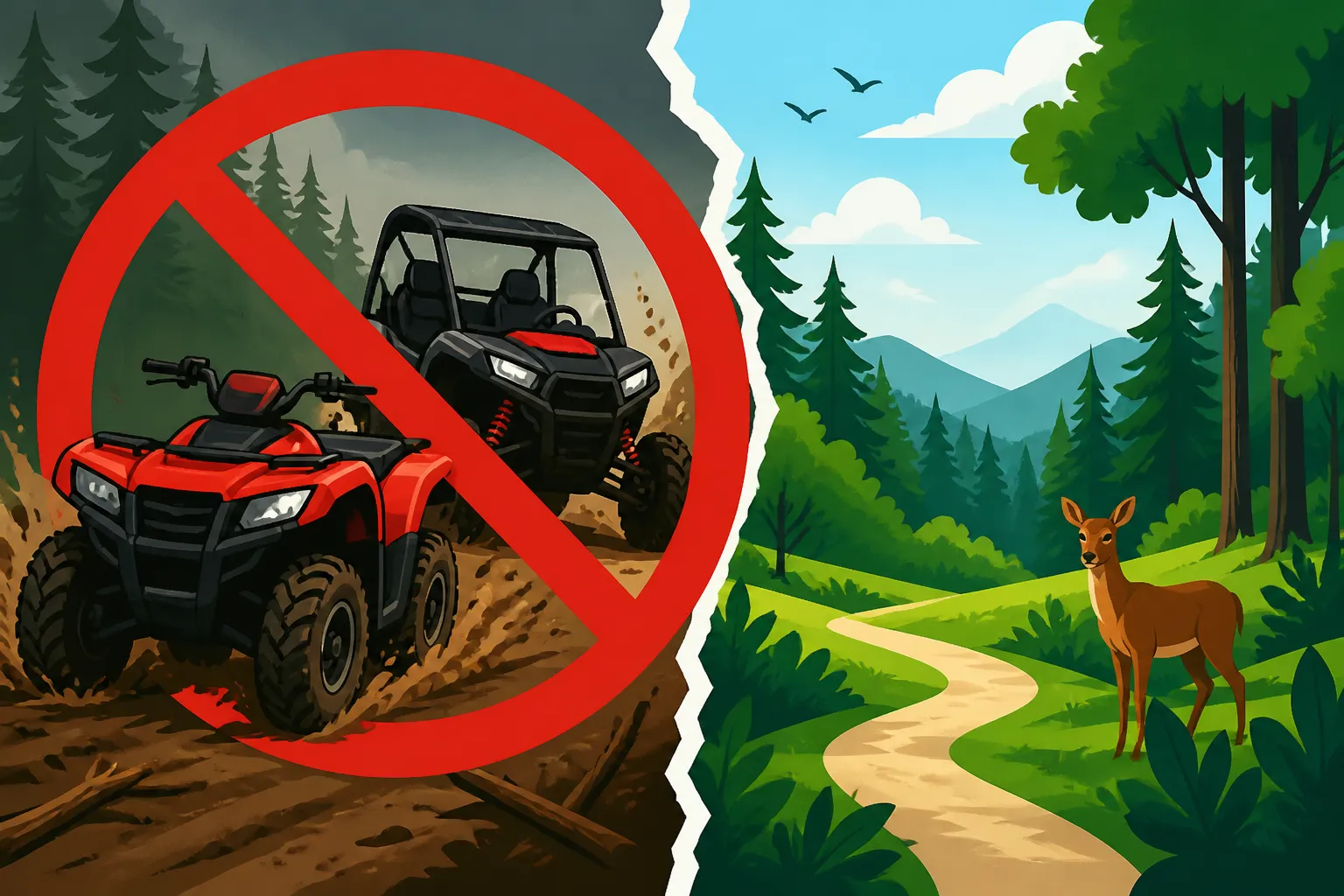
Why the Forest Preserve Is Closed to Machines
It’s a frustrating reality for many New York ATV and UTV enthusiasts: you look at those vast, beautiful expanses of state land, the untouched forests, the winding trails, and naturally think, "Wow, what an incredible place to ride!" But then you discover the truth – a huge portion of that land, specifically the Adirondack and Catskill Forest Preserves, is almost entirely off-limits to motorized recreation like ATVs and UTVs. This can be incredibly disappointing, especially when you've invested good money in your machine and are eager to explore. This guide is here to unravel the legal and historical reasons behind these restrictions, explaining why the Forest Preserve remains closed to machines and directing you toward the places where you can legally and enjoyably ride in our beautiful state.
The Core of the Matter: Article XIV and "Forever Wild"
The primary reason you won't be navigating the Adirondack or Catskill Forest Preserves on your ATV or UTV boils down to a fundamental principle enshrined in New York State law: Article XIV of the State Constitution. This isn't just a regular law that can be easily changed by the legislature; it's a constitutional mandate, reflecting a deep-seated commitment to preserving these wild lands in a specific, pristine condition.
What "Forever Wild" Truly Means
The phrase "Forever Wild" is more than just a catchy motto; it's the bedrock of Article XIV, Section 1, which states: "The lands of the state, now owned or hereafter acquired, constituting the forest preserve as now fixed by law, shall be forever kept as wild forest lands. They shall not be leased, sold or exchanged, or be taken by any corporation, public or private, nor shall the timber thereon be sold, removed or destroyed." This powerful language sets an extremely high bar for preservation, demanding that these lands remain in a natural, undisturbed state.
For ATV and UTV riders, this means that activities that significantly alter the landscape, introduce mechanical noise, or create new, permanent trails are generally seen as incompatible with the "Forever Wild" directive. The very act of riding a motorized vehicle on undesignated routes could be construed as "destroying" or "removing" the "wild forest lands" in the spirit of the law. It’s a protectionist stance that prioritizes the natural ecosystem and traditional forms of wilderness recreation, like hiking, fishing, and non-motorized boating, over mechanized access.
The Historical Context of Article XIV
To truly grasp the "Forever Wild" concept, it helps to understand its origins. Article XIV was adopted in 1894, a time when New York's forests, particularly in the Adirondacks, were facing severe exploitation from logging and other industrial uses. There was growing public concern that these vital watersheds and natural resources were being irrevocably damaged. The constitutional amendment was a direct response to this crisis, a bold move to safeguard these lands from further commercial and destructive interests.
The framers of Article XIV envisioned a future where these forests would remain a sanctuary, untarnished by the rapid industrialization of the era. Their intent was to prevent the very kind of development and heavy usage that motorized vehicles, by their nature, can represent. While they couldn't have specifically foreseen ATVs and UTVs, the spirit of the law was to keep these areas wild, quiet, and primarily accessible by foot or paddle, ensuring their ecological integrity for generations to come. This historical context illuminates why efforts to introduce broad ATV access often face such formidable legal and public opposition.
How This Impacts Motorized Recreation
Given the stringent "Forever Wild" mandate, any form of widespread motorized recreation, including ATVs and UTVs, faces an uphill battle in the Forest Preserve. While there are some extremely limited exceptions, such as snowmobiles on specifically designated and maintained winter trails, these are rare and subject to intense scrutiny. For ATVs and UTVs, which typically operate on different types of terrain and during different seasons, the allowance simply doesn't exist.
The impact is clear: if you own a machine, whether it's a nimble sport quad or a robust utility vehicle equipped with accessories from SuperATV, you cannot simply load it up and head into the vastness of the Adirondack or Catskill Forest Preserve expecting to find legal trails. The very definition of "wild forest lands" in the constitutional context precludes their use as a broad playground for off-road vehicles. This isn't about arbitrary rules; it's about protecting a unique and historically significant natural heritage under one of the strongest environmental clauses in any state constitution.
Understanding Different Land Classifications Within the Parks
It’s easy to look at a map of the Adirondack or Catskill Parks and see one big green blob, but within these vast regions, there are actually several different land classifications, each with its own specific rules and regulations. Understanding these distinctions is crucial because while some areas might seem less restrictive, the "Forever Wild" clause still casts a long shadow over the entire Forest Preserve, generally excluding ATVs and UTVs from public access.
Wilderness Areas: The Strictest Protections
At the top of the protection hierarchy are Wilderness Areas. These are vast, untrammeled expanses of land and water that are managed to preserve their primeval character and influence. The key here is "untrammeled"—meaning no permanent improvements or human habitation, and certainly no motorized vehicles. Access to Wilderness Areas is strictly by foot or non-motorized means like canoe or kayak.
Think of it this way: if you're deep in a Wilderness Area, the goal is to experience nature as it existed before modern human intervention. The sounds of an engine, the tracks of tires, or the construction of a hardened trail for ATVs would fundamentally disrupt this experience and violate the very essence of a Wilderness designation. These areas are specifically set aside for solitude, primitive recreation, and the preservation of ecological processes without mechanical intrusion. So, if you're planning a trip to the Adirondacks or Catskills, always check the specific land classification; if it's Wilderness, leave the quad at home. You can learn more about these protected areas in [The Forest Preserve Is Closed to Machines].
Wild Forest Lands: A Glimmer of Opportunity (But Not for ATVs)
Next up are Wild Forest lands, which are generally more accessible than Wilderness Areas, allowing for a wider range of outdoor recreational activities. This might sound promising for ATV and UTV riders, but here's the catch: while Wild Forest areas do allow for some motor vehicle use, it's typically restricted to existing public roads, snowmobile trails in winter, or designated motor vehicle ways where allowed for administrative purposes.
The critical distinction is that these existing routes are not generally open to ATVs and UTVs. The trails designated for snowmobiles in winter, for instance, are rarely, if ever, officially opened for summer ATV use. The Department of Environmental Conservation (DEC) manages these lands with careful consideration for the "Forever Wild" clause, and opening trails to ATVs would require significant environmental review and, often, a constitutional amendment, which is an extremely high bar. While you might see some administrative roads used by DEC personnel, these are not for public motorized recreation. So, even in Wild Forest areas, your ATV is still mostly out of luck for public trail riding.
Primitive and Canoe Areas
Rounding out the more protected classifications are Primitive and Canoe Areas. Primitive Areas are managed very similarly to Wilderness Areas, often because they are smaller or have some existing non-conforming structures that prevent a full Wilderness designation, but the management intent is largely the same: minimal human impact, no motorized vehicles, and a focus on solitude.
Canoe Areas, as the name suggests, are designed for water-based, non-motorized recreation. While you might encounter a road to access a put-in point, the vast majority of these areas are intended for paddling and traditional camping, with no provisions for ATVs or UTVs. All these classifications reinforce the overarching theme of the Forest Preserve: a commitment to natural quiet, ecological preservation, and activities that leave minimal impact on the land. For motorized vehicle enthusiasts, this consistently points to the need to look elsewhere for riding opportunities.
The Broader Implications for ATV and UTV Riders
Beyond the specific land classifications, the foundational principles of New York's Forest Preserve present significant and often insurmountable hurdles for ATV and UTV riders. It’s not just a matter of finding the right trail; it’s about a clash of recreational philosophies and the very definition of what these protected lands are meant to be.
Why Traditional ATVs Don't Fit the Forest Preserve's Mission
Traditional ATVs, designed for off-road travel and often equipped for rugged terrain, are inherently seen as incompatible with the "Forever Wild" ethos. The noise generated by these machines, even relatively quiet ones, can disturb wildlife and detract from the wilderness experience sought by hikers, birdwatchers, and campers. Furthermore, the physical impact of ATV tires, especially on unhardened surfaces, can lead to erosion, trail widening, and the degradation of sensitive habitats. These are all outcomes that Article XIV specifically aims to prevent.
Consider the potential for damage: even a single ATV ride on a wet, soft trail can create deep ruts that accelerate erosion and alter water flow. If hundreds or thousands of riders were permitted, the cumulative impact would be devastating to the delicate ecosystems and the aesthetic value of the preserve. The Forest Preserve’s mission is to preserve the natural state, not to accommodate activities that fundamentally alter it. This perspective leads state managers to conclude that ATV use simply doesn't align with the constitutional mandate or the public's expectation for these wild areas.
The Challenges for Modern UTVs
Modern UTVs, or side-by-sides, present an even greater challenge. While incredibly versatile and popular, their size and weight often exceed what is deemed acceptable for most off-road recreational use in areas like the Forest Preserve. New York has specific limits on ATV dimensions for registration on approved trails, with a [New York ATV Width Limit for Registration] of 70 inches and a [New York ATV Weight Limit for Registration] of 1,000 pounds. Most contemporary UTVs, especially popular models often upgraded with larger tires or lift kits from companies like SuperATV, far exceed these limits.
Even if Article XIV were somehow amended or interpreted to allow some motorized access, the sheer physical footprint and weight of many UTVs would still make them unsuitable for the type of narrow, low-impact trails that might exist. Their larger engines also tend to be louder, and their wider stances would necessitate the clearing and maintenance of much wider trails, which would again contradict the "Forever Wild" principle. The reality is that the regulatory framework for ATVs in New York is already quite strict, and UTVs often fall outside those parameters even for other permitted riding areas, let alone the highly protected Forest Preserve. For example, a vehicle like a Polaris Ranger 1000, while a fantastic machine, would never qualify.
What About Electric Machines?
The rise of electric ATVs and UTVs often sparks hope among riders, who imagine that their quieter operation and zero emissions might make them more acceptable in sensitive natural areas. While electric machines certainly address some of the concerns related to noise and air pollution, they still face the fundamental barrier of Article XIV within the Forest Preserve. The "Forever Wild" clause isn't solely about emissions or noise; it's also about preventing the physical alteration of the land and limiting mechanized access to maintain its wild character.
Even a silent electric ATV still leaves tire tracks, requires maintained trails, and represents a form of mechanized intrusion into what is designated as wild forest land. While some state parks or other less protected state lands might explore electric vehicle use in the future, the Adirondack and Catskill Forest Preserves are bound by a constitutional mandate that prioritizes the absence of such vehicles, regardless of their propulsion method. So, for now, while an electric machine offers a cleaner, quieter ride, it won't open the gates to the Forest Preserve.
Where You Can Ride in New York State (If Not the Forest Preserve)
The good news is that while the Adirondack and Catskill Forest Preserves are largely off-limits, New York State isn't entirely devoid of ATV and UTV riding opportunities. It just requires knowing where to look and understanding the specific rules and regulations that apply to those areas. You don't have to trailer your machine out of state to find adventure!
County and Club Trail Systems
The most robust and continually expanding opportunities for ATV and UTV riding in New York come from county-managed and private club trail systems. These are the lifeblood of off-road recreation in the state, offering hundreds of miles of diverse terrain.
- Lewis County ATV Trail System: This is perhaps the crown jewel of New York ATV riding, boasting hundreds of miles of trails managed by the county in cooperation with local clubs and private landowners. It's a fantastic example of how communities can come together to create legal, well-maintained riding areas. You'll need a [Lewis County ATV Trail Permit Cost and Rules], but it opens up vast opportunities for multi-day rides, connecting small towns, and experiencing the Tug Hill Plateau. Many riders outfit their machines with cargo racks or extra storage solutions from SuperATV to carry gear for longer trips on these expansive trail networks.
- Oswego County Club Trails: Similar to Lewis County, Oswego County offers a network of trails, often managed by local ATV clubs. These trails typically require club membership or a day pass and are sustained through volunteer efforts and rider contributions. These systems are crucial for fostering a sense of community among riders and ensuring responsible land use.
- Private Parks: Beyond county systems, a few private, pay-to-ride parks exist, such as Tall Pines ATV Park in Andover. These parks offer designated loops and riding areas, often with amenities like camping, and are a great option for riders seeking a controlled environment or those whose machines don't meet strict state registration criteria for public trails.
These systems are generally well-marked, regularly maintained, and offer a variety of challenges for riders of all skill levels. They also provide crucial economic benefits to local communities, supporting gas stations, restaurants, and lodging establishments.
Designated Roads and Private Land
Beyond the established trail systems, there are other, more limited opportunities for ATV and UTV use in New York:
- Designated Town and County Roads: Some towns and counties in New York have passed local ordinances to designate specific, posted roads as open to ATV and UTV use. This is not widespread, and these are typically low-traffic, unpaved or lightly-paved roads in rural areas. It is absolutely critical to check with the local municipality directly, as riding on an undesignated public road is illegal and can result in significant fines. This is a very different scenario from riding on dedicated trails and requires strict adherence to local signage and rules. You can find more details on [New York Rules for Riding a Town Road].
- Private Land with Permission: This is perhaps the simplest and most widespread option. If you own private land, you can generally ride your ATV or UTV on it without state registration, provided you have proper insurance and operate safely. The same applies if you have explicit, written permission from a landowner to ride on their property. This is a common arrangement for hunting, farming, or simply enjoying the outdoors. However, even on private land, local noise ordinances or other specific town rules may still apply, so it’s always wise to be a good neighbor and check local regulations. Remember, [New York Landowner Permission Rules] are critical for avoiding trespassing charges.
Exploring Private Parks and Play Areas
For those looking for a guaranteed place to ride without the complexities of public land regulations or county permits, private ATV parks are an excellent choice.
- Benefits of Private Parks: Places like Tall Pines ATV Park offer controlled environments with dedicated trails, often catering to different skill levels. They typically have clear rules, maps, and sometimes even amenities like restrooms, food vendors, or even cabins for rent. These parks are often ideal for families or new riders, providing a safe and predictable experience. They also offer a place for wider machines or those slightly outside New York's strict public trail registration criteria, as the park sets its own rules within its private boundaries.
- What to Expect: When visiting a private park, you'll usually pay a day-use fee or purchase a membership. They often have their own waivers and rules, which are important to follow for your safety and the longevity of the park. It’s a great way to enjoy your machine without worrying about the constitutional complexities of the Forest Preserve.
| Land Classification | Primary Purpose | Motorized Vehicles (ATV/UTV) | Typical Access Methods |
|---|---|---|---|
| Wilderness Area | Primitive recreation, ecological preservation | Prohibited | Foot, canoe, kayak |
| Wild Forest Land | Recreation, resource management | Generally Prohibited | Limited designated roads, snowmobiles (winter only) |
| Primitive Area | Preserve wild character | Prohibited | Foot, canoe, kayak |
| Canoe Area | Water-based non-motorized recreation | Prohibited | Foot, canoe |
| County Trail System | Designated motorized recreation | Permitted (with permit) | ATV, UTV |
| Private Land (with permission) | Any legal use by owner | Permitted (with permission) | ATV, UTV, other vehicles |
| Private ATV Park | Organized motorized recreation | Permitted (with fee/rules) | ATV, UTV |
Remember, the landscape of ATV and UTV riding in New York is dynamic. Always check current regulations, trail statuses, and permit requirements before you head out. Websites for county recreation departments, specific ATV clubs, and private parks are your best resources for up-to-date information. While the "Forever Wild" lands are largely off-limits, there's still plenty of New York to explore on your machine!
Disclaimer
This article is for general informational purposes only and does not constitute professional advice. Laws, prices and regulations vary by location and change over time. Consult a qualified professional for guidance on your specific situation.