Street Legal ATVs in New York: The Short Answer
It's a question many of us ask, full of hope and sometimes a little bit of longing: "Can I just ride my ATV down the road in New York?" The truth, for most riders, is often a frustrating "not really," or at least, "not in the way you might imagine." This guide is here to untangle the complex web of New York's ATV laws, helping you understand precisely why street-legal ATVs are such a rare bird here and what avenues are actually open to you for riding.
The Fundamental Truth: Why ATVs Aren't "Street Legal" in New York
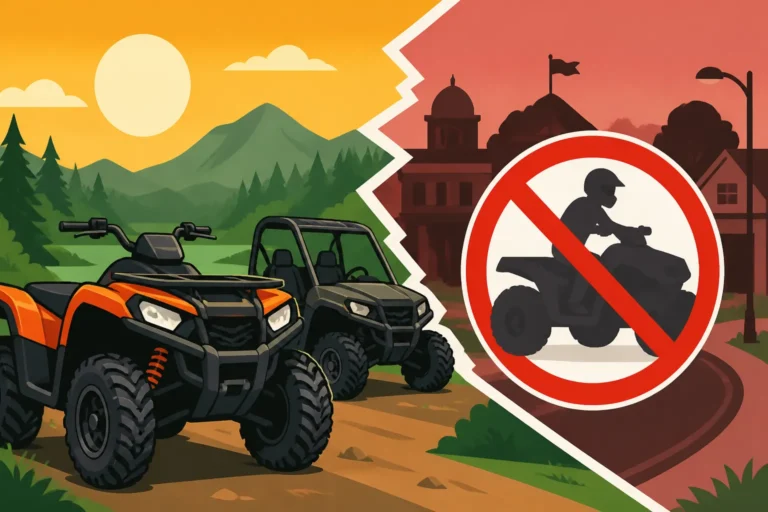
Let's get straight to it: The dream of hopping on your quad and cruising down Main Street in New York, just like you would a car or motorcycle, is generally just that—a dream. New York State law draws a very clear line in the sand between vehicles designed for off-road recreation and those allowed on public roadways. This distinction is the bedrock of why "street legal" ATVs are almost nonexistent within the state's regulatory framework.
The Definition of an All-Terrain Vehicle Under New York Law
To understand why ATVs aren't street legal, we first have to look at how New York defines them. An All-Terrain Vehicle (ATV) in New York is specifically categorized as an off-highway vehicle. The law defines an ATV as a motorized vehicle designed for off-highway use, which uses handlebars for steering, has a seat designed to be straddled by the operator, and travels on three or more wheels. It's built for rough terrain, for dirt, mud, and rocks—not smooth asphalt. This legislative definition is crucial because it immediately places ATVs outside the typical definitions for vehicles allowed on public roads, such as cars, trucks, or motorcycles, which have different design and safety requirements.
This definition carries significant weight because it dictates everything from registration requirements to where you can actually operate your machine. When the state explicitly says a vehicle is "designed for off-highway use," it's not just a casual descriptor; it's a legal classification that impacts its use across the board. Many riders, especially those new to the sport or coming from other states with different rules, often overlook this fundamental classification, leading to confusion and, unfortunately, potential run-ins with law enforcement.
The Legal Distinction Between ATVs and Motor Vehicles
New York law doesn't consider an ATV to be a "motor vehicle" in the same sense it considers your car or motorcycle. This is a critical legal distinction. Motor vehicles are designed, manufactured, and regulated to meet specific federal and state safety standards for highway use. They have features like Department of Transportation (DOT) approved tires, turn signals, brake lights, headlights designed for road illumination, rearview mirrors, and often, crash protection standards that ATVs simply do not meet. Your ATV, while powerful and fun, lacks these necessary components, or has them in a form not compliant with road use standards.
Think about it from a safety perspective. An ATV's suspension is built for absorbing bumps and jumps, not for stable, high-speed cornering on pavement. Its tires are knobbed for traction in dirt, making them unstable and quick-wearing on asphalt. The seating position, designed for active rider input and balance, isn't conducive to the passive comfort and safety expected on public roads. This fundamental difference in design intent and safety features is why the state places ATVs in a separate legal category, effectively prohibiting their general use on the vast majority of public roads.
New York's Core Stance on Public Road Use
At its heart, New York's stance is that public roads are for public road vehicles. ATVs are not public road vehicles. Section 2403 of the New York State Parks, Recreation and Historic Preservation Law explicitly states, "No all-terrain vehicle shall be operated on a public highway, except as provided in this article." This is the "short answer" encapsulated in law. While the "except as provided" offers a glimmer of hope, it's crucial to understand that these exceptions are very narrow and specific, not a broad invitation to ride wherever you please.
The state's primary concern is public safety. Mixing off-road vehicles, which lack the requisite safety features and handling characteristics for pavement, with conventional road traffic creates significant hazards. This includes not just the risk of accidents but also issues with vehicle stability, visibility, and the general wear and tear that ATVs can inflict on paved surfaces. So, while you might see an ATV crossing a road or briefly on a shoulder, this is not an endorsement of general road use. The default is prohibition, with only tightly controlled deviations. This is why attempting to treat your ATV like a street bike will almost always lead to legal trouble.
Limited Exceptions: When an ATV Can Touch a Public Road
While the general rule is a resounding "no" for street-legal ATVs in New York, the law does carve out very specific, limited exceptions where an ATV might legally operate on or across a public highway. These aren't loopholes to exploit, but rather carefully defined circumstances that acknowledge practical necessities or designated riding areas. Understanding these exceptions is crucial, as misinterpreting them can still lead to fines and legal issues.
Designated and Posted Roads: The Golden Ticket (Sometimes)
One of the most common exceptions allows ATVs on public highways that have been "designated and posted" for ATV use. This is perhaps the closest many riders will get to a "street legal" experience, but it comes with significant caveats. For a road to be legally open to ATVs, the specific town, village, or county must pass a local law designating it for ATV use, and then physically post signs indicating that ATVs are permitted. This isn't a statewide blanket policy; it's a local option. You can't just assume a rural dirt road is open because it looks like a trail. It needs official designation and clear signage.
Even on these designated roads, there are usually conditions. Speeds might be restricted, and riders are often still required to adhere to all other ATV regulations, including having a valid [New York ATV Registration and Insurance Proof] and a safety certificate if applicable. You also need to pay attention to the dates and times these roads are open; some might be seasonal or have specific hours. It's always your responsibility to verify the legality of riding on any given road, and checking with local authorities or ATV clubs is the best way to get current information on [New York's Designated and Posted Roads].
Crossing a Highway: A Brief and Specific Maneuver
New York law does permit ATVs to cross a public highway, but this is a very strict and limited exception. You can't ride down the highway for miles and then "cross" it. The intention is to allow riders to move from one section of an off-road trail system to another when a public road intersects it. The rules for crossing are precise:
- Right Angle: You must cross the highway at approximately a ninety-degree angle to the direction of the highway. This minimizes your time on the paved surface.
- Safety First: You must come to a complete stop before crossing, yield to all traffic, and cross only when it's safe to do so.
- No Parallel Travel: You cannot travel along the highway shoulder or the main roadway for any distance longer than what is absolutely necessary to cross.
- Designated Crossing: Sometimes, crossings are explicitly marked. Even if not, the rules still apply.
This "crossing" rule is often misunderstood. It's not an excuse to ride your ATV a mile down the road to your buddy's house before cutting across to a trail. It's for an immediate, direct transition between off-road segments. Ignoring these rules is a quick way to get a ticket for illegal operation. For more details on the exact parameters, look up [Crossing a Highway on an ATV in New York].
Agricultural Exemptions: For the Farmers Among Us
New York law also provides a specific exemption for ATVs used in agricultural operations. If you're a farmer and your ATV is being used for farming purposes—like moving equipment, checking fences, or tending to livestock—you may be permitted to operate it on a public highway for specific, limited distances. This is a practical necessity for agricultural businesses, as it allows them to move machinery between fields or to other parts of their property that might be separated by a public road.
However, this isn't a free pass for all rural residents. The ATV must be actively engaged in an agricultural operation. Riding your farm quad to the general store for a snack, even if you're a farmer, typically wouldn't fall under this exemption. The vehicle must be directly related to the farm work, and even then, such use is usually limited to short distances and low speeds. Farmers often have to ensure their machines are well-lit and visible, especially at dawn or dusk, to prevent accidents with other road users. This exemption highlights that the state recognizes legitimate needs for ATVs to briefly interact with public roads, but always within a very tight framework of purpose and safety.
The Equipment Conundrum: Why ATVs Don't Meet Road Standards
Beyond the legal definitions and limited exceptions, there's a practical reason ATVs aren't street legal in New York: they simply aren't built for it. The very design and features that make an ATV so capable off-road are precisely what make it unsafe and illegal for public highway use. You can add all the aftermarket accessories in the world, but it won't fundamentally change the machine's intended purpose or its compliance with highway safety standards.
Lighting, Signals, and Mirrors: More Than Just Headlights
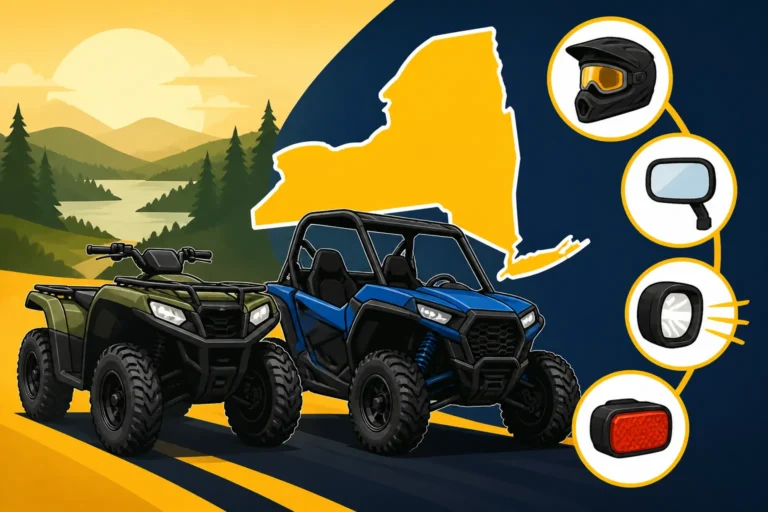
When you think about a street-legal vehicle, you envision turn signals, brake lights, mirrors that offer clear rear visibility, and headlights designed to properly illuminate a road without blinding oncoming traffic. Most ATVs, out of the box, lack some or all of these critical components, or the ones they do have aren't up to road standards. Your ATV's headlight might be great for spotting deer on a trail at night, but it often lacks the beam pattern and intensity required for safe highway navigation. Similarly, a single taillight might be fine for off-road, but street vehicles typically require multiple, brighter rear lights.
Turn signals are virtually non-existent on factory ATVs, and while you can add aftermarket kits, they don't magically convert your machine into a road-worthy vehicle in the eyes of the law. Rearview mirrors are also often absent or too small to provide adequate visibility for highway speeds and traffic conditions. These aren't minor omissions; they are fundamental safety features designed to allow drivers to communicate their intentions and be aware of their surroundings in a complex, multi-vehicle environment. Without them, an ATV on a public road is a hazard to itself and others.
Tires, Brakes, and Suspension: Built for Trails, Not Pavement
The core mechanics of an ATV are optimized for off-road performance. Take the tires, for example. Those aggressive knobby tires provide fantastic traction in mud, dirt, and over rocks. But on pavement, they wear down incredibly fast, create excessive noise, and, more importantly, offer very poor grip and stability, especially in wet conditions or during hard braking. This makes stopping distances longer and cornering unpredictable. Many companies like SuperATV specialize in making your machine even more capable off-road with purpose-built tires, not tires for the street.
The suspension system is another major point. ATV suspensions have significant travel and are often softer to absorb impacts from rough terrain. This design choice leads to excessive body roll and instability when cornering on a smooth, hard surface at higher speeds. Combine that with brakes that are designed for lower speeds and off-road traction, and you have a vehicle ill-suited for the demands of highway driving. Trying to make an ATV handle like a car on the road is like trying to make a race car handle like a monster truck off-road—it's designed for a different purpose entirely.
Noise, Emissions, and Safety: Meeting Federal and State Requirements
Modern motor vehicles must comply with stringent federal and state regulations regarding noise levels and exhaust emissions. ATVs, while they do have mufflers and some emissions controls, are generally designed with a different set of priorities, often allowing for louder operation and emissions that wouldn't pass highway vehicle standards. These regulations are in place to protect public health and the environment, and ATVs typically fall outside the scope of highway-specific compliance.
Furthermore, ATVs often lack basic safety features found in road-legal vehicles, such as occupant restraints (seatbelts or airbags) and crumple zones designed to absorb impact energy in a collision. While helmets are mandatory for ATV riders in New York, the overall design of the vehicle does not offer the same level of occupant protection as a car or even a motorcycle. This isn't to say ATVs are inherently unsafe, but rather that their safety parameters are entirely different and not compatible with the high-speed, high-impact environment of public roads. These equipment deficiencies, far more than just "missing a turn signal," are fundamental to why your quad isn't deemed road-worthy.
Side-by-Sides and UTVs: A Different Beast, Same Rules?
The rise in popularity of Side-by-Sides (SxS) and Utility Terrain Vehicles (UTVs) has added another layer to the "street legal" question. With their car-like seating, steering wheels, and often larger size, many riders assume these machines might have an easier time qualifying for road use than traditional ATVs. Sadly, in New York, the answer remains largely the same: most UTVs face the same legal hurdles as ATVs when it comes to public roads, though there are ongoing discussions and legislative efforts to potentially change this in the future.
The Weight and Width Dilemma for UTVs
While UTVs often look more capable of road travel due to their larger stature and more enclosed cabins, they often run into significant issues with New York's specific ATV definitions, particularly regarding weight and width. New York's definition of an ATV, which UTVs are typically categorized under, specifies a maximum weight of 1,000 pounds and a maximum width of 70 inches. Many popular UTV models, especially modern multi-passenger or high-performance machines, exceed these limits.
For example, a robust utility UTV designed for heavy farm work or a sporty recreation model from manufacturers like Polaris or Can-Am often weighs well over 1,000 pounds and can easily be wider than 70 inches. If a machine falls outside these parameters, it doesn't even qualify as an "ATV" under New York law, meaning it cannot be registered as such and therefore has even fewer, if any, options for any form of public road interaction. This is a common source of frustration for UTV owners who purchase a machine only to find it's too large to even meet the basic registration requirements for off-highway use.
Why Most Side-by-Sides Cannot Be Registered in New York
The inability to meet the 1,000-pound weight and 70-inch width limits is the primary reason why [Why Most Side-by-Sides Cannot Be Registered in New York]. Without a registration, these machines are essentially confined to private property. This creates a significant challenge for UTV owners, as they are left with limited options for legal riding beyond their own land or dedicated private parks that don't require state registration.
Even for UTVs that do happen to meet the strict weight and width criteria, they still fall under the general ATV regulations, which, as we've discussed, prohibit general public highway use. So, while a smaller, older UTV might technically be registered as an ATV if it meets the physical specifications, it doesn't grant it street-legal status. It merely allows it to be operated on designated ATV trails and within the very narrow public highway exceptions. Many owners invest in aftermarket parts from companies like SuperATV to enhance their UTV's off-road capabilities, only to realize these modifications do nothing to address the core legal barrier of road use.
Proposed Legislation: Hopes for Change (But Not Yet)
There's a growing movement and ongoing legislative effort in New York to address the unique situation of UTVs. Bills have been proposed in the state legislature to create a separate classification for UTVs, or to expand the definition of ATVs to accommodate their larger size, with the ultimate goal of allowing some form of limited public road use or expanding trail access. This demonstrates that lawmakers are aware of the demand and the distinct characteristics of UTVs compared to traditional quads.
However, these bills often face significant hurdles. Concerns about safety, environmental impact, and the practicalities of integrating larger, heavier machines onto existing trail systems and public roads mean that progress is slow. While a [A New York Bill to Widen the ATV Definition] or other similar legislation might offer hope for the future, it's crucial to remember that until such bills are passed into law, the current restrictions remain firmly in place. Riders should stay informed about these legislative efforts but operate under the current laws to avoid penalties.
Consequences of Illegal Road Riding: What's at Stake
The temptation to take your ATV or UTV on a quick jaunt down a public road can be strong, especially if the trail is just across the street or you just need to get to the gas station. However, the consequences of illegal road riding in New York can be severe, far outweighing any perceived convenience. It's not just about a simple ticket; it can lead to significant financial burdens, loss of riding privileges, and even serious safety risks.
Fines, Tickets, and Impoundment: The Immediate Repercussions
Operating an ATV illegally on a public highway in New York will almost certainly result in fines and tickets. These aren't minor parking violations; they can be substantial, often ranging into hundreds of dollars per offense. Law enforcement officers, whether state troopers, sheriff's deputies, or local police, are generally well-versed in ATV regulations and will not hesitate to enforce them, especially in areas with known ATV activity.
Beyond fines, your ATV could be impounded. This means your machine is seized and towed away, incurring towing and storage fees that can quickly add up, easily surpassing the cost of the initial fine. Retrieving an impounded ATV can be a lengthy and frustrating process, often requiring proof of ownership, payment of all outstanding fees, and possibly a court appearance. Imagine your weekend ride ending with your prized machine sitting in an impound lot, leaving you with a hefty bill and no way to ride it home. [New York Fines for an Unregistered ATV] will apply here, as a machine being ridden illegally on the road is effectively treated as if it were unregistered for that purpose. What a New York Officer Checks Roadside] often includes whether the ATV is operating legally.
Insurance Ramifications: When Your Policy Says "No"
One of the most critical, yet often overlooked, consequences of illegal road riding relates to insurance. While New York mandates [New York's Mandatory ATV Insurance] for off-road operation, most standard ATV insurance policies are designed specifically for off-road use and often contain exclusions for incidents that occur on public highways. This means if you have an accident while illegally riding your ATV on a paved road, your insurance company may deny coverage for damages, injuries, or liability.
This can be financially devastating. You could be personally responsible for thousands or even tens of thousands of dollars in medical bills, property damage to other vehicles, or even legal fees if someone else is injured. The peace of mind that comes with insurance vanishes when you operate outside the terms of your policy. It's a risk that simply isn't worth taking for a quick illegal spin on the road. Always check your policy details and understand where and when your coverage applies, and more importantly, when it absolutely does not.
Safety Risks: Pavement Versus Trail Design
Finally, and perhaps most importantly, operating an ATV on a public road poses significant safety risks. ATVs are designed with a high center of gravity, narrow track width, and specialized tires, all optimized for soft, uneven terrain. These characteristics make them inherently unstable on hard, paved surfaces, especially at higher speeds, during sharp turns, or when braking suddenly. The risk of rolling over, losing control, or being ejected from the machine increases dramatically on pavement.
Moreover, ATVs are less visible to other motorists compared to cars or motorcycles. Their smaller profile, lack of proper road lighting, and often slower speeds can lead to dangerous situations in traffic. Mixing these off-road machines with fast-moving cars and trucks creates a recipe for serious accidents. The safety equipment you wear, like a helmet, is crucial but cannot fully compensate for the fundamental design incompatibility between an ATV and a public highway environment. Ultimately, the rules against street-legal ATVs in New York are deeply rooted in preventing injuries and fatalities for both ATV riders and the general public.
Where You Can Ride Your ATV Legally in New York
So, if public roads are largely off-limits, where can you legally ride your ATV or UTV in New York? The good news is that there are many fantastic opportunities for off-road adventure, as long as you know the rules and respect the designated riding areas. New York has a vibrant off-road community and some incredible terrain waiting to be explored, all within the bounds of the law.
Dedicated Trail Systems and Parks
The best and safest place to ride your ATV legally in New York is on a dedicated, authorized trail system or in an off-road park. These areas are specifically designed and maintained for ATV use, offering a variety of terrains and challenges while ensuring rider safety and environmental protection. One of the most famous examples is the Lewis County ATV Trail System, which boasts hundreds of miles of trails for riders to enjoy. Other counties and private parks also offer excellent opportunities.
When riding on these trails, you'll typically need to have your ATV registered with the New York DMV and carry proof of insurance. Many trail systems, especially those managed by counties or clubs, also require a specific trail permit. For instance, Lewis County requires a permit, and often offers discounts if you're a member of a local ATV club that contributes to trail maintenance. These permits help fund the upkeep of the trails, ensuring they remain open and enjoyable for everyone. Always check the specific requirements for any trail system before you head out. These are often the [Best Places to Ride an ATV in New York].
Private Land With Permission
Riding on private land is another excellent legal option, provided you have explicit permission from the landowner. This could be your own property, a friend's farm, or leased hunting land. When riding on private property, many of the same general safety rules apply, such as wearing a helmet and operating responsibly. Even on private land, you still need to ensure your ATV is registered and insured if you plan to transport it on a public road (e.g., trailering it to the private property).
It's absolutely crucial to get permission in writing or have a clear, verbal agreement before riding on someone else's land. Trespassing is a serious offense and can lead to fines, legal action, and damage to the reputation of ATV riders as a whole. Respect for landowners is paramount to keeping private lands open for recreational use. Always be courteous, leave no trace, and understand the terms of your access. For a deeper dive into these rules, you can consult [New York Rules for Riding Private Land].
The Importance of Registration, Insurance, and Safety Courses
No matter where you choose to ride in New York, certain fundamental requirements are non-negotiable for legal and responsible ATV operation.
- Registration: Your ATV must be registered with the New York Department of Motor Vehicles (DMV). This typically involves filling out forms, providing proof of ownership (like a bill of sale, since [New York Issues No ATV Title]), and paying a registration fee. This registration process is entirely separate from any attempt to make an ATV street legal; it's purely for off-highway identification and regulation.
- Insurance: As mentioned before, New York law requires every ATV operator to carry liability insurance. This protects you and others in case of an accident. You must have proof of this insurance with you whenever you're operating your ATV off your own private property.
- Safety Certificates: For younger riders, or if you're supervising a younger rider, an ATV safety certificate is mandatory. Riders between the ages of 10 and 15 must possess an approved safety certificate to operate an ATV off their own property. While adults are not legally required to have one, taking a safety course is highly recommended for all riders to enhance skills and knowledge. For more information, check out the [New York ATV Safety Certificate Requirements].
Adhering to these requirements not only keeps you legal but also contributes to the overall safety and sustainability of ATV riding in New York. They are the backbone of responsible off-road recreation in the state.
Dispelling Myths and Misunderstandings
When it comes to street-legal ATVs in New York, there's a lot of misinformation and wishful thinking floating around. It's easy to get caught up in rumors or misunderstandings, especially when comparing New York's strict rules to other states. Let's clear up some common myths that often trip up riders.
Out-of-State Plates: No Loophole Here
A common misconception is that if your ATV is registered in another state that does allow street-legal operation, or has less restrictive rules, then you can legally ride it on New York's public roads. This is a resounding "no." New York's laws govern vehicles operated within its borders, regardless of where they are registered. If your ATV doesn't meet New York's definition and requirements for street legality, an out-of-state plate won't make a difference.
New York's reciprocity agreements typically apply to motor vehicles that are already street legal in their home state and meet New York's basic safety standards for highway use. ATVs, by their fundamental design and classification, generally do not fall into this category. So, bringing your "street-legal" quad from, say, Arizona, to ride on the paved roads of the Adirondacks will still lead to a ticket. Your out-of-state registration might be valid for off-road trails in New York (subject to specific trail permit requirements), but it offers no special pass for public highway use.
"Just to Get to the Trail": A Common Pitfall
Another frequently heard rationalization is, "I'm just riding it down the road for a short distance to get to the trail." While this might seem like a minor offense, and something many people unfortunately do, it's still illegal in New York State. Unless that specific stretch of road is a "designated and posted" ATV road, or you are making a direct, perpendicular crossing as discussed earlier, any travel on a public highway is prohibited.
Law enforcement officers understand this common tactic and are often vigilant in areas where trails intersect roads. What might seem like a harmless quick hop down the shoulder can quickly turn into a ticket, impoundment, and an insurance headache. It's important to plan your rides properly, using a trailer to transport your ATV to the trailhead or staging area. Relying on the "just for a minute" excuse is a risky gamble that usually doesn't pay off.
Modified ATVs: Aftermarket Parts Don't Change the Law
Many riders invest heavily in aftermarket parts and accessories to enhance their ATV's performance, safety, or appearance. You might see everything from LED light bars to beefed-up suspension components, and even kits designed to add turn signals or mirrors. While these modifications can certainly improve your off-road experience or make your machine more visible on a trail, they do not magically transform your ATV into a street-legal vehicle in New York.
Adding a full complement of DOT-approved lighting, a horn, and mirrors might make your ATV look more street-ready, but it doesn't change its fundamental classification as an off-highway vehicle or its inherent design limitations for pavement. The state's laws are based on the vehicle's original manufacturing intent and adherence to highway safety standards, not on what aftermarket components, even from reputable brands like SuperATV, you've bolted on. Trying to argue that your highly modified quad meets highway standards will almost always fall on deaf ears with law enforcement or in court, as the core legal definitions remain unchanged.
Navigating the Future: Potential Changes and Advocating for Riders
While the current state of affairs for street-legal ATVs in New York might seem restrictive, it's not entirely static. The off-road community is active, and there's ongoing discussion and legislative activity that could, over time, bring about changes. Understanding these efforts and knowing how to constructively engage can be empowering for riders who hope to see expanded access in the future.
Bills in the Legislature: A Glimmer of Hope for UTVs
As we touched upon earlier, there have been, and continue to be, legislative efforts aimed at revising New York's ATV and UTV laws. Many of these bills focus specifically on UTVs, recognizing their different characteristics compared to traditional ATVs. Proposals often aim to create a distinct legal category for UTVs, raise the weight and width limits to accommodate modern machines, or allow for limited road use in specific, rural contexts. [A New York Bill on UTV Registration] is one example of the kind of legislative movement that appears from time to time.
These bills, if passed, could potentially open up new avenues for UTV owners, possibly allowing for registration of more models and perhaps even some controlled access to certain roads or trails that are currently inaccessible. However, the legislative process is often slow and complex. Bills can be introduced year after year without passing, or they can undergo significant revisions. It's important for riders to follow these developments, but not to assume that a proposed bill is already law. Change, if it comes, will be incremental and carefully considered.
Rider Advocacy and Community Efforts
The most effective way to influence future legislation and expand riding opportunities is through organized rider advocacy and community engagement. ATV clubs and associations across New York play a vital role in this process. They work with landowners, local governments, and state legislators to advocate for rider rights, promote responsible riding, and help maintain and develop legal trail systems. By joining a local club or state association, you become part of a larger, unified voice.
These groups often organize trail cleanups, participate in public hearings, and provide valuable input on proposed legislation. They also serve as fantastic resources for understanding current laws, finding legal riding areas, and connecting with other enthusiasts. Being an active, responsible member of the off-road community helps to foster a positive image for ATV and UTV riders, which in turn can lead to greater public and political support for expanded access.
Staying Informed About New York's Evolving Laws
Given the dynamic nature of legislation and local ordinances, staying informed is paramount. Laws can change, new trails can open (or close), and local regulations can vary significantly from one town or county to another. Relying on outdated information or hearsay can lead to legal trouble and disappointment.
Here are some ways to stay up-to-date:
- New York DMV Website: The official source for all registration and basic operation laws.
- New York State Parks, Recreation and Historic Preservation (OPRHP): This agency often oversees trail systems and recreational land use, providing information on where you can ride.
- Local ATV Clubs and Associations: These groups are often the first to know about local legislative changes, trail conditions, and permit requirements. They are invaluable for hyper-local information.
- County Government Websites: For designated roads and local ordinances, check the specific county, town, or village websites where you plan to ride.
- Legal Resources: If you have specific questions, consulting with an attorney familiar with New York's ATV laws can provide clarity, especially regarding complex situations.
By actively staying informed and participating in the community, you not only protect yourself but also contribute to a positive future for ATV and UTV riding in New York.
Disclaimer
This article is for general informational purposes only and does not constitute professional advice. Laws, prices and regulations vary by location and change over time. Consult a qualified professional for guidance on your specific situation.