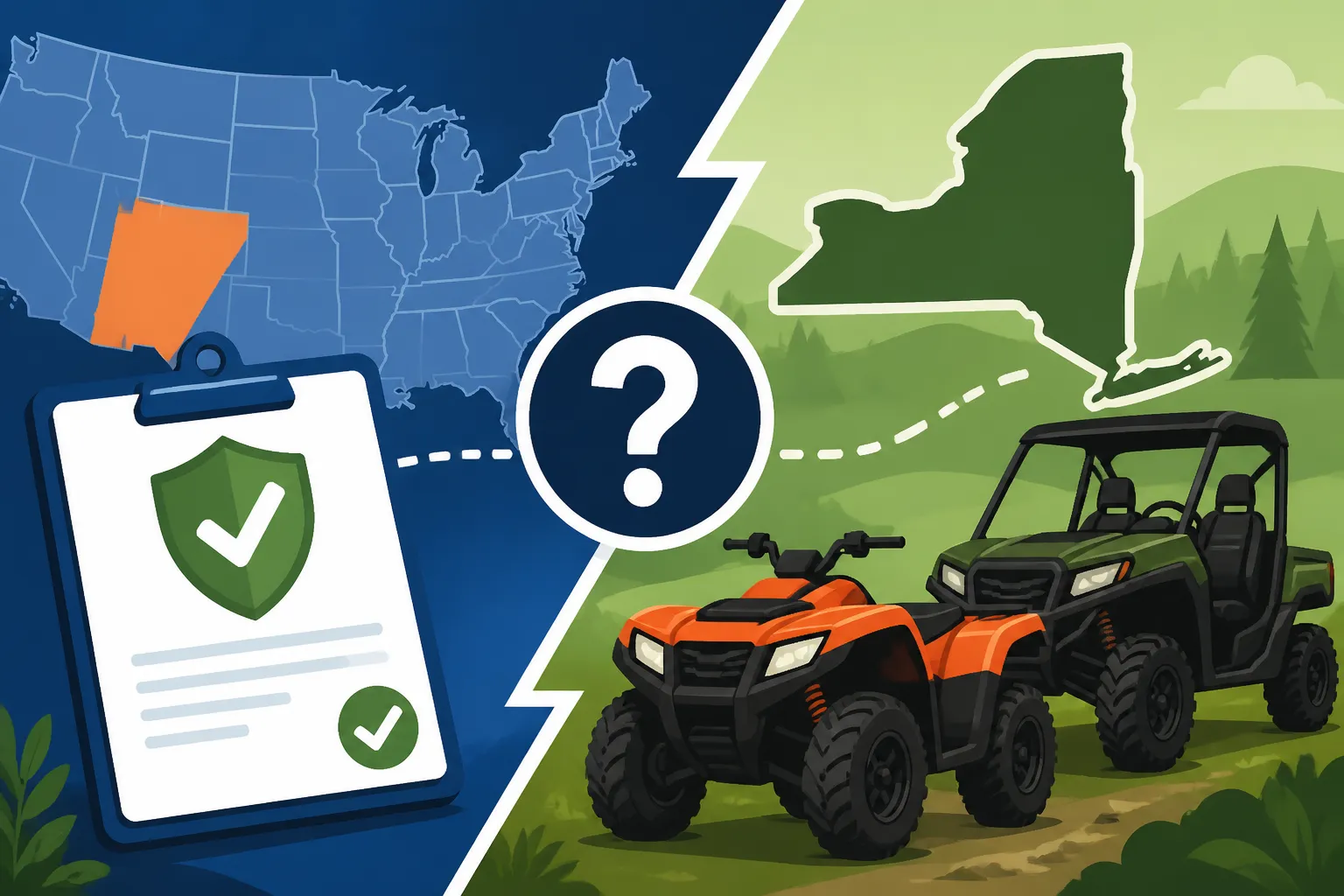
Does an Out-of-State Policy Satisfy New York’s ATV Rule?
You’ve packed up your quad, fueled the truck, and made the trek into New York State, ready to hit the trails – maybe Lewis County, or the Tug Hill Plateau. But as you pull into the staging area, a nagging question pops into your head: Is your ATV insurance from back home actually going to cut it here in New York? This is a super common and totally valid concern for riders visiting from out of state, and it’s a question that can lead to some real headaches if you don't have the right answer. This guide is here to unravel the complexities of New York's ATV insurance laws, especially as they pertain to out-of-state policies, so you can ride with peace of mind.
The New York ATV Insurance Mandate: What You Need to Know
Let's cut right to the chase: New York State takes ATV insurance seriously. It’s not an optional extra or something you can just decide to skip. If you're going to ride an ATV on any public land, designated trail, or even certain private lands where permission has been granted, you absolutely must have a compliant insurance policy. This isn't just a suggestion; it's a legal requirement designed to protect everyone involved.
Why New York Demands Insurance
The primary reason New York mandates ATV insurance is simple: safety and financial responsibility. Accidents happen, even to the most careful riders. When they do, there can be significant costs involved – medical bills for injuries, repairs for damaged property (whether it's someone else's fence, a trail marker, or even another machine), and potential legal fees. Without insurance, an accident could leave you, or the person you injure, facing crippling financial burdens. New York wants to ensure that if an incident occurs, there’s a mechanism in place to cover those costs without leaving individuals completely exposed. It's about making sure that the financial fallout from an unfortunate incident doesn't ruin lives or strain public services. It protects you from claims, and it protects others from your potential negligence. That's why [New York's Mandatory ATV Insurance] is such a critical component of riding legally in the state.
The Coverage Minimums New York Requires
So, what exactly does "compliant" insurance mean in New York? It’s not just any old policy; it has to meet specific minimum liability coverage amounts. These minimums are set by the state to ensure a baseline level of protection. While I can't give you exact dollar figures because those can change over time, typically, you’re looking at requirements for:
- Bodily Injury Liability: This covers medical expenses and lost wages for someone else if you're at fault in an accident that causes them injury. There’s usually a minimum for a single person injured in an accident, and a higher aggregate minimum for all persons injured in a single accident.
- Property Damage Liability: This covers damage you cause to someone else's property – whether it’s a private landowner’s fence, another rider’s machine, or even a utility pole.
It’s absolutely crucial to check the most current figures directly with a New York-authorized insurance provider or the New York Department of Motor Vehicles (DMV) website. Don't guess. These minimums are the bedrock of what [The Coverage Minimums New York Requires] means, and failing to meet them can lead to serious consequences.
What an Insurer Authorized in New York Means
This is where the rubber meets the road for out-of-state riders. It’s not enough to have any insurance policy; that policy needs to be issued by an insurance company that is authorized (or "admitted") to do business in New York State. What does this mean? It means the insurance company is licensed and regulated by the New York Department of Financial Services (DFS). They operate under New York laws, they have to respond to New York consumer complaints, and they have to meet New York's financial solvency requirements.
Why is this important? Because if your insurance company isn't authorized in New York, the state has no jurisdiction over them if there's a problem. They can't compel the company to pay a claim under New York law, and they can't ensure that the company meets the state's standards. So, even if your out-of-state policy technically provides the same dollar amounts of coverage, if the insurer isn't admitted in New York, the policy likely won't satisfy the state's mandate. You need to make sure you have [An Insurer Authorized in New York].
Understanding Reciprocity for Out-of-State Policies
The question of whether an out-of-state policy works in New York is perhaps the most common query for visiting riders, and it’s steeped in nuance. While New York generally does not have full "reciprocity" for ATV insurance in the same way it might for a driver's license, there are critical distinctions you need to understand.
When Your Home State Policy Might Work (and When It Won't)
Let's clear up some common misconceptions. Many riders assume that because their ATV is insured in their home state, that coverage automatically extends and is recognized by New York. Unfortunately, for most ATV-specific insurance policies, this isn't usually the case if the insurer isn't authorized to do business in New York. If you're coming from, say, Pennsylvania, and your ATV is insured through a regional carrier that only operates in Pennsylvania, that policy is unlikely to satisfy New York's requirements.
However, there's a slight wrinkle, though it's rarely a complete solution: homeowners' policies. Some homeowners' insurance policies might offer extremely limited liability coverage for ATVs, especially if the incident occurs on your own property. But this is almost never sufficient for riding on designated trails or public lands in New York, and it certainly won't meet the state's specific ATV liability minimums. It's a common area of confusion, and it’s why so many riders get frustrated when they realize their existing coverage might be insufficient. The best rule of thumb is to assume your out-of-state, ATV-specific policy will not be recognized unless you've confirmed your insurer is also authorized to do business in New York. This distinction can be particularly confusing when you're used to things like [Riding New York on a Pennsylvania Registration] for your vehicle, only to find ATV rules are different.
The Importance of a Domiciled Insurer
At its heart, New York wants an insurer that is "domiciled" or "admitted" in the state for ATV coverage. This means the insurance company is properly licensed and registered with the New York Department of Financial Services. Why is this so crucial? Because if you have an accident on a New York trail, and a claim needs to be filed or adjudicated, New York's legal system needs to be able to interact directly with the insurance company under its own laws.
Think of it this way: if your out-of-state insurer isn't licensed in New York, they aren't subject to New York's consumer protection laws, claim handling regulations, or legal processes. This creates a significant gap in protection for all parties. An authorized New York insurer provides a layer of accountability and ensures that claims are handled according to state guidelines, offering greater peace of mind for you, injured parties, and the state itself. When you're dealing with legal documents and financial responsibilities, platforms like LawDepot can be helpful for understanding various agreements, but for the actual insurance policy, you need a New York-authorized provider.
What to Do If Your Home State Doesn't Require ATV Insurance
This scenario is even more common than you might think. Riders coming from states like Vermont, for instance, might not even have a dedicated ATV insurance policy because their home state doesn't mandate it for riding. In such cases, the answer is unequivocally clear: you must obtain a New York-compliant ATV insurance policy before you ride here.
There is no gray area. If your home state doesn't require insurance, that doesn't grant you an exemption in New York. New York's laws apply to anyone operating an ATV within its borders, regardless of where they hail from. So, if you’re planning on [Riding New York on a Vermont Registration], be prepared to secure separate New York-specific ATV liability insurance. It’s an essential step to ensure legal compliance and protect yourself and others while enjoying New York's extensive trail systems.
Practical Steps for Out-of-State Riders in New York
Navigating New York's ATV insurance requirements as an out-of-state rider can feel a bit daunting, but it’s entirely manageable with a little preparation. Taking the right steps before you even load your machine will save you a lot of grief and ensure your trip is all about the trails, not about legal worries.
Gathering Proof of Coverage
Once you have a New York-compliant insurance policy, whether it's a new one or an existing one from an authorized insurer, you need to be ready to prove it. Simply having the policy isn't enough; you need tangible evidence that you can present if requested by a law enforcement officer or a trail official.
Always carry your insurance card. This small card typically contains all the essential information: policy number, effective dates, and the name of the insured and the insurer. Some riders also find it helpful to carry a copy of their insurance declaration page, which provides a more detailed breakdown of coverage limits. While a physical card is common, many insurers now offer digital proof through their apps, which is usually acceptable. The key is to have it readily accessible. You don't want to be fumbling around in your gear bag while an officer waits. Being able to quickly provide [New York ATV Registration and Insurance Proof] is part of being a responsible rider.
Getting Temporary or Local Coverage
If you've determined that your existing out-of-state policy won't cut it, don't despair! There are straightforward options for obtaining the necessary coverage. Your best bet is to contact insurance providers who are authorized to do business in New York State. Many national carriers operate in New York and can easily issue a compliant ATV policy. You might even find local insurance agents in communities near popular riding areas, like those around the Tug Hill Plateau or in Lewis County, who specialize in ATV insurance for both residents and visitors.
When you call, be very clear that you are an out-of-state resident needing liability coverage to meet New York State ATV requirements. In some cases, if you're only visiting for a short period, you might inquire about temporary policies, though full annual policies are often the most common and comprehensive solution. Always get your policy in place before you arrive in New York and certainly before you unload your ATV to ride.
What Happens If You Ride Uninsured in New York
This is the part nobody wants to hear, but it's vital to understand the ramifications of riding without proper New York ATV insurance. The state takes this requirement very seriously, and the penalties can be significant, ranging from substantial fines to impoundment of your machine. An officer at a trailhead or during a routine stop may ask for proof of insurance, and if you can't provide it, you could face immediate legal action.
Beyond the fines and potential impoundment, consider the civil liability. If you're involved in an accident while uninsured, you could be personally responsible for thousands, even hundreds of thousands of dollars, in medical bills and property damage. This financial exposure can be devastating. New York's law protects its residents and visitors, and when you opt out of that protection, you open yourself up to severe consequences. Before you take that chance, seriously consider [New York Fines for Riding Without Insurance] and secure the necessary coverage. It's truly not worth the risk, both legally and financially. Even for understanding general liability agreements that you might encounter on private trails, resources like LawDepot can provide insights into contract forms, but nothing replaces a valid insurance policy.
Disclaimer
This article is for general informational purposes only and does not constitute professional advice. Laws, prices and regulations vary by location and change over time. Consult a qualified professional for guidance on your specific situation.