Buying a Quad Nobody Ever Registered
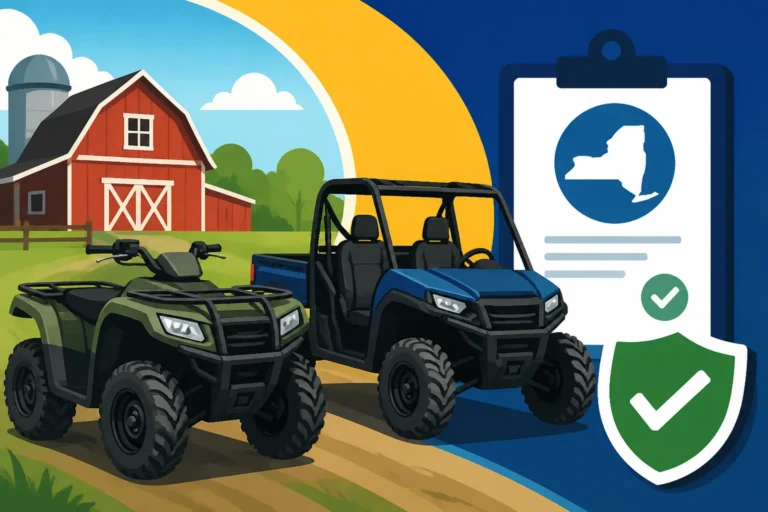
Buying an ATV that’s never been registered in New York can feel like walking into a maze without a map. You find a great deal on what looks like a solid machine, but then the seller shrugs when you ask for paperwork, saying, "Oh, nobody ever registered it, just rode it on the farm." Suddenly, that amazing deal feels fraught with anxiety, leaving you wondering how on earth you'll prove ownership to the DMV. This guide will walk you through exactly what you need to do to successfully register an ATV in New York, even if it's never been in the system before.
The Core Challenge of Buying an Unregistered ATV in New York
It’s a scenario many of us have faced: you’ve found the perfect ATV, maybe an older model, a farm quad, or something from an estate sale, and the price is right. But when you ask for the registration or title, the seller gives you a blank stare. "We never registered it," they say, "just used it on our own property." While perfectly legal to ride an unregistered ATV on private land with permission in New York, it creates a unique hurdle when you, as the new owner, want to make it street-legal for designated trails or public crossings. The challenge isn't just about paying fees; it's fundamentally about proving to the New York Department of Motor Vehicles (DMV) that the machine legitimately belongs to you.
Why Some ATVs Go Unregistered and Why It Matters
There are plenty of legitimate reasons why an ATV might never have been registered in New York. Perhaps it was a dedicated farm machine, used exclusively for chores around the property, far from any public roads or trails. Maybe it was kept at a remote camp and only trailered in and out, never seeing a formal trail system. Often, you'll encounter older machines, passed down through generations, where the original paperwork has simply been lost to time. In other cases, a machine might have been purchased out-of-state from an area where ATV registration isn't required or is handled differently, and then brought into New York.
The "why" behind its unregistered status is important because it dictates the type of paperwork you'll need to chase down. If it was always a farm machine, for instance, the original owner might never have bothered with an MSO (Manufacturer's Statement of Origin) once they got it. If it’s an inherited machine, the estate might have lost everything years ago. While New York doesn't issue titles for ATVs, which might make you think less paperwork is needed, the DMV still requires a clear chain of ownership to prevent theft and ensure proper sales tax collection. Your responsibility as the buyer is to meticulously reconstruct that chain, even if the previous owner never had to.
The Buyer's Burden: Proving Ownership to the DMV
In New York, because ATVs are considered non-titled vehicles, the DMV uses a different process to establish ownership compared to cars or trucks. They rely heavily on a combination of documents that, together, create a lineage for the machine. This is where the phrase "buyer beware" really comes into play. If you buy a machine with no history, no paperwork, and no way to trace its origins, you're essentially buying a headache. The DMV isn't going to just take your word for it that you own the machine; they need tangible proof.
This proof typically starts with the original sale document from the manufacturer or dealer and then follows every subsequent sale. If any link in that chain is missing, it's up to you to explain why and to provide supplemental evidence. This can be frustrating, especially if the seller is uncooperative or genuinely doesn't have the documents. It’s crucial to understand that the DMV's goal is to ensure the machine isn't stolen and that you've paid any applicable sales tax. Without a clear path of ownership, you could find yourself unable to register your new-to-you quad, leaving you with a paperweight you can only ride in your backyard (if you have one!). This is why [Proving Ownership Without a Title in New York] can be such a challenge.
Essential Documents You'll Need to Register an Unregistered ATV
When you're trying to register an ATV that's never seen the light of day at the DMV, documentation is your best friend. Think of it as building a legal case for your ownership. You need to gather every scrap of paper that supports your claim, presenting a clear, logical story to the DMV examiner.
The Bill of Sale: Your Foundation of Ownership
The bill of sale is, hands down, the most critical document you'll need. It's the legal contract that transfers ownership from the seller to you. For an unregistered ATV, this document takes on even greater importance because it might be the only official record of your purchase. A simple handwritten note might suffice, but a comprehensive, well-detailed bill of sale is always better.
A good bill of sale for an ATV in New York must include:
- Buyer's Full Name and Address: Your complete information.
- Seller's Full Name and Address: The seller's complete information, matching their ID.
- Date of Sale: When the transaction officially took place.
- Detailed Description of the ATV: This isn't just "red quad." It should include the make, model, year (if known), and, most importantly, the Vehicle Identification Number (VIN). The VIN is the unique identifier for that specific machine, and it's how the DMV tracks it.
- Purchase Price: The agreed-upon amount. This is crucial for calculating sales tax.
- Signatures: Both your signature and the seller's signature. If possible, having the seller's signature notarized adds an extra layer of authenticity, though it's not always strictly required for ATV registration.
You can find templates online from reputable sources like LawDepot, or even draft one yourself. Just ensure all the critical information is there. When you get to the DMV, they will also require a physical tracing of the VIN from the machine itself. This might seem old-fashioned, but it's a vital step to confirm the VIN on your paperwork matches the machine you're registering. For more on this, check out [New York ATV VIN Tracing Requirement].
The Manufacturer's Statement of Origin (MSO) or Certificate of Origin (MCO)
If you're buying a relatively newer ATV that has never been registered, the seller should have the Manufacturer's Statement of Origin (MSO) or Certificate of Origin (MCO). This is essentially the birth certificate of your ATV. It's issued by the manufacturer to the dealer and then transferred to the first retail buyer. It proves the machine is new and has never been registered before.
- If the MSO/MCO is present: This is fantastic news! It makes your life much easier. The MSO, coupled with a solid bill of sale from the dealer or first private owner, establishes a clear line of ownership from the factory to you.
- If the MSO/MCO is missing (for a newer machine): This is a red flag. Why would the original owner not have it? It could indicate a previous owner lost it, or it could point to a more serious issue like a stolen machine. If the seller can't produce an MSO for a machine that should reasonably have one (e.g., it's not ancient), proceed with extreme caution and ask for a significant discount or additional proof of ownership.
- For older machines: Many older ATVs predate the widespread use or retention of MSOs, or they've simply been lost over decades. In these cases, the DMV will rely much more heavily on a robust bill of sale and other supporting documents. Don't expect an MSO for a quad from the 80s or 90s.
When the MSO is Missing: Supplemental Proof of Ownership
So, what if the MSO is long gone, or never existed for your antique quad? This is where you need to build a chain of ownership with other documents. The DMV wants to see how the ATV got from its original point of sale (even if it was a cash deal at a long-closed dealership) to you.
- Multiple Bills of Sale: If the ATV has changed hands multiple times without ever being registered, try to get a bill of sale from every previous owner. This can be incredibly difficult, but each bill of sale adds another link to the chain. Even if you can only get a bill of sale from the person who sold it to your seller, that's better than nothing.
- Affidavits or "Statement of Facts": If there's a missing link in the chain (e.g., your seller bought it from someone who can't be found, and there's no bill of sale for that transaction), you might need to submit a "Statement of Facts." This is a sworn statement, often notarized, explaining the circumstances. It details how the current seller acquired the machine, why certain documents are missing, and affirms their legitimate ownership. While not a guaranteed solution, it can sometimes satisfy the DMV when combined with other strong evidence.
- Past Registration Documents (from other states): If the ATV was previously registered in another state that doesn't issue titles, bringing those old registration cards can help establish its history. New York will generally accept proof of previous registration from another state, even if that state doesn't have a title program. This falls under [Registering an Out-of-State Machine in New York].
Remember, the goal is to leave no doubt in the DMV's mind that you are the rightful owner. Any gaps in the documentation will be scrutinized, and you might be asked to provide more information. It's better to over-prepare than to be turned away.
Navigating the DMV Process for an Unregistered Machine
You've got your documents in hand, probably a stack of papers detailing bills of sale, maybe an MSO, and a pencil for the VIN tracing. Now it's time to face the DMV. While the process can feel intimidating, knowing exactly what forms you need and what to expect can smooth things considerably.
The Form MV-51B: Your Key to Non-Titled Registration
This is the form you need to become intimately familiar with. When you're dealing with a vehicle that doesn't have a New York title, like an ATV, you'll use Form MV-51B, "Vehicle Bill of Sale." Now, don't let the name confuse you – it's actually the multi-purpose form for registering vehicles that aren't issued a New York title, and it acts as the primary application for this type of registration. Many online guides might incorrectly point you to the standard MV-82 for titled vehicles, but that's not the right path for an ATV. For specific details, you might want to look up [Which DMV Form Registers a Non-Titled ATV in New York].
You'll need to fill out the MV-51B completely and accurately. Pay close attention to sections asking for vehicle details, your information as the applicant, and the details of how you acquired the machine. This form essentially serves as your declaration of ownership and your request for registration.
The VIN Tracing Requirement: Getting it Right
New York is particular about verifying the Vehicle Identification Number (VIN) on ATVs. Because there's no title, the VIN tracing provides physical proof that the numbers on your paperwork match the actual machine. This isn't just a casual scribble; it needs to be clear and legible.
To do a VIN tracing:
- Locate the VIN: The VIN is typically stamped into the frame of the ATV, often near the steering head, on a frame rail, or occasionally under the seat or near the engine mount. If you have trouble finding it, consult your ATV's owner's manual or look up common VIN locations for your specific make and model online.
- Clean the Area: Ensure the area around the VIN is clean and free of mud, grease, or rust. You want a clear impression.
- Place Paper Over the VIN: Take a piece of paper (a standard sheet of printer paper works fine) and place it directly over the stamped VIN.
- Rub with a Pencil: Using the side of a pencil lead (not the tip), gently rub back and forth across the paper where the VIN is underneath. The impression of the raised numbers should transfer onto the paper.
- Check Legibility: Make sure all digits are clearly visible and readable. If not, try again. The DMV clerk needs to be able to easily read and verify every character.
This tracing will be submitted with your MV-51B and other documents. The DMV takes this requirement seriously, so don't skip it or submit a sloppy tracing, or you'll likely be sent home to re-do it. More guidance is available in [Why New York Wants a Pencil Tracing of the VIN].
What to Expect at the DMV Counter
When you finally walk into the DMV office, be prepared. Have all your documents organized, including your driver's license or other proof of identity. The process will involve:
- Submitting Documents: Hand over your completed MV-51B, the original bill of sale (and any previous bills of sale or MSO), and your VIN tracing.
- Sales Tax Payment: You will pay sales tax on the purchase price of the ATV unless you can prove it was already paid (e.g., if you bought it from a dealer who collected tax, or if it was an inheritance where no sale occurred). New York's sales tax on vehicles applies to ATVs, so factor this into your budget.
- Review by Clerk: The clerk will carefully review all your documents. This is where your detailed preparation pays off. They are looking for consistency, a clear chain of ownership, and correct forms. Be ready to answer questions about how you acquired the ATV, why certain documents might be missing, or any discrepancies they notice.
- Payment of Fees: Once the documents are approved, you'll pay the registration fee and the one-time plate fee. New York ATV registration generally involves a modest fee that contributes to trail maintenance and other related programs.
- Receiving Your Registration and Plate: If everything is in order, you'll walk out with your new ATV registration document and your New York ATV license plate. Remember, this plate must be mounted on the rear of your machine in a visible location.
It's common for the DMV to be extra cautious with unregistered machines, as it's a common red flag for potentially stolen property. Be polite, patient, and prepared to provide any additional explanations requested.
Red Flags and Risks When Buying an Unregistered ATV
While many unregistered ATVs are perfectly legitimate, the lack of official paperwork inherently carries risks. As a buyer, you need to be vigilant to protect yourself from potential fraud, theft, or simply ending up with a machine you can't legally ride.
The "No Paperwork" Seller: A Major Warning Sign
This is perhaps the biggest red flag you can encounter. If a seller tells you they have absolutely no paperwork for an ATV—no bill of sale from when they bought it, no MSO (if it's a newer machine), nothing at all—you should seriously reconsider the purchase. This could indicate:
- Stolen Property: This is the most serious concern. Buying a stolen ATV, even unknowingly, can lead to losing the machine without compensation and potentially facing legal trouble yourself. The police will confiscate a stolen vehicle, and you'll be out the money you paid.
- Unclear Ownership History: Even if not stolen, a complete lack of paperwork means you have no way to prove the seller is the rightful owner. They might have found it, inherited it without proper estate documentation, or simply not own it free and clear.
- Future Registration Headaches: As discussed, the DMV requires a chain of ownership. If your seller can't provide anything, you'll have an almost impossible time convincing the DMV to register the machine in your name.
Always, always insist on some form of paperwork. Even a simple, handwritten bill of sale is better than nothing, provided it includes the VIN and seller's details. If a seller is truly legitimate but just disorganized, they should be willing to create at least a basic bill of sale for you.
Verifying the VIN: Protecting Yourself
Before you hand over any cash, take the time to inspect the ATV's VIN thoroughly. The VIN is the machine's fingerprint, and inconsistencies can be tell-tale signs of trouble.
- Match the VIN: Ensure the VIN on the physical machine perfectly matches any paperwork the seller provides (bill of sale, MSO, etc.). Every single character must align.
- Check for Tampering: Inspect the VIN plate or stamped area on the frame. Look for any signs of tampering, grinding, or re-stamping. Is the area discolored? Are the numbers slightly uneven or in a different font? Are there fresh tool marks around the numbers? These are all major red flags. A legitimate VIN should look factory-stamped and undisturbed.
- VIN Check: While New York doesn't title ATVs, you can still perform a basic VIN check through online services to see if the machine has been reported stolen. This isn't foolproof, as not all stolen ATVs are immediately entered into national databases, but it's a worthwhile step for peace of mind.
Taking these precautions can save you from a lot of heartache and financial loss down the road.
Negotiating for Missing Paperwork
If you find an otherwise desirable ATV but the seller has only partial paperwork (e.g., a bill of sale but no MSO for a newer machine, or an incomplete chain of prior bills of sale), don't necessarily walk away immediately. This can be a point of negotiation.
- Request Assistance: Ask the seller if they would be willing to help you track down previous owners for a bill of sale, or at least provide a more detailed "Statement of Facts" affidavit.
- Consider the Price: The hassle and risk associated with missing paperwork should translate to a lower purchase price. Factor in the potential time and effort you'll spend at the DMV, and the inherent risk, when making your offer. A significant discount is reasonable for a machine with a muddled paper trail.
- Have the Seller Register It: In some cases, you might even ask the seller to register the ATV in their name first before selling it to you. This puts the burden on them to sort out the ownership documentation with the DMV, and once it's registered in their name, transferring it to you becomes a much simpler process. Of course, this might add to their costs, which they might pass on to you, but it significantly de-risks the transaction for you.
Ultimately, your comfort level with the risk involved should guide your decision. A great deal isn't great if you can't legally use your machine.
Summary of Required Documents for ATV Registration in New York
To help visualize the paperwork trail, here’s a quick summary of what the New York DMV generally expects, depending on the ATV's history. Remember, the goal is always to establish a clear, unbroken line of ownership from its origin to you.
| Scenario | Primary Document | Supporting Documents (as needed) | Key Considerations |
|---|---|---|---|
| New ATV (never sold retail) | Original Manufacturer's Statement of Origin (MSO/MCO) | Bill of Sale from dealer to you, your ID, VIN tracing | MSO is critical; confirms it's never been registered. |
| Used ATV (previously registered) | Prior Registration Certificate (from NY or another state) | Bill of Sale from seller to you, your ID, VIN tracing | Previous registration helps establish history, even if from another state (see [New York Reciprocity With Other States]). |
| Used ATV (never registered) | Bill of Sale from seller to you | Seller's Bill of Sale (from their purchase), MSO (if applicable & available), your ID, VIN tracing, "Statement of Facts" affidavit | Most challenging scenario; requires robust bills of sale going back as far as possible, ideally to the MSO. |
| Inherited ATV | Will, court order, or affidavit of heirship | Bill of Sale (if previous owner bought it), MSO (if applicable), your ID, VIN tracing | Proving legal right to the machine via estate documents. (See [Registering an Inherited Machine in New York]) |
No matter the scenario, always ensure your VIN tracing is clear and accurate, and that you have valid photo identification ready for the DMV.
Disclaimer
This article is for general informational purposes only and does not constitute professional advice. Laws, prices and regulations vary by location and change over time. Consult a qualified professional for guidance on your specific situation.