Clearing a Neighbor’s Driveway for Free
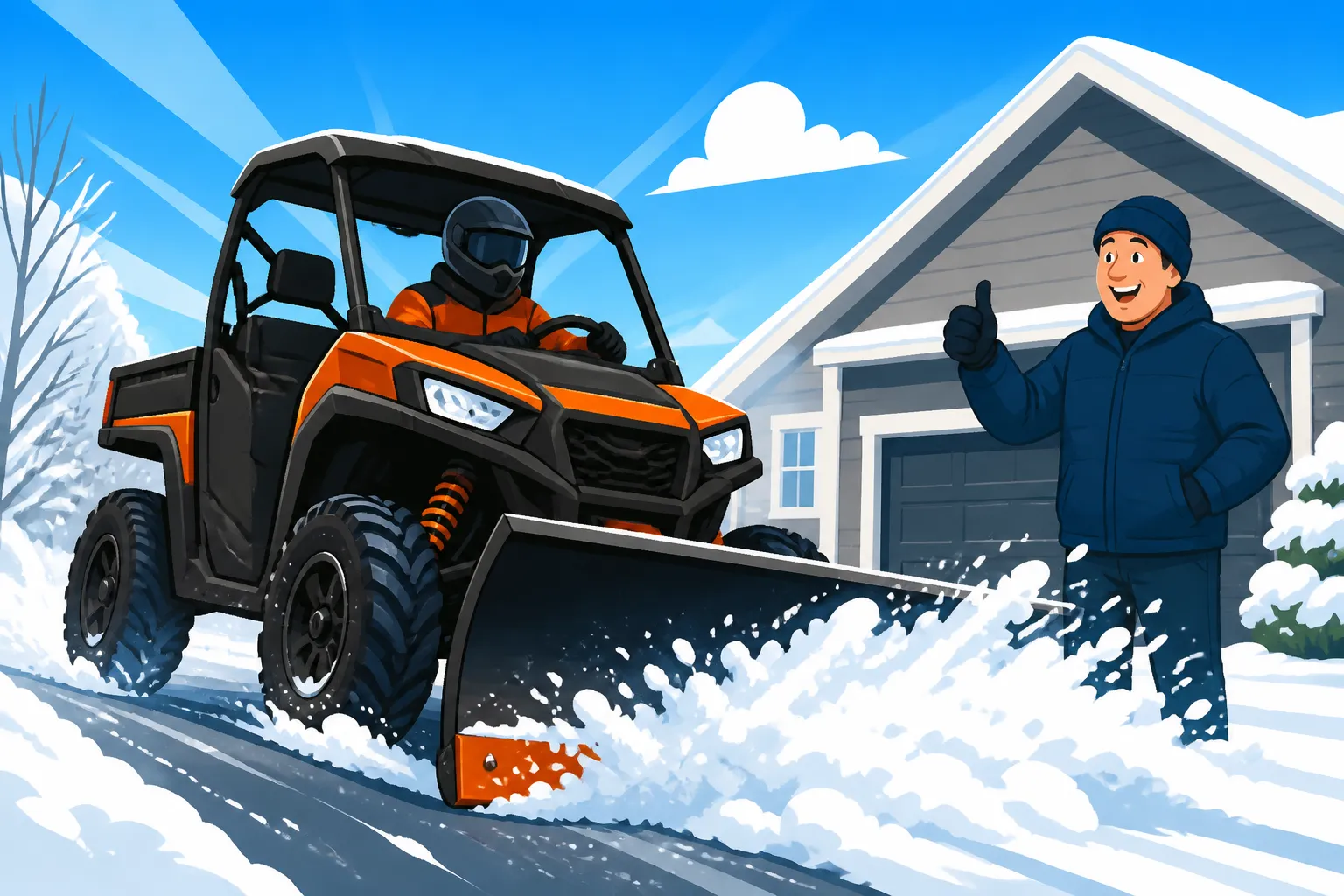
We all want to be good neighbors, don't we? When a big snowstorm dumps a foot of the white stuff and you see your neighbor struggling with their shovel, it's natural to want to fire up your trusty ATV or UTV, hook up the plow, and lend a hand. It feels like a simple act of kindness, but sometimes, doing a good deed can lead to unexpected questions about rules and regulations, especially here in New York. This guide is here to untangle the complexities around using your all-terrain vehicle or utility terrain vehicle to clear a neighbor's driveway for free, focusing on what you need to know about registration, insurance, and proving ownership without hitting any snags.
The Good Neighbor Quandary: When Does "Free Help" Get Complicated?
It’s a common scenario: you’ve got your ATV or UTV all set up for winter, maybe with a nice plow blade or a snow thrower attachment, and you see Mrs. Henderson next door, who isn't as spry as she used to be, wrestling with a heavy shovel. Your immediate thought is, "I can clear that in ten minutes!" And you'd be right. But before you rumble over, it's worth taking a moment to consider the legal landscape. While the intent is purely altruistic, operating any vehicle, even for free, brings certain responsibilities in New York State.
The main concern often revolves around whether your machine needs to be registered. Many folks assume that if they're not riding on public trails or designated roads, registration isn't necessary. And for the most part, if you're strictly on your own private property, that assumption holds true. However, the moment your wheels touch public land, even just a tiny strip of road shoulder or a town road, the rules can change dramatically. It’s this grey area, the short hop from your driveway to your neighbor’s, that often trips people up.
Beyond registration, there are other considerations like insurance, proving ownership, and even the simple act of having permission. It's not about stifling neighborly kindness, but rather ensuring that your helpful gesture doesn't inadvertently lead to a headache down the road. Understanding these points beforehand can save you a lot of worry and potential fines, keeping your focus on being the best neighbor you can be.
Do You Need to Register Your ATV/UTV Just to Plow a Driveway?
This is the million-dollar question for many New York ATV and UTV owners. The short answer is: it depends entirely on where you're operating the machine. If you're staying exclusively on private property – meaning your property and your neighbor's property, without ever touching a public road or even the shoulder – then generally, your ATV or UTV does not need to be registered with the DMV. New York State law explicitly exempts machines used solely on private land from registration requirements.
However, the definition of "private property" can sometimes be fuzzier than it seems. Does your neighbor's driveway connect directly to yours through an easement? Or do you have to cross a town road, even for a few feet, to get from your place to theirs? If any part of your journey involves a public thoroughfare, no matter how brief or seemingly insignificant, your machine must be registered. This includes crossing the pavement, riding along the shoulder, or even just using a public right-of-way that runs between properties. Even for a good deed, the law is pretty clear on this point.
The distinction is crucial. An unregistered ATV or UTV operating on a public road, even briefly, can result in fines and other penalties. It’s not worth risking a ticket just to clear a few feet of snow, no matter how much you want to help. So, before you leave your own property, consider the route carefully. If there's any public land involved, even the tiniest strip, then registration is a must. If you have any doubts, err on the side of caution and get that machine registered. [Do You Need to Register an ATV in New York?] covers this in more detail.
Understanding "Private Property" and Its Limits
When we talk about "private property" in the context of ATV and UTV operation, we're referring to land that is privately owned and not open to the general public for vehicular travel. This definitely includes your own yard, your fields, and your neighbor's residential driveway and land. The key is that the land is under private control and not maintained by the state, county, town, or village as a public road or right-of-way. Operating an unregistered machine is generally permissible on such land, provided you have the landowner's permission.
The moment your wheels cross a property line onto land designated for public use, even if it's unpaved, unmaintained, or looks like a simple dirt path, you've left the sanctuary of "private property." This often includes the shoulder of a public road, drainage ditches alongside roads, and even utility easements that run across private land but are designated for public access or infrastructure. It’s these subtle boundaries that catch people out. A quick dash across a village street, for instance, immediately brings your unregistered machine into violation territory.
Even if the "road" connecting your property to your neighbor's is just a gravel lane that hardly ever sees traffic, if it's maintained by the town or accessible by the general public, it's likely considered a public thoroughfare. The "private property" exemption for ATV registration is quite strict: it applies only when the machine never, at any point, leaves land that is exclusively private. This means if you have to use a public road to connect to your neighbor's driveway, even for a few yards, you’ll need a registered machine.
The Fine Print: Permission, Liability, and Proof of Ownership
So, you've confirmed that your neighbor's driveway is truly accessible without touching public land, or perhaps your machine is already registered. Great! But there are still a few important considerations before you start pushing snow. Even a simple act of helping a neighbor brings up questions of permission, potential liability if something goes wrong, and having proper proof that the ATV or UTV you're operating is actually yours. These details might seem minor, but they can save you a lot of grief.
Think about it: while you're doing a kind deed, accidents can happen. Maybe you accidentally clip their mailbox, or worse, someone gets hurt. What if a curious child from down the street wanders into the driveway while you're backing up? These aren't pleasant thoughts, but they're realistic scenarios that highlight the need for clear communication and some basic protections. Being prepared for these possibilities is just as important as knowing the registration rules.
Furthermore, even if you’re not making money, operating a valuable piece of equipment on someone else’s property means you should be able to demonstrate that you legitimately own it. New York State doesn't issue titles for ATVs, which adds another layer to proving ownership. It’s all about being responsible and ensuring your good intentions are backed up by good practice.
Getting Permission: More Than Just a Nod and a Wave
While a friendly "Go ahead, thanks a million!" might feel sufficient, for something involving machinery and potential property damage, it's always wise to get explicit permission from your neighbor. This isn't just about common courtesy; it's a critical step in protecting yourself from potential misunderstandings or liabilities. Imagine if, unbeknownst to you, your neighbor had just put down new pavers, and your ATV's weight or plow blade somehow scuffs them. Without clear permission, you could find yourself in a sticky situation.
Even though you’re helping for free, it’s not out of line to have a brief, clear conversation about what you'll be doing. Ask them where they want the snow piled, whether there are any hidden obstacles like decorative lights or fragile landscaping to be aware of, and if they have any specific concerns. This conversation clarifies expectations and demonstrates your thoughtfulness. It transforms a casual offer into a responsible act of service.
For extra peace of mind, especially if you foresee this becoming a regular occurrence or if the neighbor is an elderly person, consider a simple written agreement. It doesn't need to be fancy or complex – just a brief note stating that you have permission to enter their property with your ATV/UTV for the purpose of snow removal, and that they acknowledge it's being done as a free favor. Resources like LawDepot offer templates for basic personal agreements that, with a little modification, could be adapted for this purpose, offering a layer of protection for both parties. [Landowner Consent on New York Private Land] also elaborates on this.
The Role of Insurance, Even for Free Service
Many New York ATV and UTV owners are surprised to learn that New York law mandates liability insurance for these machines when they are operated anywhere other than solely on your own property. This means if you're plowing your neighbor's driveway, even for free, you must have the required insurance coverage. This is a huge point often overlooked, as people equate "free" with "no risk," which simply isn't true in the eyes of the law or in practical terms.
The mandatory insurance covers bodily injury and property damage that your machine might cause. So, if you accidentally hit their garage door, or if someone slips and falls on snow you’ve pushed into a walkway (even if it wasn't your intention), your liability insurance would come into play. Without it, you would be personally responsible for any damages or injuries, which could be financially devastating. This requirement applies whether your machine is registered or not, as long as it's being operated on land other than your own.
Before you even think about starting your engine, check your ATV or UTV insurance policy. Confirm that it provides the minimum liability coverage required by New York State and that it extends to operating your machine on another person's private property. If you only have coverage for your own land, or if you don't have a policy at all, it's essential to secure one. It's a small investment for massive peace of mind, protecting both you and your neighbor from unforeseen accidents. [New York's Mandatory ATV Insurance] details the specifics of these requirements.
Proving Ownership Without a Title
New York State does not issue titles for ATVs, which can sometimes make proving ownership a bit more challenging than with a car or truck. However, for snow removal on a neighbor's driveway, proof of ownership primarily becomes important in situations like theft, an accident investigation, or if a law enforcement officer has questions about the machine you're operating. While you won't typically be asked for it when simply plowing, it's good practice to always have readily available documentation.
The primary forms of ownership proof for an ATV in New York are your bill of sale and your registration certificate (if the machine is registered). A detailed bill of sale, especially if notarized or witnessed, is the strongest evidence you have that you are the rightful owner. It should clearly identify the seller, buyer, the date of sale, the purchase price (even if $0 for a gift), and most importantly, the ATV's Vehicle Identification Number (VIN) or frame number. Keep this document in a safe place, but have a copy accessible.
If your machine is registered, your New York ATV registration certificate also serves as excellent proof of ownership, as it links the VIN directly to your name. While you don't need to carry the original bill of sale on your person, having your current registration certificate and proof of insurance accessible when operating the machine is always a good idea. Should any unforeseen circumstance arise, being able to quickly verify you're operating your own machine can save a lot of hassle. For more on this, check out [New York ATV Proof of Ownership Requirements] and [New York ATV Bill of Sale Requirements].
Navigating the Public/Private Boundary
The critical distinction in New York is whether your ATV or UTV will ever touch a public road or its right-of-way. Even if you're offering free snow removal, if your journey from your garage to your neighbor's driveway requires you to cross or use any public land, your machine instantly falls under the state's registration and insurance mandates. This isn't just a recommendation; it's a legal requirement with real consequences if ignored.
Consider the layout of your properties. Is there a shared private drive? Do you live on a quiet dead-end road where you could technically just stay on the shoulder? Even a shoulder is often considered part of the public right-of-way. The law doesn't make exceptions for short distances or good intentions. If it's a public way, your machine needs to be street-legal in terms of registration and insurance.
Understanding this boundary is paramount. It determines whether your act of kindness remains simple and hassle-free, or whether it inadvertently opens you up to fines and legal complications. Ignorance of the law is not a valid defense, and a simple act of helping can quickly turn sour if you're not properly equipped with the necessary paperwork.
Crossing a Public Road to Get to the Neighbor's
This is where many people run into trouble. Let's say your property is separated from your neighbor's by a town road, a county road, or even a quiet village street. To get your ATV or UTV from your driveway to theirs, you'll inevitably have to cross that public thoroughfare. The moment your wheels roll onto that pavement, your ATV or UTV is no longer operating solely on private property. This means it must be registered with the New York DMV and have the required liability insurance.
New York law is very clear: "no person shall operate an all-terrain vehicle in this state unless it is registered and numbered as provided in this article." There are specific exemptions, as discussed, for operating solely on private land, but crossing a public road negates that exemption immediately. It doesn't matter if it's just 20 feet, or if there's no traffic around; the rules still apply. An unregistered machine on a public road, even for a few seconds, can lead to a ticket.
If you absolutely must cross a public road, ensure your machine is registered and insured, and that you understand the rules for crossing a highway on an ATV in New York. You typically need to make the crossing at a right angle, stop before entering the roadway, and yield to all traffic. While you might be able to cross a public road, you generally cannot ride along it or its shoulder. So, if your neighbor's driveway is a quarter-mile down a public road, crossing isn't enough; you'd be riding on the road, which is usually prohibited.
What Happens If You're Caught Unregistered on Public Land?
The consequences of operating an unregistered ATV or UTV on public land, even accidentally or for a very brief moment, can be significant. Law enforcement officers, whether it's a State Trooper, Deputy Sheriff, or local police, are well aware of the registration requirements for ATVs and UTVs. If you're spotted, even just crossing a road, you could face fines and other penalties. These aren't just minor slaps on the wrist; they can be costly.
Fines for operating an unregistered ATV can vary, but they can quickly add up. Beyond the monetary penalty, your machine could potentially be impounded, creating an even bigger headache and additional costs to retrieve it. It's an unnecessary risk to take, especially when the goal is simply to help out a neighbor. The small cost of registration is far less than the potential fines and hassle of dealing with a violation. [New York Fines for an Unregistered ATV] can give you a clearer picture of the potential financial impact.
Furthermore, if you are involved in an accident while operating an unregistered and uninsured ATV on public land, the repercussions can be severe. Your mandatory liability insurance is designed to cover damages you cause. Without it, you would be personally on the hook for any property damage or personal injury claims. This is why it's always prudent to ensure both registration and insurance are in order if there's any chance your machine will touch public property.
Formalizing Agreements for Peace of Mind
Even with the best intentions, it's wise to approach neighborly help with a bit of formality, not to make things complicated, but to protect everyone involved. A simple conversation is a good start, but putting a few key details down on paper can prevent misunderstandings and provide a clear record, especially when using a machine that carries inherent risks. This doesn't mean you need a lawyer for every snow-clearing favor, but a basic understanding of agreements can be highly beneficial.
This is where a simple written permission or liability waiver can be incredibly useful. It might seem overkill for clearing a driveway, but it's about setting clear expectations and acknowledging responsibilities. It ensures both you and your neighbor are on the same page regarding the scope of the work, any potential risks, and that the service is indeed offered for free.
Having a template for such an agreement can be a lifesaver. You don't have to draft it from scratch. Online legal resources offer simplified forms that you can easily adapt. This proactive step might feel a little formal, but it’s a smart way to ensure that your good deed doesn’t inadvertently create a problem later.
Why a Simple Written Agreement Can Protect Both Parties
While a verbal agreement works for many things, a written agreement, even a very simple one, adds a layer of clarity and protection for both you and your neighbor when operating an ATV or UTV on their property. It doesn't have to be a multi-page legal document. A short, signed note can confirm:
- Permission: That you have explicit permission to be on their property with your machine.
- Scope of Work: What specific task you're performing (e.g., "snow removal from the main driveway").
- No Compensation: That the service is provided entirely free of charge. This is crucial as it prevents any future claims of implied contract or payment.
- Acknowledgment of Risk: A brief statement acknowledging the inherent risks of operating heavy machinery and perhaps a mutual agreement to waive claims for minor accidental damage, provided there is no gross negligence.
This simple document can prevent "he said, she said" scenarios if a minor issue arises, such as a damaged sprinkler head or a scuffed lawn ornament. It solidifies the understanding that you are acting as a volunteer, not a paid contractor. It sets expectations and ensures that the spirit of neighborly goodwill remains intact, even if unforeseen circumstances occur.
Using Resources Like LawDepot for Basic Agreements
You don't need a law degree or an expensive lawyer to draft a protective agreement for a simple favor. Online platforms like LawDepot provide user-friendly templates for a wide range of legal documents, which can be incredibly helpful for situations like this. While they may not have a specific "neighborly snow removal waiver," you can often find general liability waivers or simple service agreements that can be easily customized to fit your specific needs.
For instance, you might use a basic service agreement template and modify it to explicitly state that the service (snow removal) is being provided gratuitously (for free) and that the neighbor grants you permission to operate your ATV/UTV on their property for this specific purpose. You could also include a clause acknowledging that the neighbor has pointed out any potential hazards and that you are not liable for incidental damage unless it results from gross negligence.
Taking a few minutes to fill out such a template and having both parties sign it can prevent countless headaches down the line. It transforms a casual favor into a recognized arrangement, ensuring that everyone understands the terms. This isn't about distrust; it's about being responsible and ensuring your helpful nature is protected by clear communication and a little bit of foresight.
Final Checkpoints Before You Plow
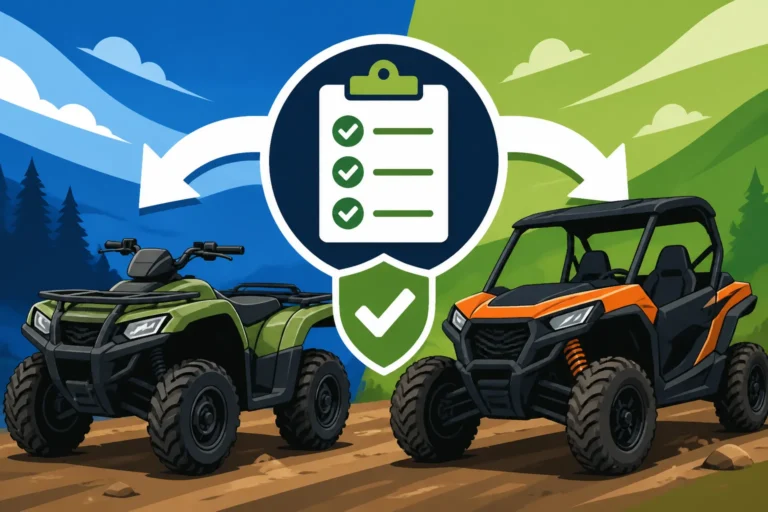
Before you head out to help your neighbor, take a moment to run through a quick checklist. These are the crucial steps to ensure your good deed goes off without a hitch and adheres to New York's specific regulations for ATV and UTV operation. Skipping any of these could turn a simple act of kindness into an unexpected hassle.
| Requirement | Applies If… | What to Check/Do |
|---|---|---|
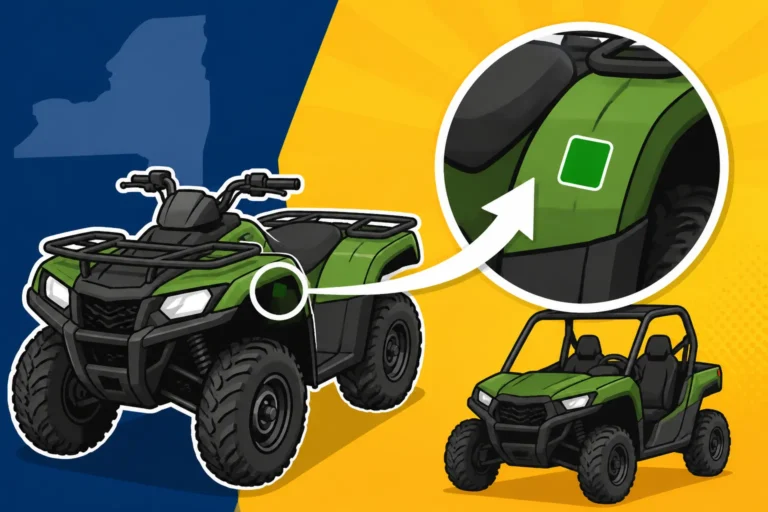
| ATV Registration | Your machine touches any public road, shoulder, or right-of-way. | Is your current New York ATV registration sticker valid and displayed? [New York's Annual ATV Registration] |
| ATV Insurance | Your machine is operated on any property other than your own. | Do you have proof of valid liability insurance? Does it meet New York's minimums? [New York ATV Insurance Requirement] |
| Neighbor's Permission | You are operating on your neighbor's property. | Have you had a clear conversation? Consider a simple written agreement. LawDepot |
| Proof of Ownership | You are operating your machine (good practice always). | Do you have your bill of sale and/or registration handy (copy is fine)? [Proving Ownership Without a Title in New York] |
| Route Planning | Moving from your property to your neighbor's. | Can you reach their driveway without touching a public road? If not, is your machine registered and insured? |
This quick table should help you quickly assess your situation. If you're in doubt about any of these points, it's always best to get things in order before you start the engine. A little preparation goes a long way in ensuring your efforts to help are appreciated and problem-free.
Disclaimer
This article is for general informational purposes only and does not constitute professional advice. Laws, prices and regulations vary by location and change over time. Consult a qualified professional for guidance on your specific situation.