Do You Need to Register an ATV in New York?
Navigating the world of ATV ownership in New York State can sometimes feel like you need a law degree just to figure out where you can ride and what paperwork you need. One of the biggest head-scratchers for new and even experienced riders is whether your beloved all-terrain vehicle actually needs to be registered. It’s a common source of confusion, leading to unnecessary stress and sometimes, even unexpected fines. This guide is here to cut through the noise, explaining exactly when and why you need to register your ATV in New York, and what happens if you don't.
The Core Question: Is New York ATV Registration Mandatory?
Let's get straight to the point because nobody wants to waste time or money on something they don't need. The short answer to whether you need to register your ATV in New York is, generally, yes. However, like most things involving state regulations, there are important nuances and exceptions that are absolutely vital to understand. It's not a simple blanket rule, and overlooking the details can land you in a heap of trouble.
The Simple Answer and Its Nuances
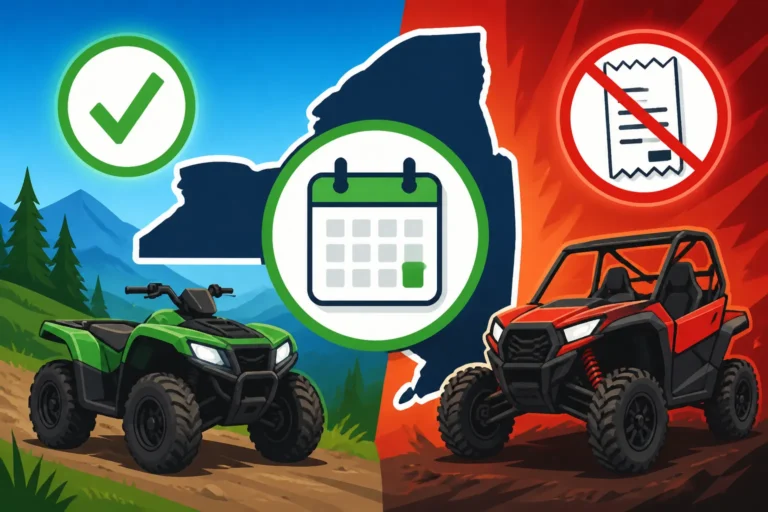
For the vast majority of riders and machines, if you plan on operating your ATV anywhere beyond your own private property, it needs to be registered with the New York Department of Motor Vehicles (DMV). This means if you're hitting the county trails in Lewis County, crossing a town road to get to a friend's hunting spot, or participating in an organized club ride, your ATV must have a current New York registration. It feels like one more hoop to jump through, doesn't it? Another piece of paper, another fee. But there's a good reason for it, from a state perspective. The fees collected from registration actually go towards important initiatives like maintaining trails and supporting ATV safety programs. Knowing [Where New York ATV Fees Go] can sometimes make the process feel a little less like a burden.
The intent behind the registration requirement is multifaceted. Firstly, it's about identification. In the event of an accident, a stolen machine, or a rider causing damage, a registered vehicle can be traced back to its owner. Secondly, it's about safety and regulation. Registration is often tied to insurance requirements, ensuring that if something goes wrong, there's a basic level of financial protection. Finally, it's about funding the very trail systems and infrastructure that we all love to ride. Without those registration dollars, the trails we enjoy might not exist or be as well-maintained.
The "Private Land" Exemption and Why It's Tricky
Here's where the primary exception comes into play, and it's one that often causes confusion. If you only ever operate your ATV on land that you own, and never, ever venture onto public lands, roads, or even cross a public right-of-way, then you are technically exempt from the registration requirement. This might sound great if you have a sprawling property in the Catskills or a vast farm upstate.
However, the "only" part is absolutely critical. Imagine you own a large parcel of land, but there's a town road that cuts through the middle, connecting two sections of your property. If you ride your ATV from one side of your land to the other by crossing that public road, even for a mere few seconds, you're no longer "only" on private property. At that moment, your ATV needs to be registered. Similarly, if you trailer your machine down a public road to a friend's private property, or even to a local gas station, you're effectively using public infrastructure, and the registration requirement kicks in. It's a fine line, and many riders assume their vast private acreage gives them a pass, only to be surprised when they briefly cross a town road or a utility easement. Understanding [Riding Your Own Property Under New York Law] is key here, as even seemingly minor deviations from strict private-land-only riding can trigger the registration mandate.
Understanding What "Counts" as an ATV in New York for Registration
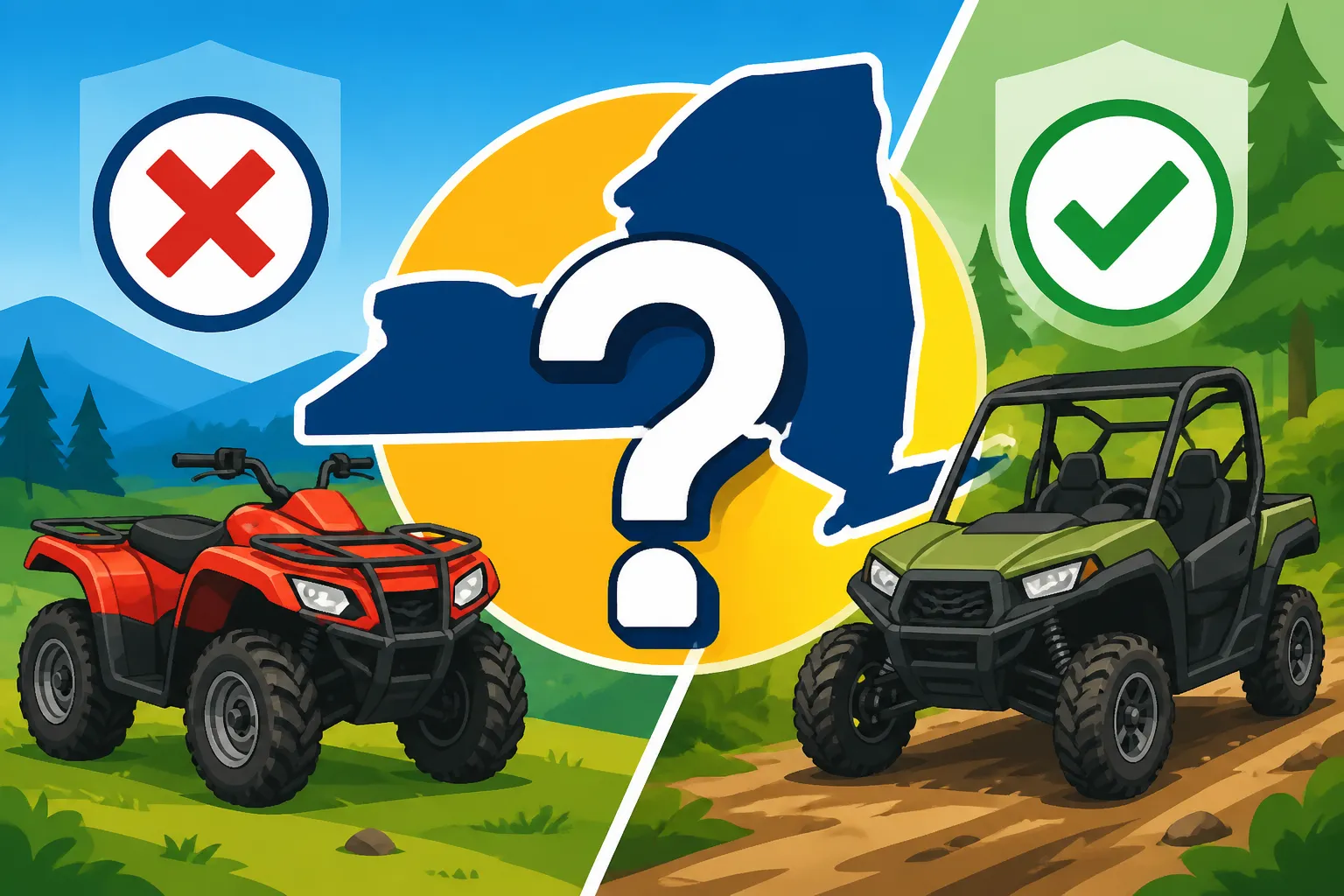
This is another huge area of confusion, especially with the explosion in popularity of side-by-side (SxS) vehicles, often referred to as UTVs. Many riders assume that if it has four wheels and goes off-road, it's an ATV. But New York State has a very specific legal definition, and if your machine falls outside those parameters, it simply cannot be registered as an ATV. This distinction is paramount and often catches people off guard after they've already purchased their dream machine.
The Official Definition and Why It Matters for Your Machine
New York's definition of an "all-terrain vehicle" is quite narrow, especially when it comes to dimensions. Generally, an ATV must be less than 70 inches wide and weigh less than 1,000 pounds. When you think about it, that rules out a significant number of popular modern side-by-sides right off the bat. Many folks get caught off guard here, especially with machines that seem to fit the bill visually but exceed the weight or width when measured.
Here's a quick comparison to illustrate the challenge:
| Feature | New York ATV Legal Limit | Typical Sport ATV (e.g., Yamaha Raptor) | Typical Modern Side-by-Side (e.g., Polaris Ranger 1000) |
|---|---|---|---|
| Maximum Width | Under 70 inches | ~45-49 inches | ~60-65 inches (some models exceed 70 inches) |
| Maximum Weight | Under 1,000 pounds | ~400-600 pounds | ~1,500-2,000+ pounds |
| Passengers | Designed for one (some two-up models exist) | Typically one rider only | Often designed for 2-6 passengers |
As you can see from the table, most modern side-by-sides, while fantastic machines for work or recreation, simply do not meet the legal definition to be registered as an ATV in New York. This is a common source of frustration for UTV owners who move to New York or purchase a new machine only to find they can't legally ride it on public trails. For a deep dive into why these larger machines often don't qualify, check out [Why Most Side-by-Sides Cannot Be Registered in New York]. This is crucial information that could save you from making a costly mistake if you're in the market for a new off-road vehicle.
Exceptions and Special Cases
While the width and weight limits are strict, there are a few scenarios where different rules might apply, or where specific uses are exempt from the standard registration requirements.
- Agricultural Exemption: If your ATV is used exclusively for agricultural purposes on land actively farmed, it might fall under an agricultural exemption. This isn't a free pass to ride anywhere, though. It's specifically for farm work—like checking fences, hauling feed, or moving equipment on your own fields. If that "farm quad" ever leaves the farm for recreation, it absolutely needs registration. You can learn more about the specifics of this exemption in [The Agricultural Exemption in New York].
- Snow Removal on Private Property: Similarly, if your ATV is equipped with a plow and used solely for snow removal on private property, it may not require registration for that specific function. Again, this is not an invitation to plow your neighbor's driveway for a fee and then rip through the woods without a plate. The moment you use it for anything beyond its primary, exempt purpose, registration becomes mandatory. For details on this, see [Snow Removal on Private Property].
- Youth Machines: Don't think that just because a machine is smaller or designed for a younger rider, it gets a pass. Youth ATVs, if ridden off private land, still need to be registered. The rules apply to the machine, not just the age of the operator. Parents often wonder about this for their kids' machines, and the answer is a clear yes. More information is available in [New York Registration for a Youth Machine].
- Electric ATVs: With the rise of electric vehicles, many people are curious if electric ATVs are treated differently. As far as registration goes, an electric ATV still needs to meet the physical dimensions (width, weight) of a combustion engine ATV to be registered. There's been discussion and proposed legislation around electric ATVs, but as of now, the core definition largely holds. You can stay informed on potential changes by looking into articles like [Electric ATVs and New York's Registration Rules].
The Consequences of Not Registering Your ATV
Ignoring the registration requirements isn't just about bending the rules a little; it carries real, tangible consequences that can range from inconvenient fines to much more serious legal and financial headaches. It's a risk that simply isn't worth taking when the registration process is relatively straightforward.
Fines and Legal Trouble
If you're caught operating an unregistered ATV on any land or trail where registration is required, you're likely going to face a fine. New York law enforcement officers, especially those in areas with popular ATV trails like the Tug Hill Plateau or Lewis County, are very familiar with these regulations. They know what to look for, and they're not shy about pulling over riders who are out of compliance. It's not just a minor infraction; these fines can be significant, quickly eating into your riding budget. Imagine planning a fun weekend ride, only to have it cut short by a ticket that costs more than a year's registration fee. You can find more specific details on the penalties in [New York Fines for an Unregistered ATV].
Beyond the initial fine, there can be additional layers of trouble. Operating an unregistered ATV might also invalidate your insurance coverage, which leads us to an even bigger problem. New York mandates ATV insurance for good reason, and if your machine isn't legally registered, your insurance company might have grounds to deny a claim if you're involved in an accident. That means you could be personally on the hook for property damage or, even worse, medical expenses from an injury. The interconnectedness of [New York ATV Registration and Insurance Proof] is vital here. Don't assume your policy will cover you if you're not compliant with registration laws.
Impact on Ownership and Resale
New York is one of the states that does not issue titles for ATVs. This can be a bit confusing for owners, as a title is often seen as the ultimate proof of ownership for vehicles. In the absence of a title, a strong paper trail becomes even more important, and registration is a significant part of that. When you register your ATV, the DMV creates a record linking you to that specific machine by its Vehicle Identification Number (VIN). This record serves as a crucial piece of ownership documentation.
If you decide to sell an ATV that has never been registered, or whose registration has lapsed for a long time, it can make the sale much more difficult. A savvy buyer will be wary of purchasing a machine without any registration history, as it makes it harder for them to prove ownership and get it registered themselves. This is where a clear and comprehensive bill of sale becomes indispensable. You might use a template from a reputable service like LawDepot to create a legally sound bill of sale, ensuring all necessary details are included. This document, combined with any previous registration documents (even if expired), helps establish a chain of ownership. When selling, you'll need to provide the new owner with a valid bill of sale and any previous registration documents you have. For more on what's required, review [New York ATV Bill of Sale Requirements]. Trying to sell a machine without any official paperwork can lead to suspicion, lower offers, or simply an inability to find a buyer who's willing to take the risk. For more on proving ownership in a non-titled state, consider [Proving Ownership Without a Title in New York].
The Process: How to Get Your ATV Registered in New York
So, you've decided your ATV needs to be registered (good choice!). Now, let's walk through what you'll need and how to get it done. The process is designed to be straightforward, but like any bureaucratic task, having all your ducks in a row before you head to the DMV will save you a lot of time and frustration.
Essential Paperwork and Steps
Registering your ATV generally requires a few key documents and a trip to your local DMV office. Here’s what you’ll typically need:
- Form MV-51B, "Application for Registration/Title": Despite the name, this form is used for both titled and non-titled vehicles, and it's the one you'll need for your ATV. Make sure to fill it out completely and accurately. This form is your primary application document, and any errors could lead to delays. For a breakdown of this specific form, see [New York's Form MV-51B Explained].
- Proof of Ownership: Since New York doesn't issue titles for ATVs, your proof of ownership will usually be a bill of sale.
- If bought from a dealer: You'll typically get a Manufacturer's Certificate of Origin (MCO) or a dealer's bill of sale. The dealer usually handles much of the initial paperwork for you, but you'll still need their documentation.
- If bought from a private seller: A notarized bill of sale is ideal, though not always legally required in New York for ATVs. However, it's highly recommended for your own protection and to streamline the DMV process. A well-drafted bill of sale, perhaps generated using a service like LawDepot, should include the date of sale, buyer and seller information, the ATV's VIN, make, model, year, and sale price. It acts as your crucial link in the chain of ownership.
- Previous registration: If the ATV was previously registered in New York, the previous owner's registration document (or a copy) can also serve as proof of ownership, alongside the bill of sale.
- Proof of Identity and Residency: You'll need a valid New York State driver's license or non-driver ID, or other acceptable forms of identification as specified by the DMV. Proof of residency might also be required, such as a utility bill or bank statement.
- Proof of New York ATV Insurance: This is non-negotiable. You must have liability insurance that meets New York's minimum requirements before you can register your ATV. Bring your insurance card or policy declaration page.
- Pencil Tracing of the VIN: Yes, you read that right – a pencil tracing! The DMV often requires a clear pencil tracing of your ATV's VIN (Vehicle Identification Number) directly from the frame. This is to ensure accuracy and prevent fraud. It's a quirky step, but essential. Get a piece of paper, place it over the VIN, and rub a pencil lightly across it to transfer the number. More details on this specific requirement can be found in [Why New York Wants a Pencil Tracing of the VIN].
- Payment for Fees: Be prepared to pay the registration fee and any other applicable taxes or fees.
Where and When to Register
Once you have all your documents in order, you'll need to visit a New York State DMV office. While many services can be done online, initial ATV registration typically requires an in-person visit. You can usually find your closest office and check their hours on the DMV website. [Where to Register an ATV in New York] will give you more context on the process.
New York ATV registrations operate on a fixed annual cycle, which runs from September 1st to August 31st. This means that regardless of when you register your ATV during the year, your registration will always expire on August 31st. For instance, if you register your ATV in March, it will still expire on August 31st of that same year. This fixed expiration date means there's no proration, so if you register late in the cycle, you're still paying the full annual fee. This particular aspect can be a bit frustrating for riders who buy a machine mid-year, but that's how the system works. You can find more information about this fixed date in [New York's August 31 Expiration].
The initial cost to register your ATV will include the registration fee and a one-time plate fee. While the annual renewal fee is the recurring cost, that initial plate fee is paid only once for the life of the machine under your ownership. The specific amounts can vary, but generally, the initial registration costs are quite reasonable, especially when weighed against the potential fines for non-compliance. Details on [New York ATV Registration Cost] will help you budget for this.
Disclaimer
This article is for general informational purposes only and does not constitute professional advice. Laws, prices and regulations vary by location and change over time. Consult a qualified professional for guidance on your specific situation.