New York Trails for Beginners
A first ATV ride in New York can feel harder to plan than it should: trails may be seasonal, access can depend on a county permit or club, and a route that looks easy on a map may be muddy, rocky, or closed. This guide explains how to choose a beginner-friendly riding area, prepare for local rules, and make your first outing manageable.
Choose a riding area that suits a first-time rider
Start with the type of ride you want
“Beginner-friendly” can mean different things. A new rider may want a short, wide, clearly marked route with a nearby staging lot and room to stop. A family might prefer a place with several loop options so a young rider can turn back early. Someone learning on a full-size machine may care more about predictable footing and low traffic than a short distance.
Before you choose a destination, decide what a comfortable first ride looks like. For example, a two-hour outing with a few stops is a sensible target for someone who has never ridden on a trail. A long ride across several connected areas can be tiring even when the terrain is not especially difficult. Mud, repeated bumps, shifting your weight, and concentrating on other trail users all take energy.
New York offers different kinds of riding opportunities, including county and club trail systems and private riding parks. They are not interchangeable. Publicized trail mileage does not necessarily mean every route is open to every machine, at every time of year, or without additional requirements. Check the area’s access rules before you load the ATV, and use [New York's County Trail Systems Compared] as a starting point for understanding how areas can differ.
Compare areas by practical beginner needs
A large network may sound exciting, but a smaller area with clear access information can be less stressful for your first day. Look for a current trail map, a defined staging area, posted rules, and a way to confirm closures or conditions. If you are considering a private park such as Tall Pines ATV Park near Andover, confirm its current requirements directly before traveling. Do not assume that the rules for a private park match those for a county trail system.
Lewis County and Oswego County are among the New York areas riders commonly investigate, but the word “trail” alone does not tell you what the ride will be like. Routes can vary in width, surface, traffic, and difficulty, and conditions can change after rain or during seasonal transitions. Ask which routes are most appropriate for a novice, whether a loop can be shortened, and whether the trail is open to your particular machine.
Use a map to plan, but treat it as one part of your decision. A tool such as onX Offroad can help you look over a riding area and organize a route, but confirm access, closures, permit requirements, and the route’s actual suitability with the county, club, or park responsible for it. For beginners, a clear answer from the trail operator is more useful than an impressive mileage number.
| What to check | Why it matters for a beginner | What to ask before leaving |
|---|---|---|
| Trail surface and difficulty | Mud, rock, ruts, and steep sections can quickly tire a new rider | Which routes are easiest for a first-time rider? |
| Route length and exits | A short loop or easy turnaround helps you stop before fatigue sets in | Can we shorten the ride or return to the staging area? |
| Machine eligibility | Width, registration, and local access rules may limit where a machine can go | Is this ATV or UTV allowed on these trails? |
| Staging and parking | A confusing or crowded start can add stress before the ride begins | Where should we unload, and is overnight parking allowed? |
| Permits and membership | Access may depend on local requirements, not just state registration | Which permit, club membership, or pass is needed? |
| Conditions and closures | Thaw, rain, maintenance, or landowner decisions can change access | What is open today, and where are updates posted? |
Prepare your machine and understand access rules
Confirm the trail is open to your machine
One of the most frustrating mistakes is arriving with a machine that cannot use the route. New York’s ATV definition and registration rules can affect some larger side-by-sides, and trail systems may set their own restrictions as well. Do not rely only on a sales description such as “trail ready.” Confirm your machine’s eligibility with the authority managing the particular trail.
Check dimensions and weight before you travel if your machine is close to a limit. A side-by-side that is too wide for the applicable rules may not be eligible for registration or may not fit a narrow trail. A route’s physical width is also not permission to ride it: the machine must be legally permitted there, and the route must be open to that type of vehicle. These details are especially important when you are buying or borrowing a machine for a planned trip.
Registration, insurance, and trail access are separate questions. A machine’s registration does not automatically provide access to every riding area, while a county or club permit does not replace other legal requirements. Review [New York ATV Trail Permits Explained] and verify the rules for your destination. If you are bringing a machine from another state, check whether its registration is recognized for the riding you plan to do rather than assuming that your home-state paperwork settles every New York requirement.
Check maps, markers, and conditions before unloading
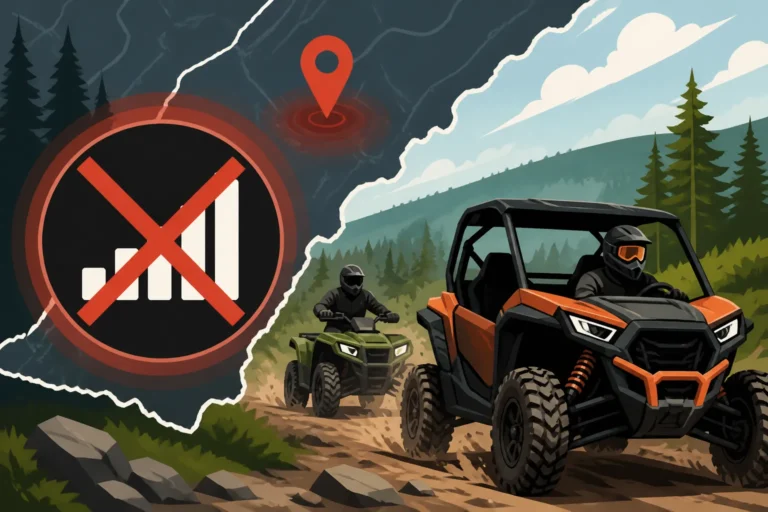
Download or save the appropriate map before you leave home, especially if the riding area has spotty cell coverage. Start with the official county, club, or park map when one is available. An app such as onX Offroad can be a useful planning aid, but it should not override posted signs or a trail operator’s closure notice. Keep a backup plan, such as a saved map or a paper copy, in case your phone battery dies or you lose reception.
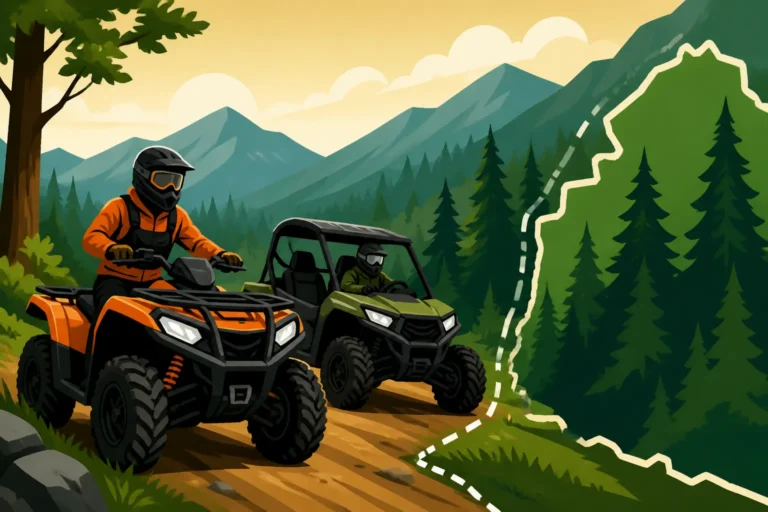
When you reach the area, take time to understand the markers before riding away from the staging lot. Follow the route designations and do not treat an unmarked road, logging track, or tempting side trail as open simply because it looks rideable. [Following County Trail Markers] is worth reviewing if you are unfamiliar with how a marked route guides you through a trail system.
Conditions matter as much as the map. A route that felt manageable in dry weather may become slick or deeply rutted after rain. Spring thaw can be particularly rough on trails, and some areas delay opening or close routes to prevent damage. Check [New York Trail Conditions Before You Ride] and the local operator’s latest notices. If the information is unclear, call or message the organization before making the drive.
Make the first ride safer and more comfortable
Keep the first outing short and unhurried
For a first trail ride, pick a modest route and give yourself permission to turn around. New riders often underestimate how tiring it is to watch the ground, steer around obstacles, and maintain a steady pace for hours. A planned stop is not a failure; it is a chance to rest, check the map, and decide whether everyone wants to continue.
Ride at a pace that lets you react to the surface and other users. Leave enough space between machines to avoid dust, sudden stops, and collisions. If you are riding with a more experienced friend, agree in advance that the group will stay together and that nobody will pressure the beginner to keep up. A patient lead rider can point out obstacles early and choose a pace that feels controlled.
Bring basic items for the length and remoteness of the route: water, suitable clothing, a charged phone, and any equipment required by law or the trail operator. Check your machine before departure, including tires, brakes, controls, lights, and fuel. Beginners may also benefit from a short practice session in a safe, permitted area before heading onto a public or club trail. If the ride starts to feel uncomfortable, stop somewhere safe and reassess rather than pushing through fatigue.
Learn the rules that apply to your group
Rules can differ depending on the rider’s age, the machine, the land, and the type of route. New York has requirements concerning registration, insurance, helmets, equipment, and young riders. Trail operators may add access conditions, and local road rules can apply where an approved route uses or crosses a road. Read the rules before the trip, not while your group is waiting at the trailhead.
If a child is riding, confirm the age-related requirements and supervision rules before choosing a machine or route. A young rider may need appropriate training, and legal eligibility does not necessarily mean a particular trail or machine is a good match. Review [New York ATV Safety Certificate Requirements] and [New York Rules for Riders Under 16] when planning a family outing. Also make sure the child can comfortably reach and operate the controls; an adult-sized machine is not a substitute for a properly sized youth machine.
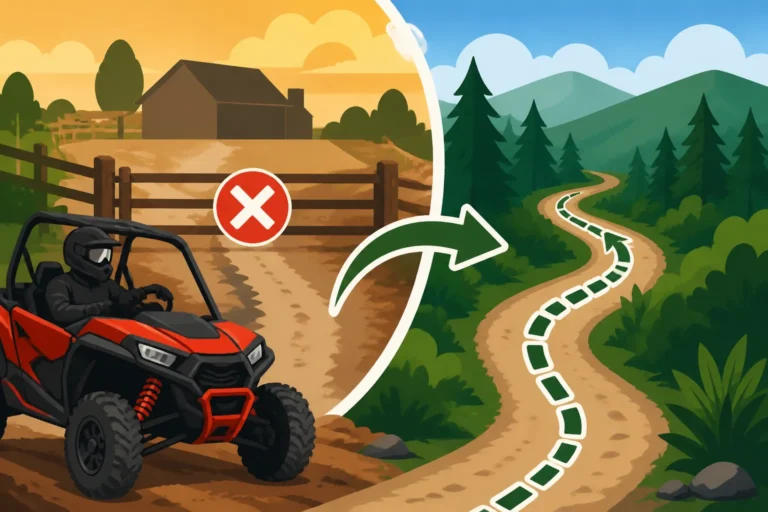
Be respectful of landowners and other trail users. Stay on marked routes, obey gates and closure signs, keep noise under control, and do not assume that an adjoining field or driveway is part of the trail. Private land access often depends on continuing permission, so riding beyond the marked corridor can damage relationships that keep trails open. Before riding, read [New York Trail Etiquette With Landowners] and confirm any club-specific expectations.
A little preparation makes a first New York ATV ride far less stressful. Choose an area with clear access information, verify that your machine and paperwork meet the requirements, check current conditions, and keep the first route short enough that everyone finishes with energy to spare. Save a map in advance, including a backup: onX Offroad may help with route planning, while official local notices and signs should guide decisions about where riding is allowed.
Disclaimer
This article is for general informational purposes only and does not constitute professional advice. Laws, prices and regulations vary by location and change over time. Consult a qualified professional for guidance on your specific situation.