New York Rules for Riding a Utility Corridor
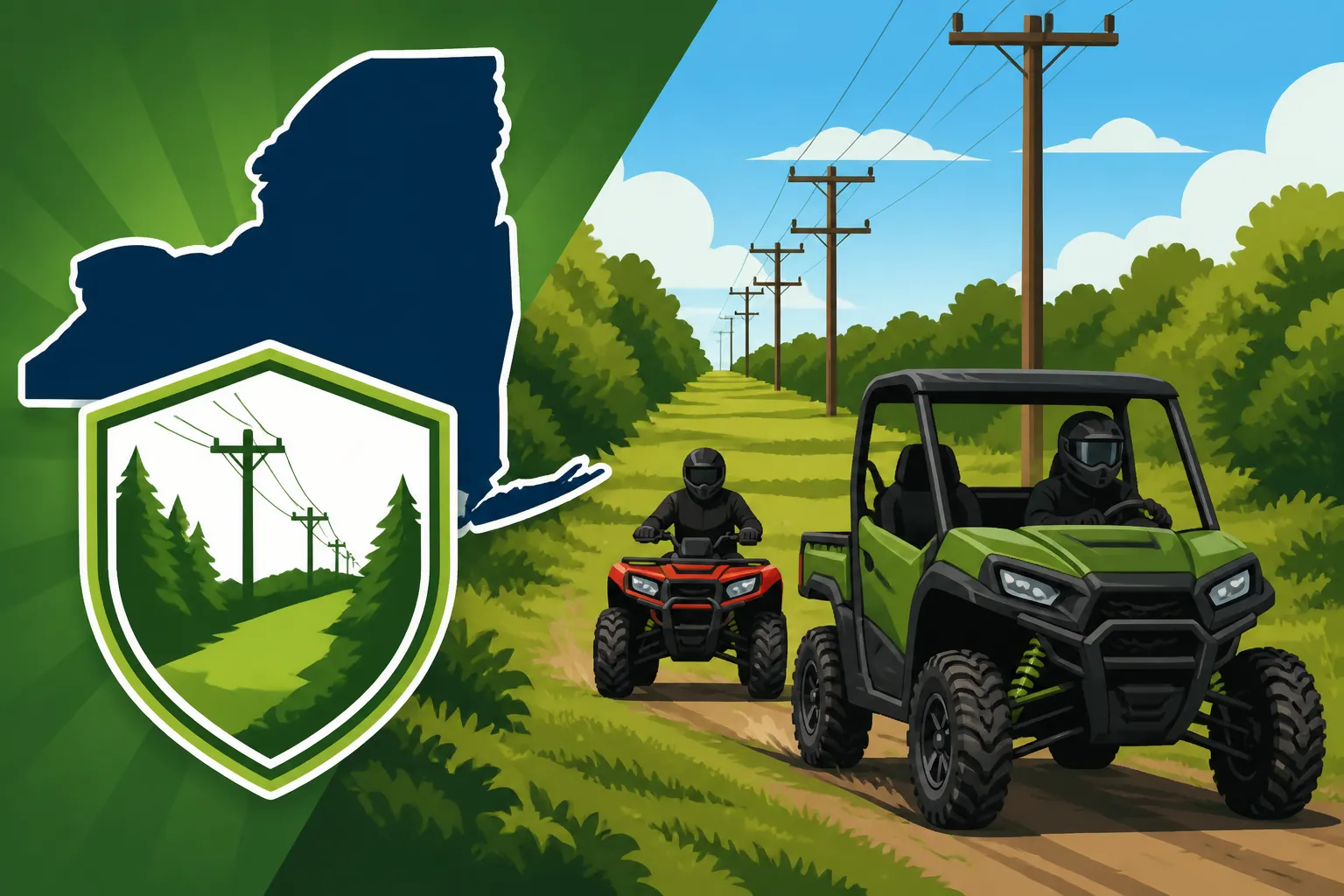
It’s a common sight when you’re out and about in New York's beautiful landscape: those long, often straight swaths of cleared land cutting through forests and fields. These are utility corridors, and for many ATV and UTV enthusiasts, they look like an open invitation to ride. They seem to connect places, offer less-traveled paths, and promise a different kind of adventure. But here’s the tough truth: what looks like a wide-open trail is almost always private property, and riding these areas often leads to big trouble. This guide is here to clear up the confusion and explain exactly why those tempting utility corridors are generally off-limits for your machine in New York.
Understanding Utility Corridors and Their Allure
When we talk about utility corridors in New York, we’re typically referring to the land maintained by companies for power lines, natural gas pipelines, or other essential infrastructure. These aren't just random clearings; they're vital arteries for our communities. They might contain massive steel towers with high-voltage lines humming overhead, or buried pipelines marked by small, unassuming signs that warn of danger below ground. From a rider's perspective, they offer a very different landscape than a winding forest trail. They often run in relatively straight lines, sometimes for miles, seemingly connecting distant points with ease.
The allure is undeniable. You see a clear path, often less overgrown than the surrounding woods, and it looks like a shortcut or an exciting new route. Maybe you’re on an official trail, and you see a utility corridor intersect it, making you wonder if you can just veer off for a bit. It’s natural to feel that pull. We all crave exploration, and these corridors often appear as blank canvases just waiting for tire tracks. Some sections might even look like they’ve been ridden before, lending a false sense of permission. You might even be thinking about how some SuperATV accessories, like a sturdy winch or robust skid plates, would make these rougher, less-maintained routes a breeze to navigate. However, the appearance can be deceiving, and what seems like an opportunity can quickly become a legal headache.
The Strict Reality: Most Utility Corridors Are Private Property
This is where the rubber meets the road, or rather, where your tires need to avoid the utility corridor. In New York, the vast majority of these utility corridors are private property, owned either by the utility companies themselves or by private landowners who have granted an easement to the utility company for access and maintenance. An easement gives the utility company the right to use that strip of land for their infrastructure, but it absolutely does not grant the public the right to traverse it.
Think of it like this: if you have a driveway on your property that a neighbor uses to access their garage, that doesn't mean anyone else can use your driveway as a shortcut or a parking spot. The utility company has the right to maintain their lines or pipes, but you, as an ATV rider, do not have a right to ride there. Even if the land isn’t explicitly "posted" with no trespassing signs, it's still private property, and riding on it without explicit permission is trespassing. It’s a common misconception that unposted land is open land, but under [New York Trespass Rules for Riders], that's simply not true.
The consequences of ignoring this reality can be severe. If you're caught riding on a utility corridor without permission, you could face significant fines, your machine could be impounded, and you might even be liable for any damage you cause. Imagine being deep in the woods, enjoying your ride, only to encounter a utility company worker or even law enforcement. That exhilarating feeling quickly turns to dread. You might have invested in top-notch gear and a great machine, but all that enjoyment is overshadowed by the legal ramifications. For a deeper understanding of where you can and cannot ride, check out [Where New York Bars ATV Riding] and [New York Rules for Riding Private Land].
Here's a quick rundown of why riding these corridors without permission is such a problem:
| Issue | Explanation |
|---|---|
| Private Land | Even if unposted, these lands are owned by individuals or corporations who haven't granted public access. |
| Liability | Utility companies and landowners face huge liability risks if a rider is injured on their property. |
| Safety | Active work areas, high-voltage lines, buried pipelines, and unguarded equipment pose serious hazards. |
| Maintenance | ATVs can cause erosion, rutting, and damage to access roads, increasing maintenance costs for utilities. |
| Security | Unpermitted access makes it harder for utility companies to monitor and secure critical infrastructure. |
| Legal Action | Riders can face fines, machine impoundment, and civil lawsuits for trespassing and property damage. |
The Rare Exceptions and Designated Trails
While the general rule is "no," there are extremely rare circumstances where a utility corridor, or a section of it, might be legally accessible for ATV riding in New York. However, it's crucial to understand that these are almost always designated trails that happen to coexist with utility infrastructure, rather than the utility corridor itself being open for general riding.
One common exception involves old rail beds. Sometimes, disused railroad tracks have been converted into multi-use trails that happen to run alongside or within former rail easements, which might also host modern utilities. These are typically managed by municipalities, counties, or specific trail organizations, and they will be clearly marked, often appearing on official trail maps. If you're riding a rail trail, you're on a designated trail, not just a random utility corridor. You can learn more about these specific routes by looking into [New York Rules for Riding a Rail Trail].
Another possibility, though even less common, is when a utility company has a specific, written agreement with an ATV club or a county for shared use of a particular segment. These agreements are highly specific, often temporary, and always require riders to adhere to strict rules, often including membership in the club or obtaining a specific permit. You won't just stumble upon these; they are the result of extensive negotiation and land management. It's not about riding any power line trail; it's about riding a specific, officially designated trail that happens to utilize a power line easement. For example, some snowmobile trails in winter might follow utility lines, but if they do, they will be clearly signed as such for multi-use during their season. Always confirm if a trail is designated for ATVs, not just snowmobiles, by checking [New York Rules for Riding a Snowmobile Trail].
The key takeaway here is designation. If a utility corridor is open to ATVs, it will be because it has been explicitly designated as a trail by the managing authority, whether that's a county parks department, a state agency, or a private club with legal permission. This means there will be official signage, trail markers, and it will appear on published trail maps. If you're in doubt, always err on the side of caution. [New York ATV Trail Permits Explained] will guide you on how to identify legal riding areas. Don't rely on unofficial advice or the assumption that "everyone rides there." Your best bet is always to stick to recognized, permitted trail systems like those found in [Best Places to Ride an ATV in New York].
Why Utility Companies Strictly Limit Public Access
It might seem unfair that these wide-open spaces are mostly off-limits, but utility companies have very legitimate and serious reasons for restricting public access to their corridors. These aren't just arbitrary rules; they're in place for safety, liability, and the reliable operation of critical infrastructure.
First and foremost is safety. Utility corridors often contain active work zones, heavy machinery, and incredibly dangerous electrical equipment or gas lines. A rider could accidentally come into contact with a downed power line, hit a buried pipeline marker, or encounter workers operating equipment without warning. The risks are enormous, not just for the rider, but for anyone involved in the utility operations. These areas aren't playgrounds; they're industrial zones that happen to be outdoors.
Then there's the massive issue of liability. If a utility company or landowner allows general public access and someone gets seriously injured or worse, they face immense legal and financial repercussions. It's why they are so diligent about discouraging trespass. No company wants to be responsible for a rider's accident, especially when it could have been prevented by simply staying off private property. This is why even minor damage you cause could lead to significant claims, not just [New York Fines for Trespass on a Trail].
Infrastructure protection is another critical concern. ATV and UTV traffic, especially off-trail or in wet conditions, can cause significant erosion, create deep ruts, and damage access roads or underlying equipment. This means more maintenance work and higher costs for the utility company, which ultimately can affect everyone through increased utility rates. Imagine hundreds of machines tearing up a route that’s meant for specialized utility vehicles; it quickly becomes impassable or requires costly repairs. Think about where your SuperATV heavy-duty axles or lift kits shine – it’s on the designated challenging trails, not through sensitive utility infrastructure.
Finally, there are security and environmental concerns. Utility corridors are critical infrastructure, and unauthorized access can make them vulnerable to vandalism, theft, or even sabotage. Furthermore, these corridors sometimes pass through sensitive environmental areas, and uncontrolled riding can disturb wildlife, spread invasive species, or damage delicate ecosystems. Utility companies have strict environmental compliance requirements, and allowing unregulated ATV traffic would make it impossible to meet these standards.
In essence, these restrictions are not meant to spoil your fun, but to protect you, the workers, the environment, and the essential services that we all rely on. When you consider these factors, sticking to marked, legal trails, and checking [New York Trail Conditions Before You Ride] or [Checking a County Notice Before You Load] before heading out, becomes not just a legal obligation, but a matter of responsible riding.
Disclaimer
This article is for general informational purposes only and does not constitute professional advice. Laws, prices and regulations vary by location and change over time. Consult a qualified professional for guidance on your specific situation.