Joining an Oswego Club for the Season
Joining an ATV club in Oswego County can make a riding season much easier to plan, but membership does not automatically mean every nearby trail is open to you. Club access, county permits, machine registration, insurance, and seasonal closures are separate pieces. This guide explains what to check before you join, what to bring, and how to ride responsibly once you’re on the trails.
What joining an Oswego ATV club may give you
Club membership and trail permission are not always the same thing
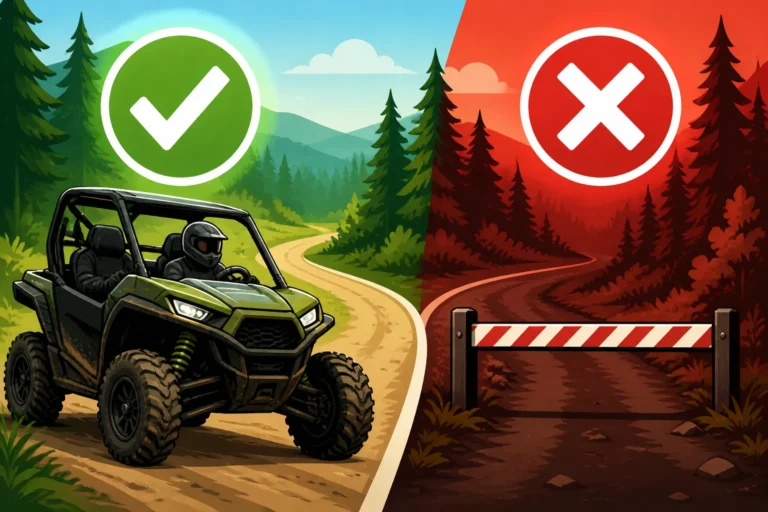
It’s tempting to think that paying club dues means you can ride every trail in the county. In practice, access can depend on the individual trail system, the club’s landowner agreements, and any county or trail-permit rules that apply. Some trails may be open to members, while other access may require a separate permit or follow different conditions.
Before paying, ask the club exactly what membership includes. Does it provide access to particular club trails, help you qualify for a permit, or simply support trail maintenance and landowner relationships? Are guests allowed? Does each machine need to be registered separately for access purposes? Clear answers now can prevent an awkward conversation at a trailhead later.
Also ask whether the club’s access arrangements are active for the routes you want to ride. A trail shown on an older map may have changed because a landowner withdrew permission, a route was rerouted, or a section is temporarily closed. [New York Club Memberships and Trail Access] explains why membership and access can be distinct questions, while [Joining a New York ATV Club] covers the broader reasons riders join.
Compare the club’s trail access with your riding plans
Think about where and how you actually want to ride. A club may be a good fit if its trails are near your usual staging area, if you want organized rides, or if you value helping maintain routes that cross private property. If you’re traveling from out of county, ask how access works for visiting members and whether the club’s routes connect to the places you plan to explore.
Oswego County riding can involve a mix of trail corridors and local access arrangements. Riders may be interested in areas around Central Square, Sandy Pond, or routes toward Hastings, but don’t assume that a route is open simply because it appears on a map or was open last season. Check the club’s current notices and county information before loading the trailer. [Oswego County Club Trails in September] and [Riding the Club Trail From Central Square to Sandy Pond] are useful related reads, but current access should always be confirmed with the organizations managing the route.
A mapping app such as onX Offroad can help you orient yourself and plan a route, especially when you’re unfamiliar with the area. Treat it as a navigation aid, not permission to ride. A mapped line does not necessarily show whether a trail is currently open, whether membership is required, or whether you have authorization to cross private land.
What to check before you pay dues
Ask specific questions about membership and permits
Before joining, contact the club and ask for the current membership instructions, access conditions, and any separate permit requirements. Club rules can differ, so avoid relying on a friend’s experience from a prior season or assuming that one club handles access the same way as another.
Here are practical questions to ask:
- Which trails or trail areas does membership cover?
- Is a county or trail-system permit also required?
- Are permits issued per rider, per machine, or another way?
- Can a nonmember ride as a guest, and what rules apply?
- Are there separate rules for passengers, minors, or group rides?
- Where should I check for closures, reroutes, and seasonal notices?
- Are there restrictions on machine width, noise, or trail conditions?
- Does membership require volunteering or attending club events?
Ask for the answers in writing if possible, especially when access depends on several organizations. Keep the confirmation with your ride documents. If the club directs you to a separate county permit, follow that process rather than assuming the membership card is enough. [Why New York Has No Statewide Trail Pass] explains why riders may encounter local access systems instead of one universal pass, and [County Permits Instead of a State Sticker] offers more background.
Make sure your machine and paperwork are ready
Club membership does not replace state requirements for operating an ATV. Before your first ride, check that your machine’s New York registration is valid, that you have required insurance, and that you can show any documents the club or trail operator asks riders to carry. Requirements can vary depending on where and how you ride, so confirm the rules that apply to your situation.
If you’re visiting from another state, don’t assume your home registration settles every New York requirement. Check the relevant rules before setting out, including whether your insurance meets New York’s requirements. [New York Reciprocity for Out-of-State Registrations] and [New York ATV Registration and Insurance Proof] can help you identify questions to resolve before the trip.
It’s also worth checking the machine itself against the route. A trail system may have restrictions or practical limits that make a wide or heavy machine unsuitable, even if you can legally register it. Ask the club whether the routes are appropriate for your machine’s dimensions and whether any sections are narrow, rocky, or especially muddy. The club may not be able to guarantee trail conditions, but it can often point you toward the right questions.
How to prepare for your first club ride
Confirm access and conditions on the day you ride
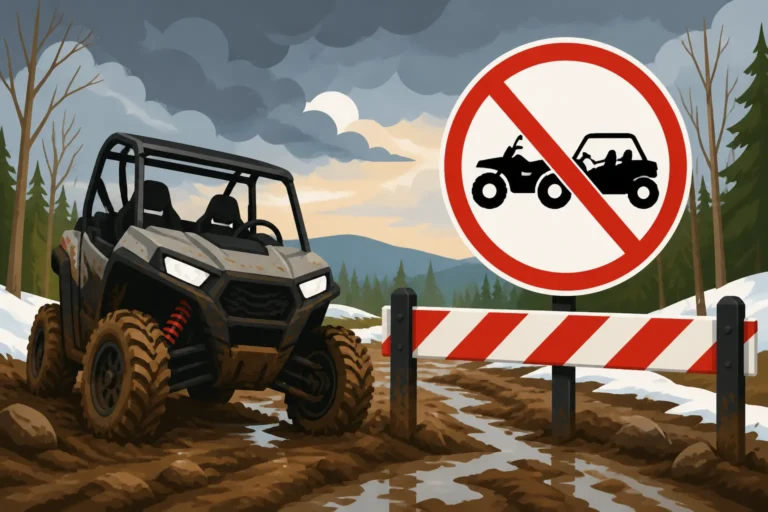
Trail access can change with weather, maintenance, landowner requests, or seasonal closures. Contact the club or check its official updates close to your ride date. A route that was open when you joined may not be open when you arrive, particularly after heavy rain, during spring thaw, or when a landowner needs the trail kept clear.
Use a simple pre-ride check:
- Confirm that your membership and any required permit are valid.
- Check for current trail notices, closures, and reroutes.
- Confirm that your machine is allowed on the route.
- Verify where to park and stage your trailer.
- Share your plan with someone who is not riding with you.
- Save an offline map or other navigation backup where practical.
onX Offroad may be useful for viewing route information and keeping your bearings, but verify the route with the club or county before following it. Cell service can be unreliable in some riding areas, so don’t make a live phone map your only plan. Bring a charged phone, and consider carrying a paper map or another backup suited to your route.
| Before the ride | What to verify | Why it matters |
|---|---|---|
| Membership | That it is active and applies to the trail you plan to ride | Club access may be limited to certain routes |
| Permit | Whether a separate county or trail permit is required | Dues may not cover every access requirement |
| Registration and insurance | That your documents are current and available | Membership does not replace state requirements |
| Trail status | Closures, reroutes, and current conditions | Access can change after weather or landowner requests |
| Machine fit | Width, condition, and route suitability | A machine that is too wide or poorly prepared can create problems |
| Parking and staging | Approved location and any posted restrictions | Improper parking can block access or annoy nearby landowners |
Learn the club’s expectations before you ride
A club’s most valuable work may happen behind the scenes: maintaining routes, communicating with landowners, organizing trail work, and asking riders to follow local rules. When members respect posted signs, stay on marked routes, and avoid disturbing nearby homes or farms, they help protect the relationships that keep trails available.
At the trailhead, take a moment to read signs and follow the club’s instructions. Don’t ride around a closed gate, even if the path looks passable. Don’t assume that a parallel road, field edge, logging road, or utility corridor is part of the club route. Permission to ride one section does not automatically grant permission to use adjoining land. [Landowner Agreements That Keep Trails Open] explains why these relationships matter, and [What Happens When a Landowner Pulls Trail Permission] describes how access can be affected when permission changes.
If you’re new to organized trail riding, ask about group etiquette before joining a club event. Find out where riders meet, whether the group uses a lead and sweep rider, how the club handles stops, and what pace to expect. Keep enough distance to avoid dust and sudden stops, and don’t pressure a slower rider to go faster. A considerate first ride makes it easier to learn the system and meet members who can answer local questions.
Making club membership worthwhile through the season
Participate beyond the first ride
Joining can be more rewarding when you take part in club communication and maintenance, rather than treating the membership card as a one-time purchase. Clubs often rely on volunteers to help with trail work, signage, events, and member updates. You don’t necessarily need to be an experienced mechanic or trail builder to contribute; ask what tasks are useful and whether the club has a workday or orientation for new members.
Participation also helps you understand why a route may be closed or rerouted. For example, a trail that crosses working land may need to be closed during a particular activity or after damaging weather. A club member who receives official notices is less likely to mistake a temporary closure for an invitation to find a detour. If you use a navigation app, update your route planning with those notices rather than following an old saved track.
Keep a simple season record
A small folder on your phone or in your vehicle can prevent repeated last-minute scrambling. Keep your membership confirmation, permit details, registration and insurance information, emergency contacts, and the club’s preferred way to receive trail updates together. Before each outing, check that the information still applies to the route and date.
If you ride with family or friends, make sure everyone understands the access rules. A passenger or guest may need to meet separate requirements, and a rider who is not a club member may not have the same trail privileges. Don’t rely on one person in the group to know every rule. Share the route plan, explain where the group is allowed to ride, and agree on what to do if someone gets separated.
A little preparation makes club membership more useful and helps protect the access that local riders depend on. Confirm what dues cover, check whether a separate permit is needed, and verify trail conditions before you head out. Most importantly, stay on authorized routes and follow club and landowner directions throughout the season.
Disclaimer
This article is for general informational purposes only and does not constitute professional advice. Laws, prices and regulations vary by location and change over time. Consult a qualified professional for guidance on your specific situation.